

If you have—or suspect you have—sleep apnea, you already know the morning headaches and brain fog. You’re here to catch oxygen drops, check your severity, or verify your CPAP. I’ve been in your shoes, wasting money on cheap overnight monitors only to realize the data is completely worthless.
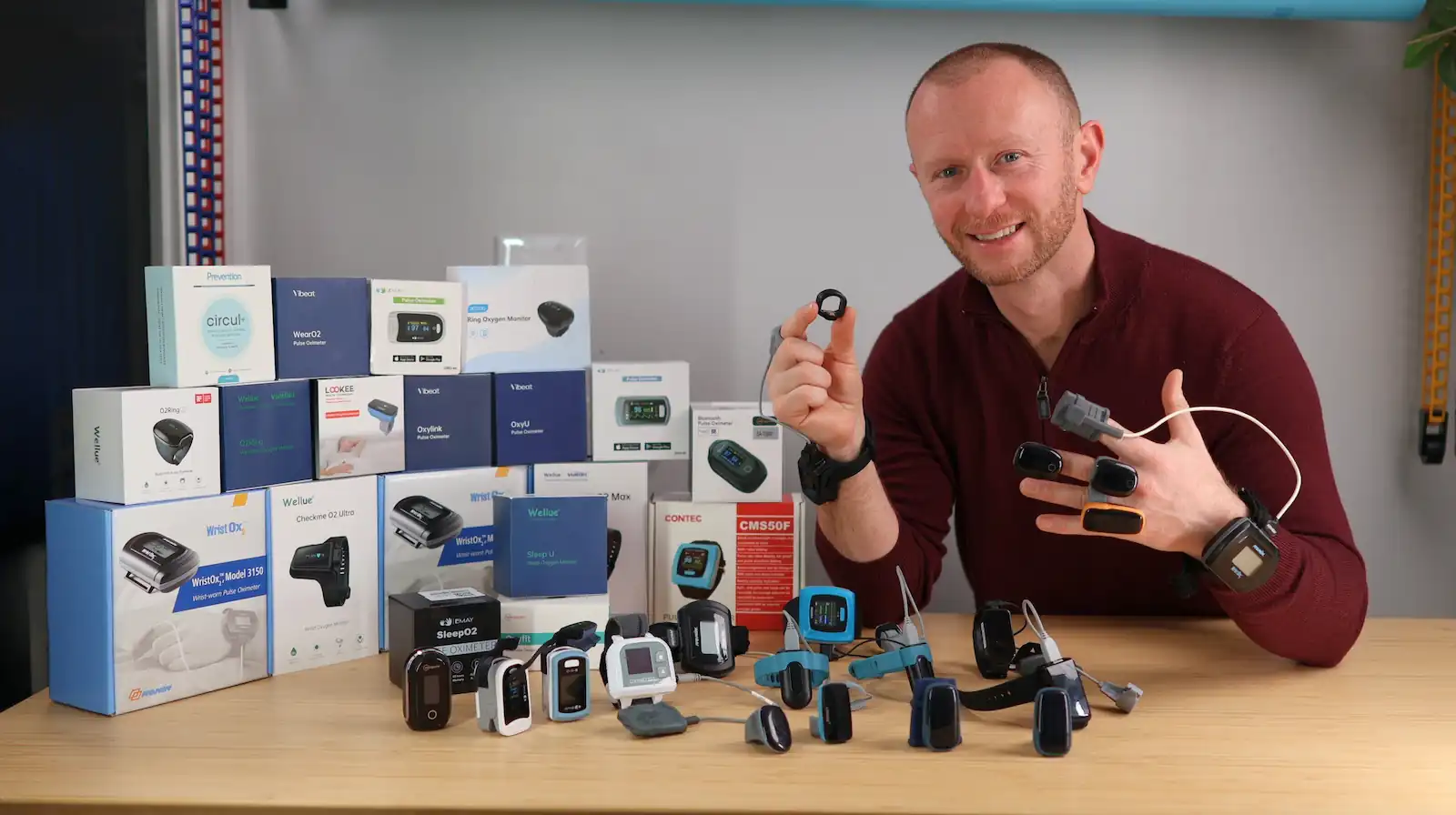
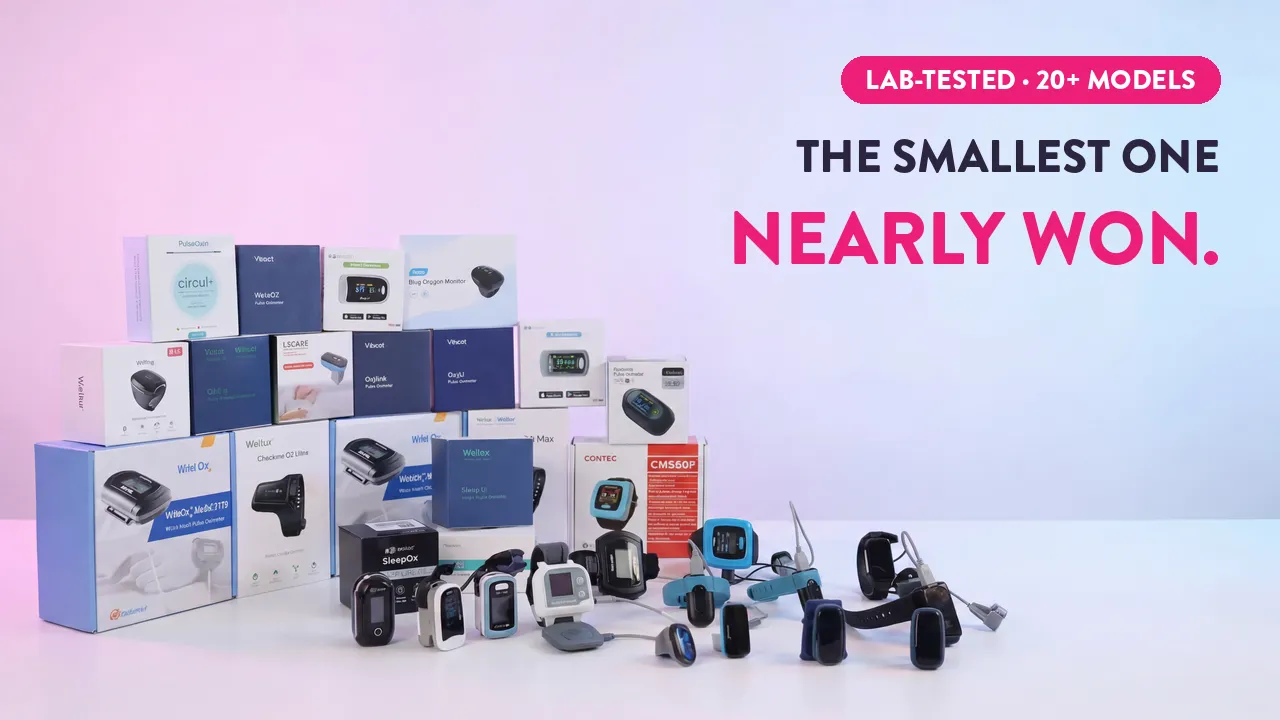
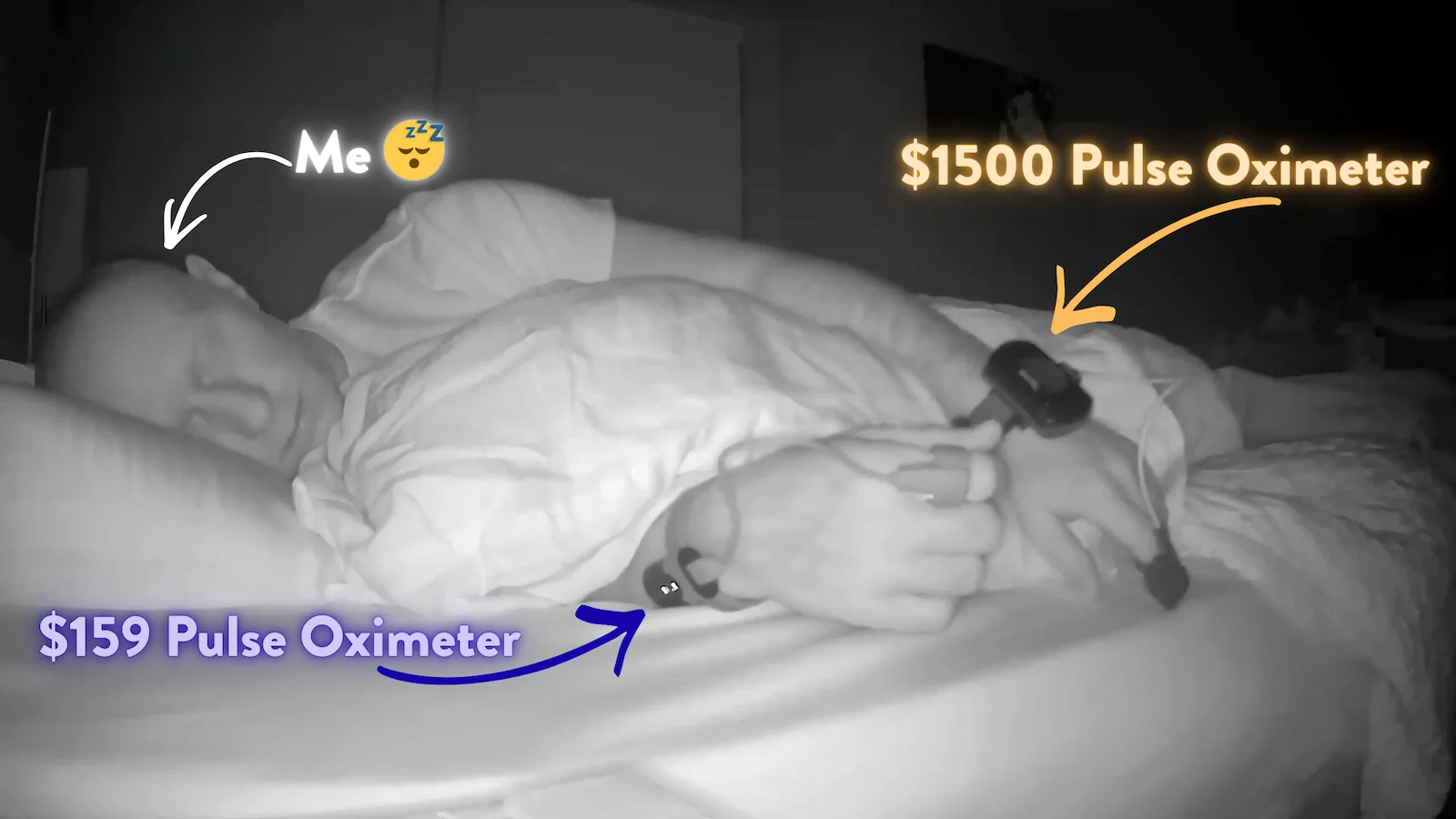
Following a rigorous 60-day testing phase, I personally benchmarked 20+ of the most popular overnight pulse oximeters against the clinical gold standard: the $1,500 Nonin 3150. I analyzed over 2.5 million lines of data to identify the few oxygen monitors that provide accurate, reliable results.
Before we get into the recommendations, you may want to familiarize yourself with some of the factors that make an overnight pulse oximeter actually worth buying. So feel free to read on or skip straight to the recommendations.
Overnight Pulse Oximeter Buying Guide: 4 Key Features
To assist you in choosing the overnight oxygen monitor you need; here are the four non-negotiable features you need to look for:
1. The Sample Rate And Accuracy
This is the single most important factor. Sleep apnea events (where you temporarily stop breathing) often only last 10 to 20 seconds. If your smartwatch only checks your oxygen every 3 to 15 minutes, you are essentially flying blind; it will mathematically miss your oxygen drops completely.
You need a dedicated oxygen monitor that records a sample every 1 to 4 seconds to catch those dangerous micro-desaturations. But the flip side of sample rate is raw accuracy. The more frequently your device checks-in on you throughout the night, the higher chance it has at catching oxygen dips. That is why we only recommend the oxygen monitors that scored the highest in our tests, because absolute accuracy is the only reason to wear one of these to bed.
2. Wearable Comfort
Next in importance, is comfort. You are going to be wearing this for 8 hours a night. During my extensive testing, I learned the hard way (see below) just how brutal some oximeters with hard plastic frames can be. Several of the heavy, bulky models pinched the tip of my finger so tightly that I woke up with my finger throbbing in the middle of the night.
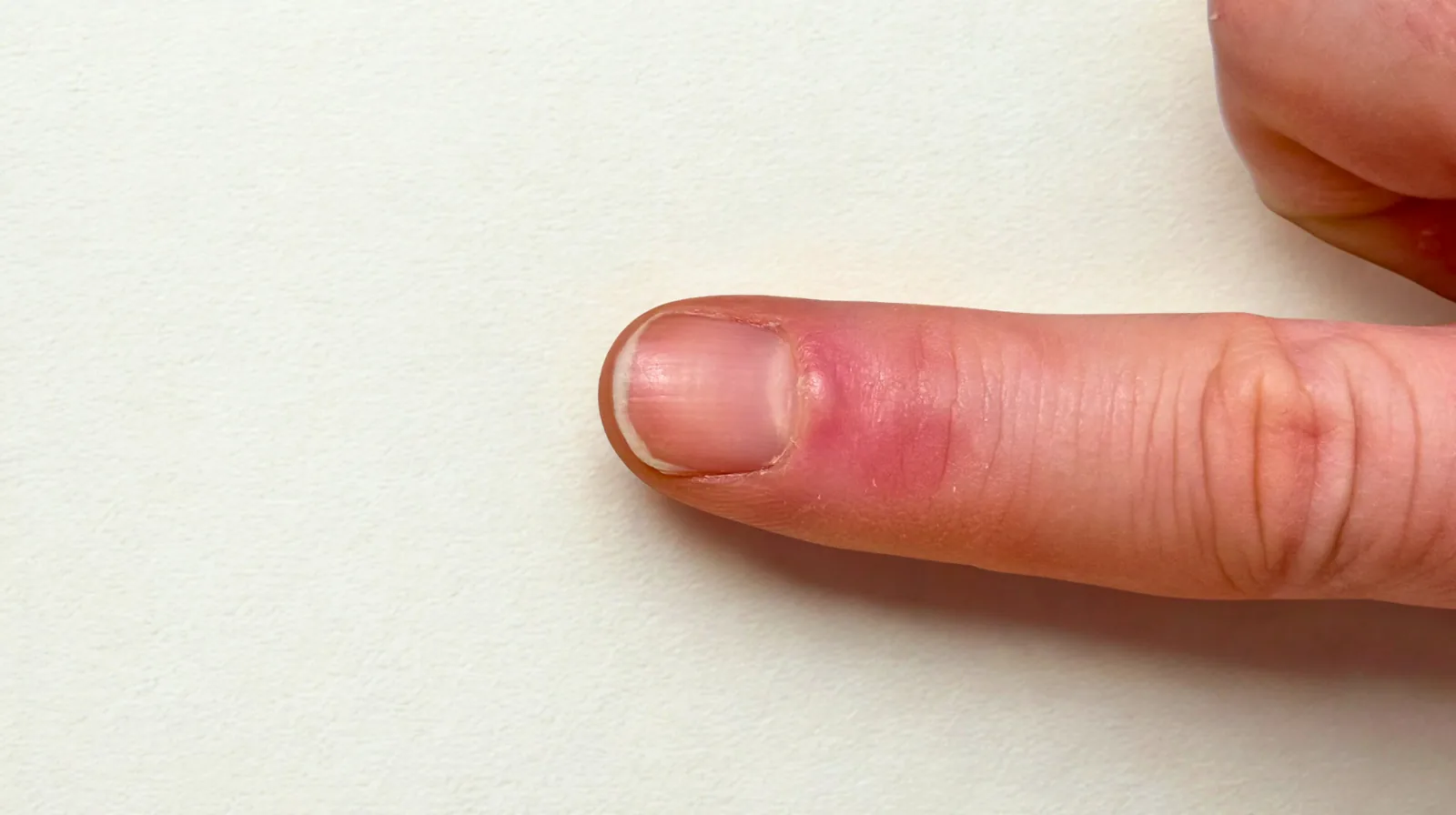
You must prioritize flexibility and lightweight materials. Any lightweight, soft silicone sensor that gently contours to your finger and offering the finger some mobility is a win, and is literally the difference between a restful night’s sleep and waking up in pain. To avoid this nightmare, we take this in to account for our recommendations.
3. Data Transparency & File Formats
Accurate tracking is completely useless if your data is held hostage. A few overnight oxygen monitors I tested only give you a basic JPEG screenshot of your morning summary while others will time travel you back to the early 2000s (see below). This makes it impossible to dig into the raw data to verify if the device is actually telling the truth. You need a device that offers data transparency in useful formats and a summary report that provides metrics that are helpful for your screening.
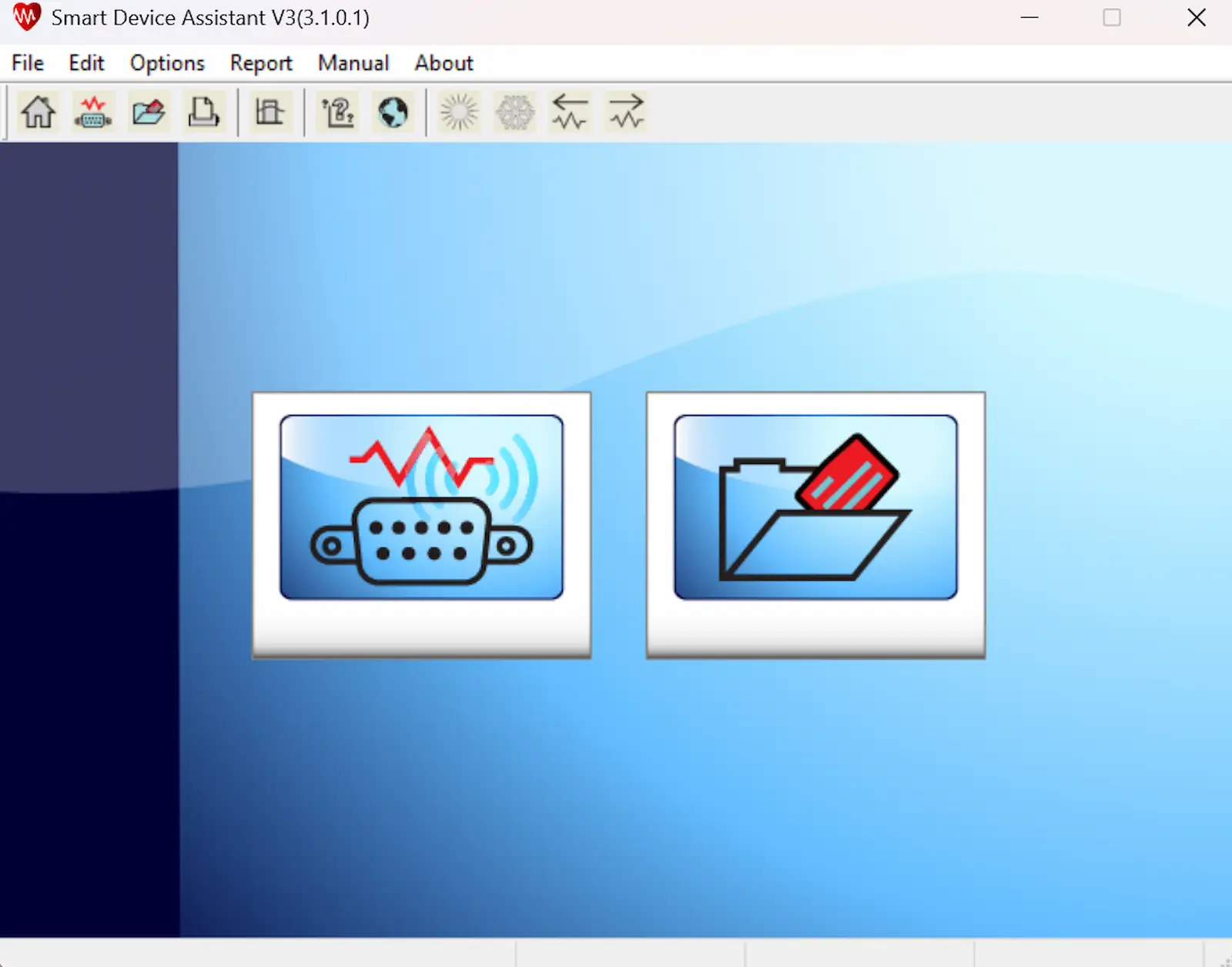
Look for pulse oximeters that generate a clean PDF for an easy-to-read summary report, and export your raw, second-by-second data as a CSV (the gold standard for data analysis). As a bonus, premium monitors will also export specialized files that integrate seamlessly into CPAP software like OSCAR.
4. Onboard Memory (Phone-Free Sleeping)
Your monitor must have reliable “onboard memory.” This means the device records and stores your entire night of sleep data internally on the sensor itself. You don’t have to sleep with your phone right next to your head.
You can simply leave your phone turned off or in another room while you sleep. In the morning, you just open the free app, and the device will effortlessly sync your entire night of data in seconds. That’s what you want!
How Did We Test (Simple Version)
- The hospital-grade Nonin was worn on one hand, and a test overnight monitor on the other
- Every morning, I exported the raw data files from both pulse oximeters
- Our custom built Python script cleaned, aligned, and compared the data line-by-line
- All the metrics were averaged across 3 nights to reduce randomness
The Best Overnight Pulse Oximeters
Without any further delay, here are all of my recommendations!
- Best Overall: EMAY SleepO2
- Best FDA-Cleared: Wellue Checkme O2 Max
- Most Comfortable: LOOKEE Ring
- Best Battery Life: Wellue Checkme O2 Ultra
- Best Smart Alarm Value: Vibeat OxyU
Best Overall: EMAY SleepO2
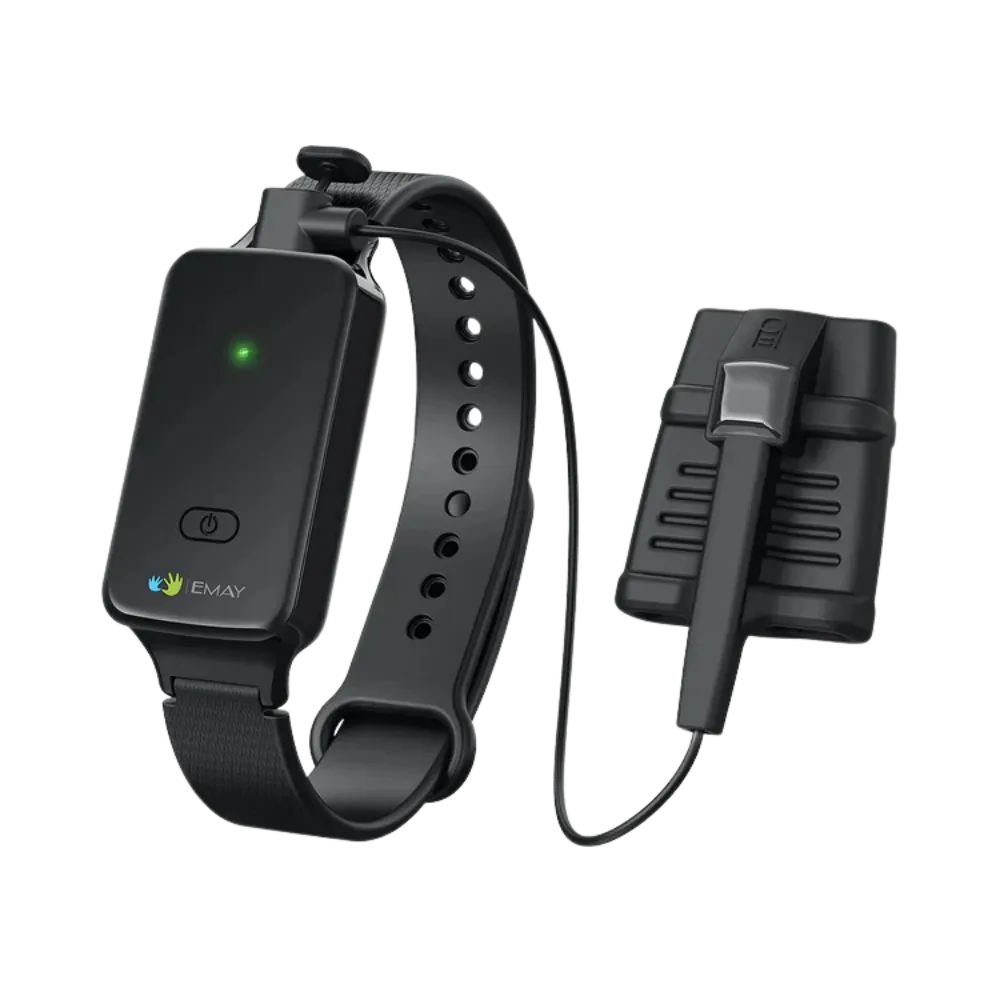
The EMAY SleepO2 is a dedicated overnight pulse oximeter that performed a near-perfect 96.5/100 on our Overall O2 Accuracy Score.
Its soft silicon duckbill sensor contours the tip of your finger surprisingly well and offers enough movement to wear night-after-night.
You will love its beautifully simplistic design with a dedicated power button, meaning you can purposefully start and stop your recording whenever you are ready.
The real treasure is the fantastic morning sleep summary report with very detailed metrics that the EMAY app generates. One of the best we have tested!
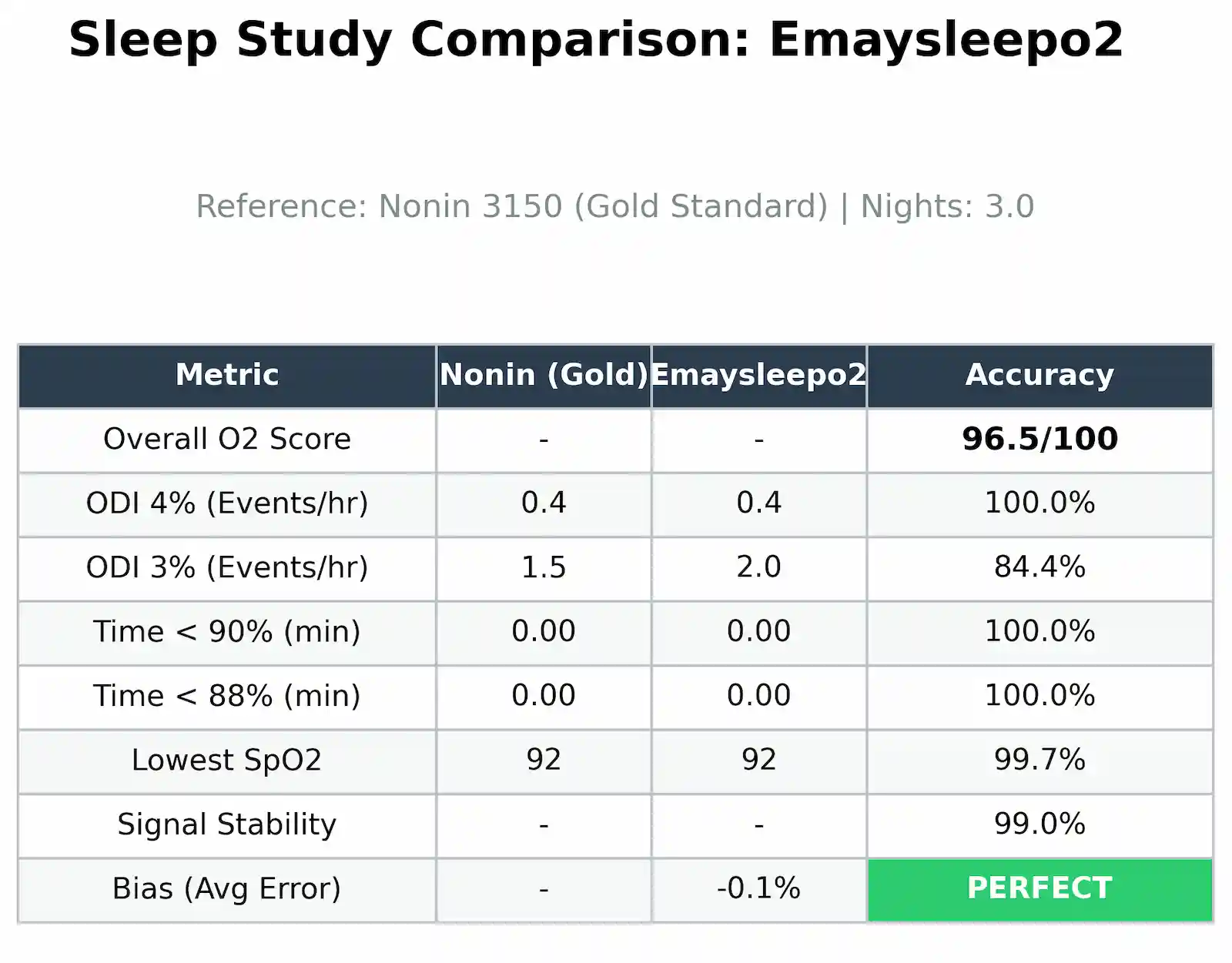
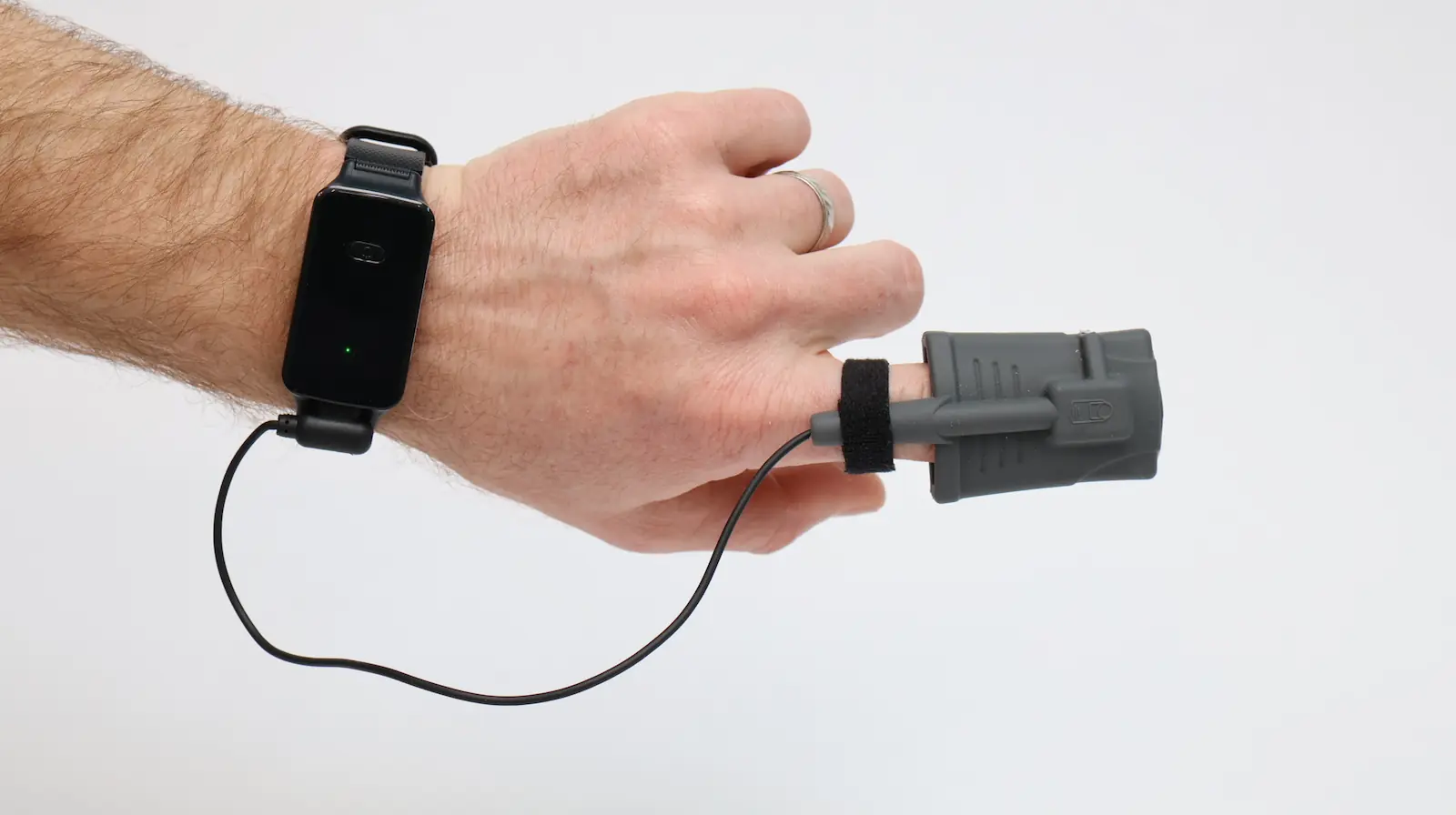
This hidden-gem is my favorite overnight pulse ox right now. If you want more details check out my full review here.
Best Overall
EMAY SleepO2
Best accuracy of the bunch at 96.5/100, with 1-second recording intervals, a clean CSV export, and a summary report that surfaces metrics most competitors skip. Simple physical button, fast morning downloads, easy sharing.
Downsides are real but liveable: a green LED that stays on all night, a duckbill sensor that runs oversized on slim fingers, and a dated charging port.
Best FDA-Cleared: Wellue Checkme O2 Max
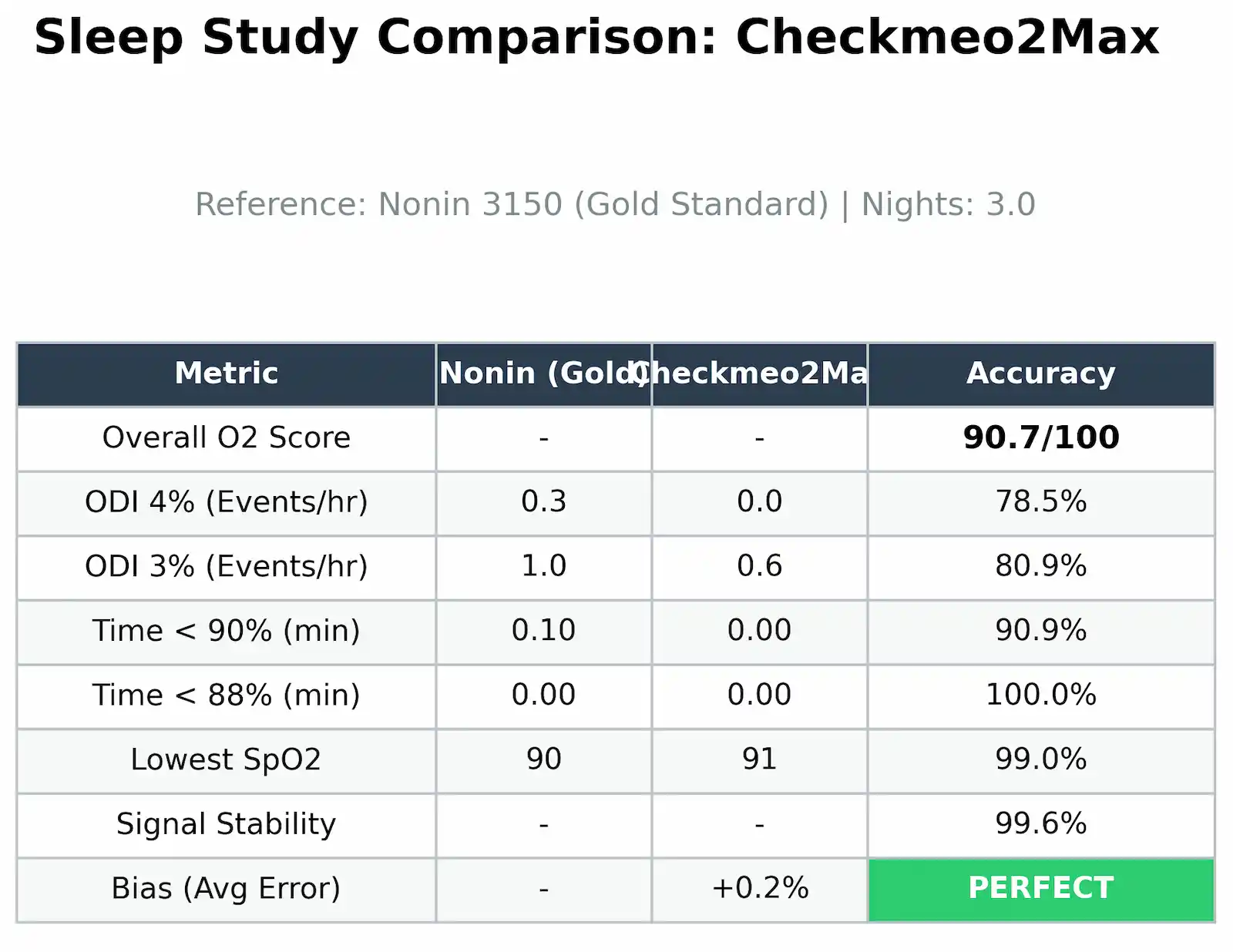
The Checkme O2 Max is Wellue’s premium oximeter. It scored a stellar 90.7/100 on our Overall O2 Score while flaunting it’s clinical-backed FDA-cleared reliability.
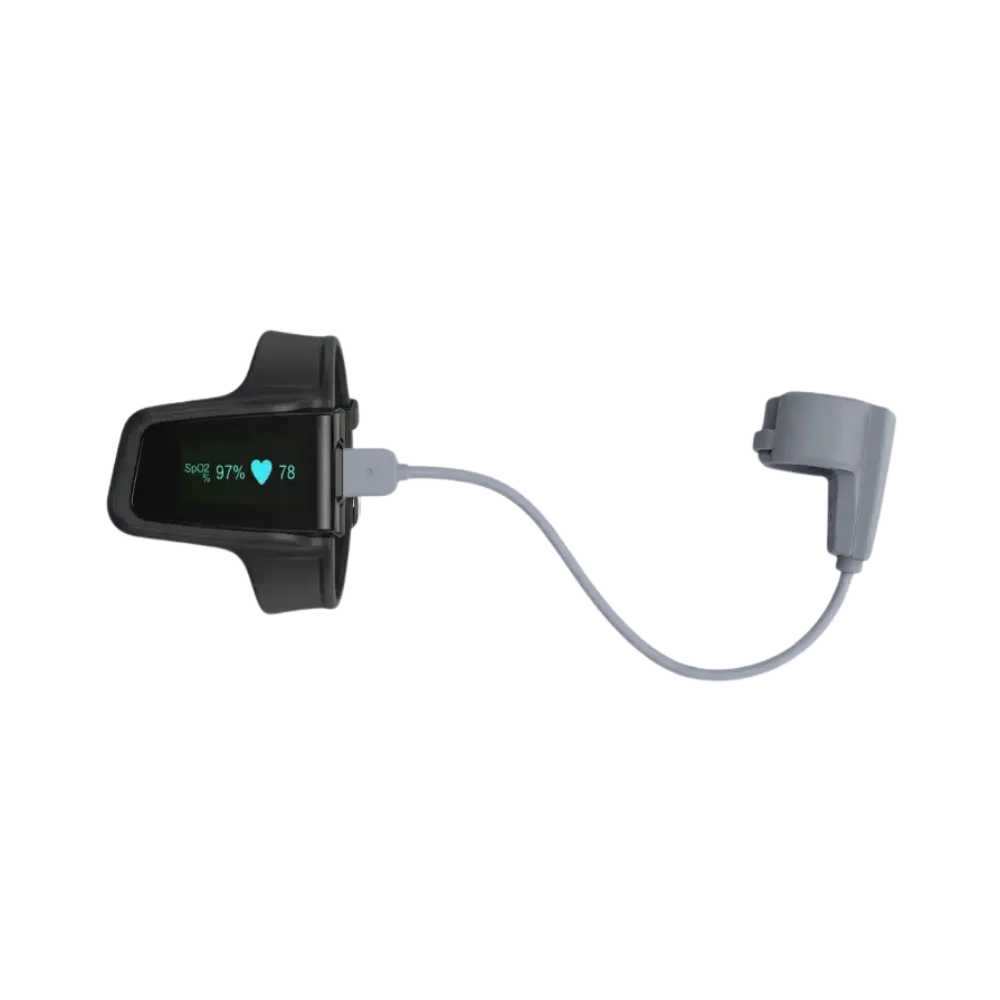
Impressively, the Max has both a vibration and an audible beep alarm, excellent sampling interval of 2 seconds, while managing to display a stunning design. Make no mistake, immediately upon holding this you know it is a premium piece of hardware and not a toy.
The incredible 72-hour battery life gives you some freedom from charging everyday. It can record a full three nights of sleep on a single charge which is very nice.
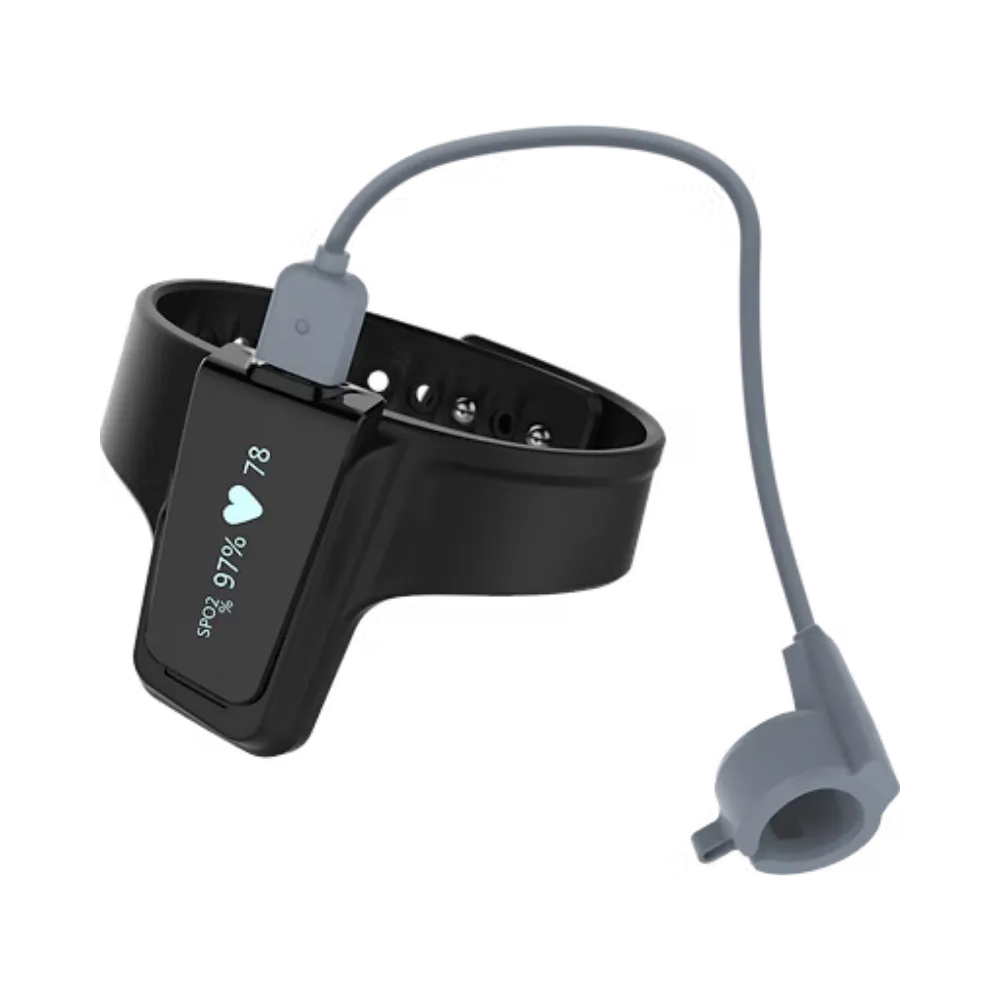
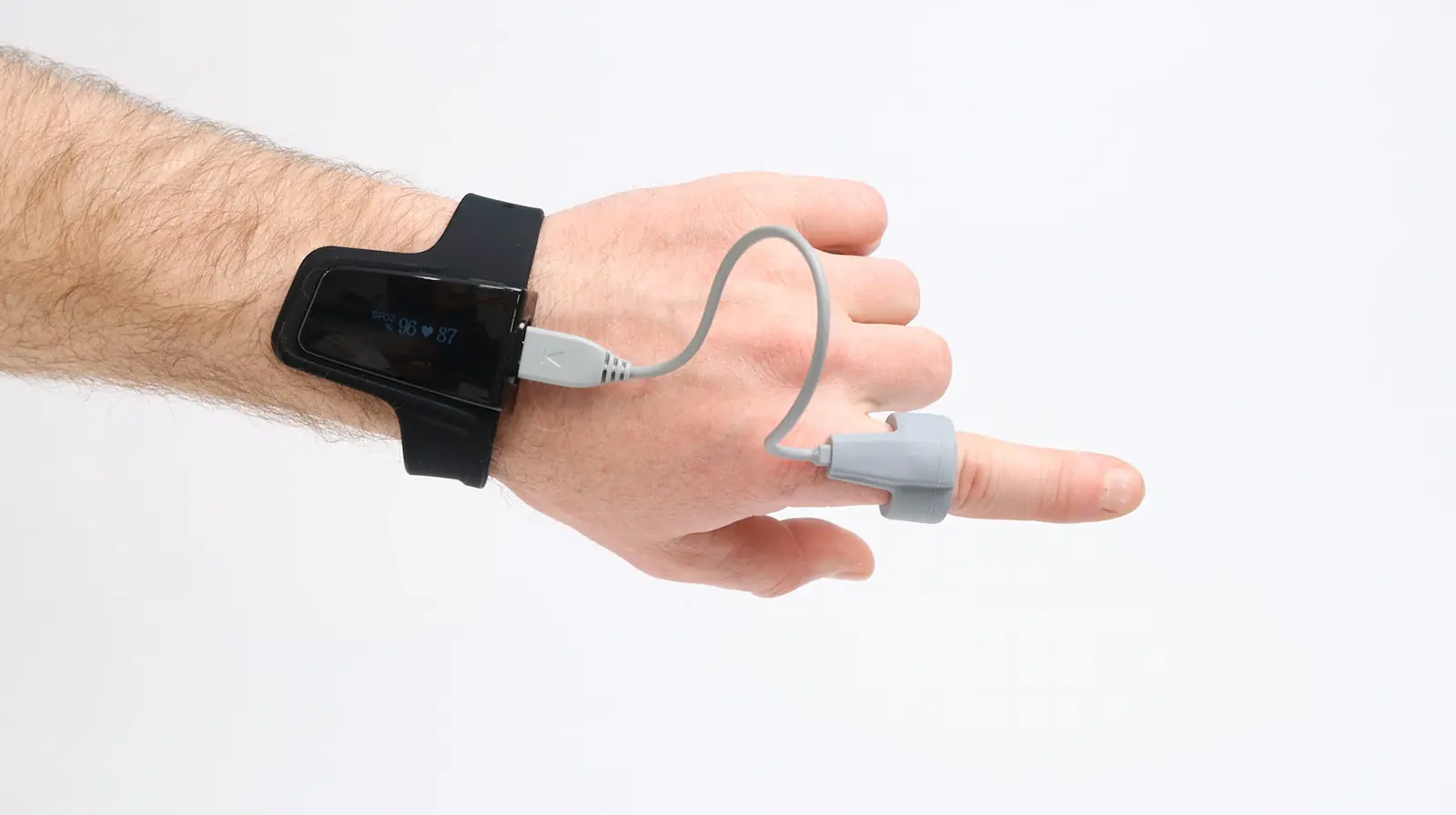
But the real treasure here is the patented silicone ring sensor, meaning you can fully bend your knuckles while the device stays perfectly locked in place without falling off!
If you want to know more on why this device is amazing, check out my full review here.
Best FDA-Cleared
Wellue Checkme O2 Max
Solid all-rounder: 90.7/100 on our O2 Score test, FDA Class II clearance with clinical trial backing, 2-second recording intervals, a clean CSV export, 72-hour battery for three full nights, and a smart vibration alarm.
Trade-offs are physical — a stiff clasp that’s awkward one-handed, and left-wrist-only by design.
Most Comfortable: LOOKEE Ring
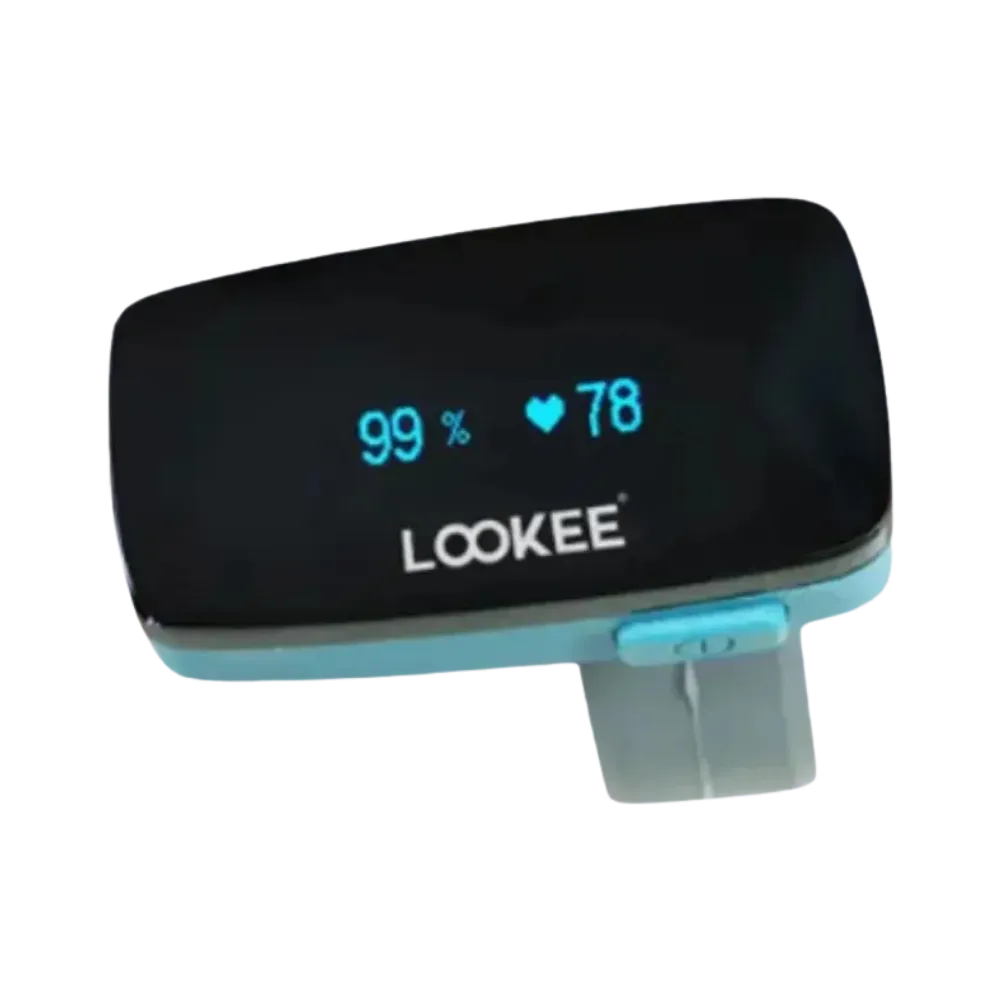
The LOOKEE Ring is a minimalist dedicated continuous pulse oximeter. It scored an impressive 93.0/100 on our Overall O2 Score for accuracy. The main trait that sticks out for this device is its tiny footprint, which supercharges in the way of comfort, and makes this my most comfortable recommendation right now.
The LOOKEE requires daily morning charging unlike the bigger battery wrist-based models, but it makes up for this in several ways.
For one, it is an all-encompassing unit that sits solely at the base of your finger, meaning you won’t have any cables to worry about while sleeping. Also you will have great mobility in your finger, which you will love. When you put it on, it feels like a sleek piece of modern jewelry rather than a medical device, with that compact shell.
This ring does come equipped with an adjustable silent vibration alarm, and a remarkably modern user friendly app.
It is punching above its weight by still offering export Binary files natively. Meaning you can drop your raw oxygen data directly into OSCAR software.
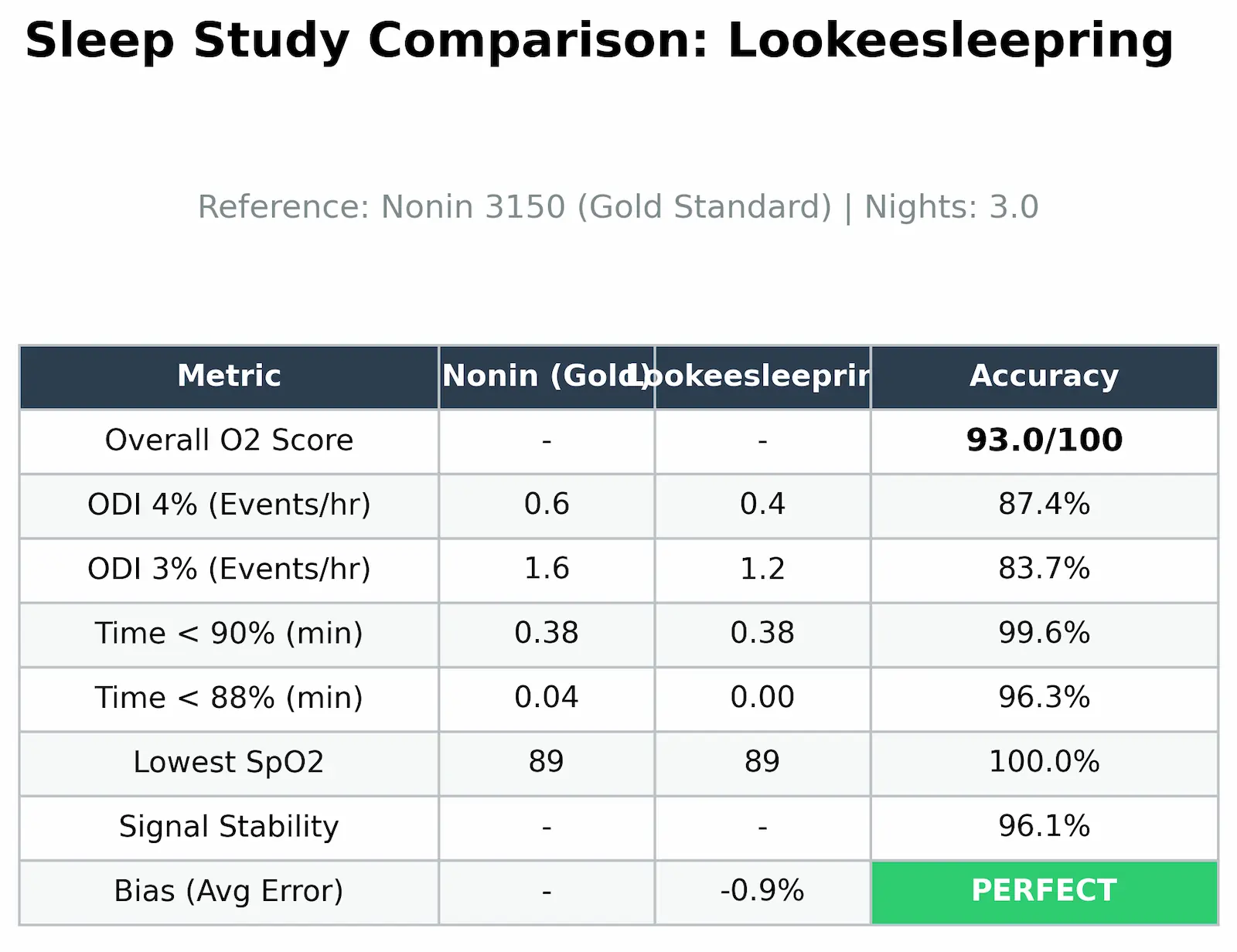
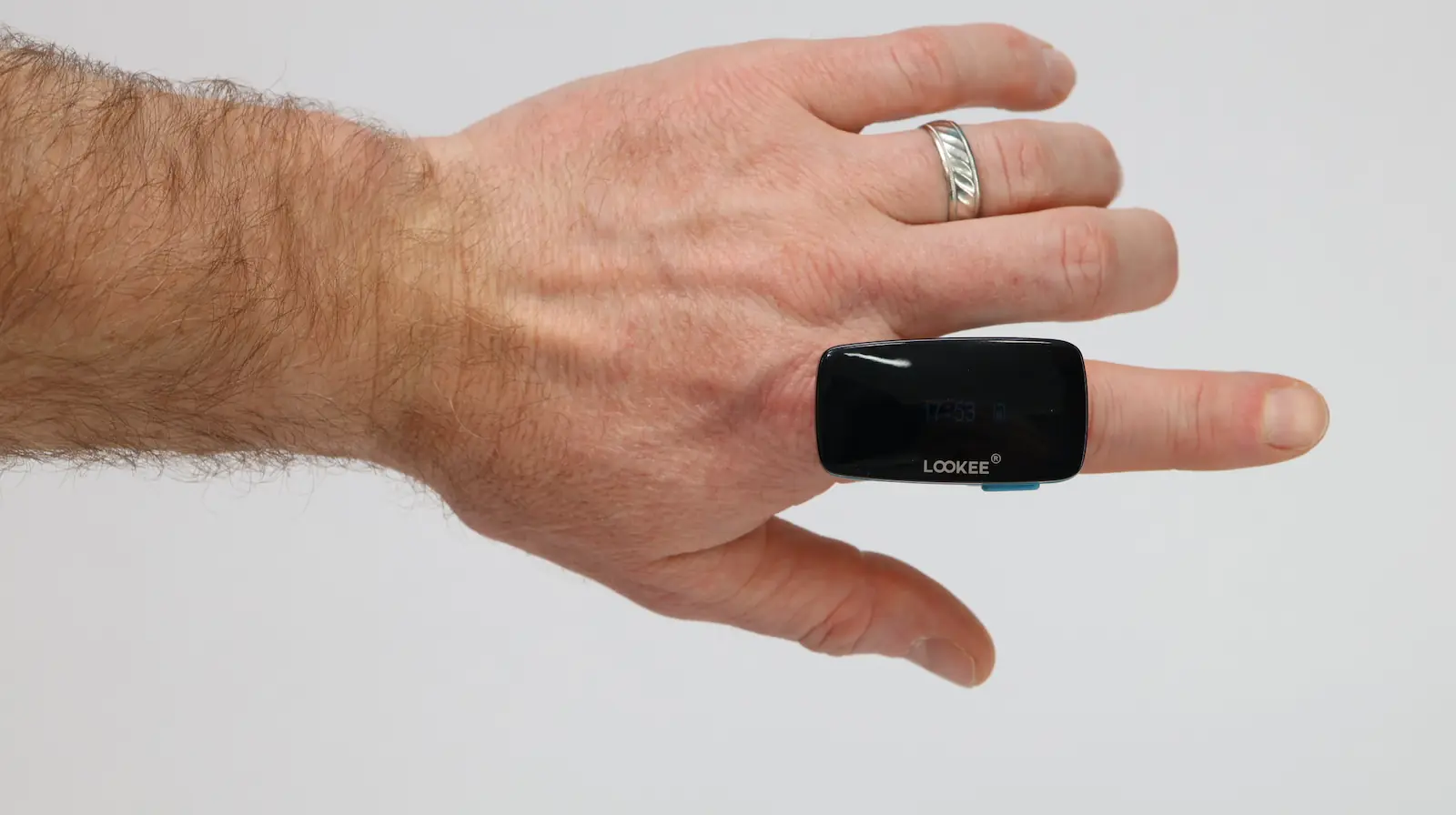
If you are a light sleeper who wants the most compact device while having reliably accurate data at the same time, I would recommend you grab this one.
Most Comfortable
LOOKEE Ring
Top-tier on the fundamentals: 93/100 on our O2 Score accuracy test, fully wire-free, binary export that drops straight into OSCAR, and the smallest footprint of anything we’ve tested — which makes it the pick for light sleepers. Tactile power button and a vibration alarm round it out.
Trade-offs are minor: smaller battery means daily charging, and it can rotate on very thin fingers overnight.
Best Battery Life: Wellue Checkme O2 Ultra
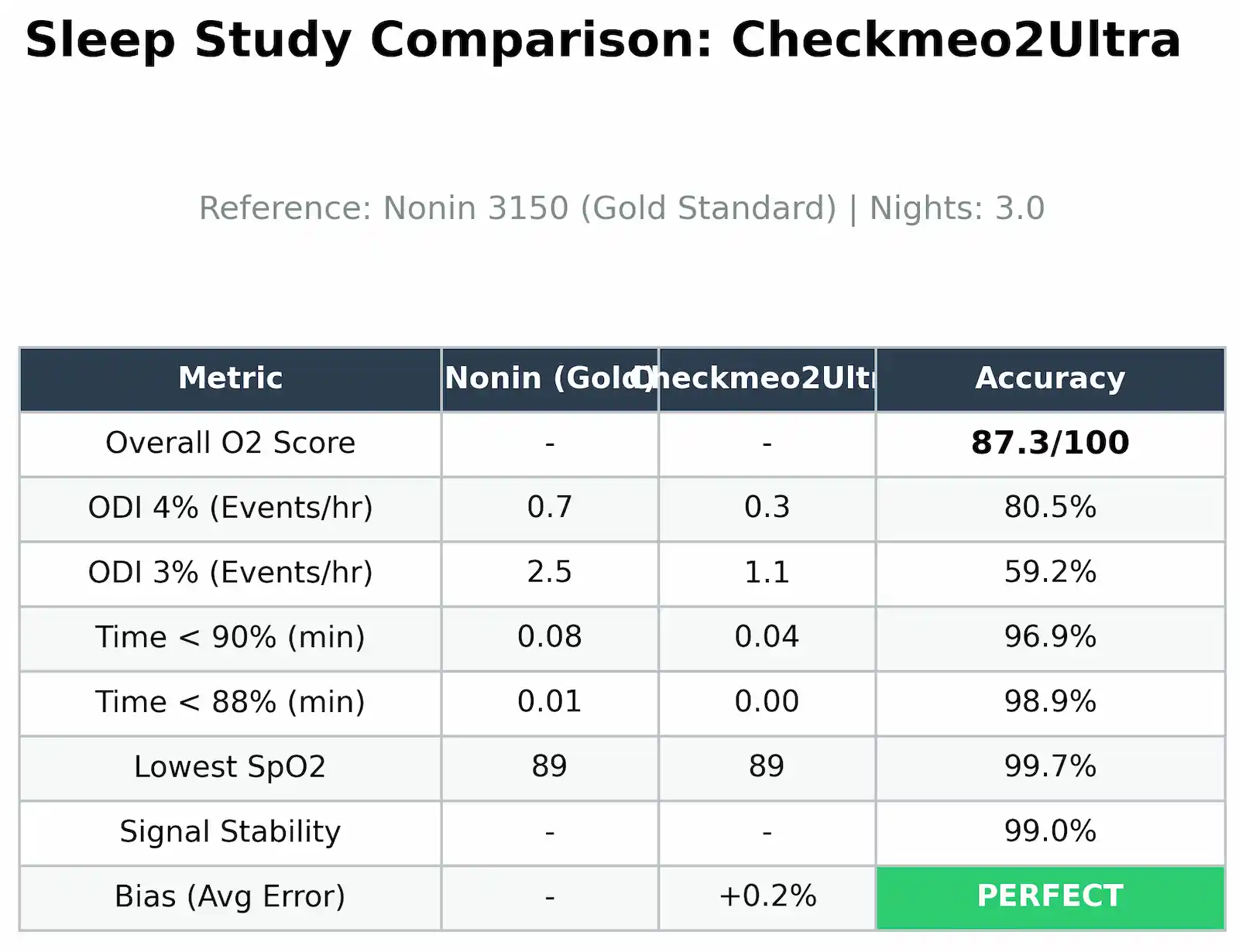
The Checkme Ultra is the newest kid on the block in the Checkme family. Scoring a solid 87.3/100 on our Overall O2 Score for accuracy while presenting a monster of a battery. The overnight power plant is what I would call it.
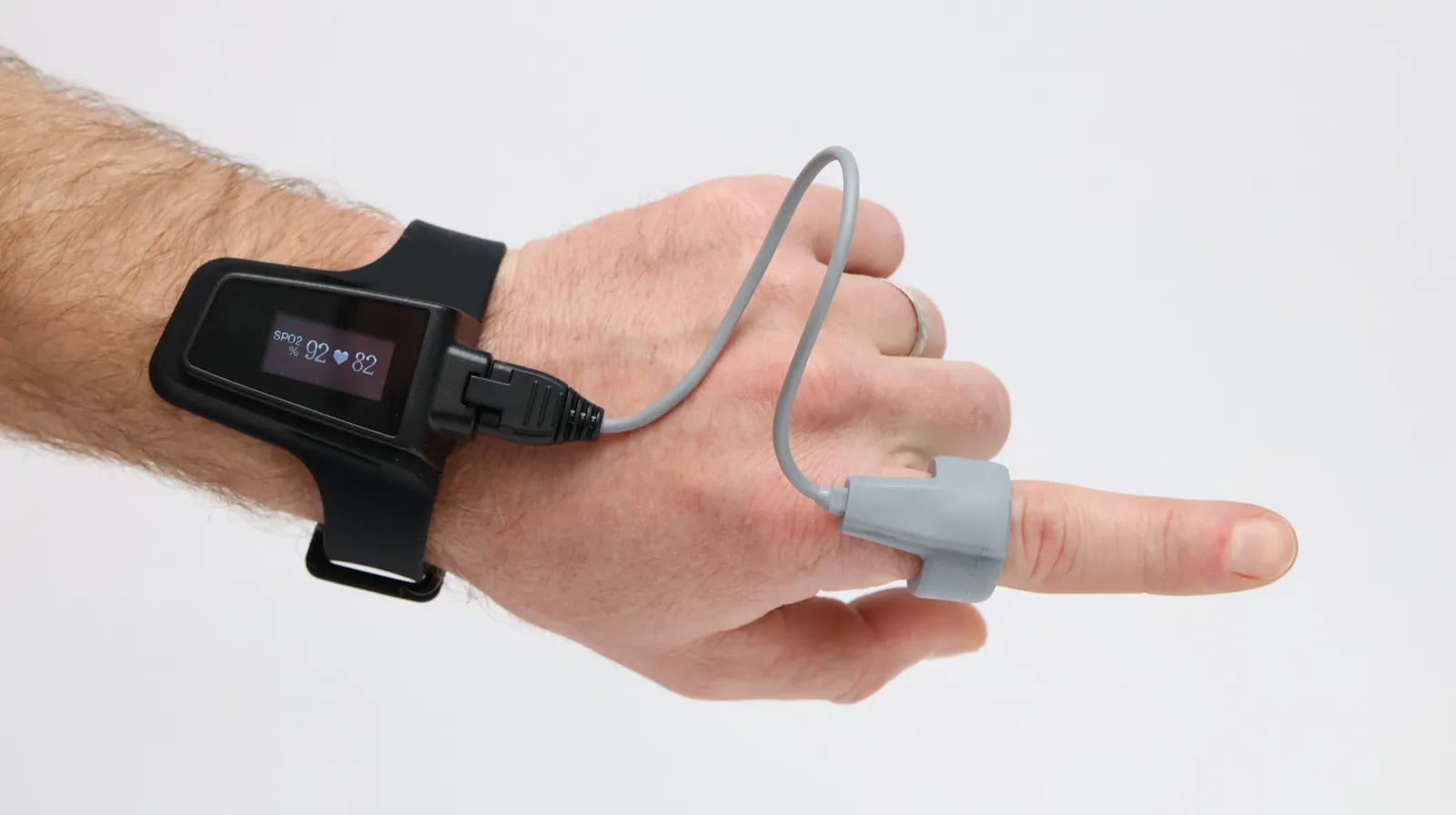
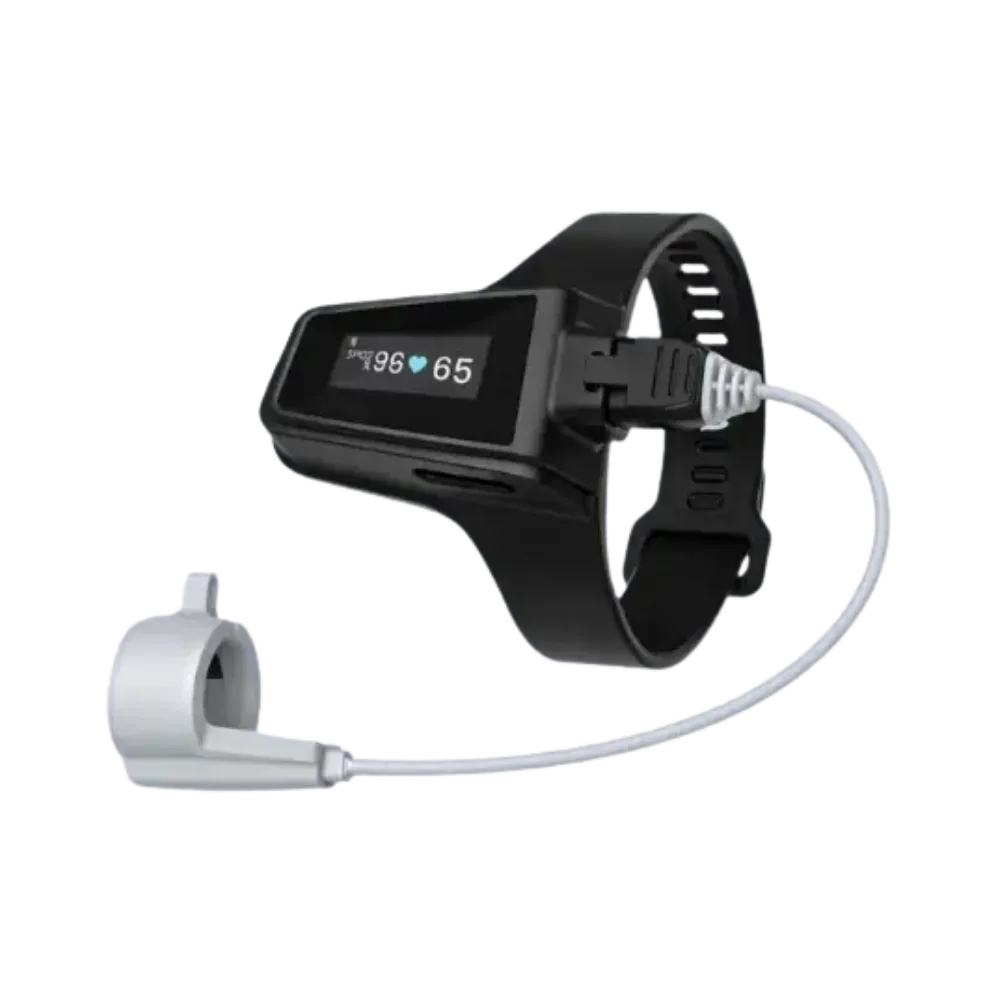
The Ultra’s wrist device is slightly larger than most. The tradeoff though is the incredible 100+ hour multi-day capacity. In other words, you can record four 12-hour nights of sleep on a trip without even needing to pack your charging cable.
The Ultra also uses a super convenient snap magnetic charger, unlike the traditional delicate plug-ins. This charges to full in a lightening fast two hours!
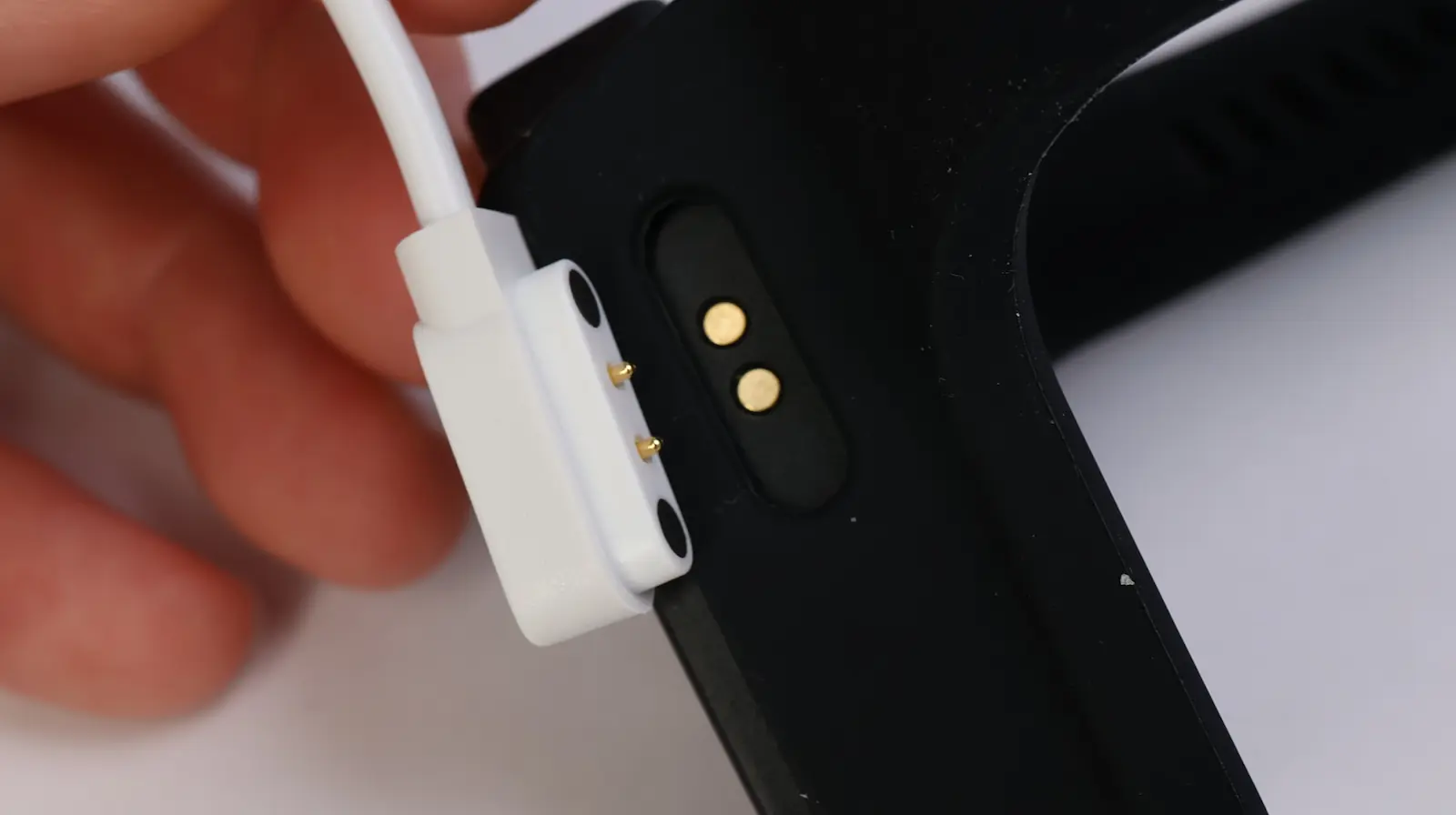
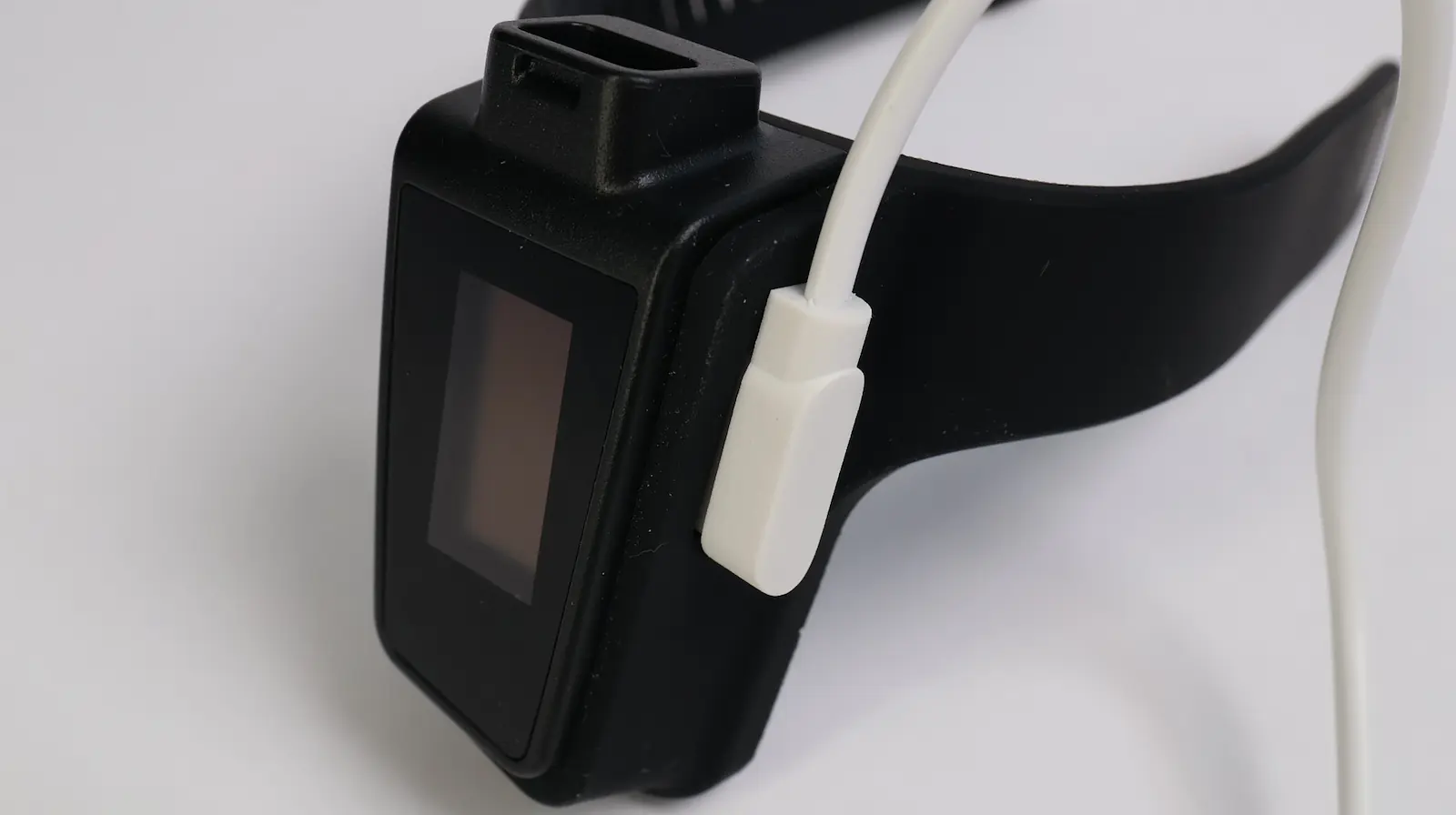
In the app you can adjust the sample rate interval from 1 second to 4 seconds, depending on how detailed you want your data. I would recommend keeping it at 1 second.
How is this different than the Max? Honestly, you will think this is the commercial version in the Checkme line up. Everything just feels beefier. Look at the connector for the ring, it does not just push in, it has a robust safety clip that firmly snaps in. If you move a lot while sleeping you will appreciate the robustness of the connections. The Ultra still offers the premium ViHealth app integration, 1 second sample interval, desktop software access, and a innovative smart alarm that makes this oximeter stands out. Lastly, if remembering to charge your device often is a issue for you, this overnight power plant is the pulse oximeter for you!
Best Battery Life
Wellue Checkme O2 Ultra
Feature-rich on paper: 87.3/100 on our O2 Score test, 1-second sample intervals, four nights of onboard memory, a magnetic charger that tops up in two hours, exports to CSV, PDF, and binary, plus a per-night sleep report.
Trade-offs are weight and price — it sits heavy on the wrist and costs more than most in its class.
Best Smart Alarm Value: Vibeat OxyU
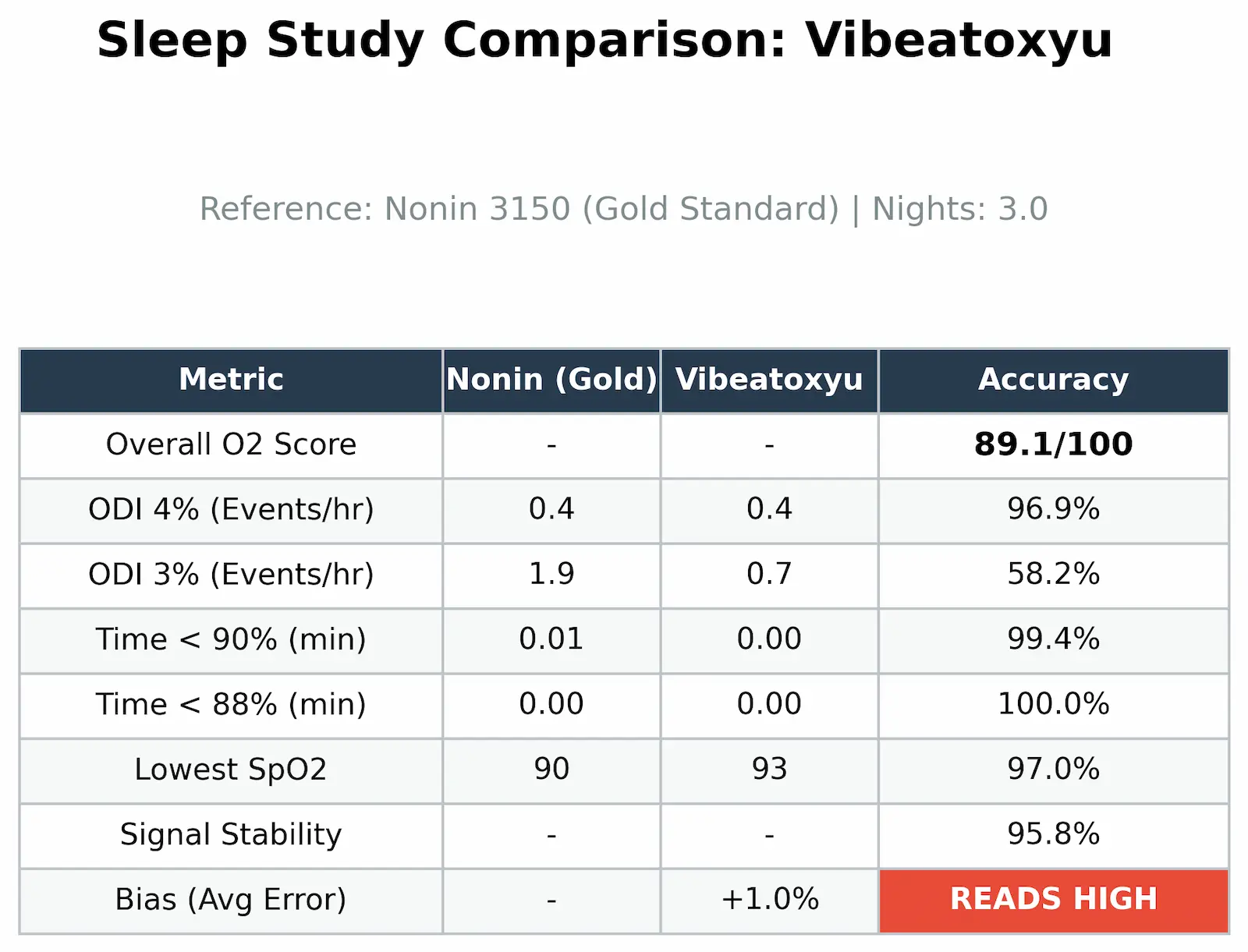
The OxyU is Vibeat’s middle-ground offering. While scoring a whopping 89.1/100 on our Overall O2 Score, OxyU’s combination of premium features and affordability provides a heck of a nice overnight pulse oximeter.
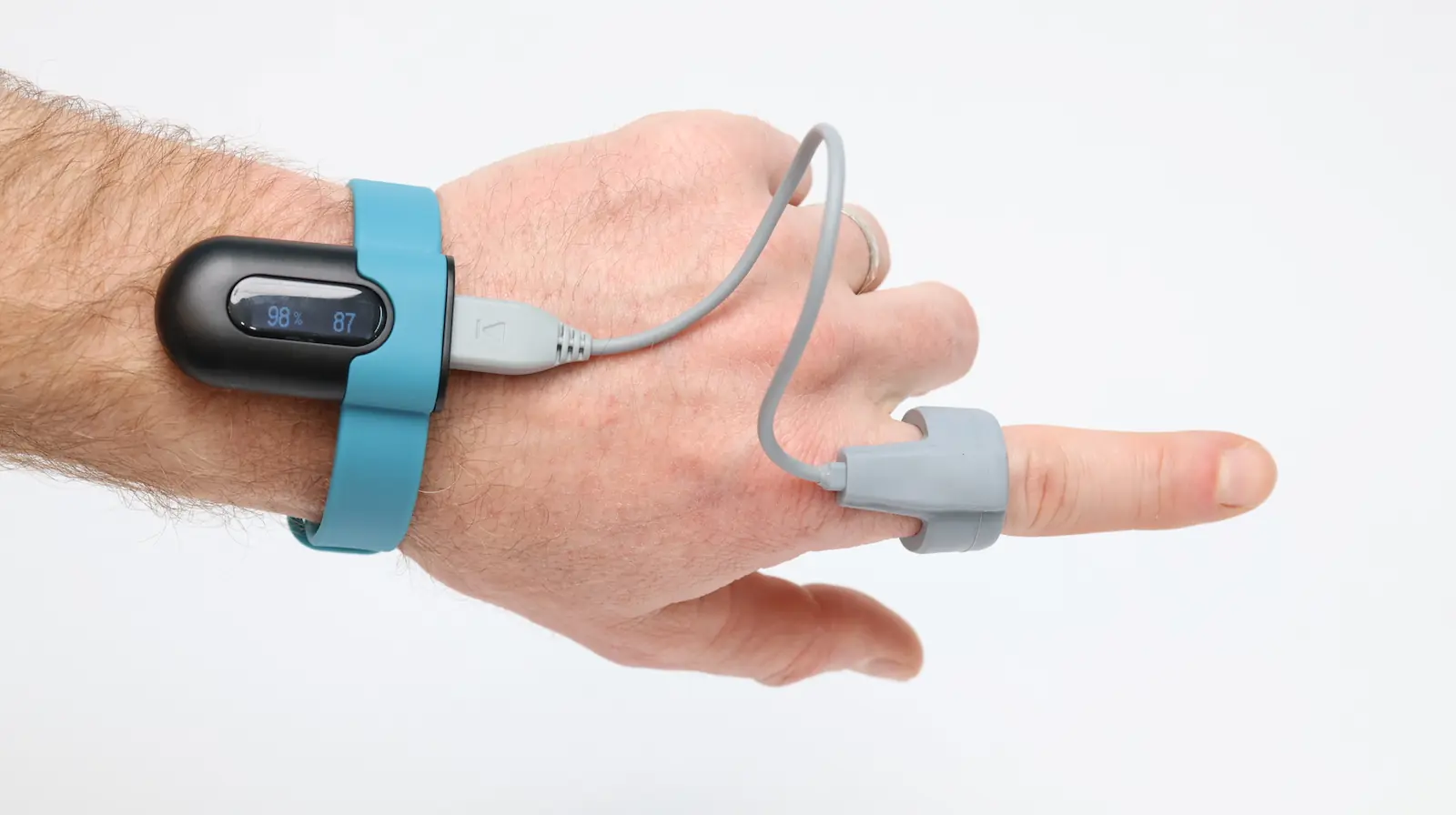
Right off the bat, you get the premium feature of the adjustable smart vibration alarm without the expensive price tag. Additionally, you get access to the Vihealth app with PDF, CSV, and Binary export files for OSCAR integration.
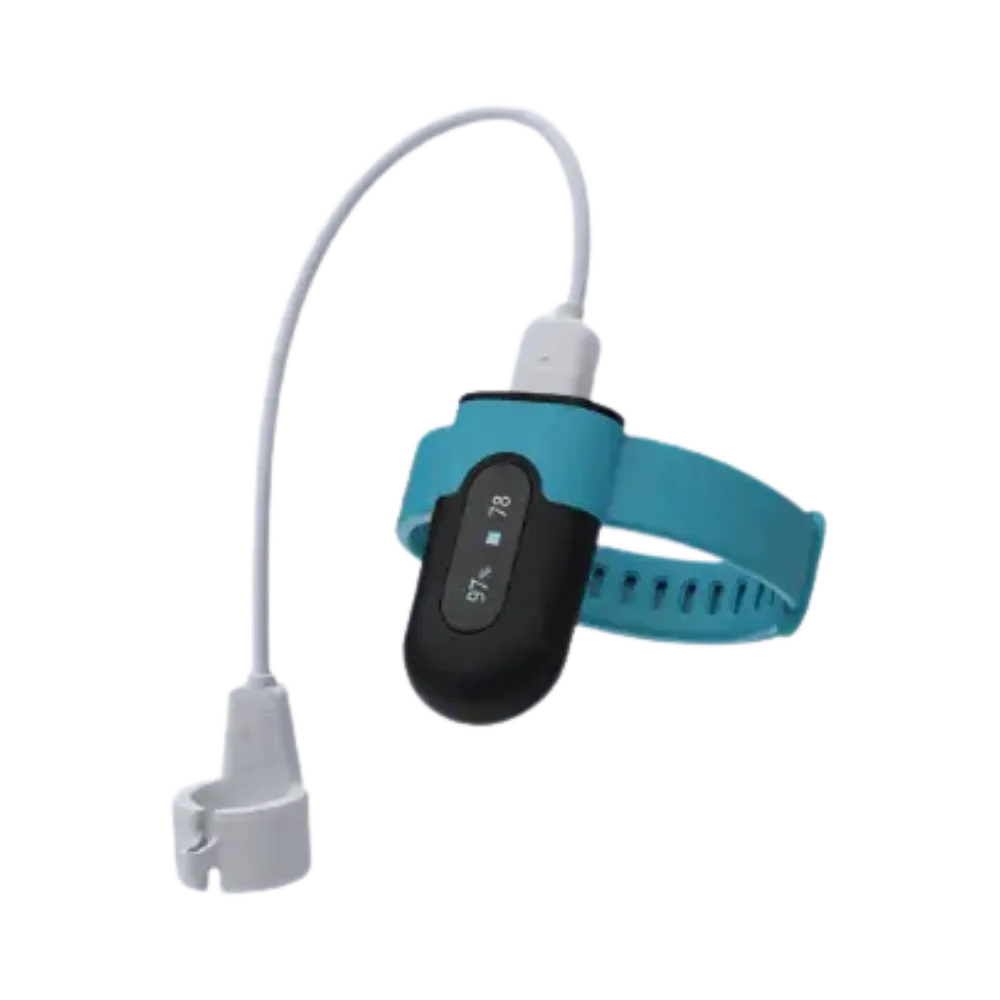
The OxyU also feels incredibly sleek and aerodynamic on the wrist and weighing in at only 32g, making it the lightest wrist oximeter we tested. It offers a nice small screen that displays your SPO2 and HR. This shuts off after 2 minutes at night.
Overall, if you are looking for some high-end features, reliable accuracy for screening, and a compact wrist pulse oximeter without breaking the bank; this is the one for you!
Best Smart Alarm Value
Vibeat OxyU
Strong value pick: 89.1/100 on our O2 Score test, a smart vibration alarm with adjustable thresholds, binary export for clean OSCAR integration, an on-wrist OLED to check numbers at a glance, and premium features at a lower price than most.
Trade-offs are the slower 4-second sample interval, no desktop software, and a 16-hour battery that won’t make it through more than one night.
Frequently Asked Questions
Common questions about overnight pulse oximeters
Keep reading
 Pulse Oximeters
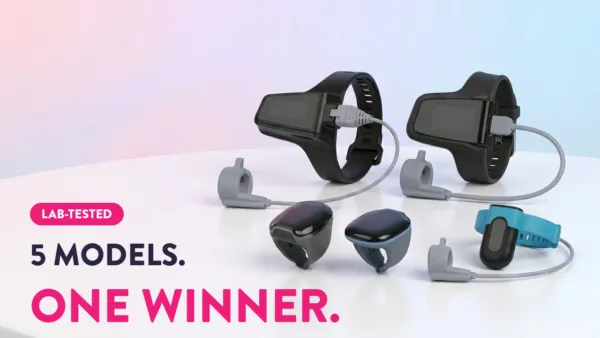
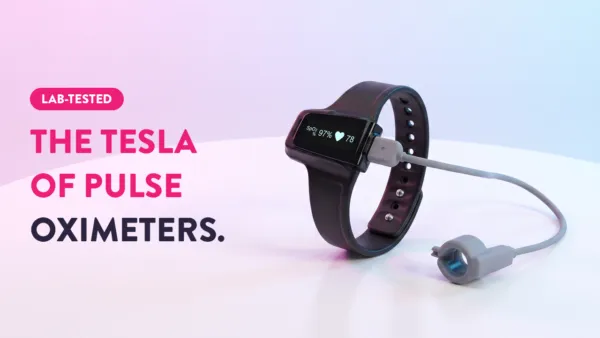
Which Wellue Oximeter Should You Buy? 5 Models Lab-Tested
 Pulse Oximeters
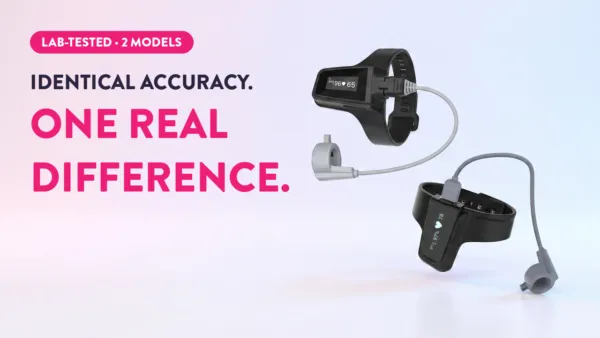
Checkme O2 Max Review: I Tested It for 3 Nights Against a $1,500 Hospital Oximeter
 Pulse Oximeters
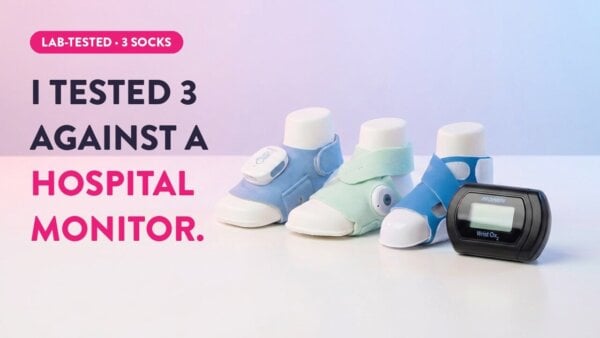
Checkme O2 Max vs O2 Ultra: I Slept in Both Against a $1,500 Hospital Oximeter
 Pulse Oximeters