
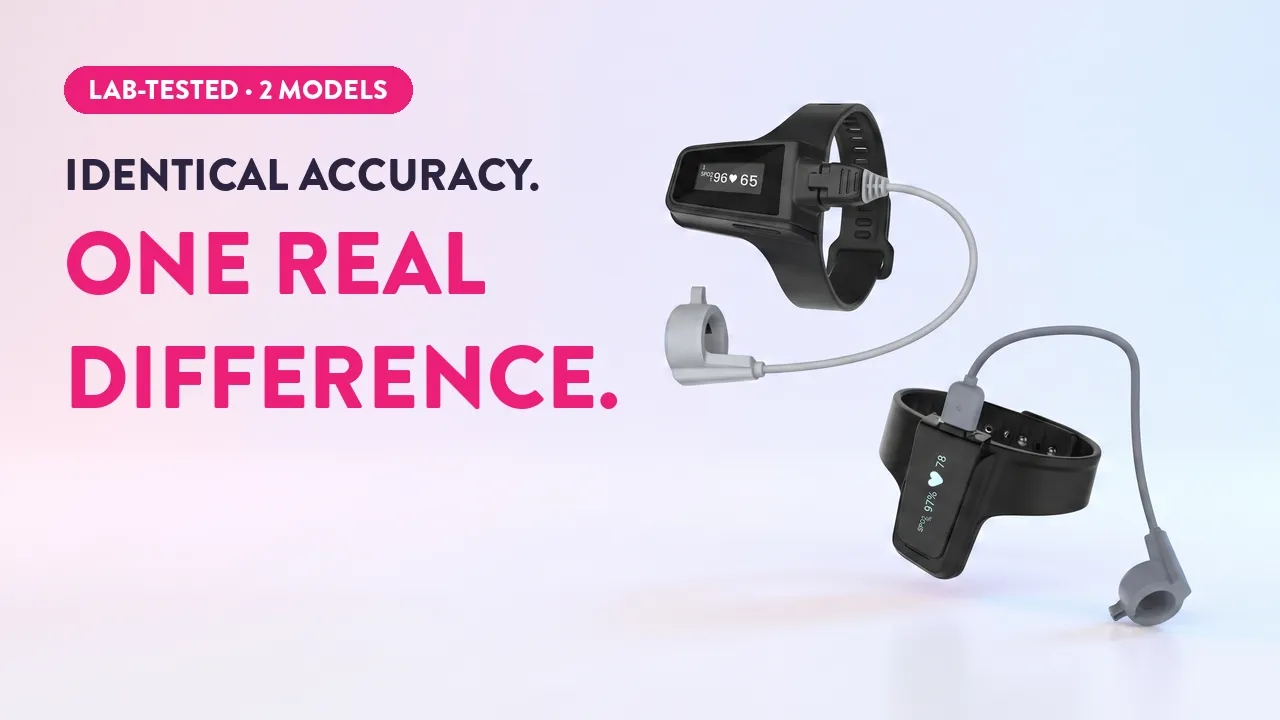

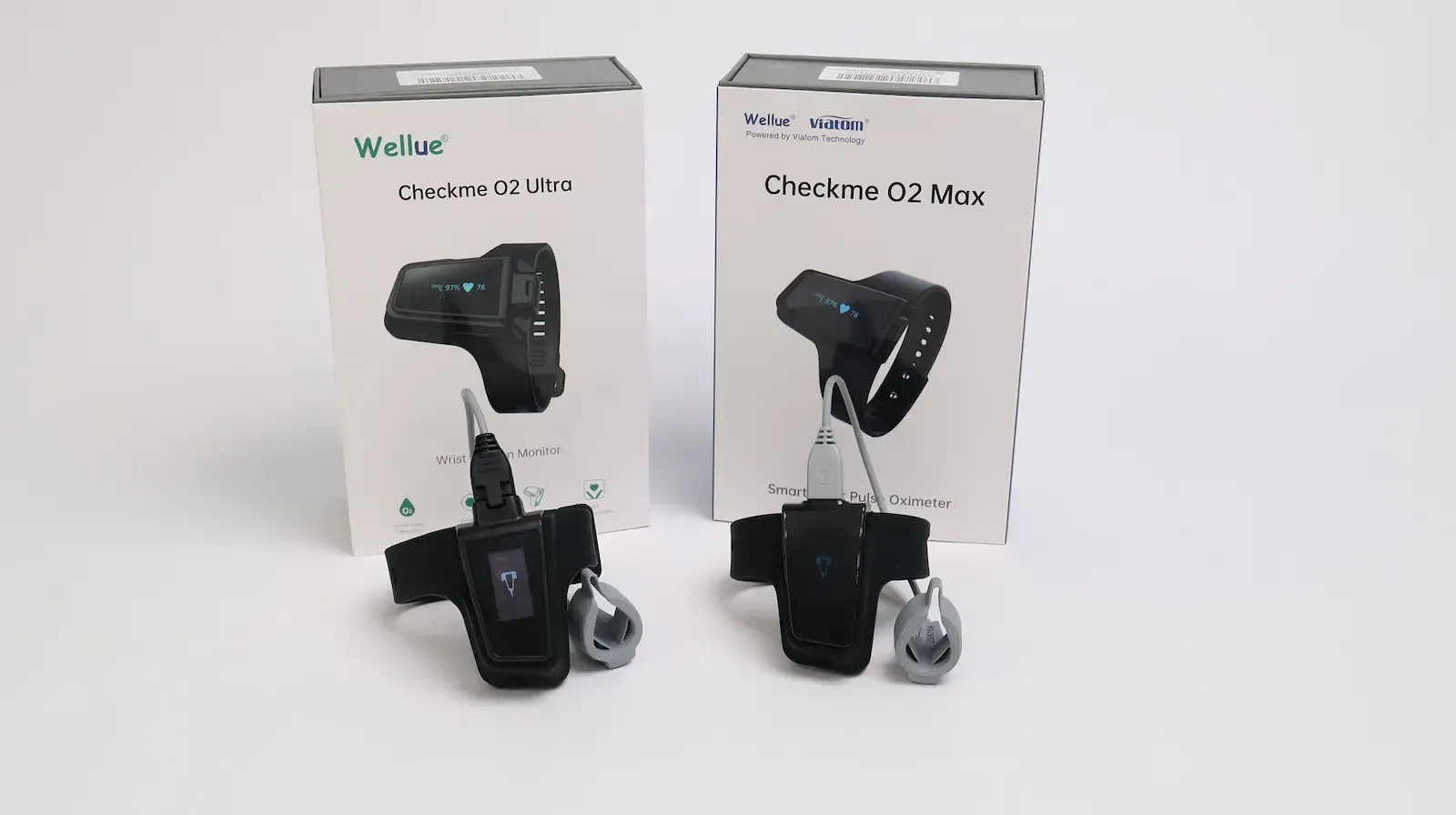
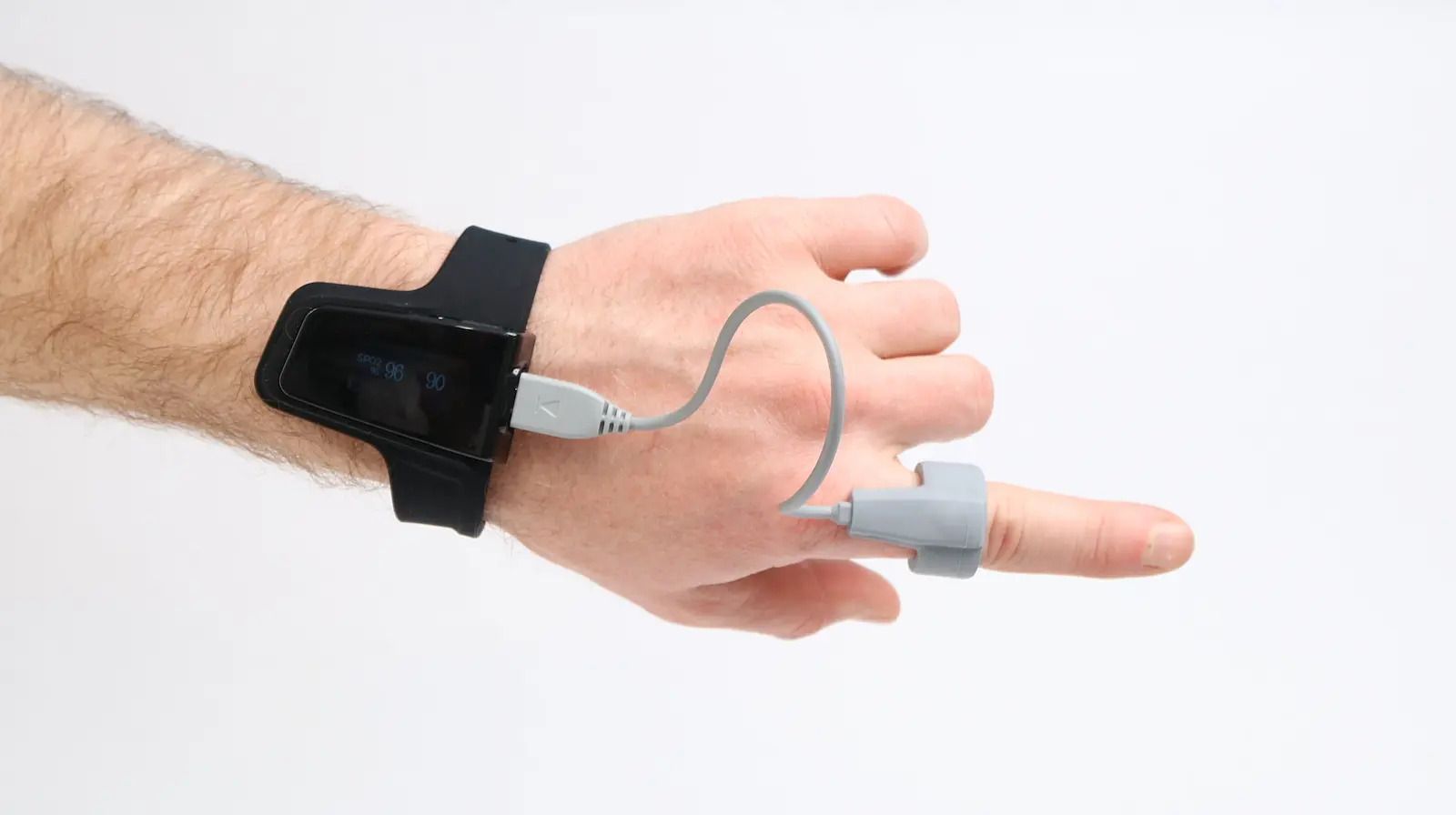
Checkme O2 Max vs Ultra is the closest call in the Wellue lineup. Two premium wrist oximeters that look nearly identical, cost about the same, and are separated by exactly one thing most people never think about. I wore both against a hospital-grade Nonin 3150 for three nights each, and here’s which one you actually want.
The Short Answer
Buy the Checkme O2 Max unless you need to record for more than three nights without charging. It’s the one carrying an FDA 510(k) clearance and it scored higher on my bench.
Buy the Checkme O2 Ultra if you’re tracking for days at a time. It records for 100 hours or more on a charge, it records at a finer 1-second interval, and it charges by magnet instead of plugging into a port.
That’s genuinely the whole decision. Everything below is the evidence.
Checkme O2 Max vs Checkme O2 Ultra
The pick: Two nearly identical wrist units, one real decision. The Checkme O2 Max is the default — FDA 510(k) cleared and 90.7/100 against a $1,500 hospital monitor. The Checkme O2 Ultra earns it if you record for more than three nights at a stretch: same +0.2% accuracy bias, a finer 1-second recording interval, a bigger battery and a magnetic snap charger.
The one-line call: the O2 Max is the better device, the Ultra is the better gadget. Buy the Ultra only if you record for more than three nights between charges.
Wellue
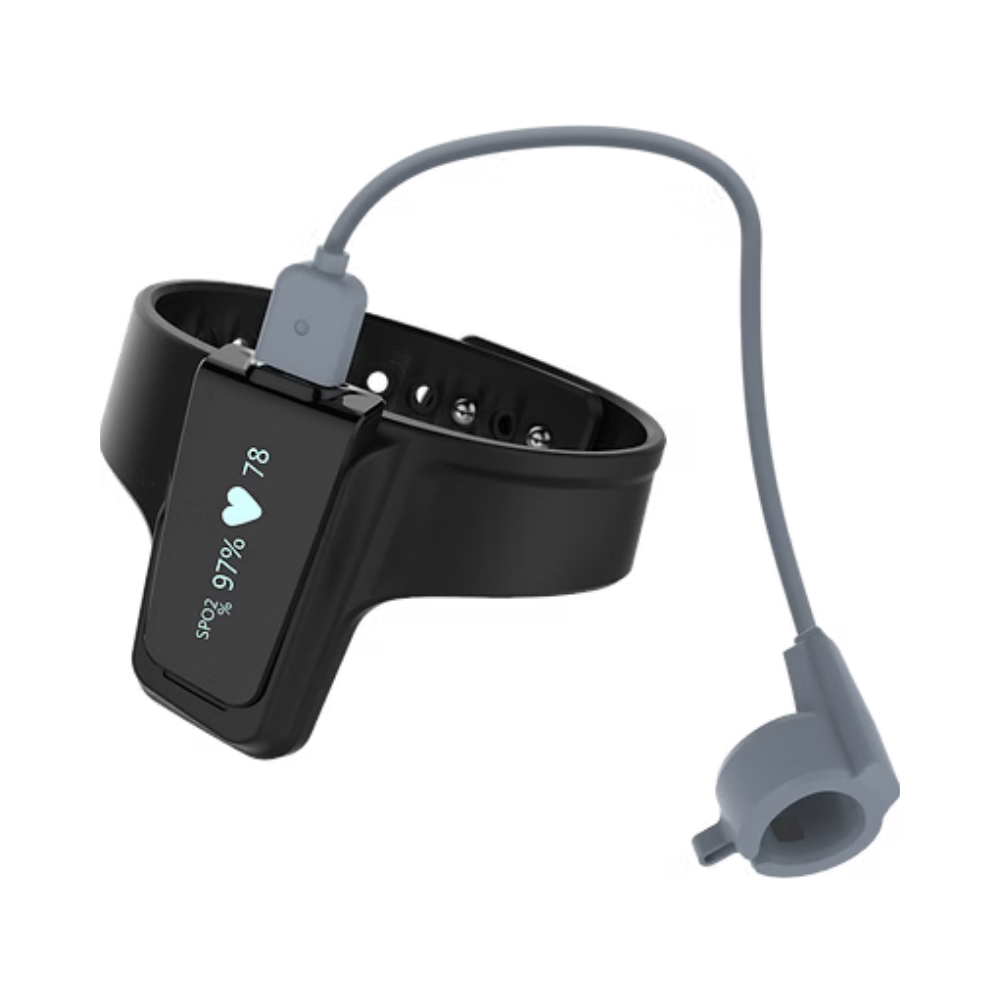
Checkme O2 Max
FDA-cleared. The accuracy pick.
wellue
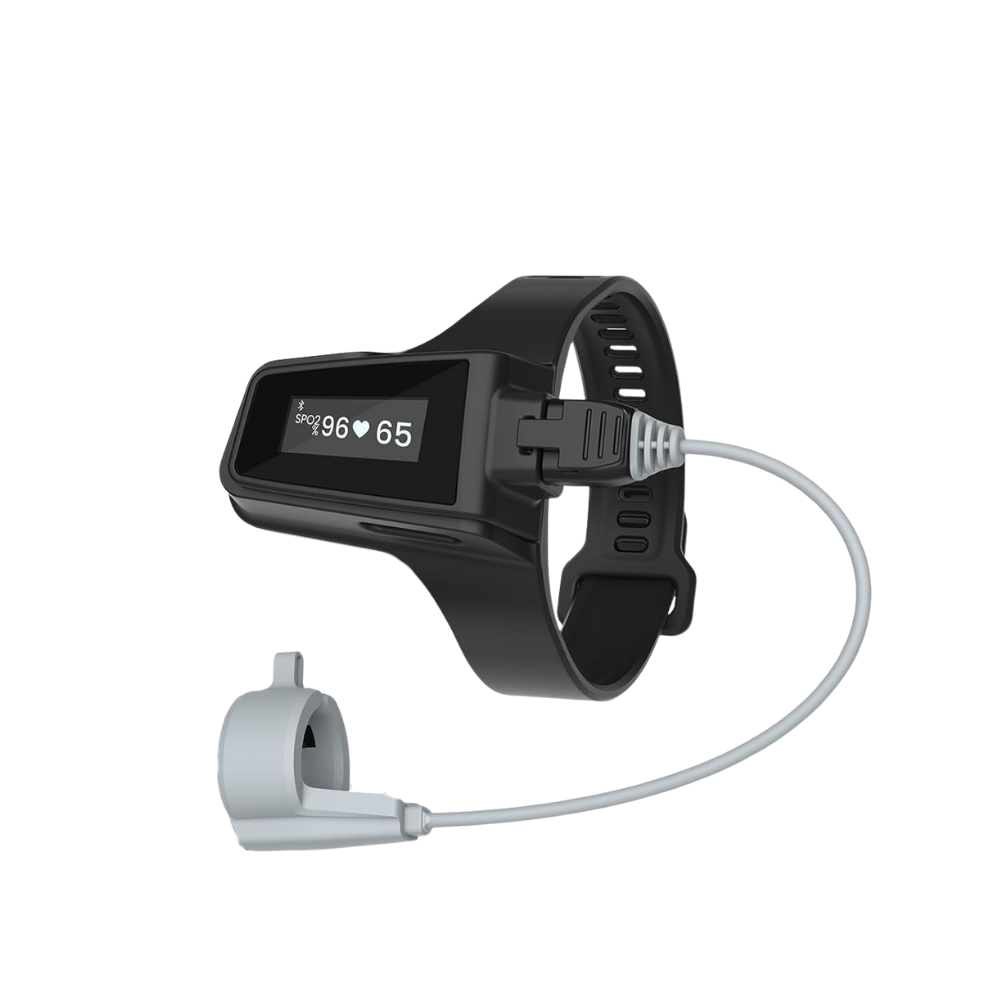
Checkme O2 Ultra
Four-day battery, best charger.
How I Tested These Two
Every number on this page came off my own wrist, not a spec sheet.
The reference is a Nonin 3150 WristOx2, an FDA-cleared hospital-grade monitor that costs about $1,500 — the same device sleep labs use. It goes on one hand, the device under test goes on the other, and both run all night. Every device in my lineup gets the same treatment: three full nights each, which is six nights across these two.
In the morning both files come off the devices and go through a Python pipeline that lines them up second by second. It scrubs physiologically impossible readings first (those are hardware error codes, not oxygen), finds the window where both devices were actually running, and cuts the first five minutes off both — that’s sensor warm-up and me falling asleep, and it isn’t a fair test of either device.
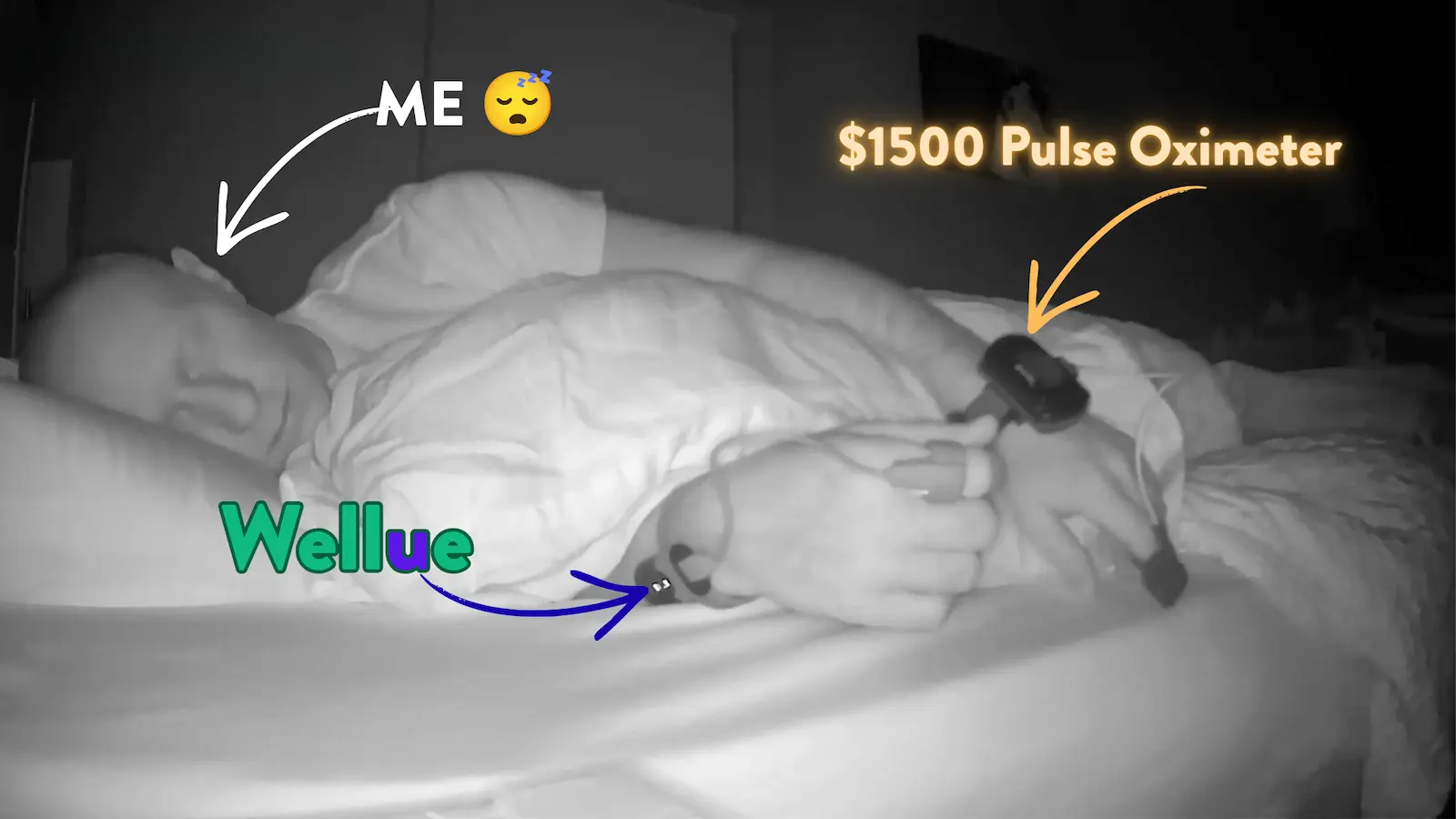
Then every Nonin timestamp gets matched to the nearest reading from the test device and compared, one pair at a time. Nothing is smoothed, averaged or estimated. For these two devices that came to 79,593 paired readings for the O2 Max and 88,699 for the O2 Ultra, about 47 hours of sleep between them.
The Overall O2 Score weights four things: 40% desaturation detection (how closely the device’s count of 3% and 4% oxygen dips matches the Nonin’s), 30% signal stability (the share of the night spent within ±2 points of the reference, which is the tolerance ISO 80601-2-61 allows a hospital oximeter), 20% nadir accuracy (whether it caught the night’s true lowest reading) and 10% time-under-90%.
One limitation I’ll name up front, because it shapes what this comparison can and can’t tell you: the two devices were tested on different nights, and my own oxygen wasn’t identical on those nights. That’s why I compare each device to the reference it actually ran against rather than to each other, and it’s covered in more detail below.
The full scoring breakdown for all fourteen devices I’ve tested lives in the continuous oximeter database.
Side by Side
Look at the top two rows for a second, because they’re the whole reason this comparison is harder than it looks.
|
Checkme O2 Max |
Checkme O2 Ultra |
|
|---|---|---|
|
Overall O2 Score |
90.7 / 100 |
87.3 / 100 |
|
Bias vs the Nonin |
+0.2% |
+0.2% |
|
Signal stability |
99.6% |
99.0% |
|
FDA 510(k) cleared |
Yes (Viatom K191088) |
No |
|
Battery |
72 hours |
100+ hours |
|
On-device memory |
4 records × 10 hours |
4 records × 12 hours |
|
Charging |
Port (shared with sensor) |
Magnetic snap |
|
Recording interval |
2 seconds |
1 second |
|
Comfort |
7/10 |
7/10 |
|
Export |
CSV / PDF / binary, OSCAR-ready |
CSV / PDF / binary, OSCAR-ready |
|
Alarm |
Vibration and sound |
Vibration and sound |
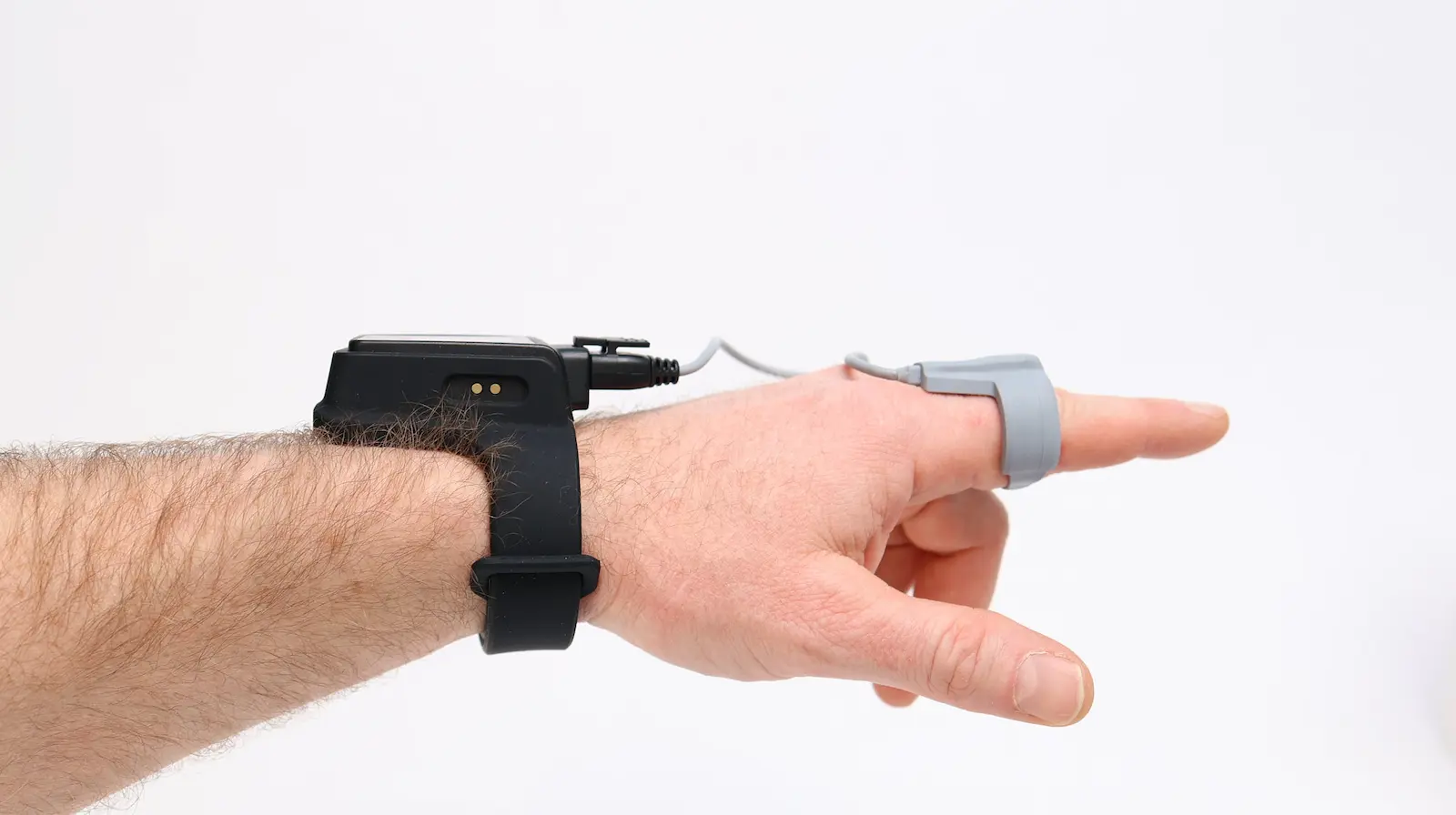
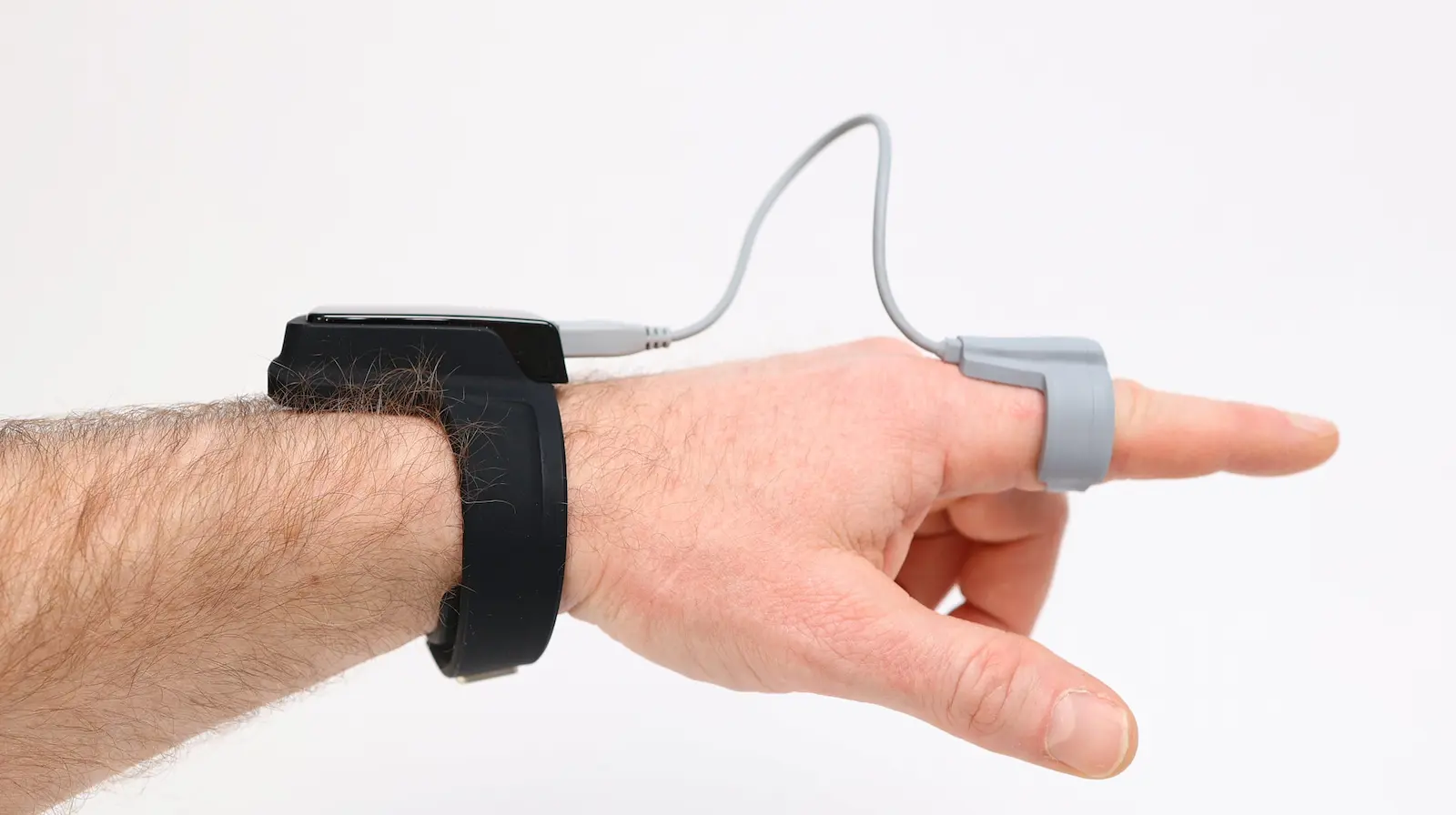
Both devices posted the same +0.2% bias. Not similar. The same. On the measure that matters most, whether a device systematically reads high or low, these two are indistinguishable, and both sit in the band I grade as perfect.
Where both land in the Wellue lineup. The gap between them is real, but it’s smaller than the gap between either one and the rings.
The Accuracy, Honestly
Here’s the O2 Max across three nights, plotted as its gap from the Nonin second by second.
The O2 Max. Three nights of per-minute deviation, with the ±2-point agreement band in green.
And here’s the Ultra, same test, same reference, same three-night structure.
The Ultra. Same story, one visible excursion on Night 2 where it ran about 3.5 points high for a few minutes.
How to Read this Chart
Think of each line as one night’s report card.
- The Center Line (0): A perfect score. At that moment the device matched the hospital-grade Nonin exactly.
- The Green Band (+2 /-2): The guard rails. Hospital oximeters are themselves allowed a ±2-point tolerance, so as long as a line stays inside the band, the device is tracking the medical equipment as closely as medical equipment tracks itself.
- The Night Buttons: Each colored line is one full night. Tap a night above the chart to view it on its own — the Bias, Within ±2, and Worst Moment boxes below recalculate live for whatever you’re looking at.
- The Takeaway: Notice how the lines spend almost the entire night inside the band. That’s what reliability looks like.
They look alike because they largely are. The O2 Max held inside ±2 points of the hospital reference for 99.6% of the night; the Ultra managed 99.0%. That’s a difference of roughly three minutes across a full night’s sleep.
Where the two actually separate is the short stuff, and this is where I have to be careful with you.
The two devices were tested on different nights, and my own oxygen wasn’t the same on those nights. Across the O2 Max’s three nights the Nonin counted about 1.0 brief 3% dips an hour. Across the Ultra’s three nights it counted 2.5. Same reference device, same wrist, very different nights.
So I won’t put their dip counts side by side and call it a head-to-head, because it wouldn’t be one. What I can tell you is how each did against the reference it was actually measured against.
- O2 Max: the Nonin counted 1.0 short 3% dips an hour, the O2 Max logged 0.6.
- Ultra: the Nonin counted 2.5, the Ultra logged 1.1.
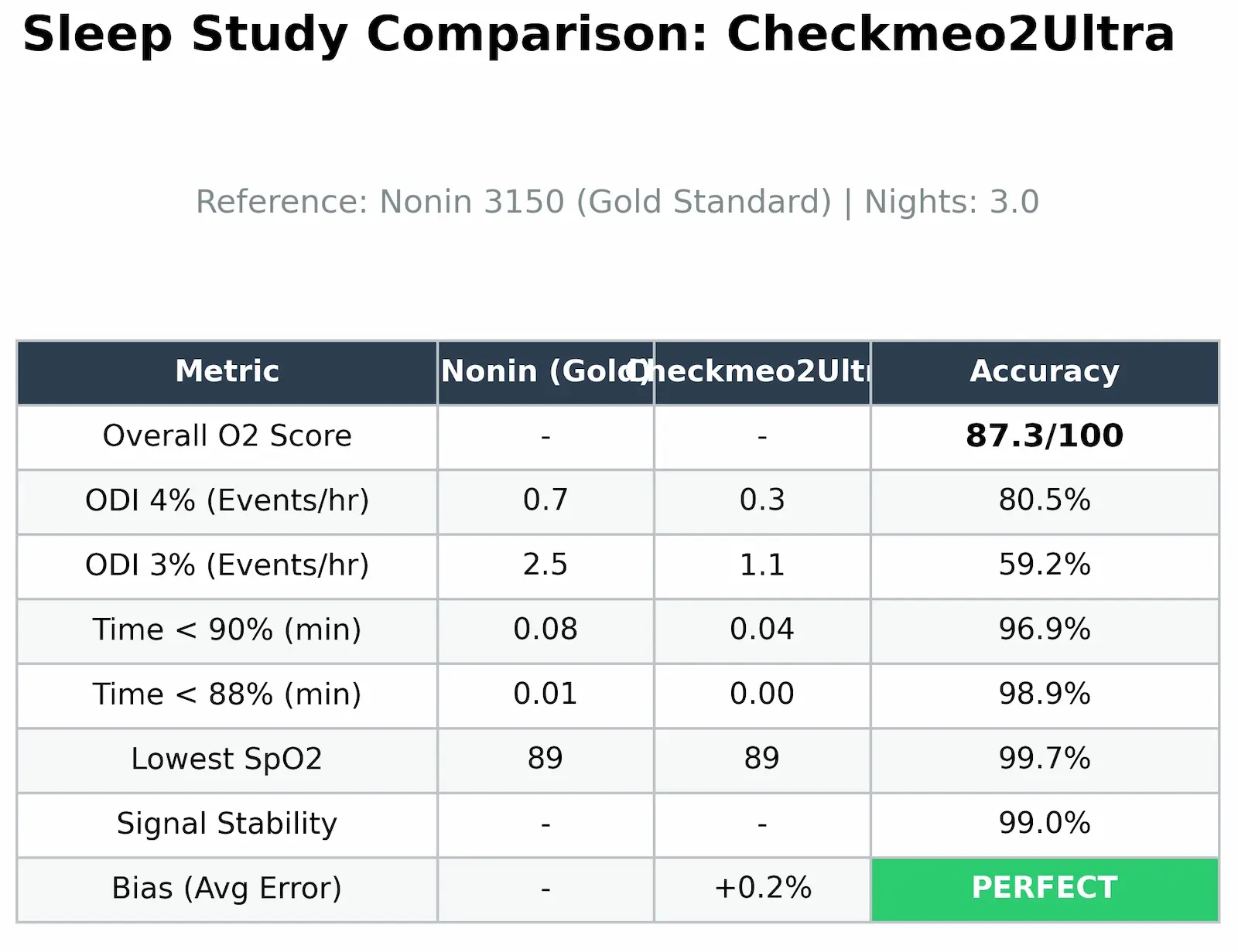
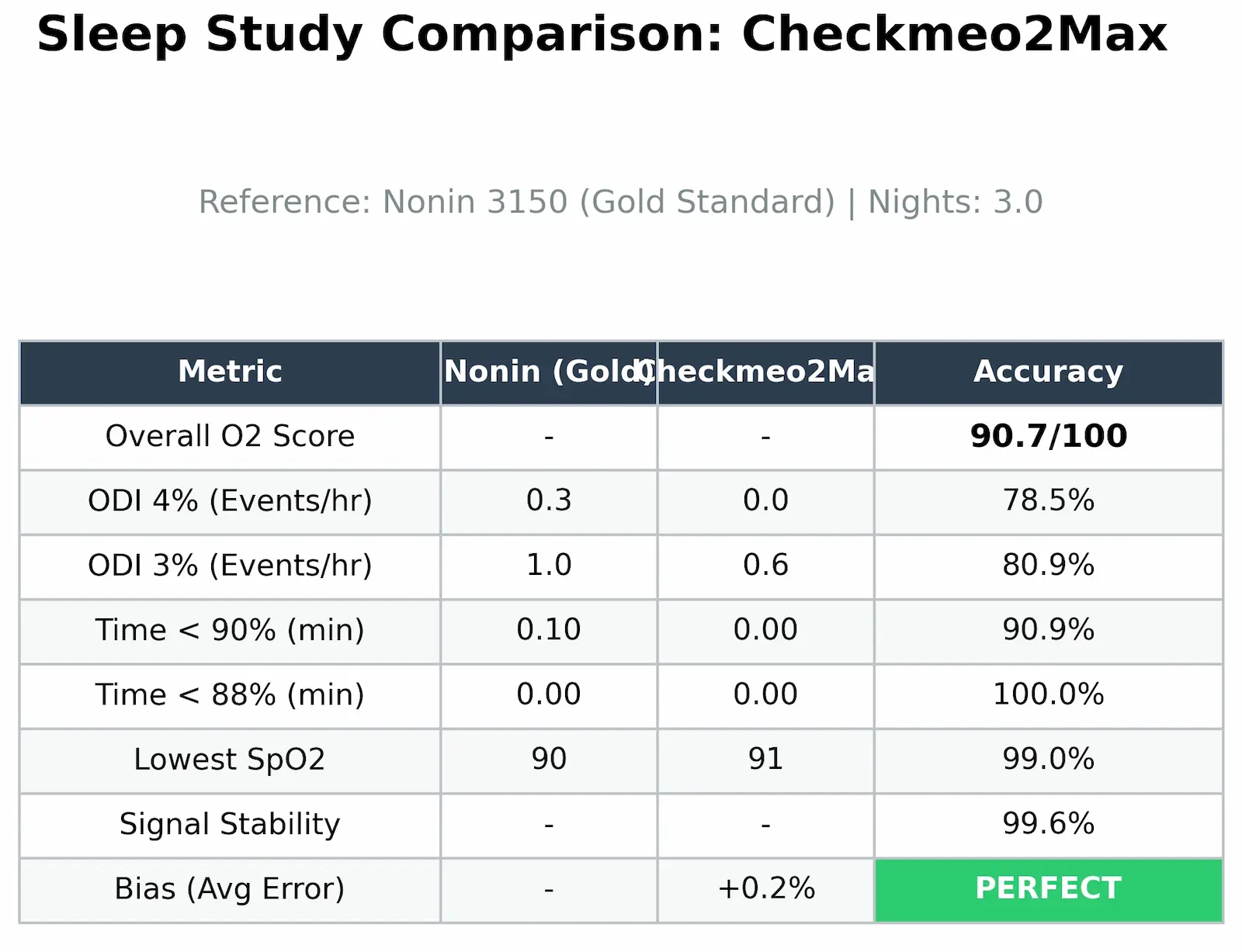
Directionally, both smooth the fastest drops and the Ultra smooths a bit more of them. That matches what the scores say and it matches how they feel to use. It is not a precise ranking, and anyone who gives you one from this data is guessing.
One more thing worth knowing, because it cuts against the scores. The Ultra records at a 1-second interval — I can see it in my own export, one row per second, 28,000 rows in a night. Wellue’s manual puts the O2 Max at 4 seconds and its product page says 2, and my exports were all 2 second intervals; either way, the Ultra writes down more, by 1 second.
Resolution and accuracy are not the same thing. The Ultra logs more data points per minute and still tracked the hospital reference slightly less closely across my nights. If you’re pulling the file into OSCAR and you want the finest-grained trace you can get, that’s a real point in the Ultra’s favor that the O2 Score doesn’t capture.
The Difference That Actually Decides It
The FDA clearance.
The Checkme O2 Max is cleared under Viatom’s 510(k) K191088. The Ultra isn’t. That clearance means the device met the FDA’s bar as a pulse oximeter — it doesn’t mean it diagnoses anything, and it isn’t a substitute for a sleep study.
But it changes the conversation in a doctor’s office. If you’re bringing overnight data to a clinician, or you’re the kind of person who wants the paperwork to exist, that’s a real difference and it’s the reason the O2 Max is my pick in the lineup.
The Difference That Might Override It
The battery, and it isn’t close.
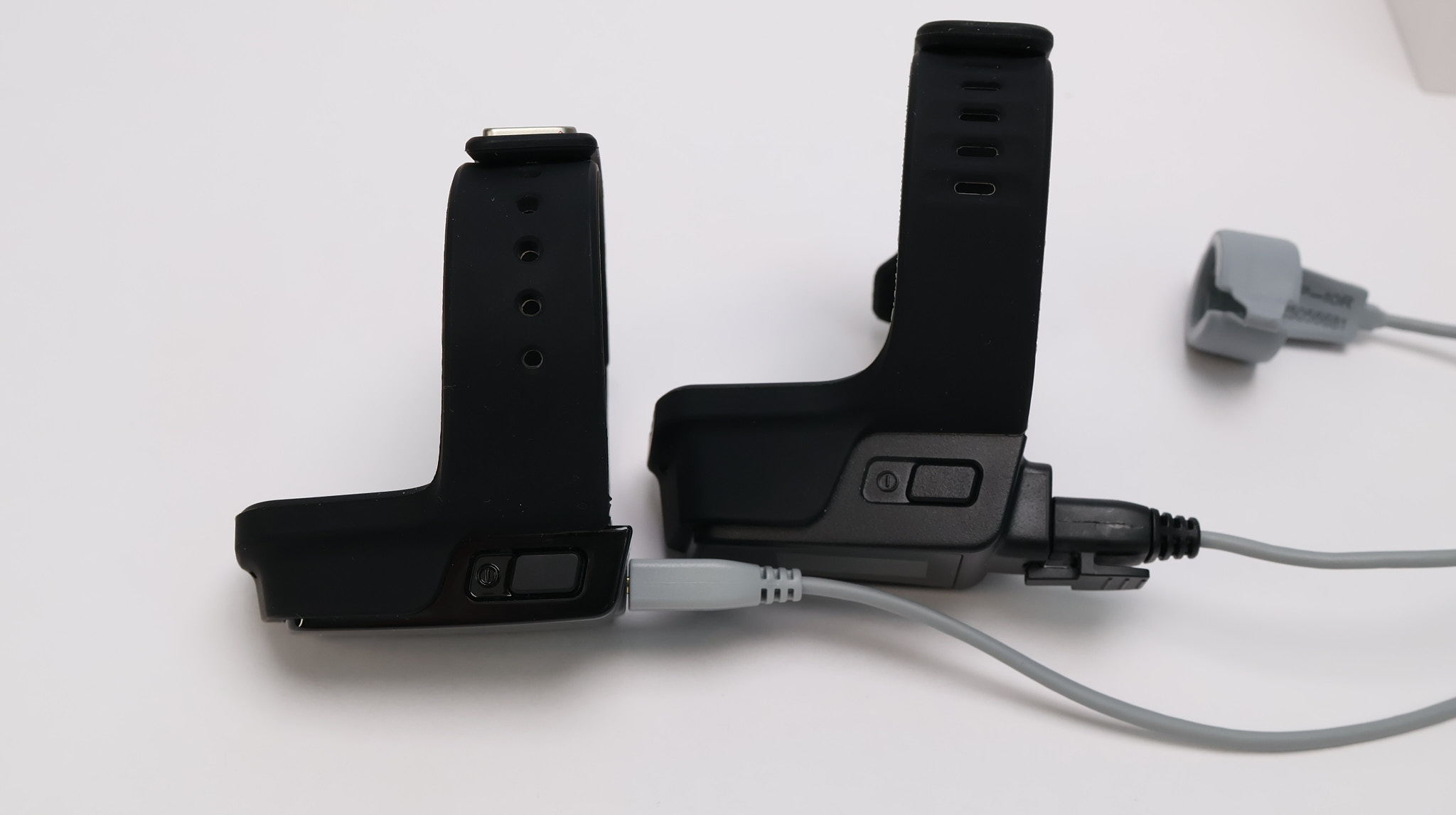
The O2 Max runs 72 hours — three full nights. The Ultra’s manual rates it at 100 hours or more, and it holds four 12-hour recordings on the device against the O2 Max’s four 10-hour ones. If you’re doing a week of tracking before a doctor’s appointment, or you travel and don’t want to pack another cable, that’s the difference between charging twice and not thinking about it.
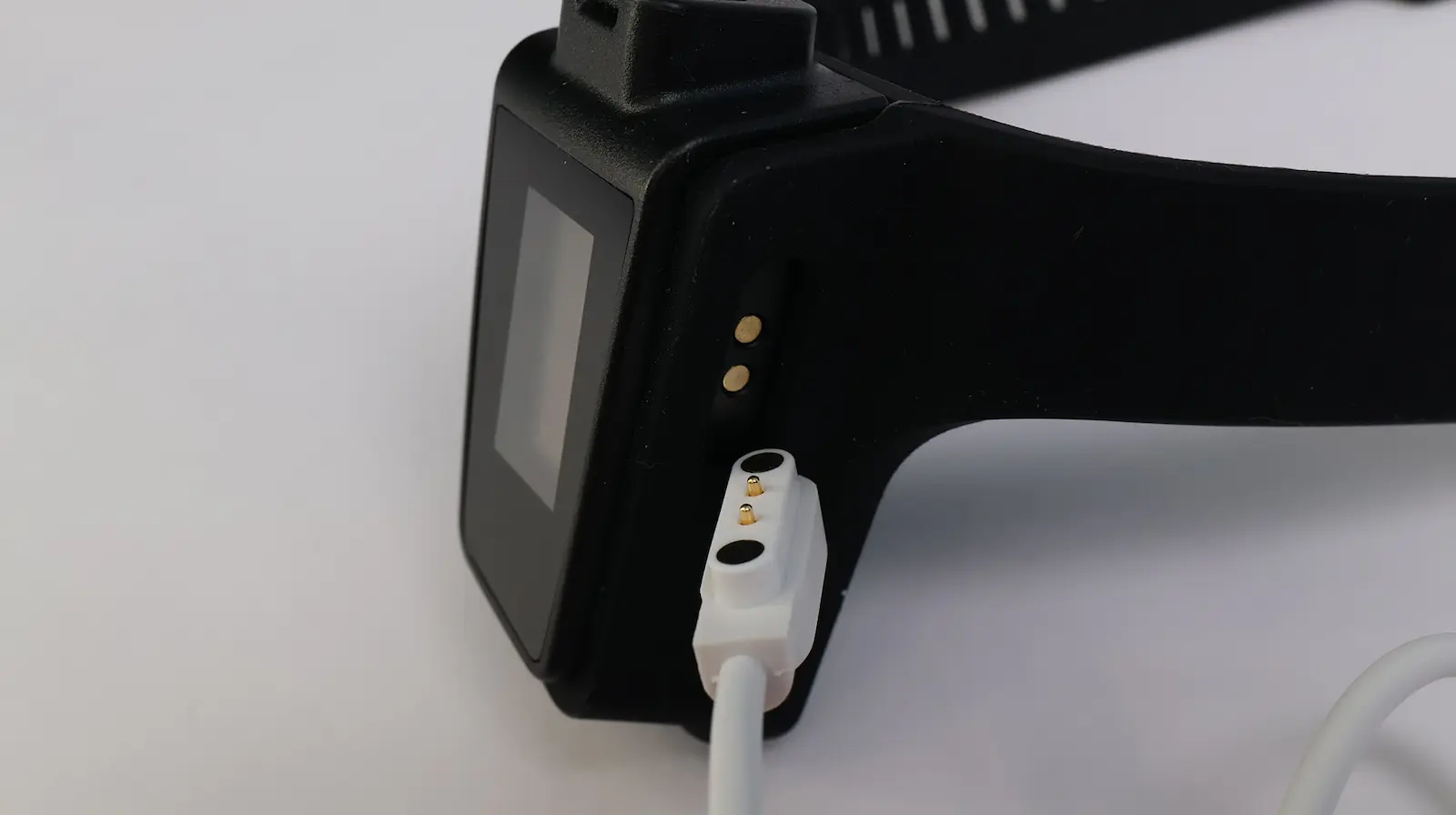
The Ultra also has the best charging solution in the whole Wellue range: a magnetic snap connector instead of plugging a cable into the same port the finger sensor uses. It’s a small thing that you notice every single day.
Everything Else Is a Tie
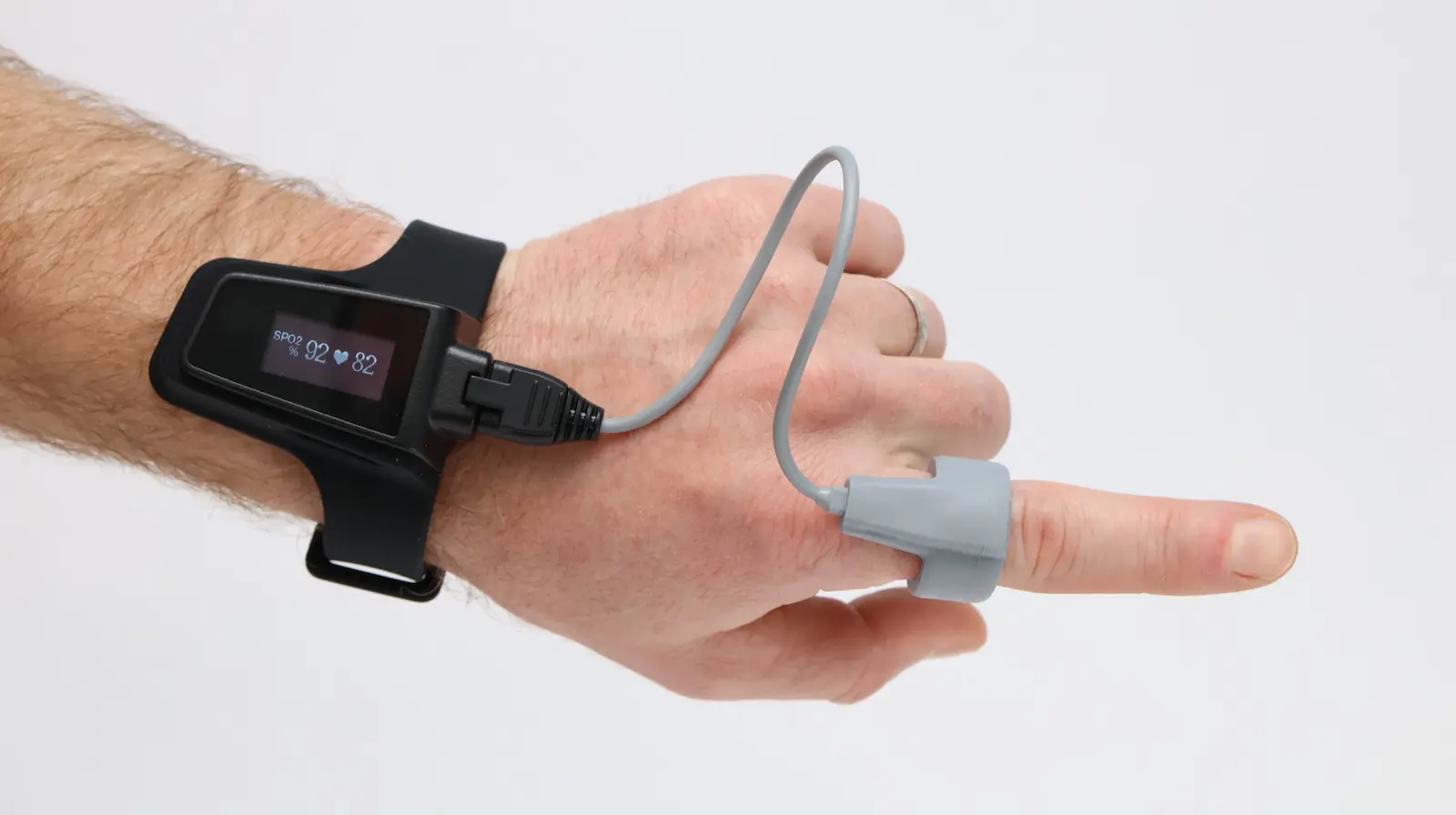
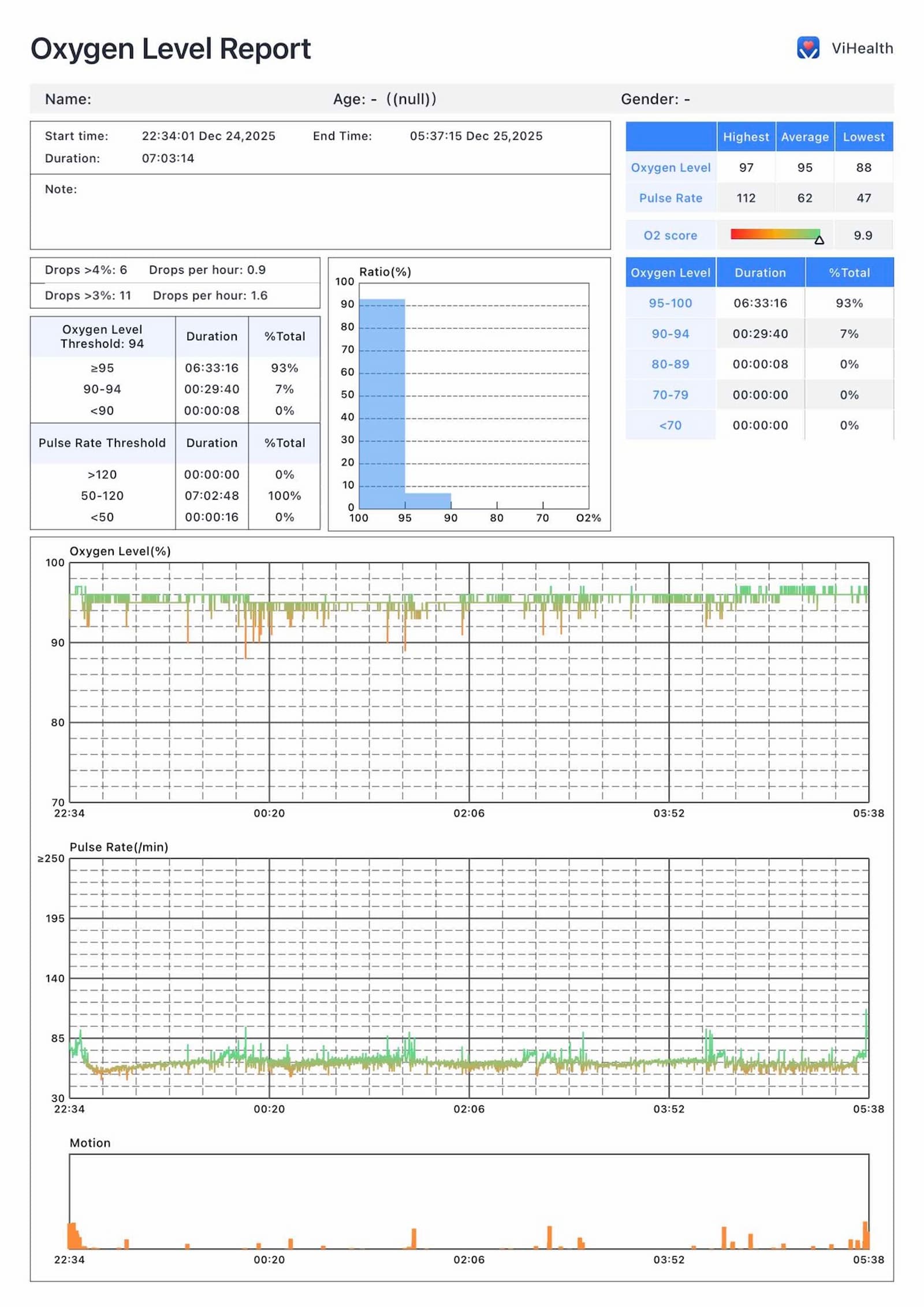
Both run Viatom’s ViHealth app, and it’s the same fast, no-subscription experience on each — pair in seconds, sync a night in ten, export as CSV, PDF or binary. Both drop cleanly into OSCAR for CPAP work.
Checkme O2 Max
Checkme O2 Ultra
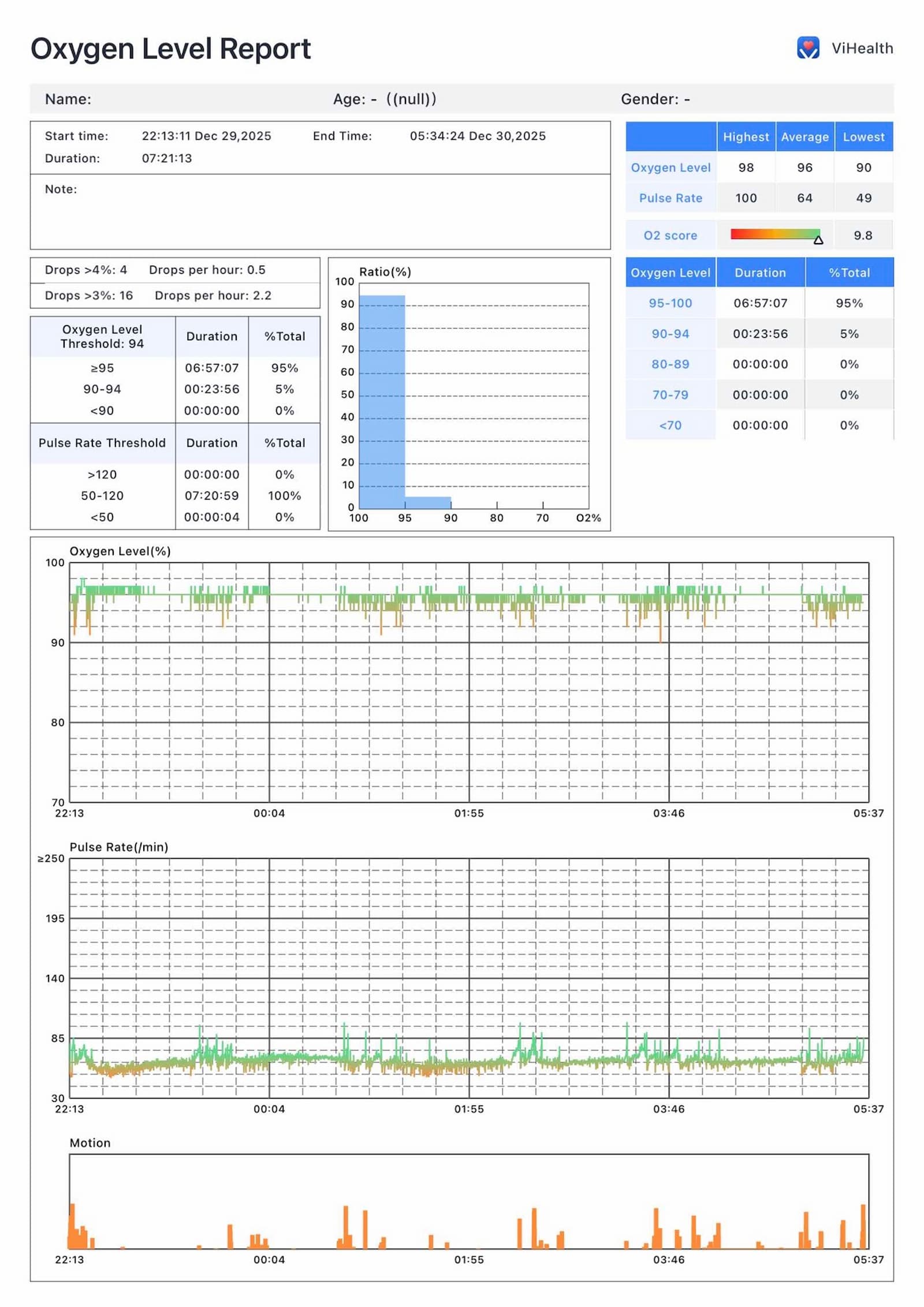
Both export the same summary report above.
Both use the same soft sensor at the base of the finger, which is why they both land at 7/10 comfort: bigger than a ring, but you can still curl your hand naturally.
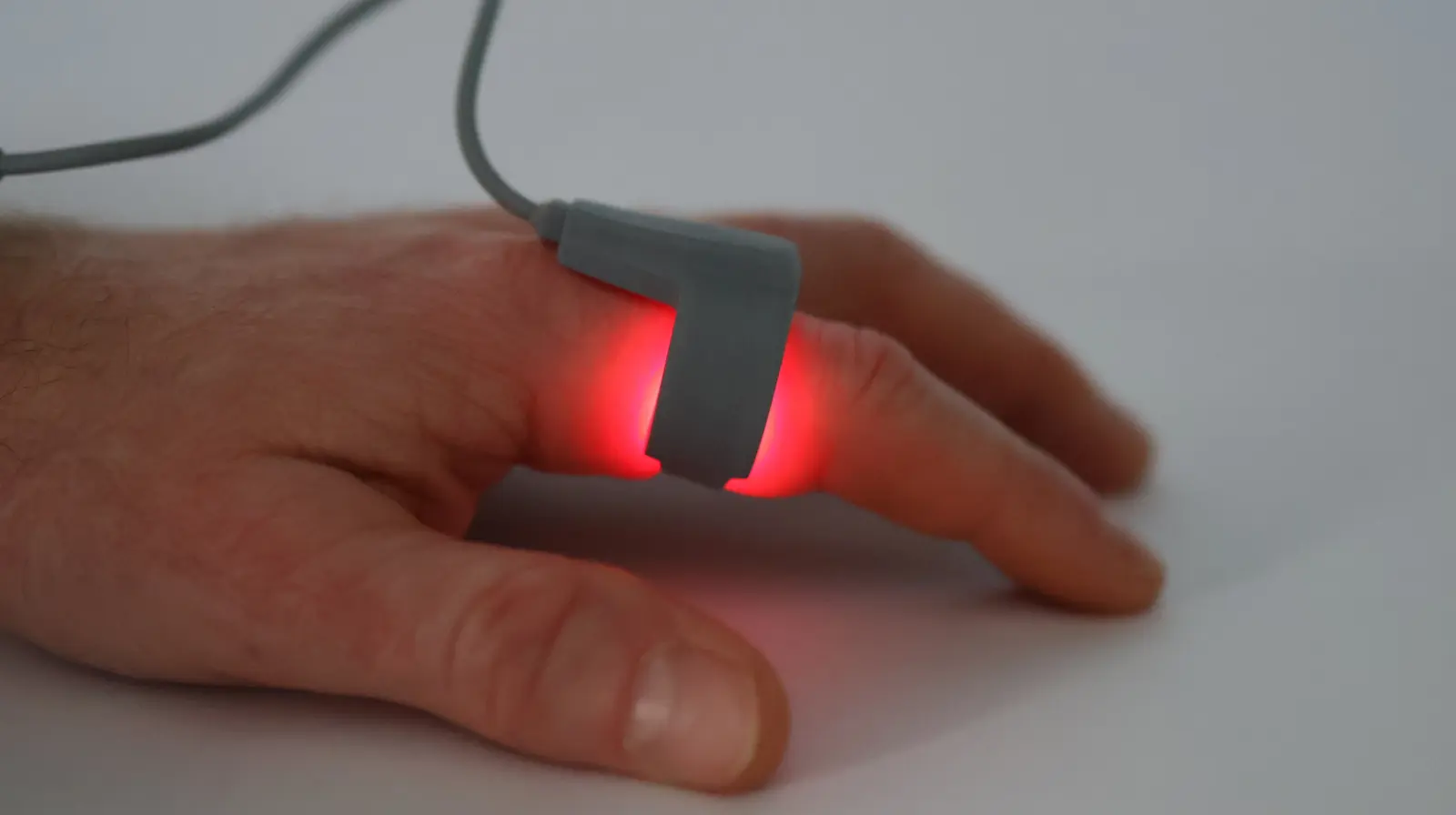
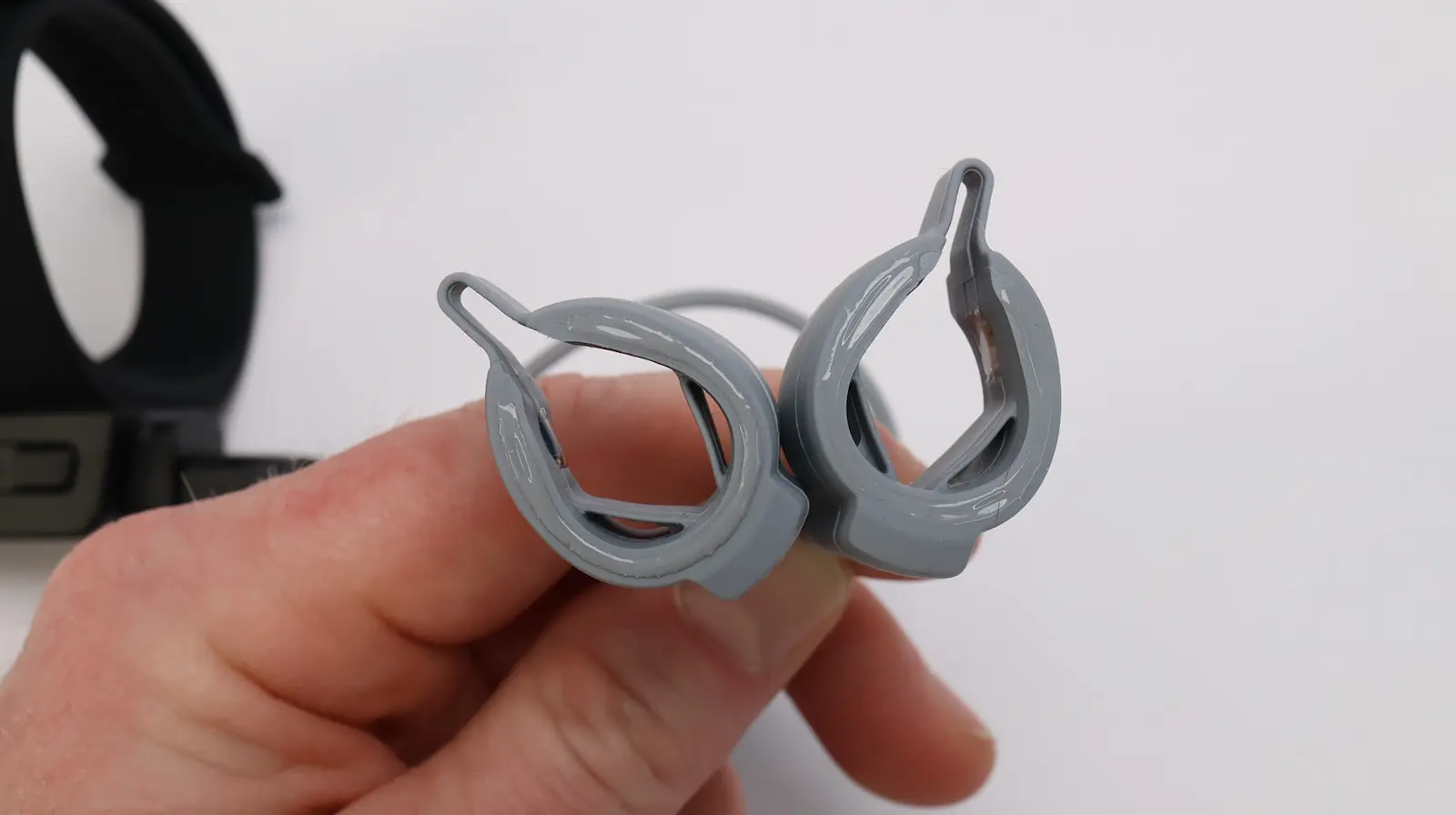
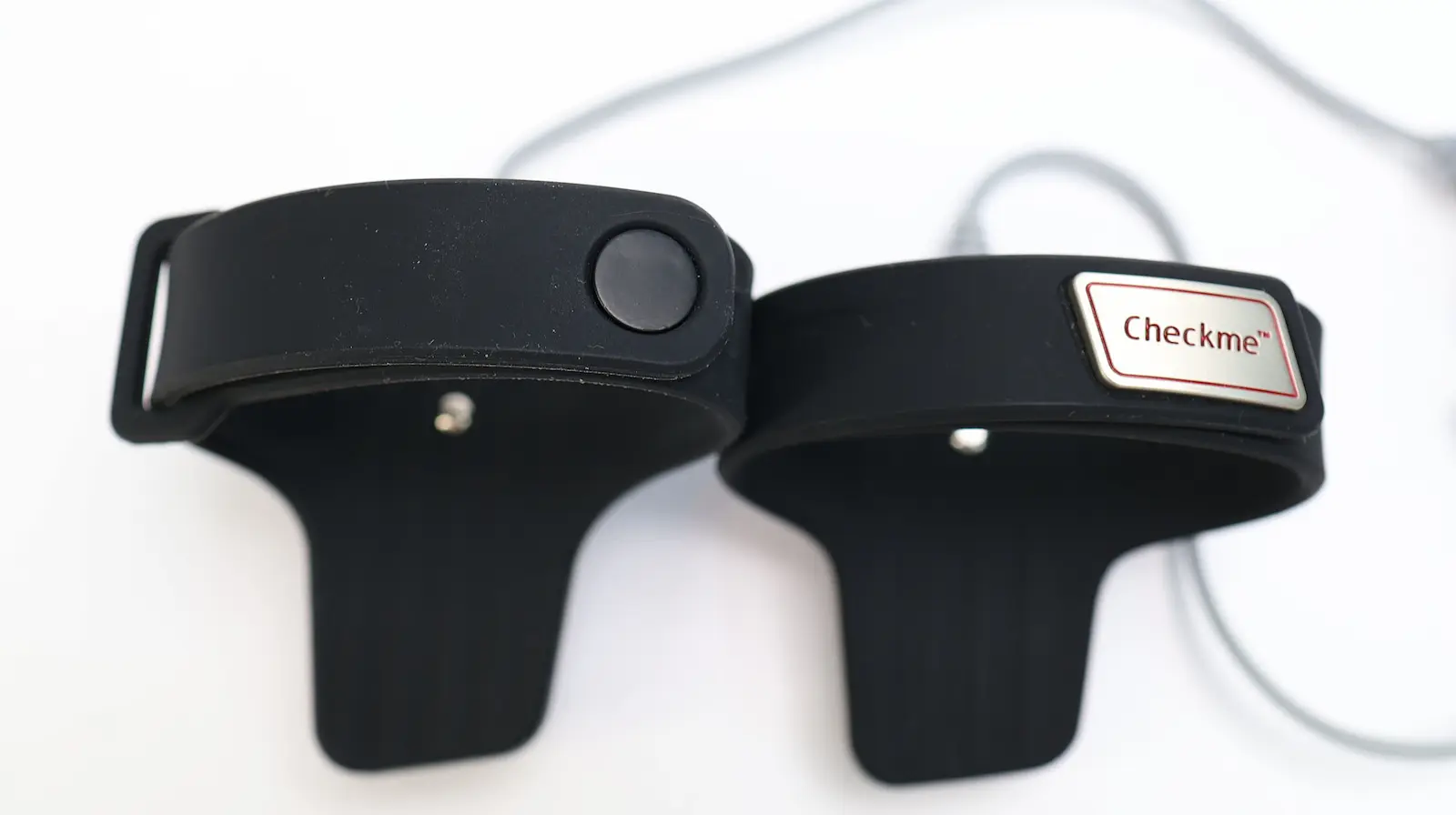
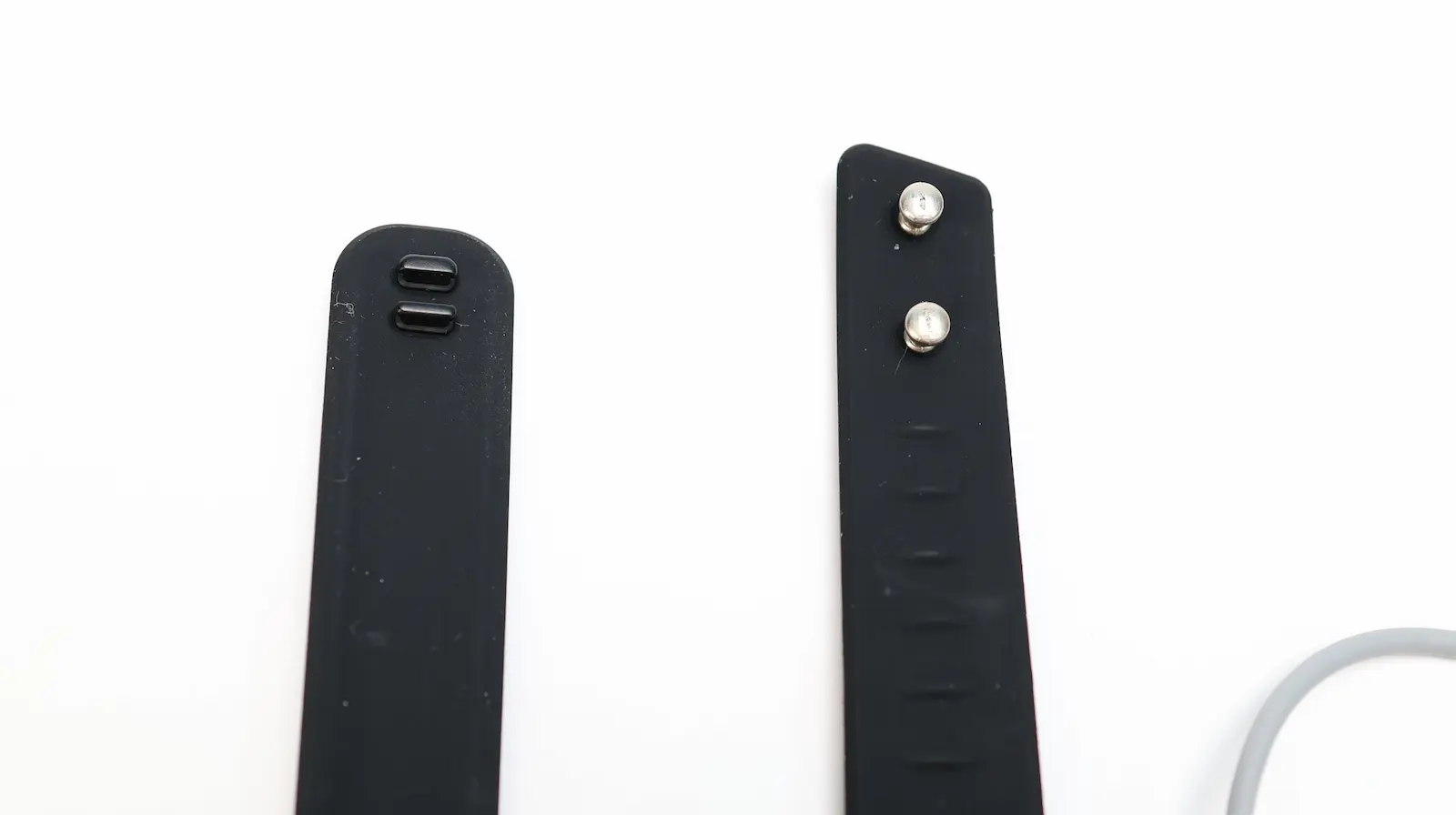
Both are wrist-and-sensor units, so if a barely-there fit is your priority, neither is your answer — read the Wellue O2Ring review instead.
So Which One
If you want the honest one-liner: the O2 Max is the better device and the Ultra is the better gadget.
The O2 Max wins on the two things I weight hardest — it scored higher and it’s the only one with a clearance behind it. For most people watching their overnight oxygen, that’s the end of the discussion, and the Checkme O2 Max is what I’d buy.
The Ultra wins on living with it. Four days of battery and a magnetic charger are the kind of thing you appreciate on night five, not night one. If you’re tracking across a stretch of nights rather than scrutinising a single one, the Checkme O2 Ultra gives up the FDA clearance and a little bench accuracy to make that easy.
What I wouldn’t do is agonise over the accuracy gap. Both read your oxygen with the same +0.2% bias against a $1,500 hospital monitor. Pick the one whose battery and paperwork match your life.
Want to see how both stack up against the rest of the family? My which Wellue oximeter to buy guide covers all five, and the full Checkme O2 Max review has the deep dive on the winner.
Best FDA cleared
Checkme O2 MAX
The only one of the two with an FDA 510(k) clearance behind it, and the higher scorer on my bench at 90.7 out of 100. It reads your oxygen with a +0.2% bias against a $1,500 hospital Nonin and exports straight into OSCAR — buy this one unless you need to record for more than three nights without charging.
Pros
Cons
Superior battery
Checkme O2 Ultra
Same +0.2% bias as the O2 Max and a verified one-second recording interval, with the longest battery and the best charger in the Wellue lineup. It gives up a clearance and 3.4 points of bench score to become the device you can wear for days at a stretch without thinking about a cable.
Pros
Cons
Frequently Asked Questions
Common questions about Checkme O2 Max & Checkme O2 Ultra
Keep reading
 Pulse Oximeters
Which Wellue Oximeter Should You Buy? 5 Models Lab-Tested
 Pulse Oximeters
Checkme O2 Max Review: I Tested It for 3 Nights Against a $1,500 Hospital Oximeter
 Pulse Oximeters
The Best Infant Pulse Oximeter of 2026: I Tested 3 Wearable Oxygen Monitors Against a Hospital-Grade Monitor
 Pulse Oximeters