

Medical Disclaimer: I am a researcher, not a doctor. This review is based on personal data testing and is for informational purposes only. It does not constitute medical advice or diagnosis. Always consult a medical professional for health concerns.
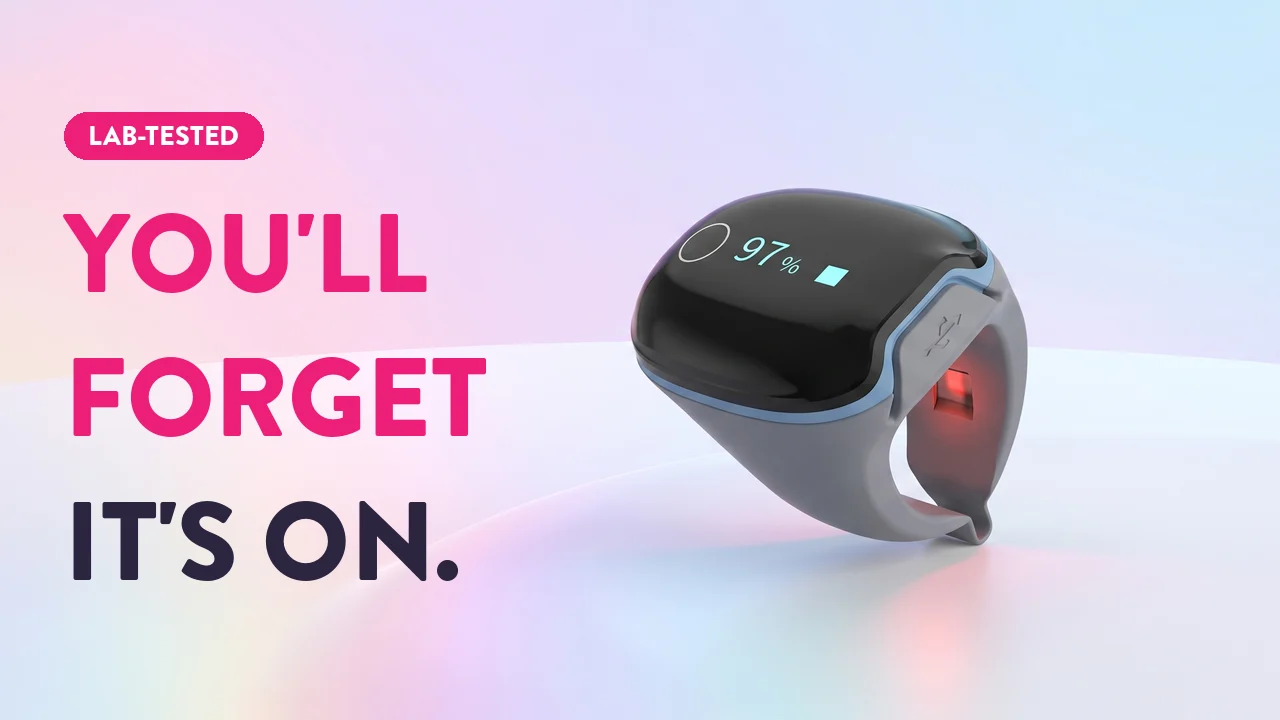
The Wellue O2Ring promises to watch your oxygen all night from a ring you barely feel. The comfort part is real. Whether the data holds up is the question I cared about, so I wore it against a hospital-grade Nonin 3150 for three nights and lined up every second.
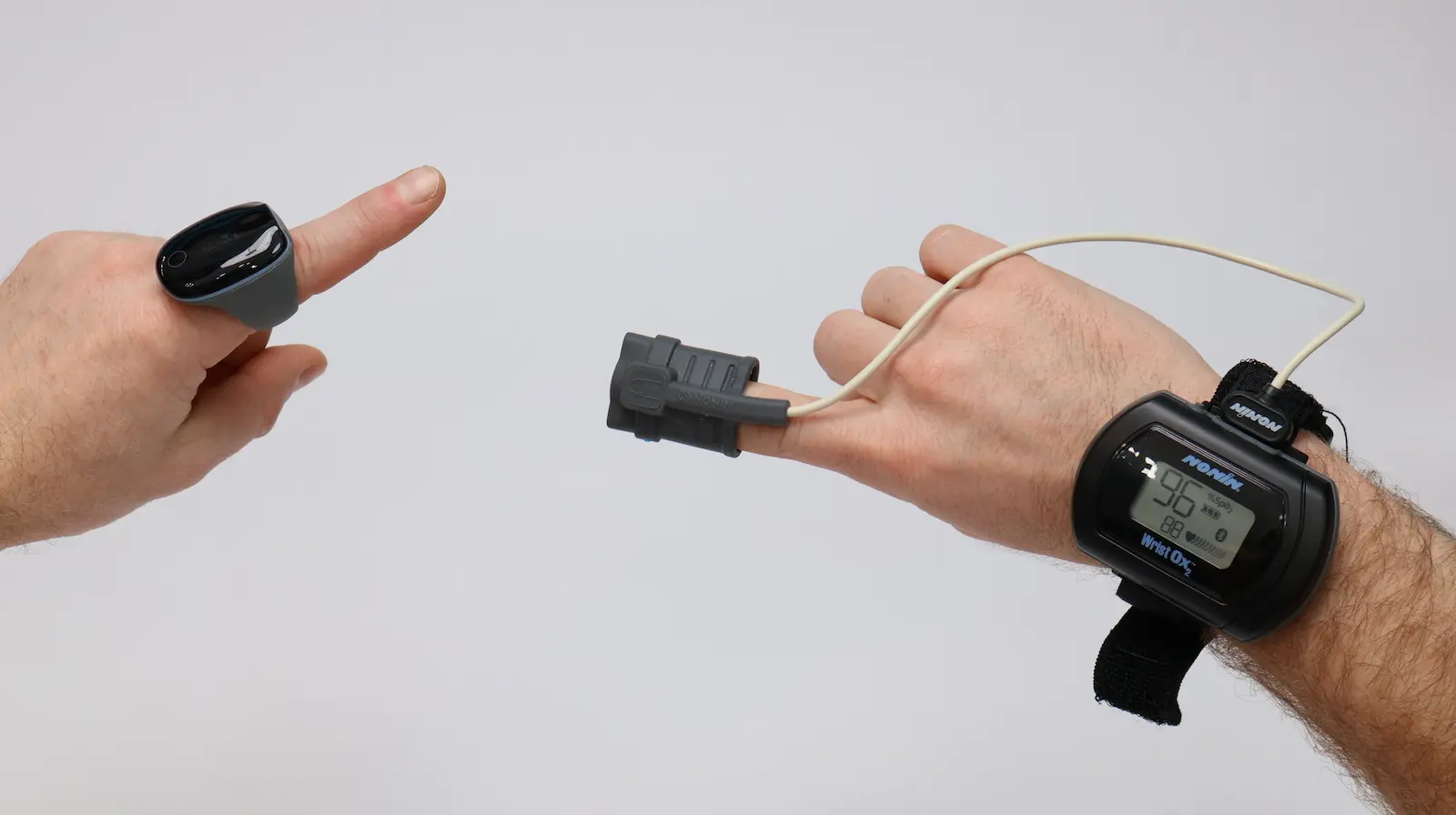
The setup every night: the Nonin 3150 on one hand, the O2Ring on the other.
My verdict
Wellue O2Ring
The O2Ring is the most comfortable, lowest-profile ring I’ve tested. Its rounder shape sits lower and barely lifts off the back of your hand, so you forget it’s on. Against my $1,500 Nonin 3150 it held steady oxygen within 2% for 99% of the night, with a near-perfect +0.7% average bias. The honest trade: it scored 81.7 overall because it softens the short dips, and it sits at the premium end of the ring shelf. It’s for one specific person: the comfort purist who wants the best-feeling ring for a nightly overview. If top accuracy or a lower price matters more, it isn’t the one, and I point you where to go below.
- Pro: Overall O2 Score 81.7/100 against a hospital Nonin 3150
- Pro: Comfort 10/10 — the lowest-profile fit I’ve tested
- Pro: Steady oxygen within ±2% of the Nonin 99% of the night
- Pro: Near-perfect +0.7% average bias, 99.1% signal stability
- Pro: Caught the night’s true low (90% nadir matched the Nonin)
- Pro: Free data, no subscription, clean PDF/CSV export
- Con: Less accurate than the LOOKEE, my best-of “Most Comfortable” pick
- Con: Under-counts short desaturation events (the 4-second export smooths fast dips)
- Con: A premium price
- Con: Micro-USB charging, and a face button that barely does anything
Want the whole field first? Start with my best overnight pulse oximeters lab test, then come back for the ring itself.
Test Protocol
Testing Disclaimer: FDA validation uses controlled hypoxia and arterial blood sampling. I didn’t do that. Instead, I used the next best real-world approach: simultaneous overnight benchmarking against a hospital-grade reference device.
What the O2Ring Actually Is
The O2Ring is a wireless finger ring. It records your blood-oxygen (SpO2) and heart rate all night, then hands the data to Viatom’s ViHealth app in the morning.
No wrist strap, no dangling cable, no fingertip clip. The whole device lives in a band on your finger with a tiny OLED on top.
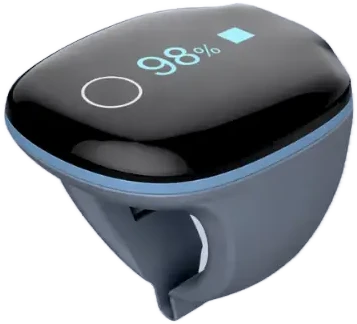
The little OLED shows live SpO2 and heart rate. Useful for a glance, and it shuts off on its own once you’re asleep.
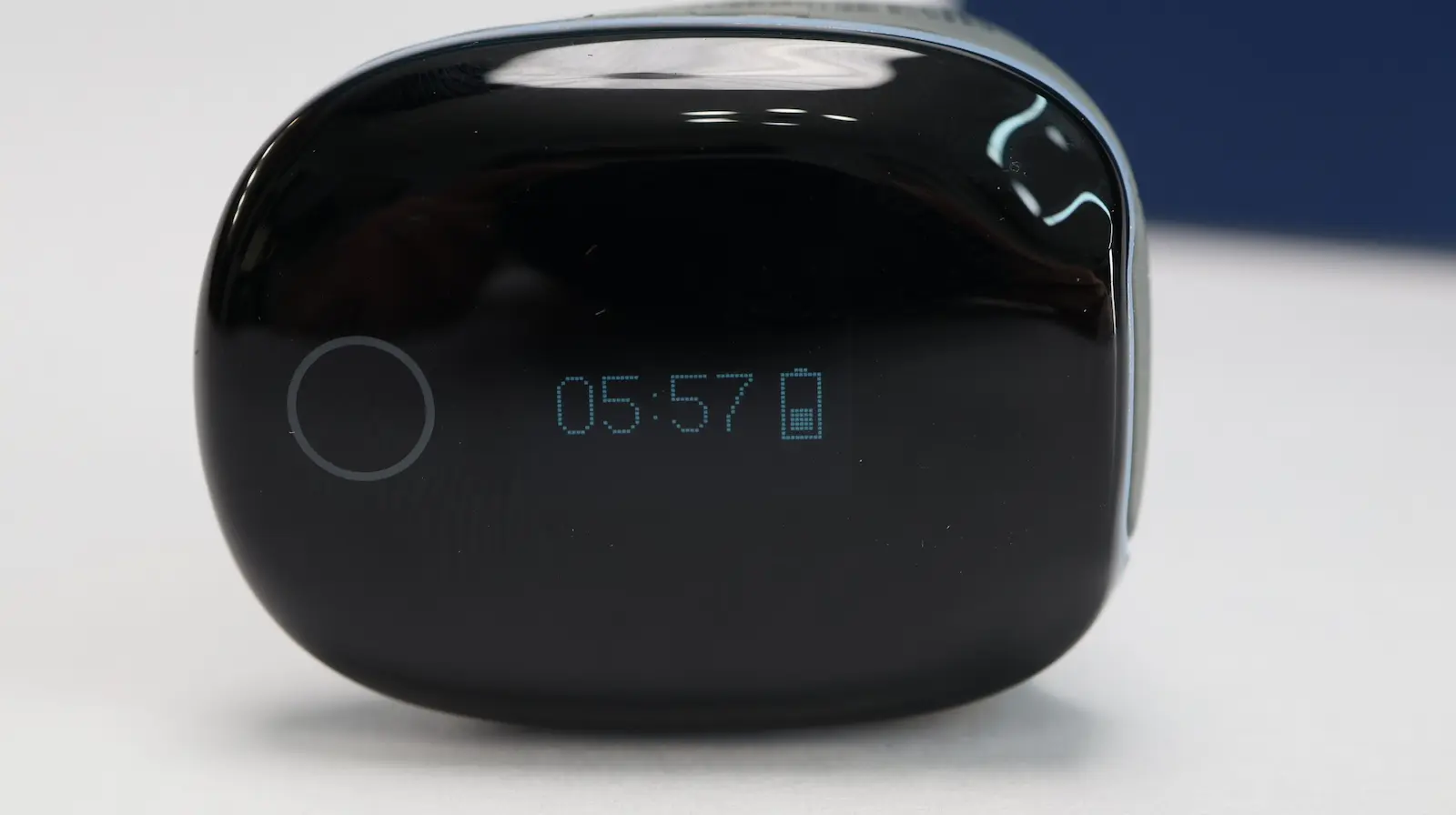
Its trick is where the band sits. The legs attach from the sides of the device instead of the bottom, which drops the ring low on the finger.
That one choice is why it wears like jewelry instead of a gadget. It’s the reason most people looking at this ring end up happy with it.
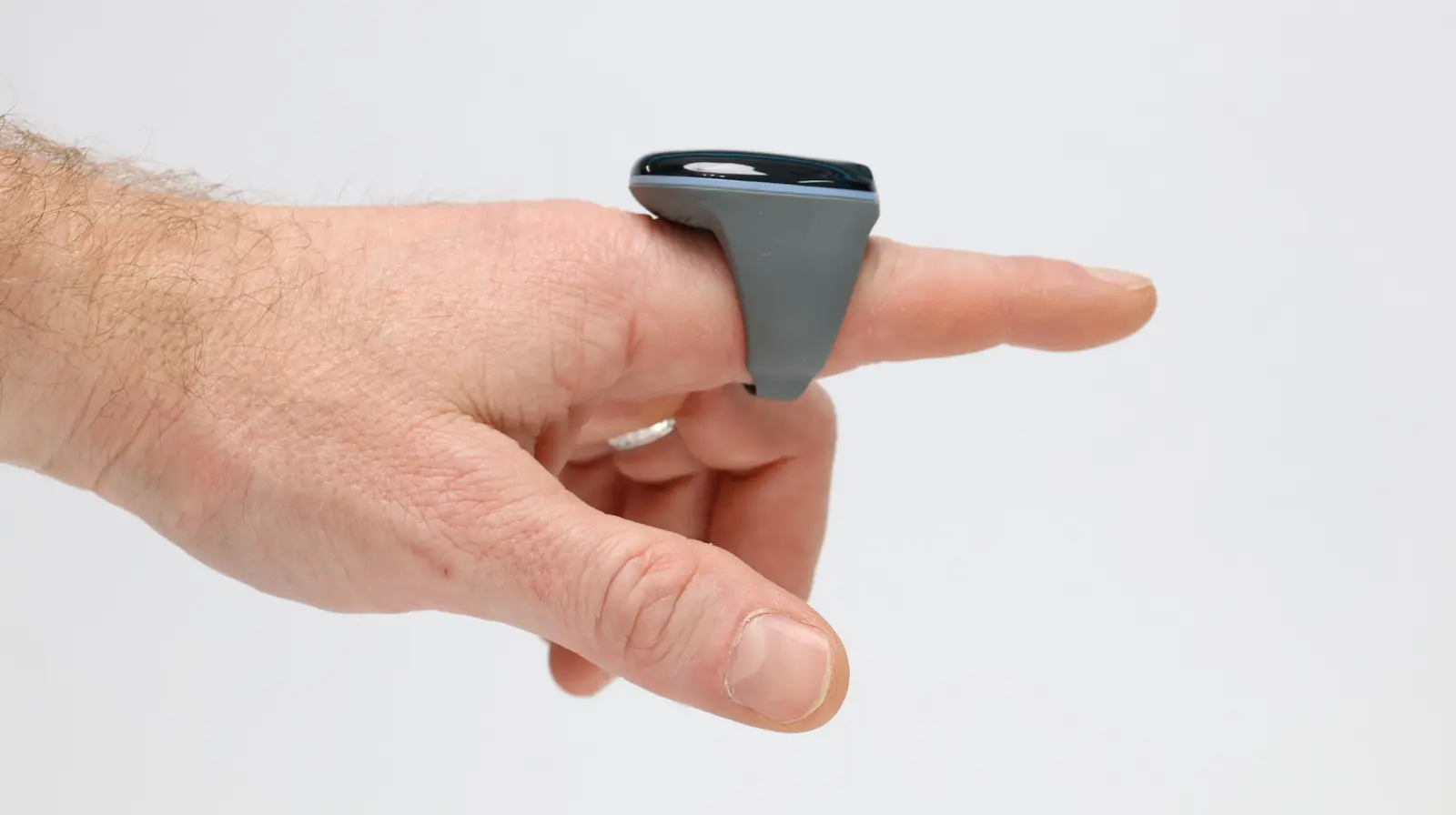
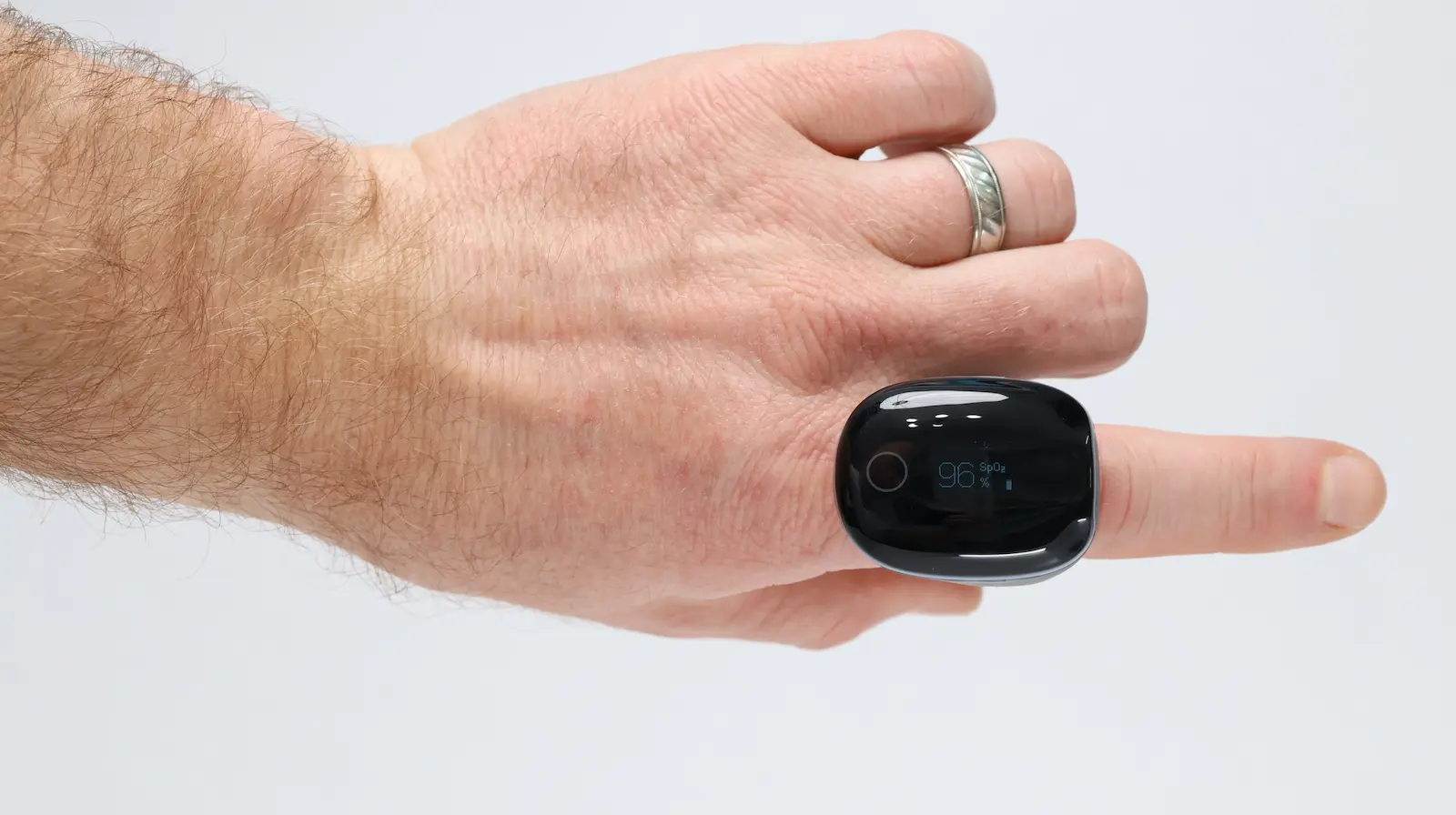
The side-mounted band sits low. Closer to wearing a real ring than a medical sensor.
The Accuracy Data
Here are the numbers, because “accurate” means nothing without them.
Every reading below is the O2Ring against the Nonin 3150, second by second, averaged across three nights. That’s more than 80,000 paired data points.
| Metric | Nonin 3150 | Wellue O2Ring | Agreement |
|---|---|---|---|
| Overall O2 Score | – | – | 81.7 / 100 |
| ODI 4% (events/hr) | 0.6 | 0.0 | 64.1% |
| ODI 3% (events/hr) | 2.1 | 0.5 | 48.9% |
| Time below 90% (min) | 0.06 | 0.00 | 94.7% |
| Time below 88% (min) | 0.00 | 0.00 | 100.0% |
| Lowest SpO2 | 90 | 90 | 99.3% |
| Signal stabilityThe share of the night the device held a usable reading. | – | – | 99.1% |
| BiasThe device's average error against the reference. + means it reads high. | – | +0.7% | Perfect |
Reference: Nonin 3150 · 3 nights.
Three nights against the Nonin, scored. The +0.7% bias lands in the “Perfect” band.
Chart Definitions
- ODI (3% & 4%): The “Oxygen Desaturation Index” counts how many times your oxygen drops per hour. 3% is a mild dip; 4% is severe. The 3% is a more sensitive metric.
- Time <90%: A timer counting every second you spent below 90% oxygen.
- Time <88%: A timer counting every second you spent below 88% oxygen.
- Lowest SPO2 (Nadir): The absolute lowest oxygen point of the night. We checked if the device caught this “rock bottom” moment or smoothed it over.
- Bias: Shows the device’s “personality.” Positive (+) bias means it overestimates oxygen (optimist); Negative (-) means it underestimates it (pessimist).
- Signal Stability: Measures how often the device stays within ±2% of the medical reference. High stability means it rarely loses its “lock” on your data.
- Overall O2 Score: A 0–100 final grade. It heavily weights ODI and Stability to determine if the device is safe for medical tracking.
The Overall O2 Score is calculated by the following weights: 40%: ODI Accuracy (3% and 4% combined) 30%: Signal Stability (FDA-style ±2% agreement) 20%: Nadir Accuracy 10%: T90 Accuracy.
On steady oxygen, the ring is strong. It stayed within 2% of the Nonin 99% of the night, and its average bias was +0.7%, a hair high but inside the band I grade as near-perfect.
Signal stability came in at 99.1%. When my oxygen sat flat, the number on the ring was the number the hospital device showed.
Deviation by hours into the night. Night 1 bias +0.58 pts; Night 1 within ±2 pts 99.8%; Night 1 worst minute +2.1 pts; Night 2 bias +1 pts; Night 2 within ±2 pts 97.9%; Night 2 worst minute +3.5 pts; Night 3 bias +0.52 pts; Night 3 within ±2 pts 99.7%; Night 3 worst minute +1.6 pts.
See the numbers
Night 1
- BiasThe average gap from the reference oximeter that night. + means the device read high.
- +0.58 pts
- Within ±2 ptsThe share of the night (second by second) the device stayed within 2 SpO2 points of the reference.
- 99.8%
- Worst minute
- +2.1 pts
Night 2
- BiasThe average gap from the reference oximeter that night. + means the device read high.
- +1 pts
- Within ±2 ptsThe share of the night (second by second) the device stayed within 2 SpO2 points of the reference.
- 97.9%
- Worst minute
- +3.5 pts
Night 3
- BiasThe average gap from the reference oximeter that night. + means the device read high.
- +0.52 pts
- Within ±2 ptsThe share of the night (second by second) the device stayed within 2 SpO2 points of the reference.
- 99.7%
- Worst minute
- +1.6 pts
Three nights of per-minute deviation from the Nonin. The green band is the ±2-point agreement zone, and each night is its own line — tap a night to read it on its own.
How to Read this Chart
Think of each line as one night’s report card.
- The Center Line (0): A perfect score. At that moment the device matched the hospital-grade Nonin exactly.
- The Green Band (+2 /-2): The guard rails. Hospital oximeters are themselves allowed a ±2-point tolerance, so as long as a line stays inside the band, the device is tracking the medical equipment as closely as medical equipment tracks itself.
- The Night Buttons: Each colored line is one full night. Tap a night above the chart to view it on its own — the Bias, Within ±2, and Worst Moment boxes below recalculate live for whatever you’re looking at.
- The Takeaway: Notice how the lines spend almost the entire night inside the band. That’s what reliability looks like.
It caught the big moment too. The night’s true low, a 90% nadir, matched the Nonin exactly. Neither device logged any real time under 90% on these nights, so there was no sustained plunge for it to miss.
The catch is the short stuff. Across the three nights the Nonin counted 2.1 brief 3% dips an hour, and the O2Ring logged 0.5 of them.
That’s roughly a quarter of the short dips. On the deeper 4% dips the gap is wider: 0.6 an hour on the Nonin, effectively none on the ring.
Brief desaturations per hour, ring against hospital reference, averaged across the three nights. Steady oxygen it tracks; short dips it rounds off.
Two things cause that: it reads slightly high, so a shallow dip that just crosses the threshold on the Nonin often doesn’t on the ring, and the app data comes out at a 4-second resolution that rounds off the quickest drops.
So read the O2Ring for what it is. It nails the trend and the overall shape of the night.
If your goal is catching every fleeting dip to fine-tune a CPAP, that’s a different tool. More on that in the verdict.
The Overnight Comfort Test
Comfort is where the O2Ring is at its best, and it’s the best I’ve felt in this category. I rated it a flat 10/10.
The design earns it. The ring is rounder than the others, so it sits lower and barely lifts off the back of your hand. That makes it the lowest-profile device I’ve slept in, and most nights I forgot it was there.
If you’ve read my best-of, you saw the LOOKEE take the “Most Comfortable” slot, not this ring. The honest reason: the O2Ring is the more comfortable of the two, but comfort doesn’t override the data. Its 81.7 accuracy kept it off my recommended list, so that slot went to the most comfortable ring I’d actually recommend.
It stayed put through the night with only a slight rotation. That’s a side effect of the low, side-mounted band, and a non-issue unless your fingers are very thin.
Nothing snagged on the sheets. Nothing woke me up needing a readjust.
If you’ve abandoned overnight tracking before because a wrist rig or a fingertip clip annoyed you awake, the O2Ring is the form factor that fixes that.
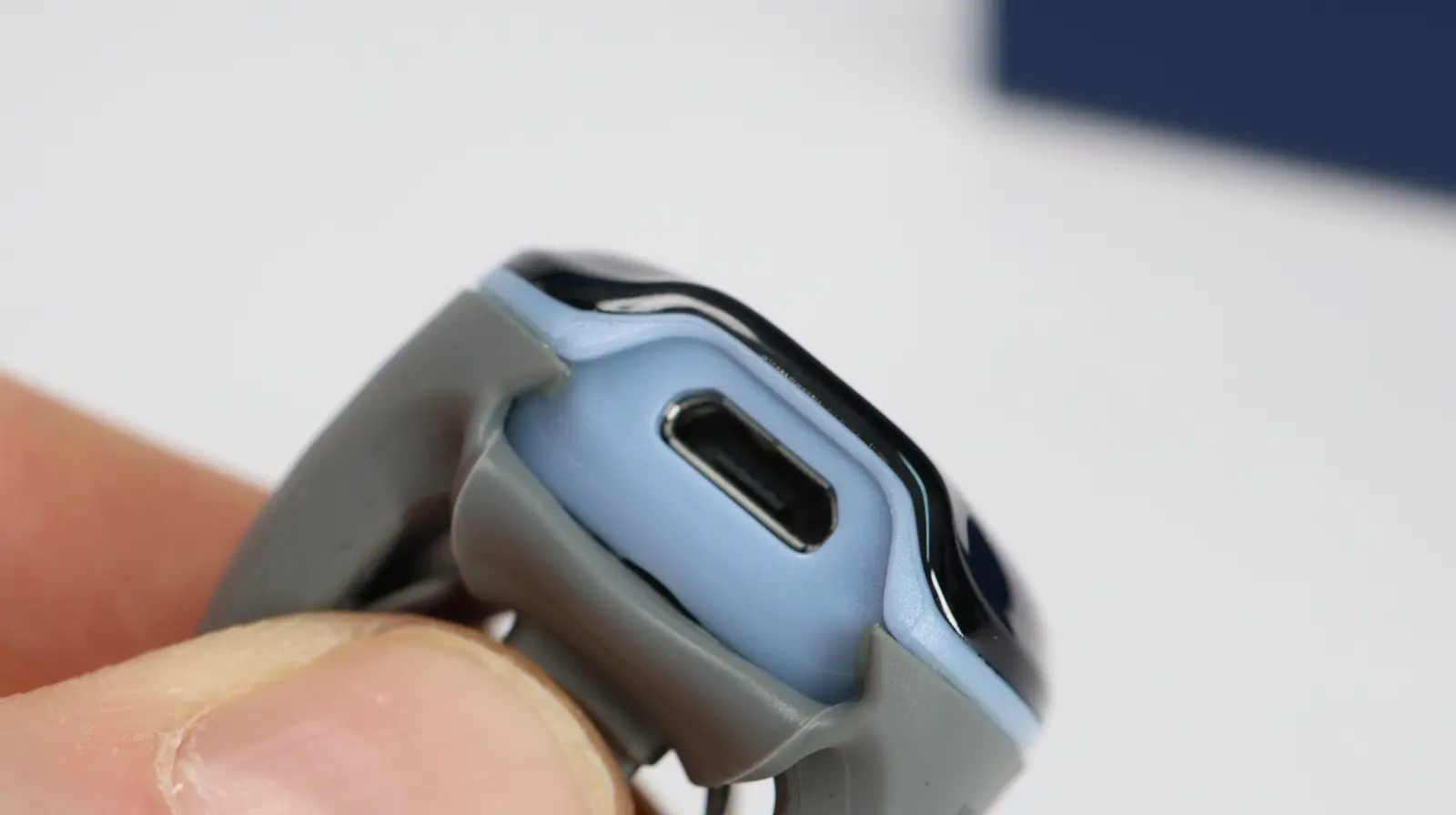
The one dated touch: it still charges over micro-USB. The O2Ring S moved to USB-C.
One honest gripe on the hardware. The touch button on the face mostly cycles screens, and I rarely found a reason to press it.
Great comfort
Wellue O2Ring
The most comfortable, lowest-profile ring I’ve tested. 10/10 to wear, steady oxygen within 2% of a hospital Nonin. The trade: a premium price and softer short-dip detection.
The App and the PC Software
The O2Ring runs on ViHealth, the same fast app shared across the Wellue, Vibeat, Checkme, and Lookee devices.
Slip the ring on, open the app, tap the device, and the night downloads in seconds. You get a clean summary up top and the raw data underneath.
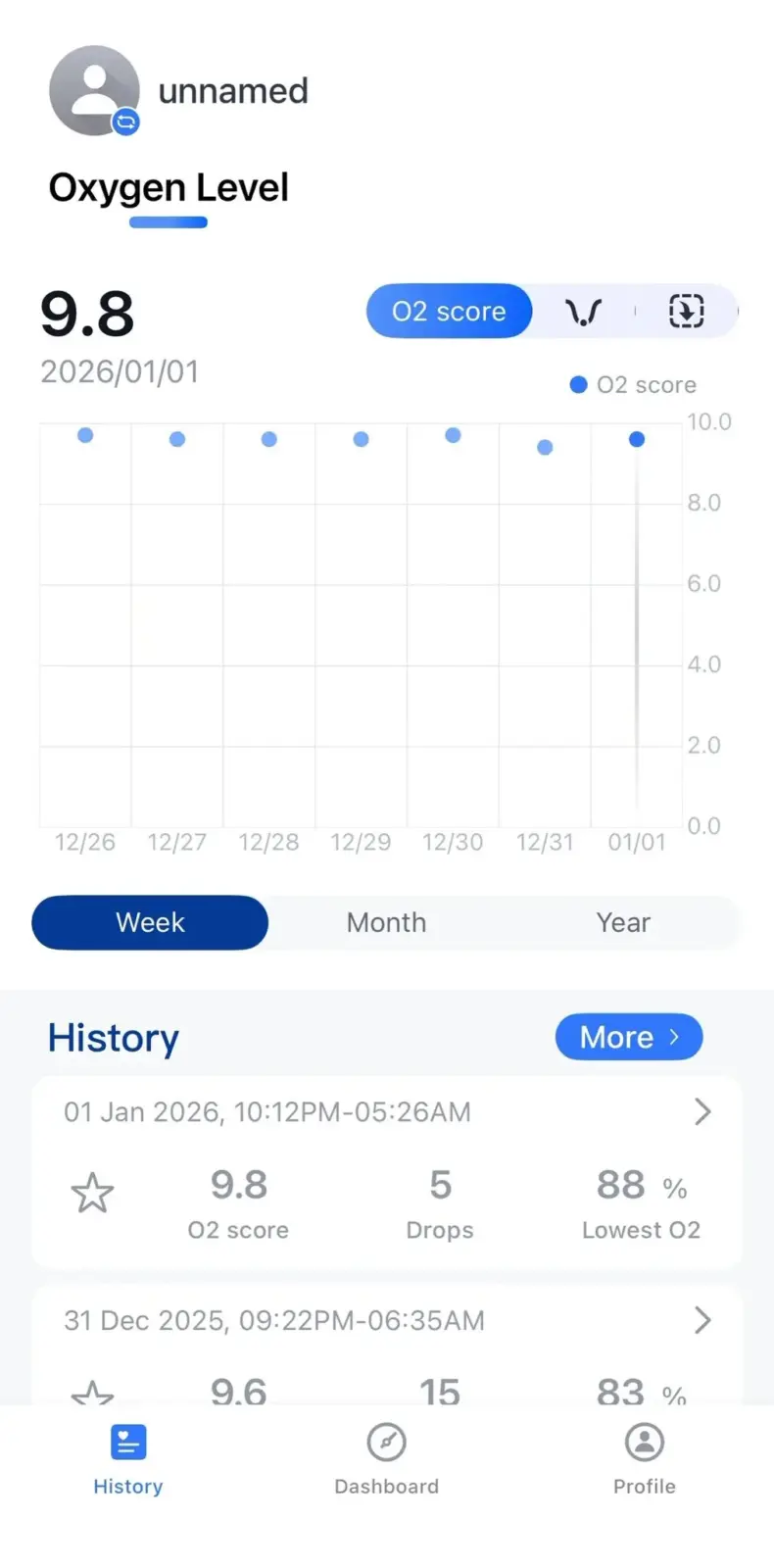
ViHealth after a typical night: the summary lives at the top, the second-by-second timeline below.
Export is where it earns points with data people. You can pull the night as PDF, CSV, or binary, and there’s PC software too.
None of it sits behind a subscription. The one limit worth repeating is that export runs at the 4-second interval.
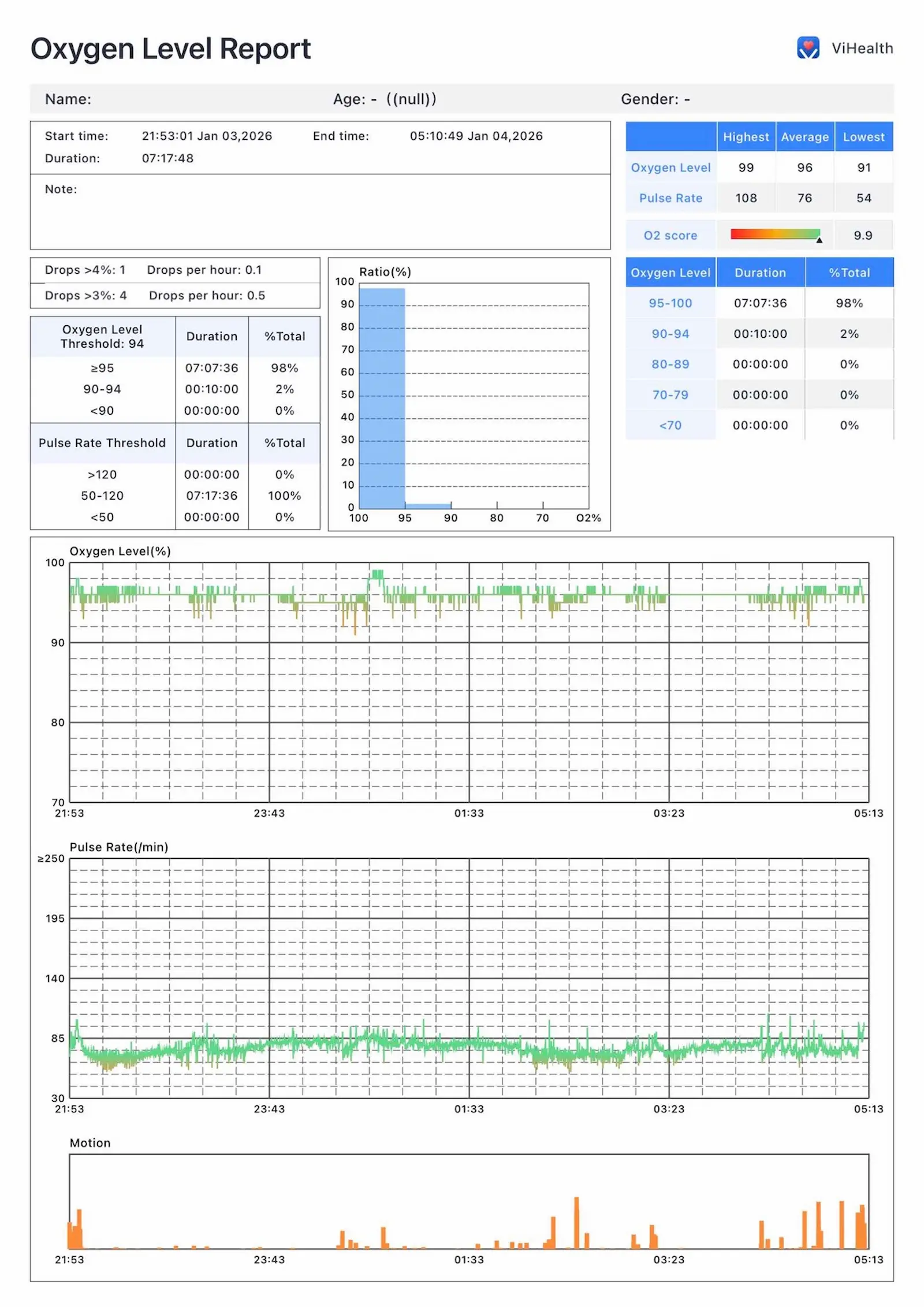
Export options: PDF for a quick read, CSV or binary for the data nerds.
That’s fine for an overview. If you want true 1-second resolution, that’s the biggest reason to look at the O2Ring S instead.
Curious how the whole Viatom range stacks up on paper? I keep a running continuous oximeter database with the specs side by side.
Where the O2Ring Fits
Here’s the honest read, so you can decide for yourself. The O2Ring is the most comfortable, lowest-profile ring I tested, and it held steady oxygen within 2% of the Nonin all night. It also scored 81.7, below the bar I hold for my top-accuracy picks, and it sits at the premium end of the shelf.
Where the O2Ring lands inside its own family, every one of them scored against the same Nonin on the same bench.
So I won’t tell you it’s the best ring, because it isn’t the most accurate one. What I’ll tell you is who it genuinely fits: the person who wants the best-feeling, barely-there ring for a nightly overview and is fine paying for that fit over sharper numbers. If that’s you, the Wellue O2Ring is right here.
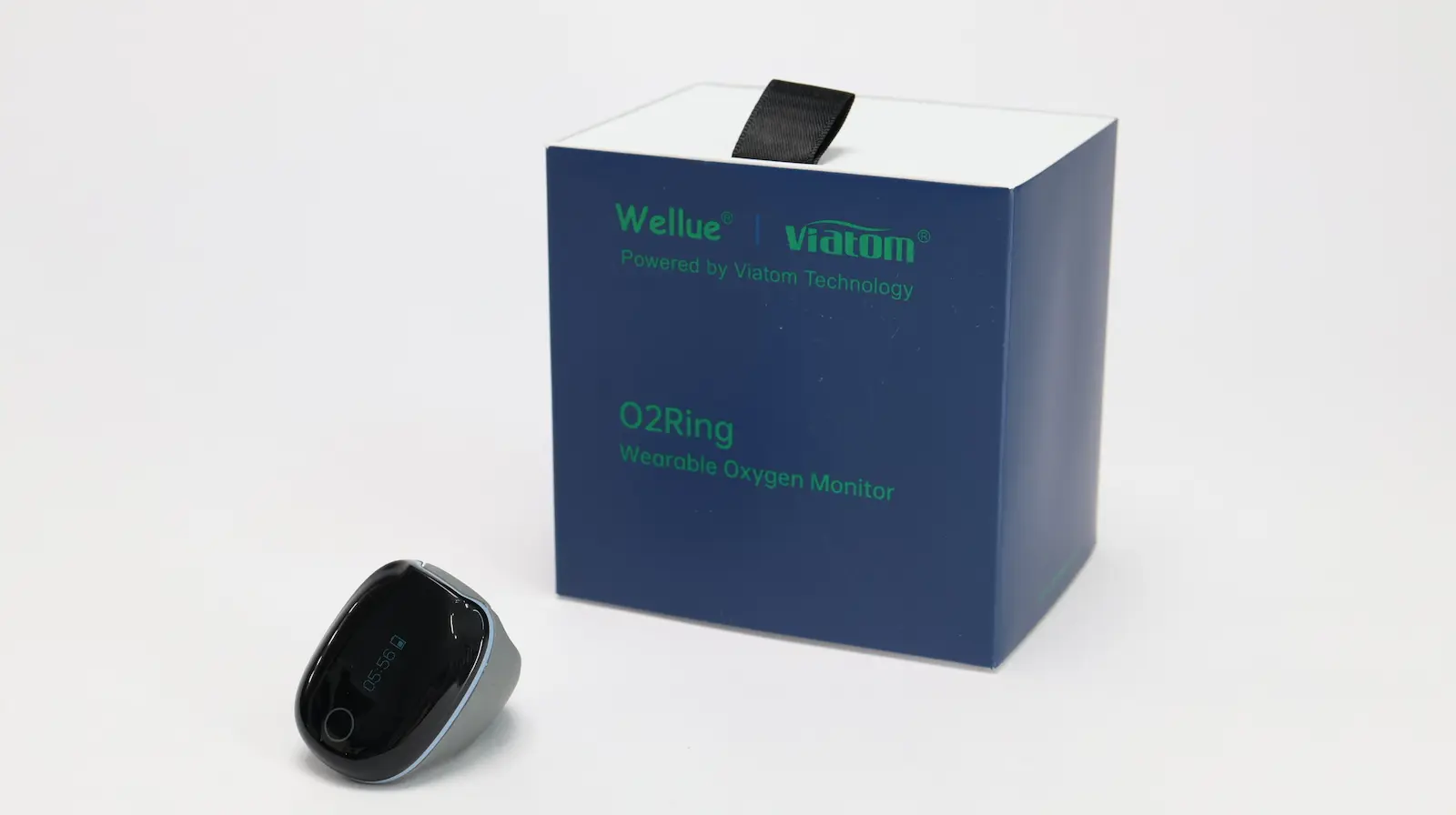
Small enough to vanish in a closed hand. That footprint is the whole pitch.
If accuracy or price matters more than the last bit of comfort, here’s where I’d send you instead, matched to what you won’t give up:
| If you value most… | The pick | Why, from my testing |
|---|---|---|
| The Best-Feeling, Lowest Profile Fit | Wellue O2Ring | 10/10 comfort, best design, but 81.7 score and a premium price |
| More Accuracy and a Lower Price | LOOKEE Sleep Ring | Scored 93, nearly as comfortable, costs less. The smart pick for most. |
| FDA-Cleared, Highest Reliability | Checkme O2 Max | Scored 90 on my bench, but a bigger wrist unit with a finger sensor |
| Sharper 1 Second Data, Still a Ring | Wellue O2Ring S | Records at 1-second resolution and charges over USB-C |
For most people shopping rings, the LOOKEE is the smarter buy: more accurate, nearly as comfortable, and less money. The O2Ring earns its place for the comfort purist who wants the single best-feeling fit and treats that as worth the premium. And if you’d trade the ring form entirely for the best accuracy and an FDA clearance, the bigger Checkme O2 Max is the one.
Still weighing the whole family? My which Wellue oximeter to buy guide lays out all five.
Great comfort
Wellue O2Ring
he most comfortable, lowest-profile ring I’ve tested, with steady oxygen within 2% of a $1,500 Nonin. The trade is a premium price and softer dip detection.
Frequently Asked Questions
Is the Wellue O2Ring accurate?
For steady-state oxygen, yes. In my three-night test against a Nonin 3150 it stayed within 2% of the reference for 99% of the night, with a near-perfect +0.7% average bias, and it matched the night’s lowest reading. The honest limit is event detection: it logged about a quarter of the brief 3% dips the Nonin counted (0.5 an hour against 2.1) and smoothed the rest, so I trust it as an overview tool rather than a device that flags every short desaturation.
Is the Wellue O2Ring FDA approved?
It’s sold as a consumer wellness and tracking device, not a diagnostic one. It’s useful for screening your overnight oxygen and watching trends over time, but it doesn’t diagnose any condition and it isn’t a substitute for a clinical sleep study. If your data looks off, take it to a doctor.
Wellue O2Ring vs O2Ring S, what’s actually different?
The big one is data resolution. The original O2Ring exports at a 4-second interval, while the O2Ring S lets you toggle true 1-second recording in the app and upgrades charging to USB-C. If you want the most granular night-by-night detail, the S is the one worth the step up.
Will the O2Ring fit my finger?
It’s built for a finger circumference of roughly 55 to 80 mm, about 2.2 to 3.1 inches, which covers most adult fingers. On the very thinnest fingers it can rotate a little overnight. On average-to-thicker fingers it locks in and barely moves.
Does the O2Ring work with OSCAR for CPAP data?
It exports raw CSV and binary files, which is the format serious CPAP users want for overlaying oxygen against their machine data. Temper expectations, though. Because it under-counts short dips, it’s better for confirming the shape of your night than for matching a CPAP’s event-by-event log second for second.
How long does the O2Ring battery last?
About 16 hours of typical use, comfortably a full night with margin, and it recharges in two to three hours over micro-USB. It stores up to four sessions of roughly ten hours each before you need to sync.
Keep reading
 Pulse Oximeters
Checkme O2 Max vs O2 Ultra: I Slept in Both Against a $1,500 Hospital Oximeter
 Pulse Oximeters
Checkme O2 Max Review: I Tested It for 3 Nights Against a $1,500 Hospital Oximeter
 Pulse Oximeters
The Best Infant Pulse Oximeter of 2026: I Tested 3 Wearable Oxygen Monitors Against a Hospital-Grade Monitor
 Pulse Oximeters