
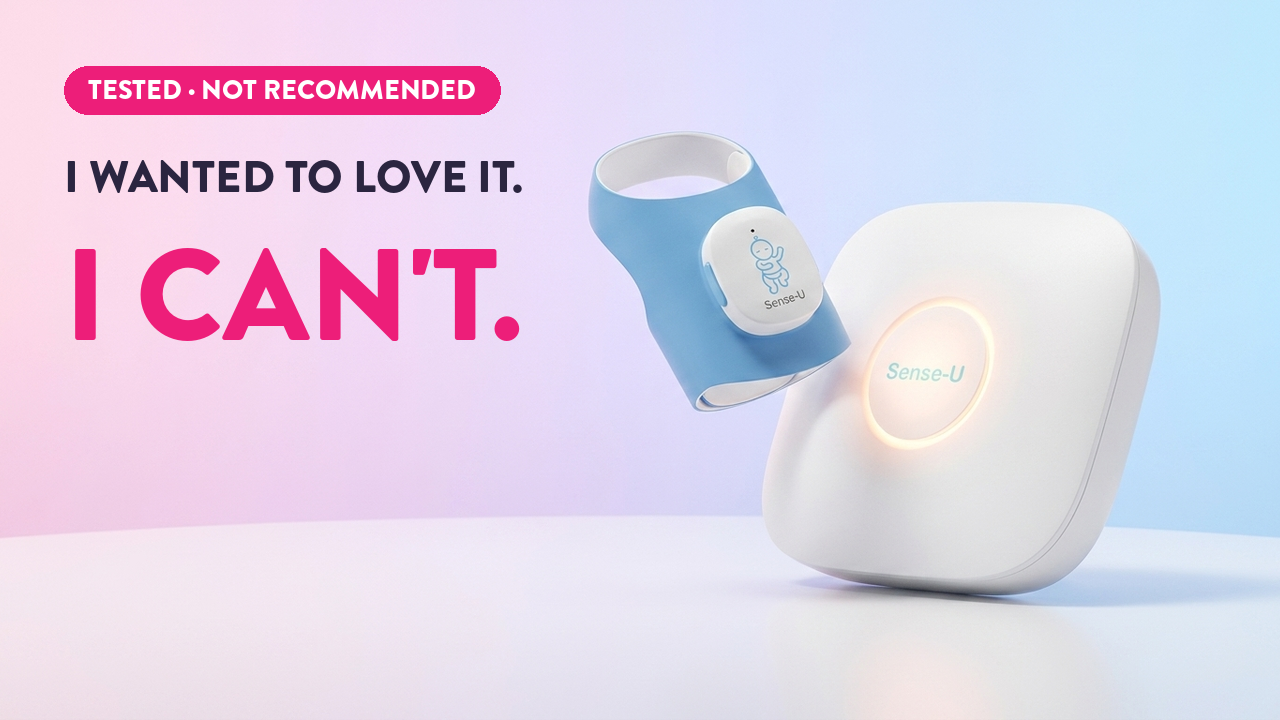

I wanted the Sense-U Smart Sock to win. It looks like the Owlet, promises the same live oxygen and heart rate, and costs less — exactly the budget underdog I root for. I tried hard to make it work, and this is the honest story of why I couldn’t.
I don’t enjoy writing a review like this. But being straight with you matters more than being nice to a product.
Review Summary
Verdict: Not Recommended. I wanted the Sense-U to be the affordable Owlet, and it copies the look and the promise. But across repeated tries I couldn’t get it to hold a signal, it has no oxygen alarm to set, and the one heart-rate alarm it does have didn’t fire when I tested it. As a safety monitor, I can’t recommend it.
Pros
Cons
Instead, get the Owlet Dream Sock — the one I tested within about 2% of a hospital monitor.
What the Sense-U Smart Sock Is
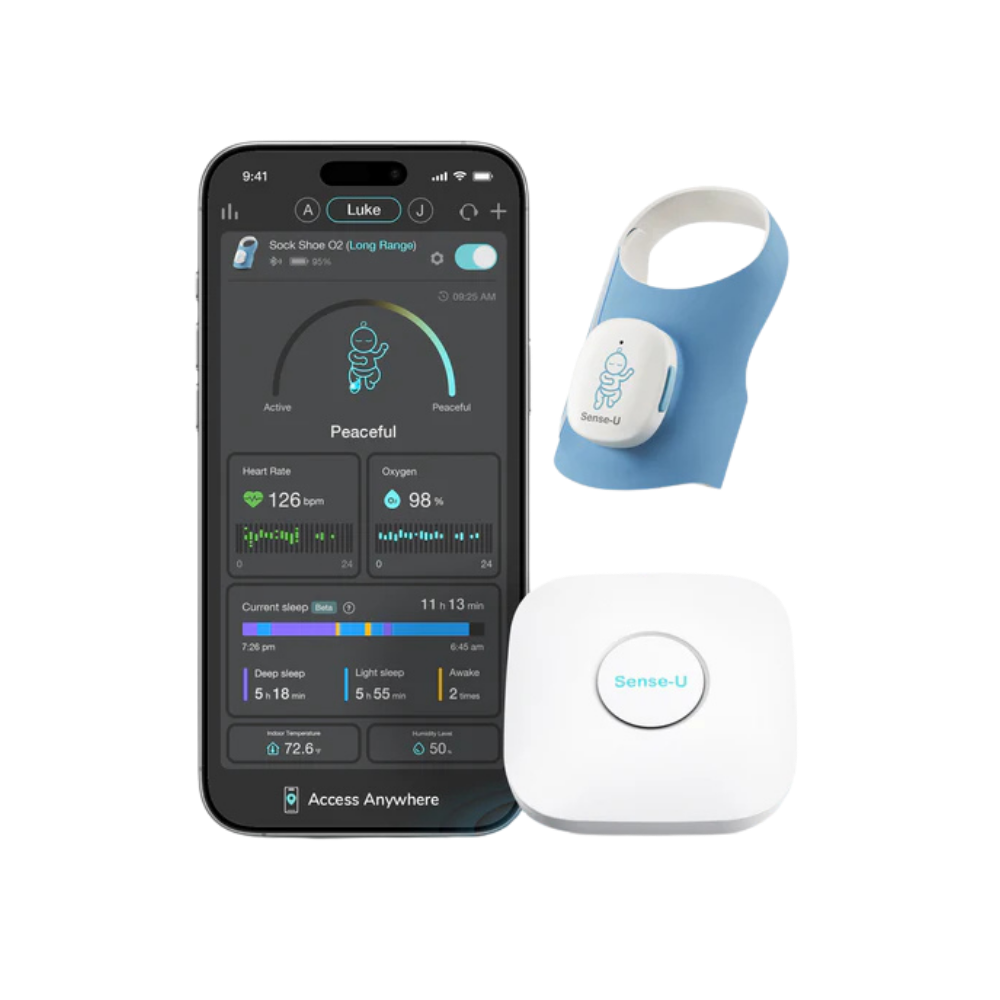
Give it its due first. The Sense-U Smart Sock 2 is a sock-and-base infant monitor that reads heart rate and blood oxygen and streams them to the Sense-U Baby app. Same idea as the Owlet, at a lower price.
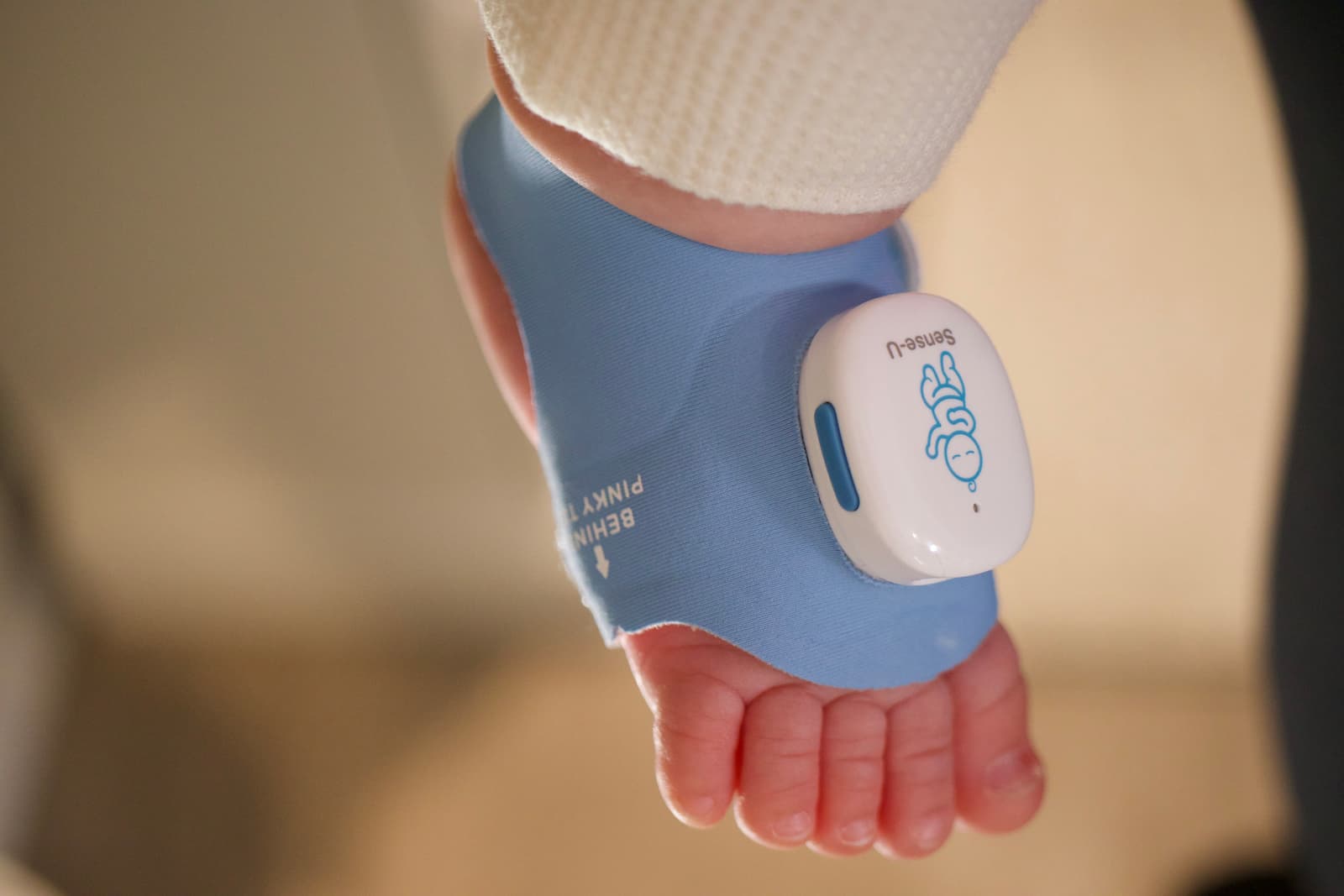
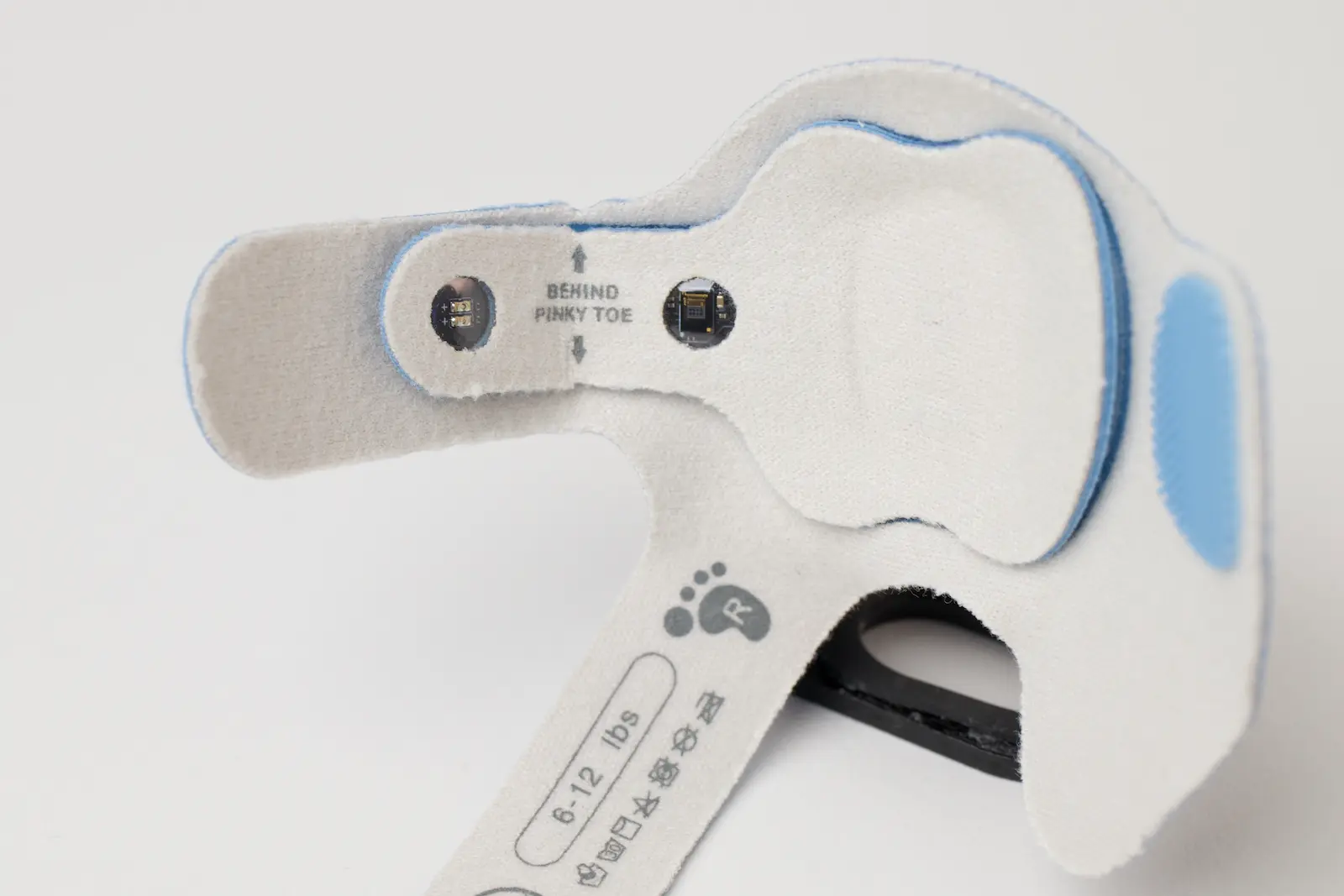
And on materials, it’s close. The fabric is soft with good stretch, the sensor pops out and swaps between socks cleanly, and the LED and photodetector look every bit as well made as the Owlet’s — maybe better to the naked eye.
In the box you get three right-foot socks (small, medium, large), a base station noticeably bigger than the Owlet’s (closer to a small router), and the app. First impression: it looks the part.
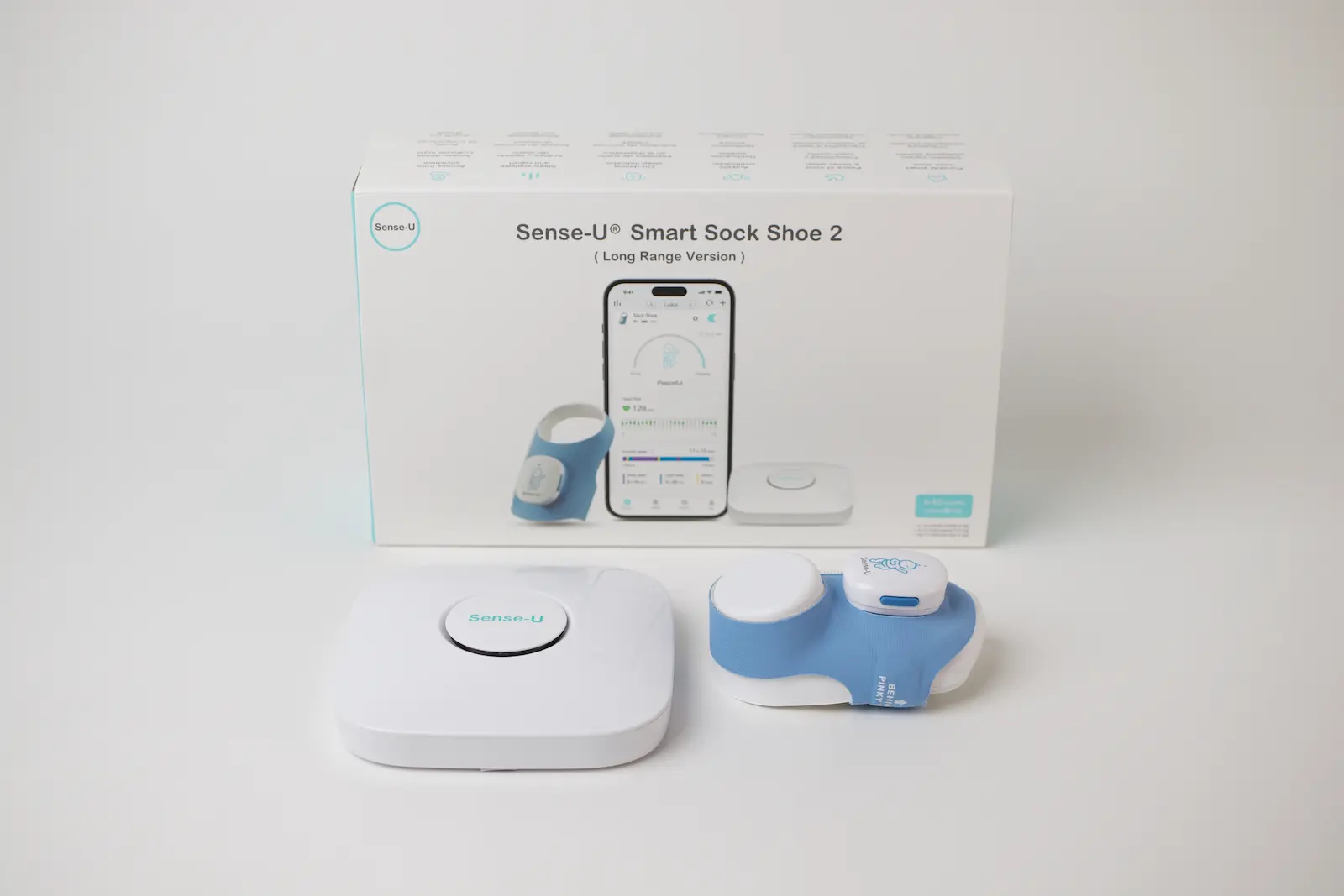
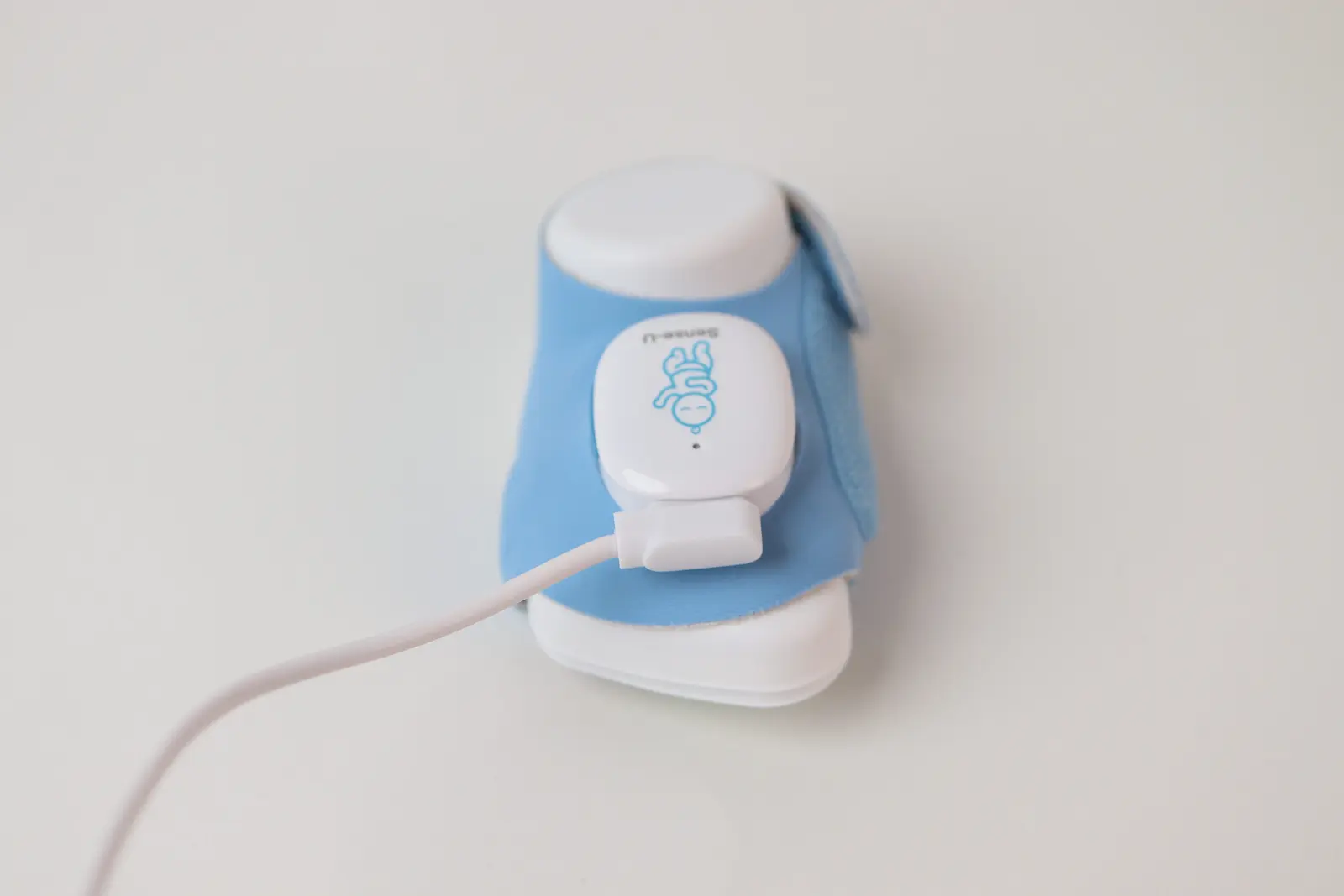
That’s the setup for the whole review. It looks like it can do the job. Then you try to use it.
How I Tested It (and How Hard I Tried)
Before I put the Sense-U on a single foot, I checked the hardware itself. I read its sensor’s LED with an Ocean Optics spectrometer, a roughly $18,000 lab instrument, to see exactly which wavelengths it emits.
It’s a clean, textbook pulse-oximeter spectrum: a red peak near 661 nm and a strong infrared peak near 941 nm. Those are the two wavelengths a pulse oximeter is built on — the same setup as the budget BabyTone. (The Owlet is the outlier of the three, with an extra blue channel the others don’t have.)
The Sense-U’s measured LED output: red near 661 nm, infrared near 941 nm — exactly what a pulse oximeter needs. The LEDs are legit. Optically, the Sense-U is a real oximeter — which is exactly why I wanted it to work. Everything that went wrong in my testing happened downstream of the light: holding a signal, the missing oxygen alarm, the heart-rate alarm that never fired.
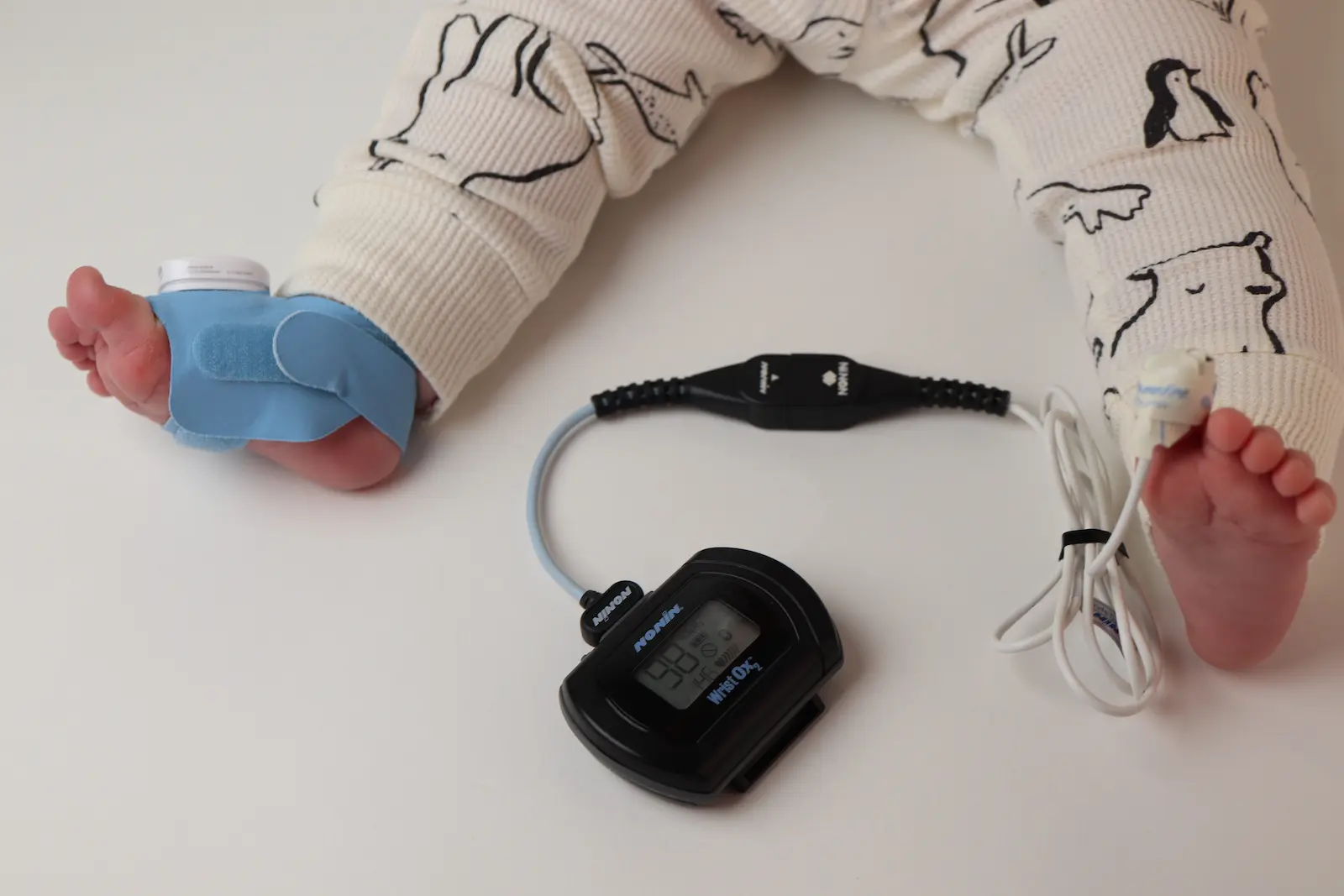
The testing plan was the same one I run on every monitor here: put a $1,500 Nonin 3150 hospital monitor on one foot and the sock on the other, then compare. I never got that far with the Sense-U.
Not for lack of trying. I put it on my 6-month-old, then on my own thumb, and finally on a pulse-oximeter simulator, because I genuinely wanted to give it every chance to prove me wrong.
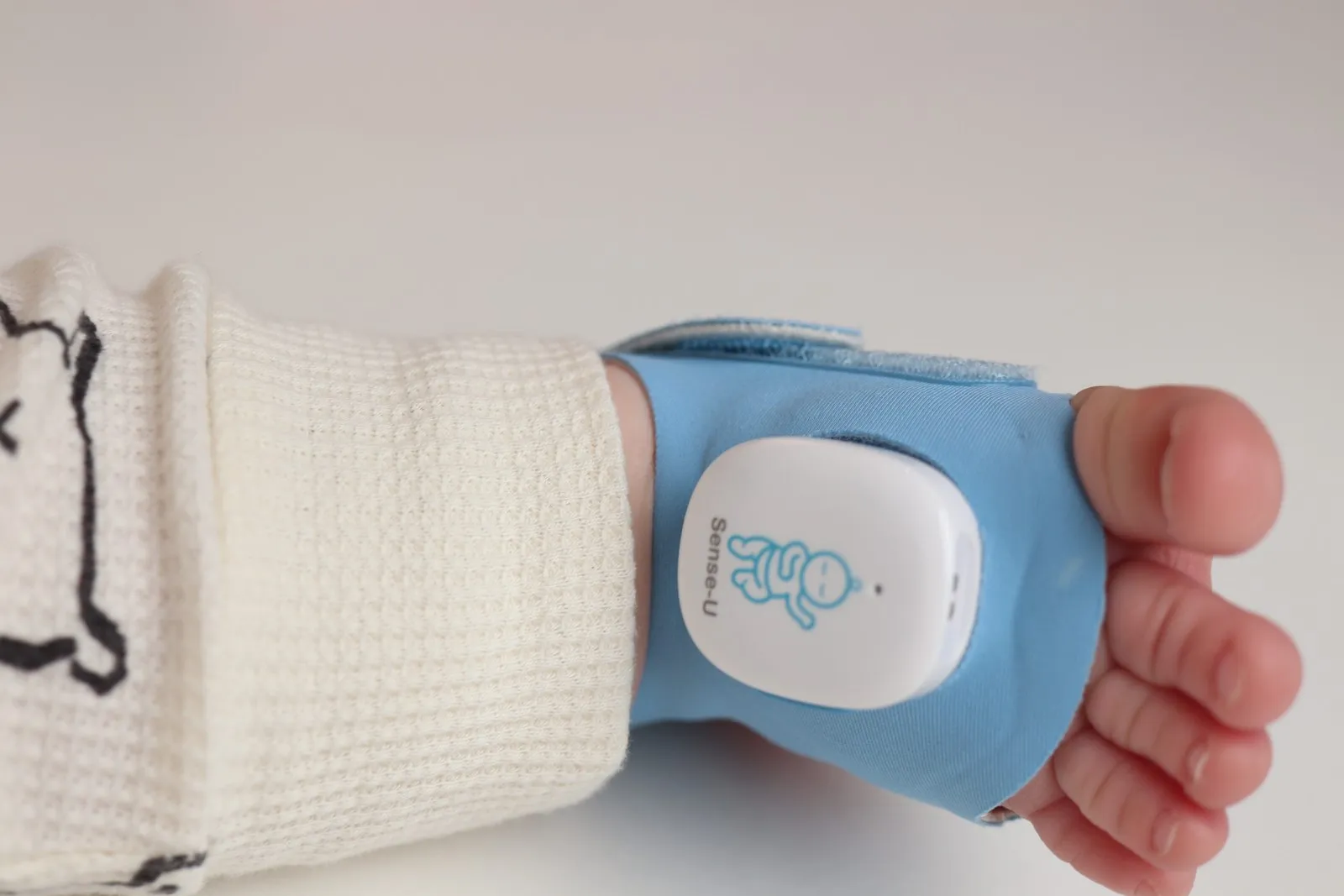
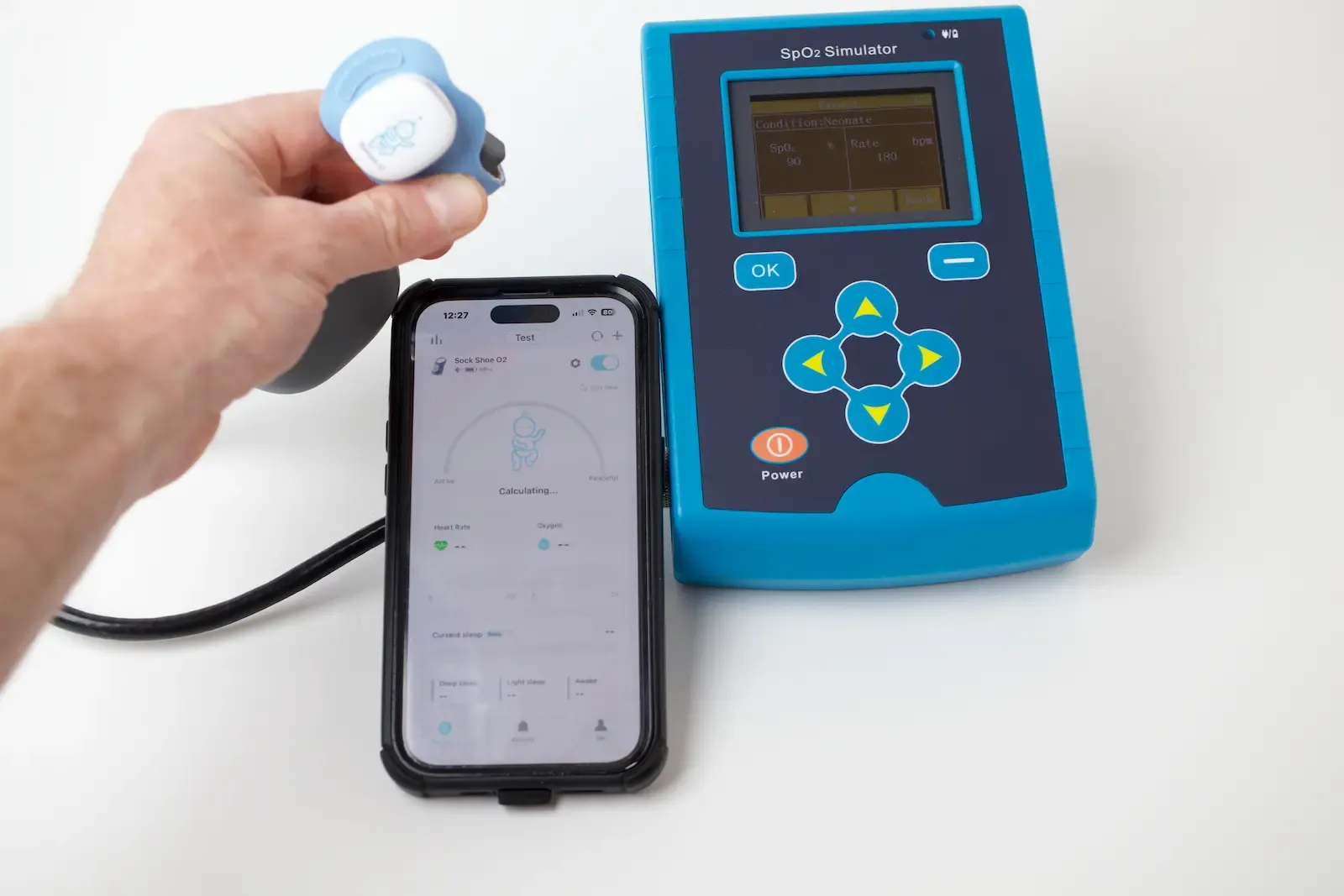
Again, I tested this device in a different way to get some data on it’s performance. A pulse-oximeter simulator feeding a perfect, textbook signal. Even then, the Sense-U held only a blip before dropping out.
It didn’t hold a signal anywhere, and here’s one of many reasons I think it struggled.
What I’d get instead
The Owlet Dream Sock — tested within about 2% of a hospital monitor, with a real oxygen alarm and support that’s still going. On a budget, the BabyTone Sleep Sock.
The Fit Problem — Why It Couldn’t Read
The reason is boring and physical: a few millimeters.
An infant sock only reads when its LED lines up with the photodetector across the foot, so the distance between them decides how big a foot it can wrap. I put calipers on all three socks, and the Sense-U has the shortest gap at 23.4 mm, versus 25.5 mm on the BabyTone and 31 mm on the Owlet.
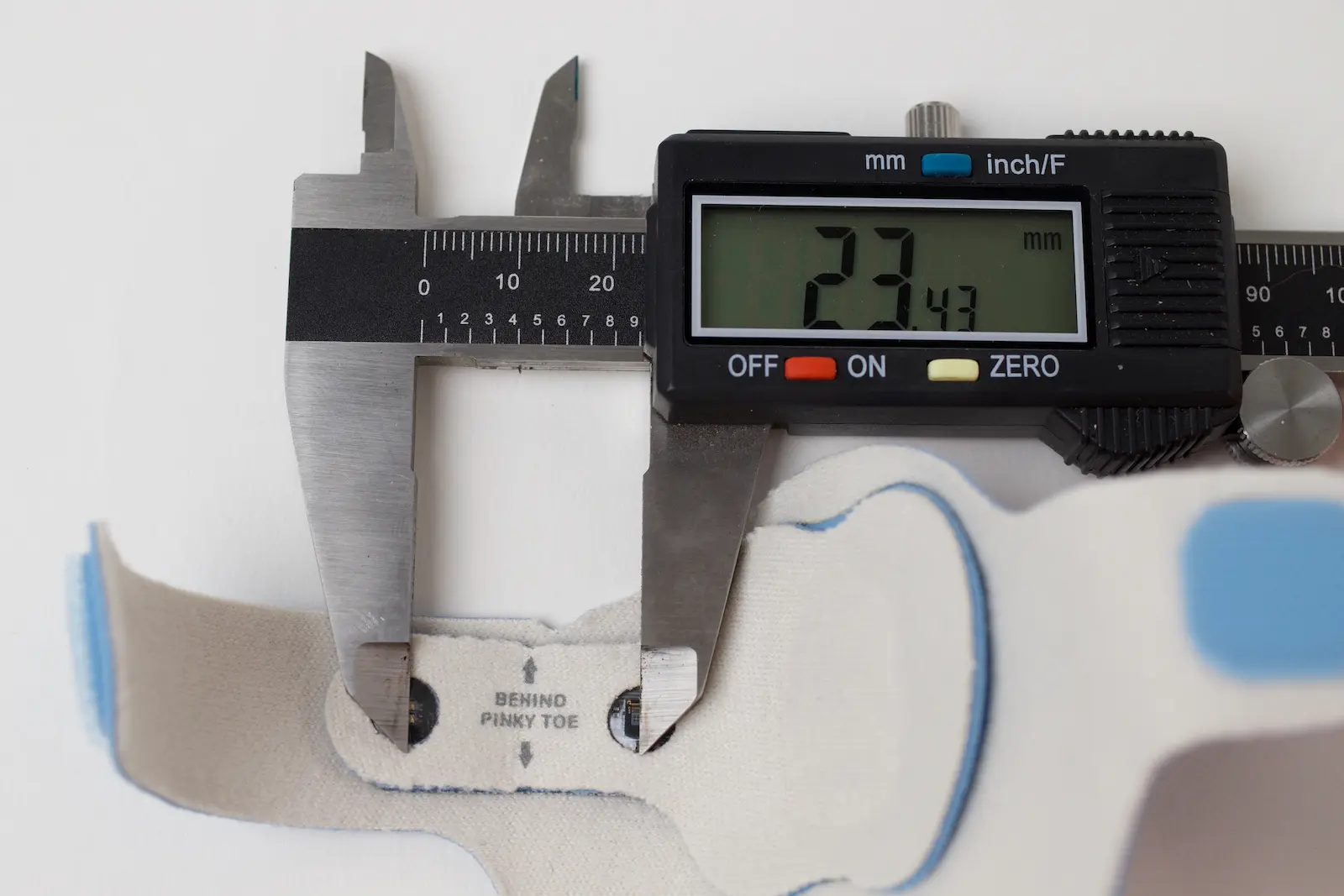
The shortest reach of the three. On the same foot, that was the difference between a signal and none.
On my son’s foot, that short reach meant the sock couldn’t wrap far enough to align the optics, and the app’s oxygen readout just sat on “–”. For context, the budget BabyTone got at least some signal on that same foot. The Sense-U got nothing.
To be fair, on a very small newborn foot the short gap might span it fine. But if your baby is anywhere past the tiny-newborn stage, fit is a real gamble.
The Signal That Won’t Hold
So I went to the friendliest target I could: my own thumb. A warm, well-perfused adult finger is the easiest read there is.
Even then, it struggled. It took about two minutes to show anything, briefly hit 95%, held for maybe 30 to 40 seconds, then dropped back to “Evaluating.”
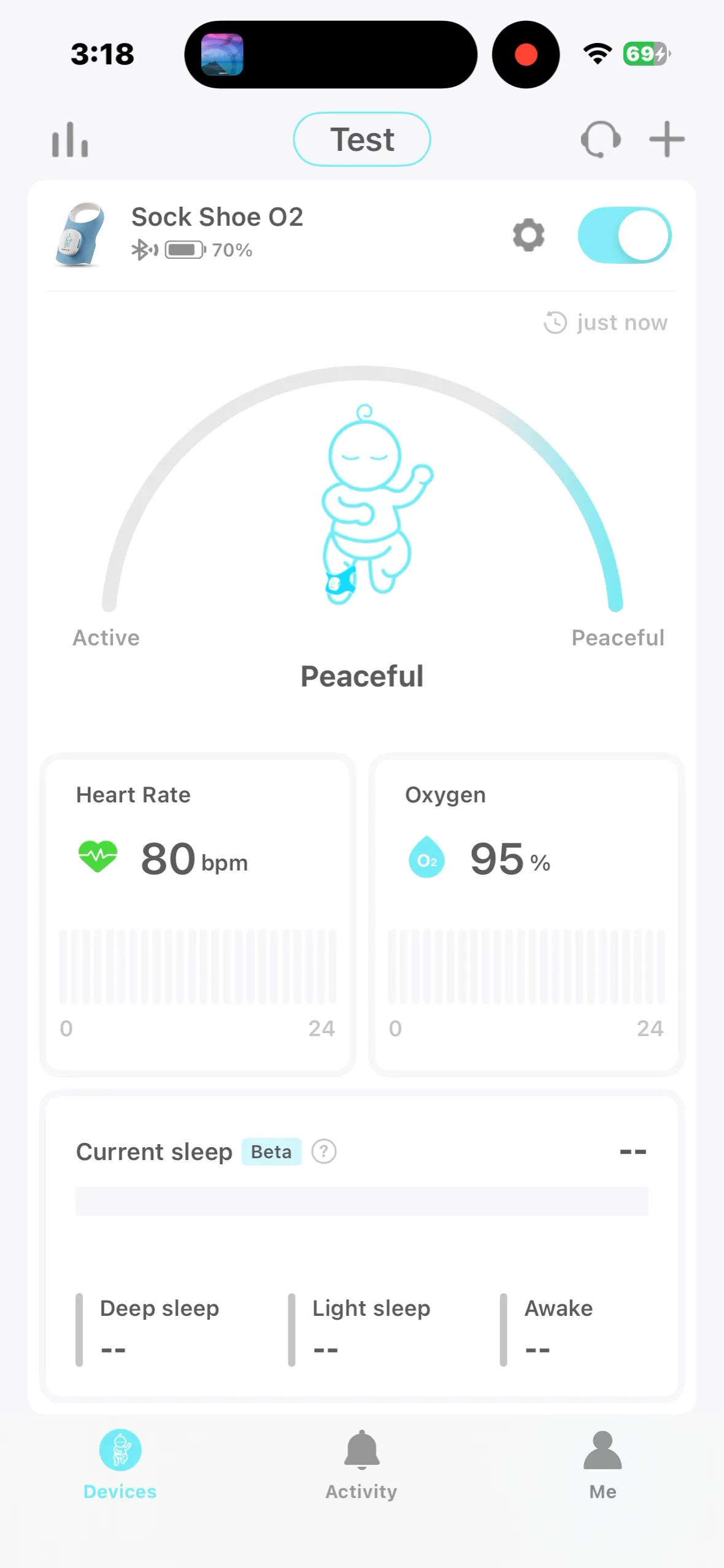
The dashboard doesn’t help. It’s built around a motion gauge that swings between “Peaceful” and “Your Baby is Moving,” and oxygen only appears while it’s locked on Peaceful. The slightest motion greys the whole thing out.
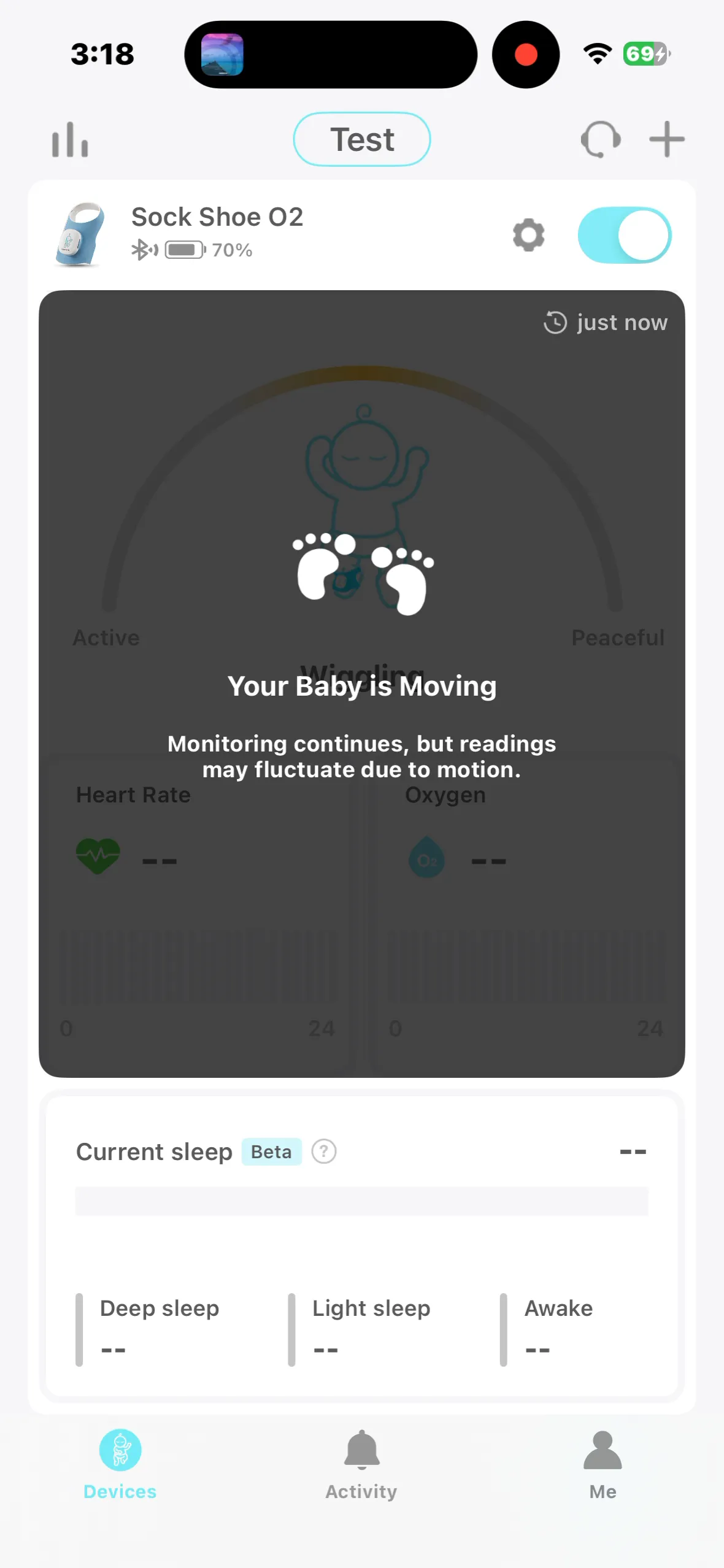
There’s a connectivity catch on top of that. By Sense-U’s own connection FAQ, the app has to stay open in the foreground before you lock the phone, and on Android, Location has to be on at all times, or it “cannot pair… or stay connected.”
A monitor you have to keep on screen and stare at isn’t a monitor. It’s a live feed you’re babysitting.
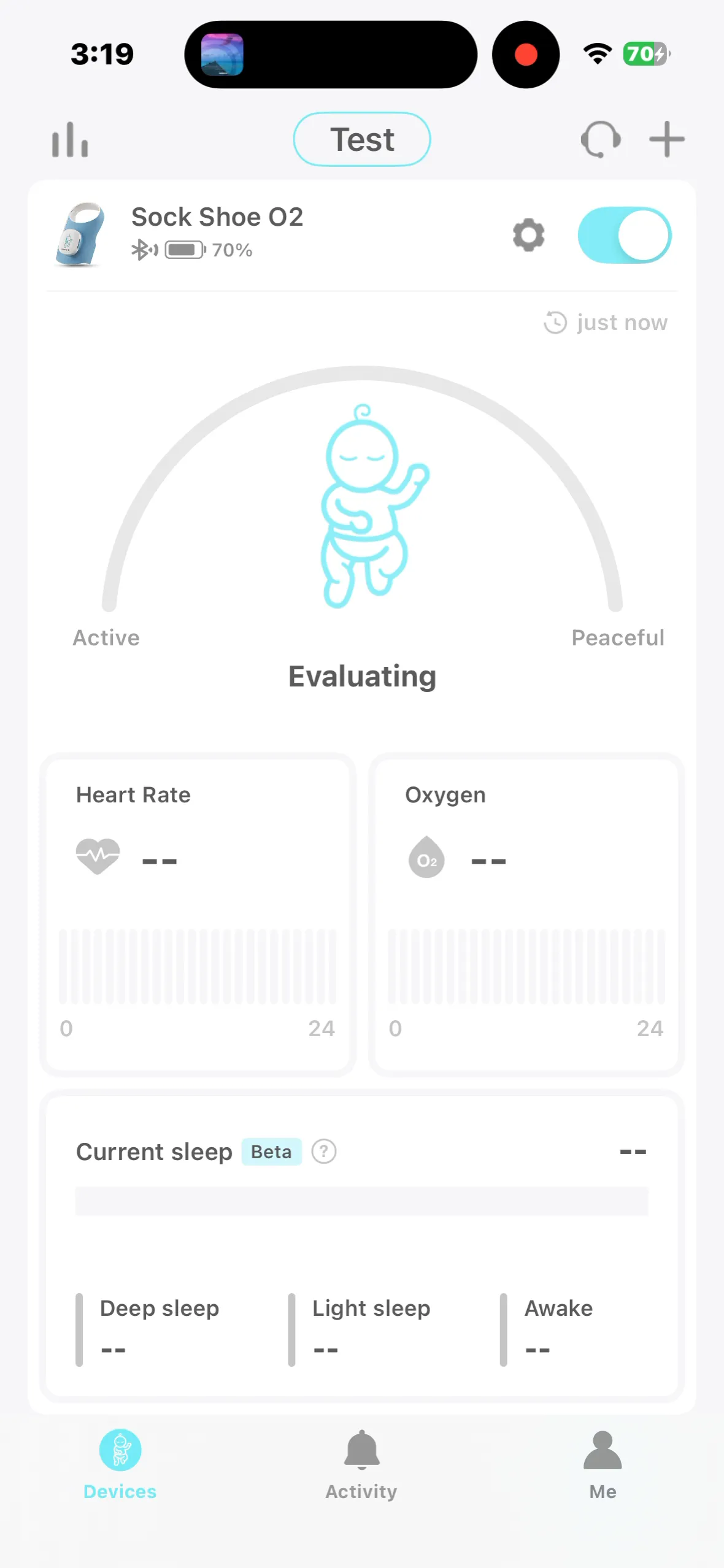
It that was not bad enough, wait for the alarms.
The Alarm Gaps
This is where a hopeful review turns into a no. A monitor’s real job is to alert you when something’s wrong. The Sense-U has holes here that aren’t about my fit or my foot.
Start with oxygen. Open the Heart-Rate settings and there’s an Alerts section with a low and high threshold you can set.
Open the Oxygen settings and there is no alerts section at all, just an on/off toggle and a disclaimer. There is literally no oxygen alarm to configure.
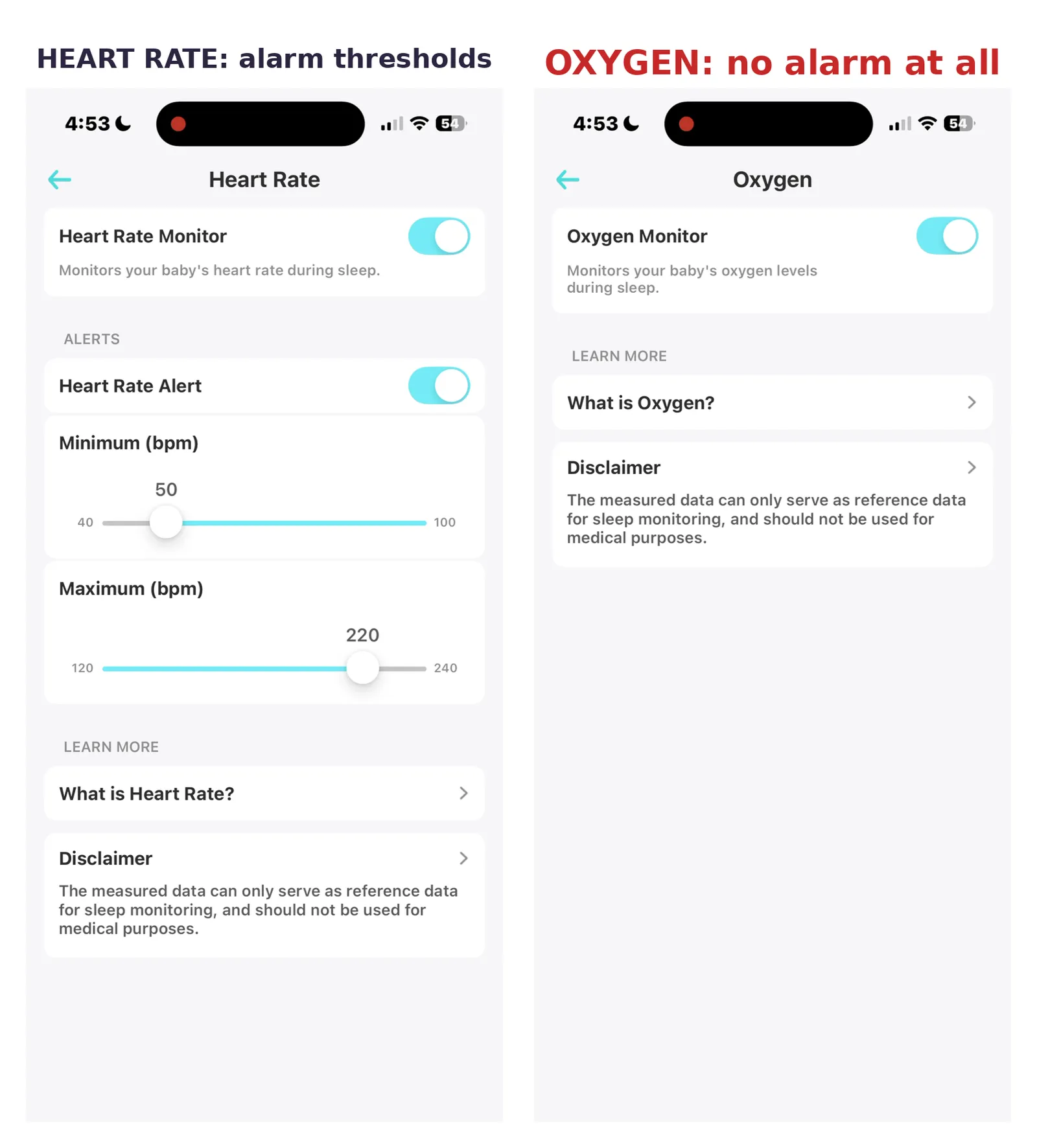
Then the alarm it does have. I set the low heart-rate threshold to 70, put the sensor on my own finger, and watched my pulse settle down to 70. Nothing fired. In my test, the one working alarm didn’t work.
It gets worse in the small stuff. The base station has a status light that’s supposed to turn red when something’s wrong, and it never did, even when I pulled the sensor off entirely and the signal was gone.
There’s no sock-removal alert either. Owners on Amazon report the heart-rate alarm only trips after about four minutes below threshold.
One line I’ll stay careful on: a short breath-hold on a healthy adult or relaxing to drop your heart rate doesn’t prove this device would miss a baby in real trouble, and I won’t make that claim. What I can say is the design: there is no oxygen alarm to set, and under stress the app blanks instead of warning you. For a device sold on peace of mind, that’s the whole problem.
What Sense-U Says About It
Here’s the part that settled it for me. The strongest critic of the Sense-U as a safety device is Sense-U.
The app’s own disclaimer reads: “The Sense-U Smart Sock… is NOT a medical device and is NOT intended to diagnose, treat, cure, or prevent any disease or condition, including… Sudden Infant Death Syndrome (SIDS)… False positive or false negative readings of your baby’s heart rate is a potential risk… should never replace adult supervision.”
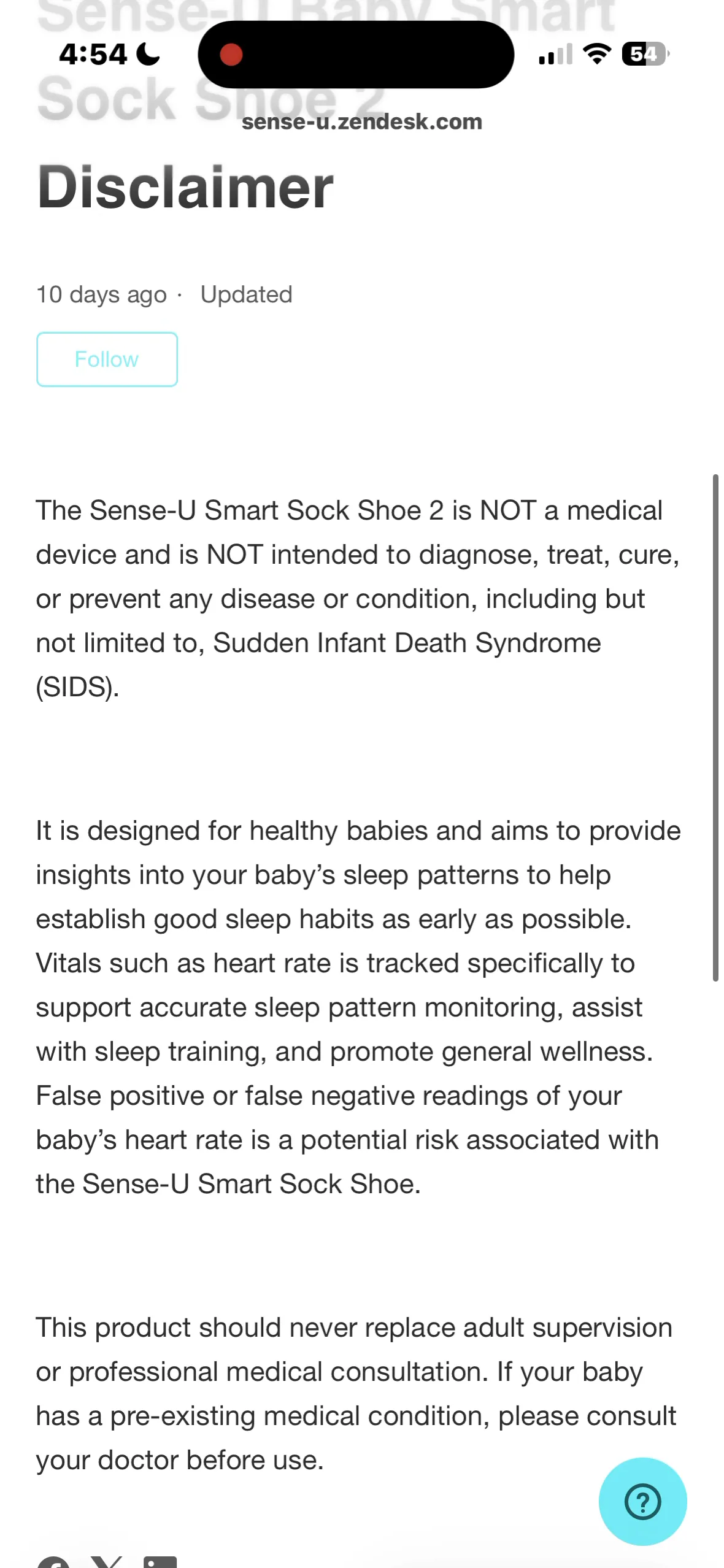
The company calls it a sleep-habit and wellness tracker, names the exact thing anxious parents fear as something it does not prevent, and admits its heart-rate readings can be wrong. That’s not me being harsh. That’s their own words.
Should You Buy the Sense-U Smart Sock?
No — not as a safety monitor, and that’s the only reason most people are shopping for one.
I hate that answer, because I wanted the cheaper option to be good. But I couldn’t get it to hold a signal, it has no oxygen alarm to set, its one heart-rate alarm didn’t fire when I tested it, and the maker itself says it isn’t a safety device. Any one of those is a problem; together they’re disqualifying.
If your budget is the reason you looked at the Sense-U, spend it on the BabyTone Sleep Sock instead — it tracked heart rate within about a beat of the hospital monitor and its alarms actually fired in my testing. If you want the most trustworthy read and a real oxygen alarm, the Owlet Dream Sock is the one I put on my own kid.
Either way, buy the one that does the job. For the full shortlist, here’s my best infant pulse oximeter guide.
I really did root for this one. Being honest with you is worth more than the story I wanted to tell. Sleep well, my friends.
What I’d get instead
The Owlet Dream Sock — tested within about 2% of a hospital monitor, with a real oxygen alarm and support that’s still going. On a budget, the BabyTone Sleep Sock.
Frequently Asked Questions
Common questions about
Keep reading
 Pulse Oximeters
Best Overnight Pulse Oximeters for Sleep Apnea (Lab Tested)
 Pulse Oximeters
Which Wellue Oximeter Should You Buy? 5 Models Lab-Tested
 Pulse Oximeters
Checkme O2 Max Review: I Tested It for 3 Nights Against a $1,500 Hospital Oximeter
 Pulse Oximeters