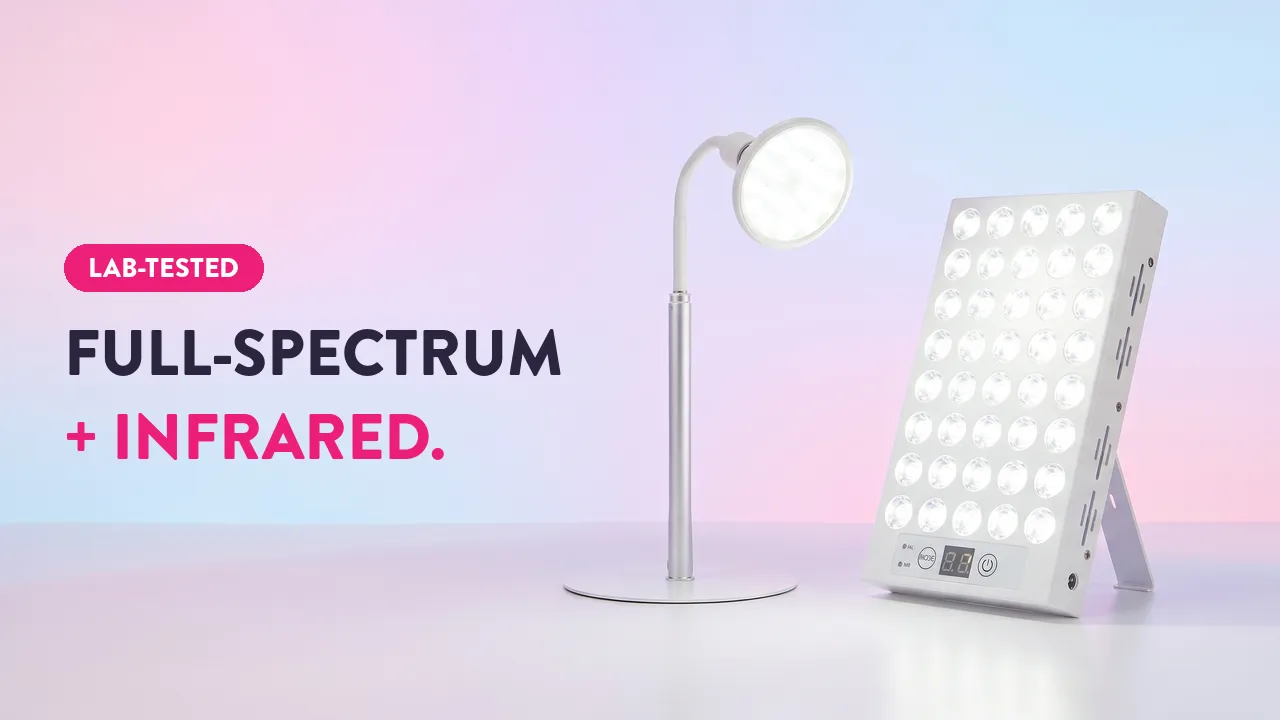
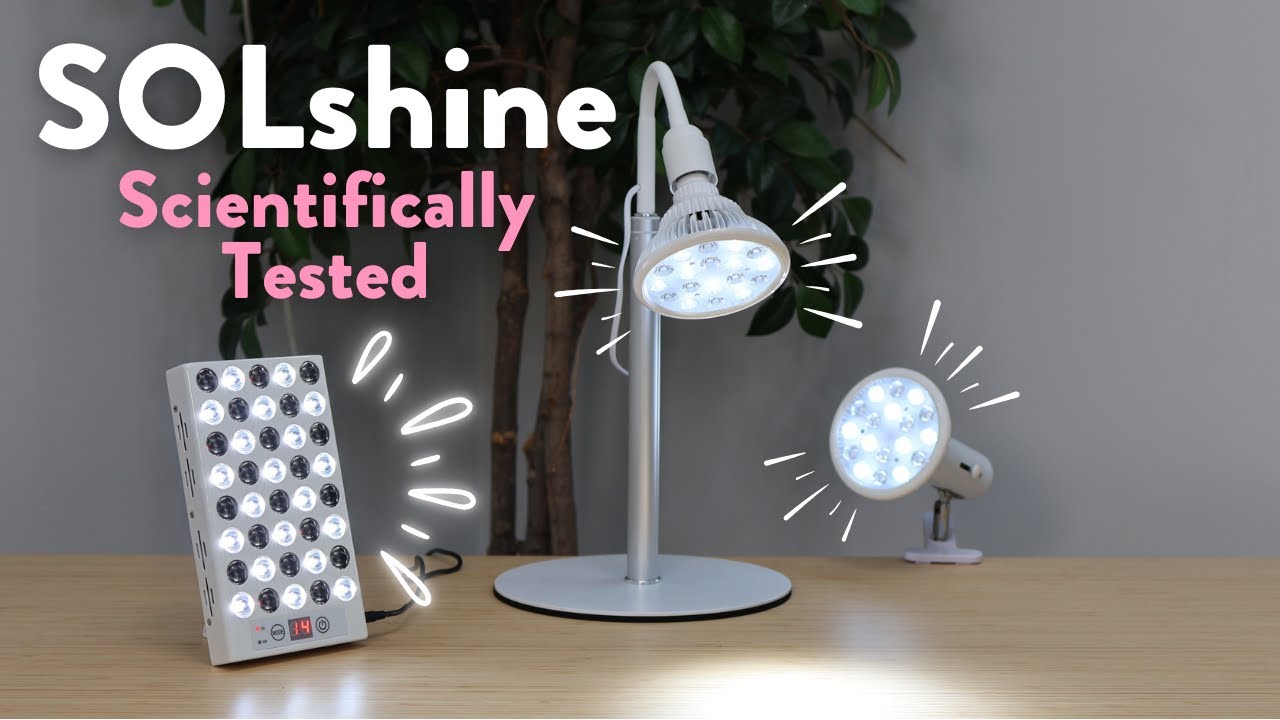
Mal-illumination plagues us all, and the folks behind SOLshine want to help solve that. Let’s look at their offerings in-depth to see what we’re getting.
Check out our best SAD lamps list if you’re on the hunt! →
OYB1010% off
My verdict
PhotoVites
The Photovites lamp and bioBulb use SunLike diodes to provide high-quality, flicker-free, full-spectrum light that supports circadian health and mood, along with healthy infrared light for added sunlight-like benefits. Though pricey, they’re among the few 2-in-1 products available, making SOL a top choice for this category.
See the lab results
White + IR, 1 ft · measured Oct 1, 2026
- 17,382m-EDI
- Melanopic EDI
- 17,701lux
- Brightness
- 6268K
- Color temp
- None
- Flicker
Spectrum
Spectrum chart. PhotoVites, 6268K, melanopic DER 0.98.
Flicker, white + IR, full brightness
Chart by time. PhotoVites.
What is SOLshine?
The SOLshine founders worked with the late original pioneer of light, John Ott, and have now come full circle to provide some truly excellent full-spectrum light products to help solve some of the issues with current offerings.
This is a very small company run by folks who really believe in what they’re doing, which is always a plus.
These lights utilize genuine SunLike diodes (my favorite) and many infrared LEDs to complement them, so let’s dive deeper into this!
Free · 95 pages
You're reading about one piece of this. The book is the whole day.
The Circadian Blueprint covers setting your body clock with light — the timing, the doses, and which products actually deliver them. Every number came off my own spectrometer.
Why Infrared?
It’s believed that shorter wavelength blue light should be properly balanced with infrared as it is in natural Sunlight. Which I agree with! This is why I include halogen lights in my office setup!
However, the products from SOLshine offer a more elegant all-in-one solution. And they do contain a whole bunch of infrared!
Infrared can help with:
- Eye health
- Blood flow
- Nutrient assimilation
- Libido
- and more!
So it’s nice that these lights include this crucial part of the light spectrum.
The SOL PhotoVites Lamp
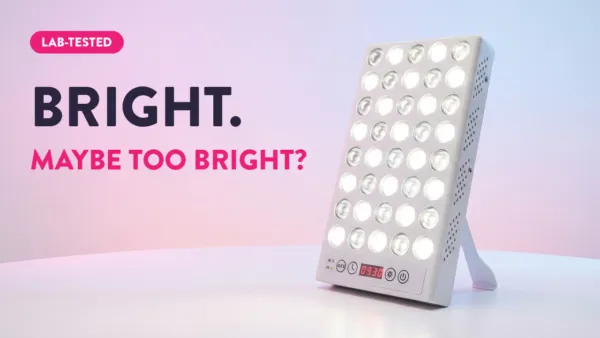
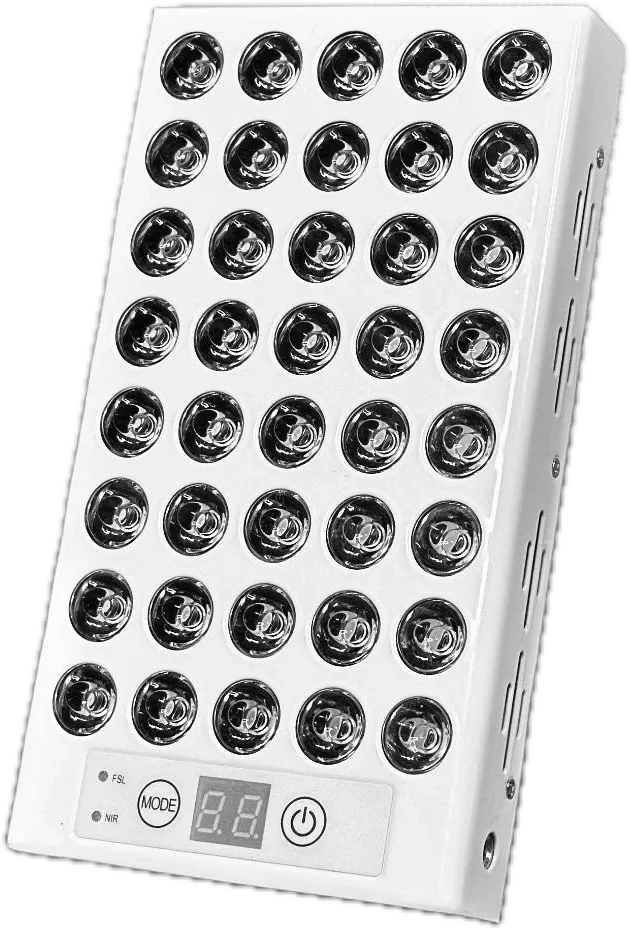
This is SOLshine’s premier lamp, which offers a very bright SAD lamp experience coupled with five wavelengths of infrared light.

SOLshine recommends using the FSL (full spectrum light) mode for 15 minutes first thing in the morning, followed by 15 minutes on the NIR (near infrared) mode.
Using the Photovites lamp is very simple, with an on-off and mode buttons that switches between VIS+NIR or just NIR.

The all-metal build feels good, and a built-in fan on the back helps to assure me that this will last a long time!
Testing the PhotoVites Lamp Output
Using our lab-grade spectrometers, we can see exactly what the spectral output is here and how bright it is.

The first thing I want to look at is the visible spectrum, which is fantastic as it uses SunLike diodes, the world’s best full-spectrum diodes.
Spectrum chart. PhotoVites, white + IR, 1 ft, 6268K, melanopic DER 0.98, about the same body-clock light than daylight.
See the numbers
PhotoVites, white + IR, 1 ft
- Color temp
- 6268K
- Body-clock lightMelanopic DER: how much light this lamp gives the body clock for its brightness, compared with daylight at 1.00. Higher means more body-clock light per lux.
- 0.98×
- Vs. daylightBody-clock light compared with daylight of the same color temperature at the same brightness.
- About the same
Here are the average lux measurements I got over the 15-minute run time:
- 1 ft: 17,700 lux
- 2 ft: 10,700 lux
SOL claims 13,470 lux at 2 feet, so we have different values here, but it’s close. And regardless, achieving over 10,000 lux at 2 feet is phenomically bright; many lamps struggle to achieve this at even 1 foot.
Testing the Infrared Range
The PhotoVites lamp also outputs a bunch of infrared, so I was curious to see what kind and how much. You can barely see it in that visible spectral graph above, but here’s the full output at 1 foot, visible and infrared:
Spectrum chart. PhotoVites, white + IR, 1 ft, 6268K, melanopic DER 0.98, about the same body-clock light than daylight.
See the numbers
PhotoVites, white + IR, 1 ft
- Color temp
- 6268K
- Body-clock lightMelanopic DER: how much light this lamp gives the body clock for its brightness, compared with daylight at 1.00. Higher means more body-clock light per lux.
- 0.98×
- Vs. daylightBody-clock light compared with daylight of the same color temperature at the same brightness.
- About the same
As you can see, there’s a ton of infrared light here! It even rivals the visible light output, which is pretty impressive. There’s one more peak at around 940nm.
And here’s the infrared-only mode on its own, at 1 foot:
Spectrum chart. PhotoVites, iR only, 1 ft, 3584K, melanopic DER 0.00, 100% less body-clock light than daylight.
Testing Flicker
Next, I checked flicker with our flicker meter.

It turns out this is very flicker-free! I love to see this. Below, you’ll see the completely flat waveform, meaning this flickers about as much as the Sun.
A flat line at the top means steady light; dips mean flicker.
Light output by time. PhotoVites percent flicker 0.24%; PhotoVites frequency Steady light; PhotoVites ieee 1789 No observable effect.
See the numbers
PhotoVites
- Percent flickerHow far the light dips from its brightest, as a share of the total. Under 1% is steady to the eye.
- 0.24%
- Frequency
- Steady light
- IEEE 1789The flicker safety guidance for lighting: how deep the flicker is, for its frequency.
- No observable effect
The SOLshine bioBulb
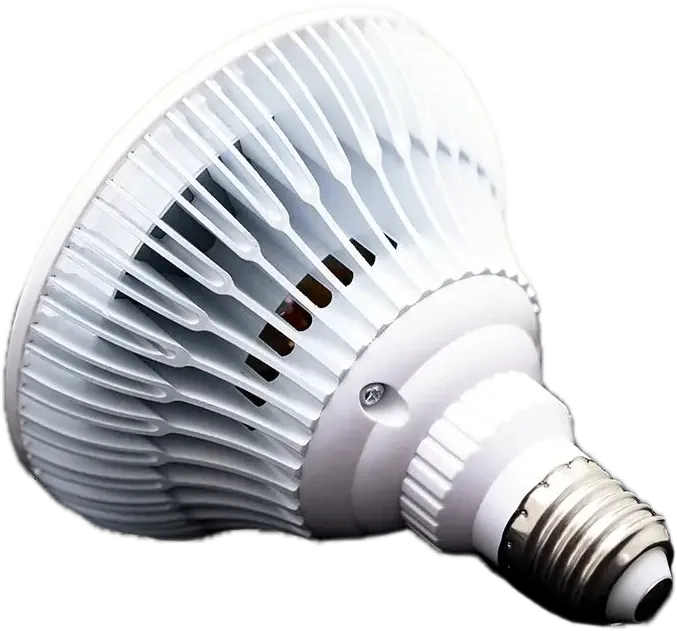
The bioBulb from SOLshine is a pretty interesting idea. They’ve essentially packed the lamp into a much smaller form factor, which is VERY bright.
The basic bioBulb comes with a clip socket that allows you to attach it to anything you want.

Here it is attached to my lovely fake tree!

You can see that this is almost like a flashlight. You won’t want to look right at it! Position this above you at the edges of your vision and point it towards your face.
Checking Out the Floor Stand Add-on
There’s also a very handy telescoping floor stand that lets you use this anywhere if you can’t find a place to clip it.

Now, here’s how it looks extended: it gets pretty tall!

Here are a couple of photos from SOL’s website to give you an idea of use cases for this:


But let’s see how this compares to the lamp…
Testing the bioBulb Lamp Output
Once again, we placed the bioBulb in front of our spectrometer.

This emits a very similar spectrum as the Photovites lamp:
Spectrum chart. BioBulb, 1 ft, 7516K, melanopic DER 1.09, about the same body-clock light than daylight.
See the numbers
BioBulb, 1 ft
- Color temp
- 7516K
- Body-clock lightMelanopic DER: how much light this lamp gives the body clock for its brightness, compared with daylight at 1.00. Higher means more body-clock light per lux.
- 1.09×
- Vs. daylightBody-clock light compared with daylight of the same color temperature at the same brightness.
- About the same
Here are the lux measurements:
- 1 ft: 25,200 lux
- 2 ft: 8,700 lux
It’s interesting that at 1 foot, this is much brighter than the lamp; however, actually becomes slightly less bright at 2 feet. Still, this is a very bright, full-spectrum light bulb capable of significantly impacting your circadian rhythm, among other things.
Flicker
Of course, flicker was also tested on the bioBulb, which also doesn’t disappoint!

Below, you’ll see that there’s a slight waveform ripple here, but it’s something I’d still consider flicker-free!
A flat line at the top means steady light; dips mean flicker.
Light output by time. BioBulb percent flicker 0.53%; BioBulb frequency 120 Hz; BioBulb ieee 1789 No observable effect.
See the numbers
BioBulb
- Percent flickerHow far the light dips from its brightest, as a share of the total. Under 1% is steady to the eye.
- 0.53%
- Frequency
- 120 Hz
- IEEE 1789The flicker safety guidance for lighting: how deep the flicker is, for its frequency.
- No observable effect
Nothing to worry about here.
Conclusions and Thoughts
Utilizing some wonderful SunLike diodes, the Photovites lamp and bioBulb emit a very high-quality, flicker-free, full-spectrum visible light that’s perfect for enhancing your circadian rhythm and improving your mood.
But they also emit a broad range of healthy infrared light! Bringing them that much closer to providing you with the full benefits of Sunlight indoors.
While these are certainly expensive, they’re some of the only products of their kind on the market. And if you’re looking for a 2-in-1 product like this, SOL is a great company to go with.
OYB1010% off
My verdict
PhotoVites
- Pro: Very bright and effective SAD option
- Pro: Powerful and broad infrared output
- Pro: Completely flicker free
- Pro: Visible or infrared only options
- Con: On the expensive side
- Con: Can be somewhat visually uncomfortable to use
See the lab results
White + IR, 1 ft · measured Oct 1, 2026
- 17,382m-EDI
- Melanopic EDI
- 17,701lux
- Brightness
- 6268K
- Color temp
- None
- Flicker
Spectrum
Spectrum chart. PhotoVites, 6268K, melanopic DER 0.98.
Flicker, white + IR, full brightness
Chart by time. PhotoVites.
OYB1010% off
My verdict
BioBulb
- Pro: Very bright and effective SAD option
- Pro: Powerful and broad infrared output
- Pro: Completely flicker free
- Pro: Can be used just about anywhere
- Con: On the expensive side
- Con: Can be somewhat visually uncomfortable to use
See the lab results
1 ft · measured Oct 1, 2026
- 27,497m-EDI
- Melanopic EDI
- 25,243lux
- Brightness
- 7516K
- Color temp
- 0.53%
- Flicker
Spectrum
Spectrum chart. BioBulb, 7516K, melanopic DER 1.09.
Flicker, full brightness
Chart by time. BioBulb.