

Review Summary
A genuinely premium circadian floor lamp whose marquee claims actually survive testing. It has near-perfect color, effectively flicker-free output, and real dedicated evening channels. It’s expensive, heavy, and only moderately bright on its own, but the light quality is the best I’ve measured in a home lamp.
Pros
Cons
Most premium lights overpromise on the spec sheet. So when I put the Chroma Skylight on a spectrometer and a flicker meter, I expected to catch it. A soft fidelity number here, some hidden dimming flicker there.
Mostly, I couldn’t. This Chroma Skylight review is the rare case where a company’s biggest claims held up under my instruments. Which is exactly why the buy decision comes down to price and room, not light quality.
What It Is
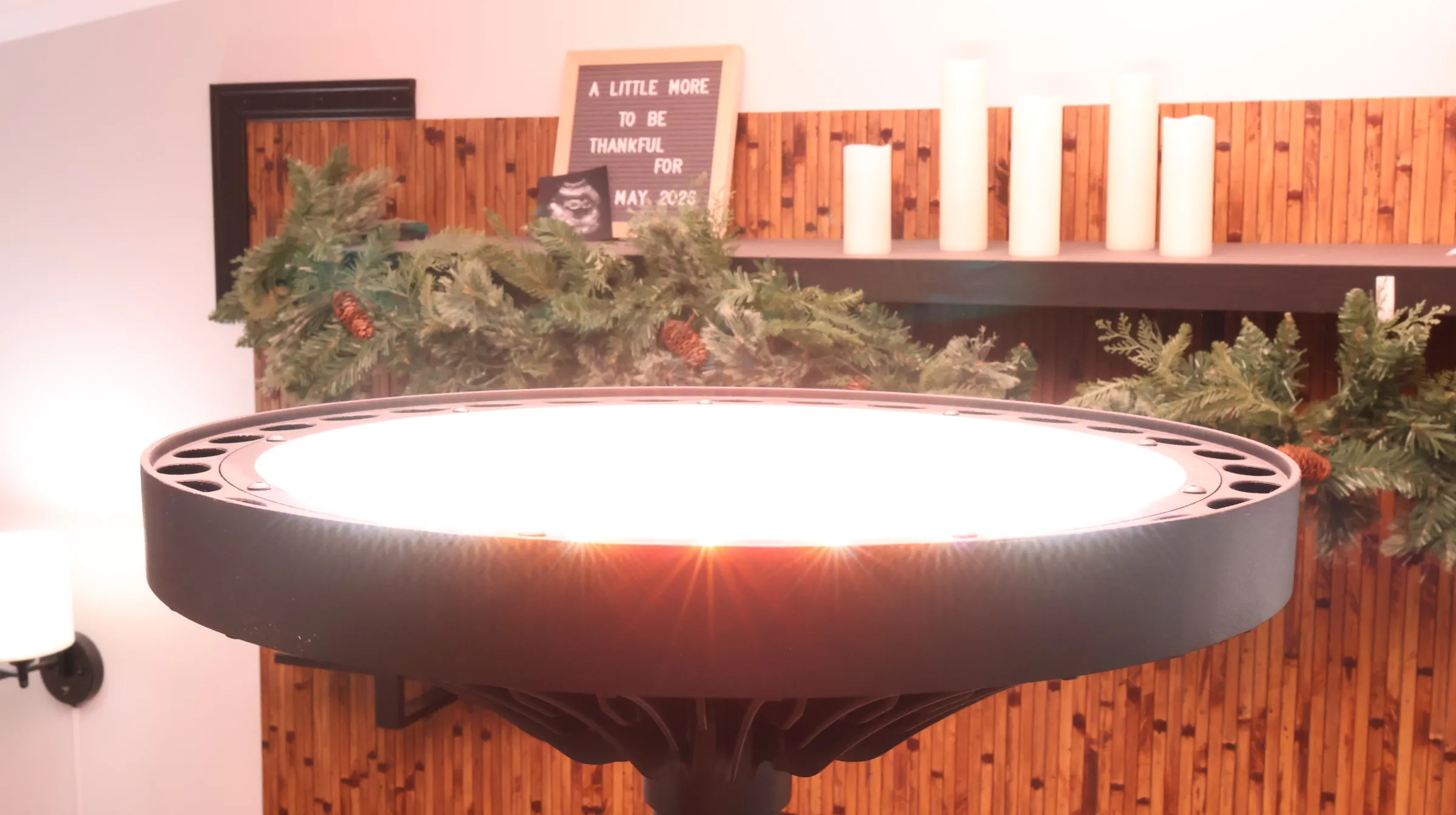
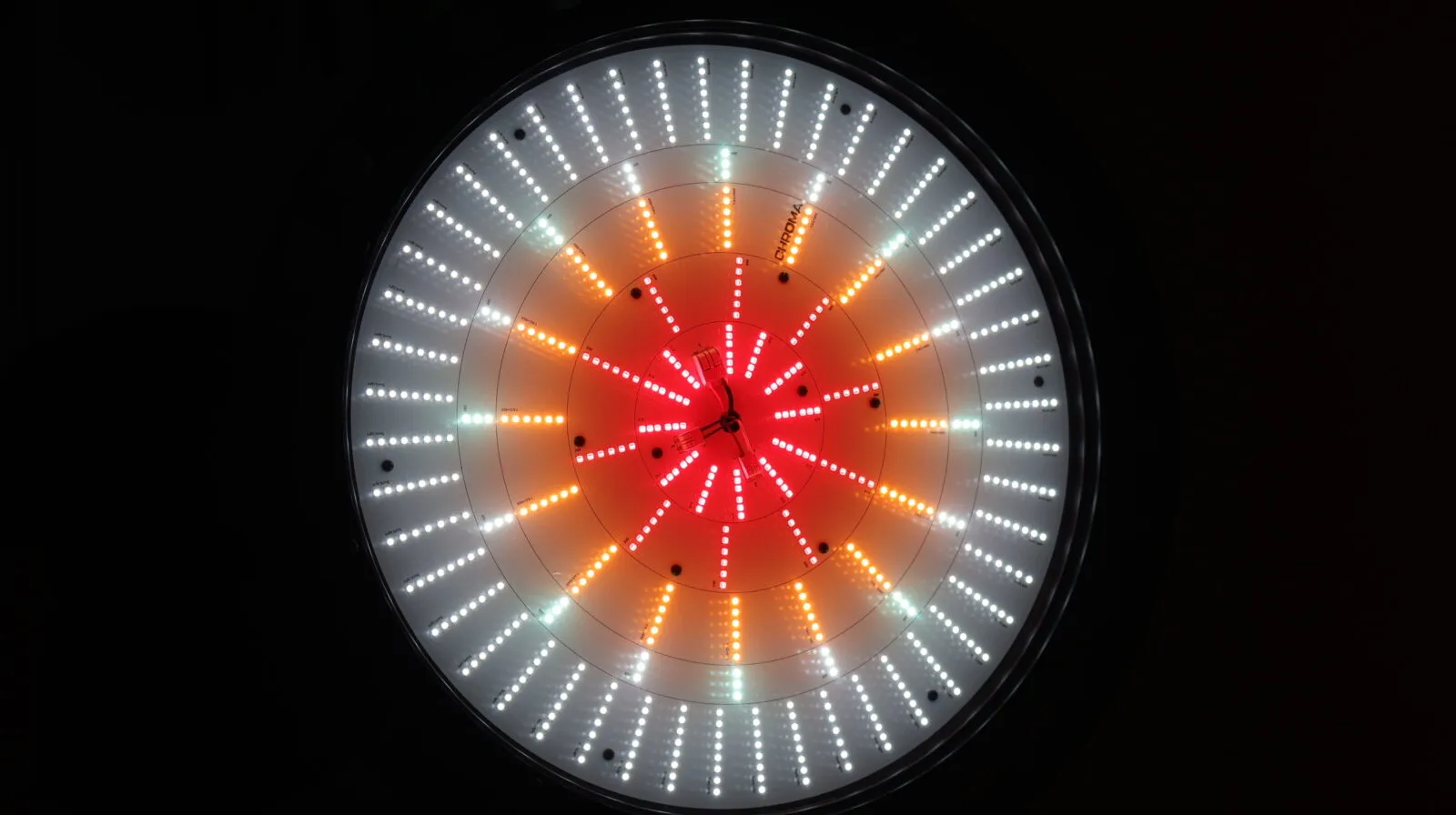
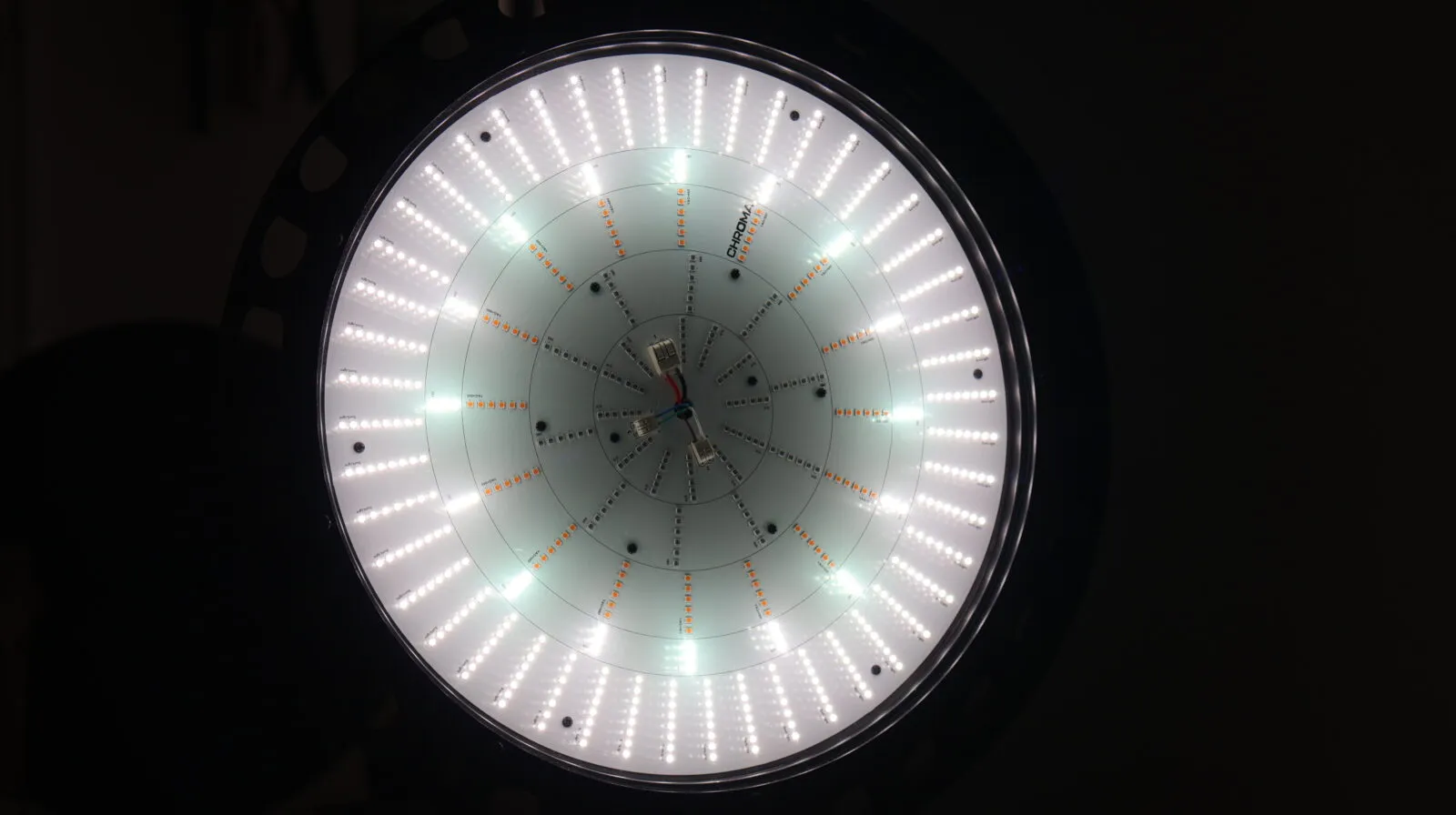
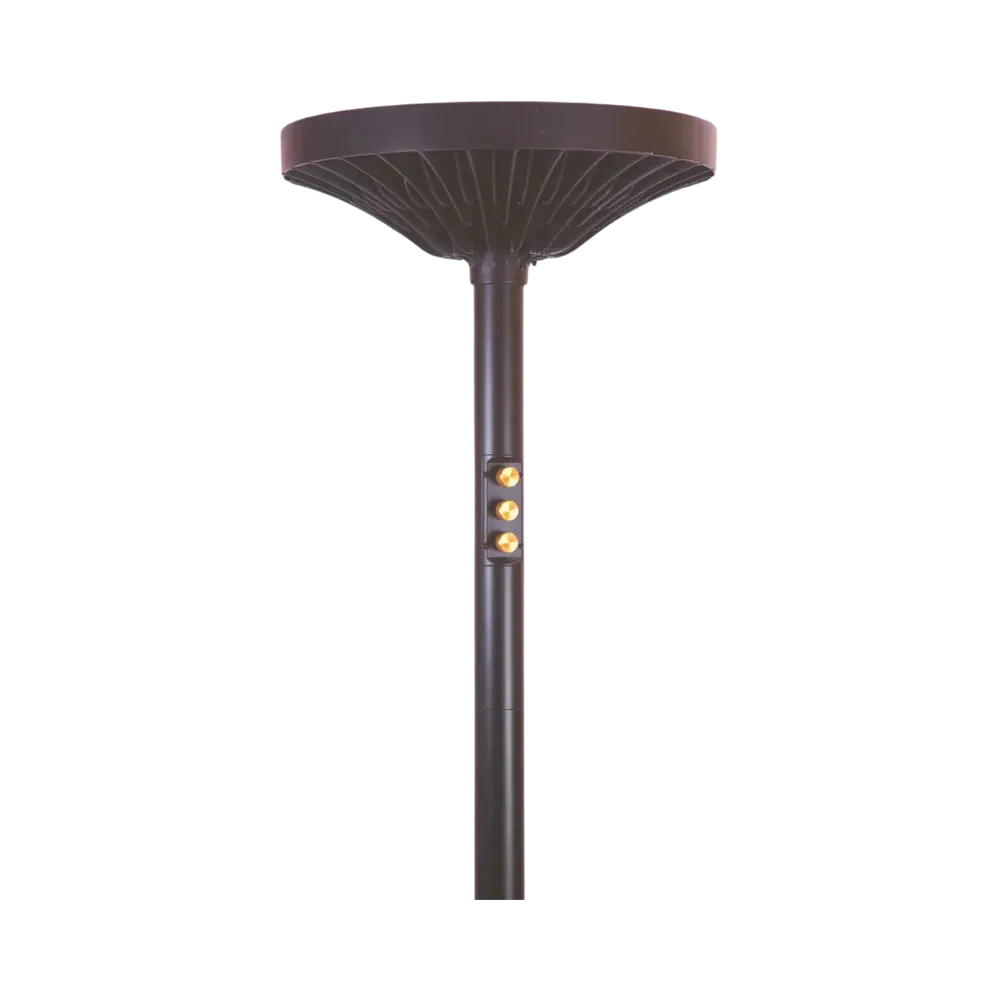
The Skylight is a full-spectrum floor lamp built around three separately dimmable channels: a 5000K daytime white, a deep amber, and a pure red. You mix them by hand with three knobs.
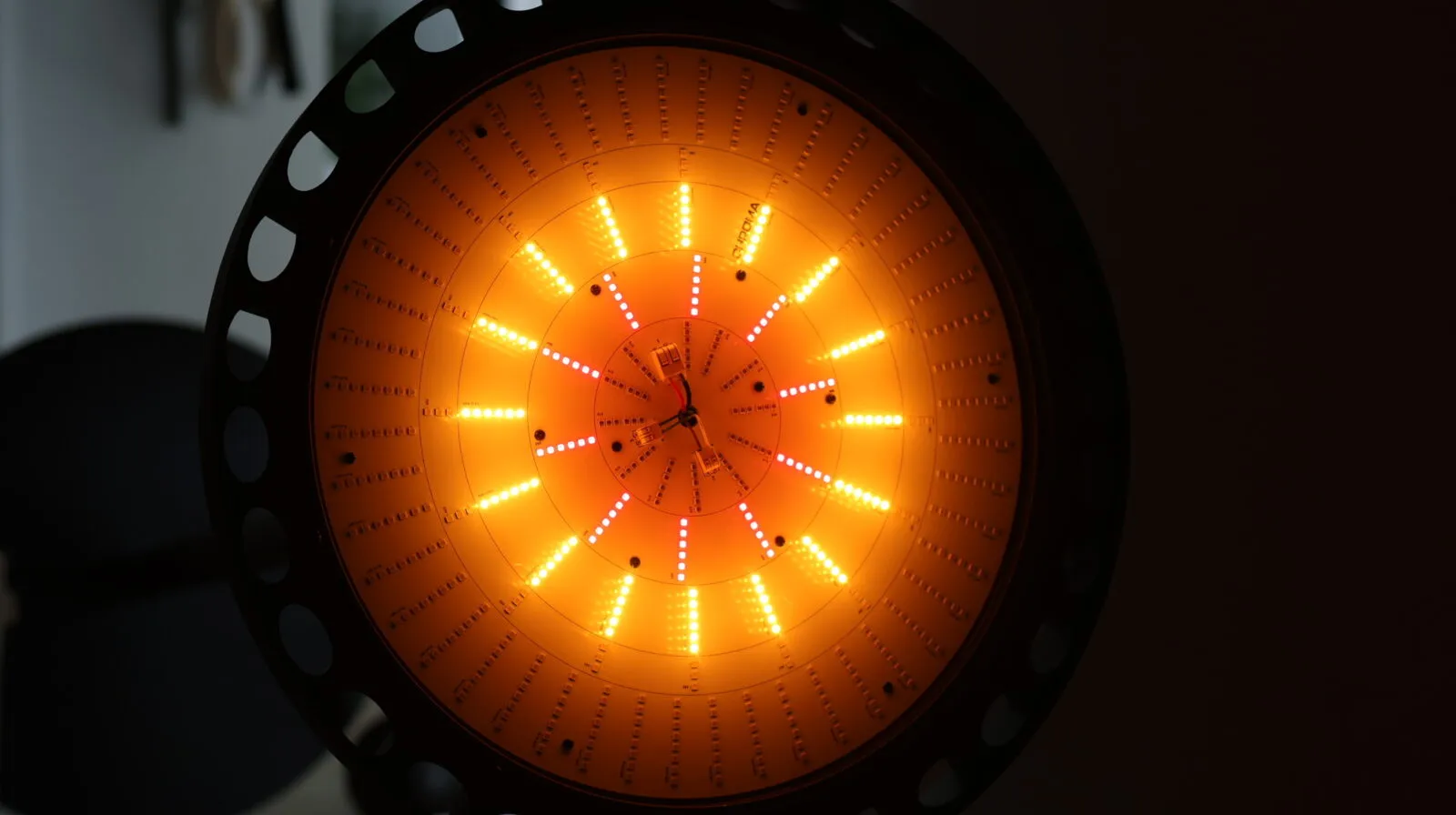
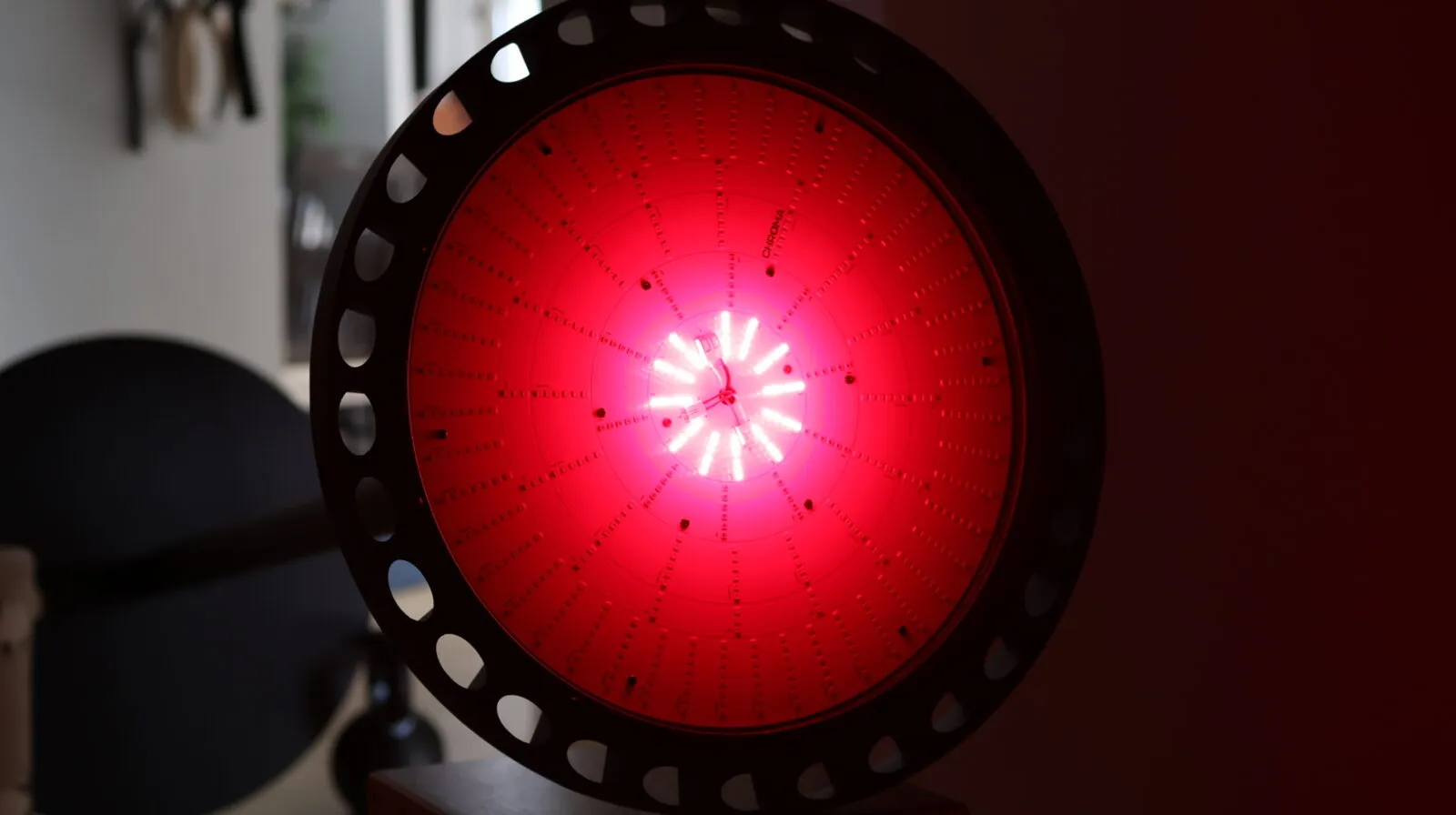
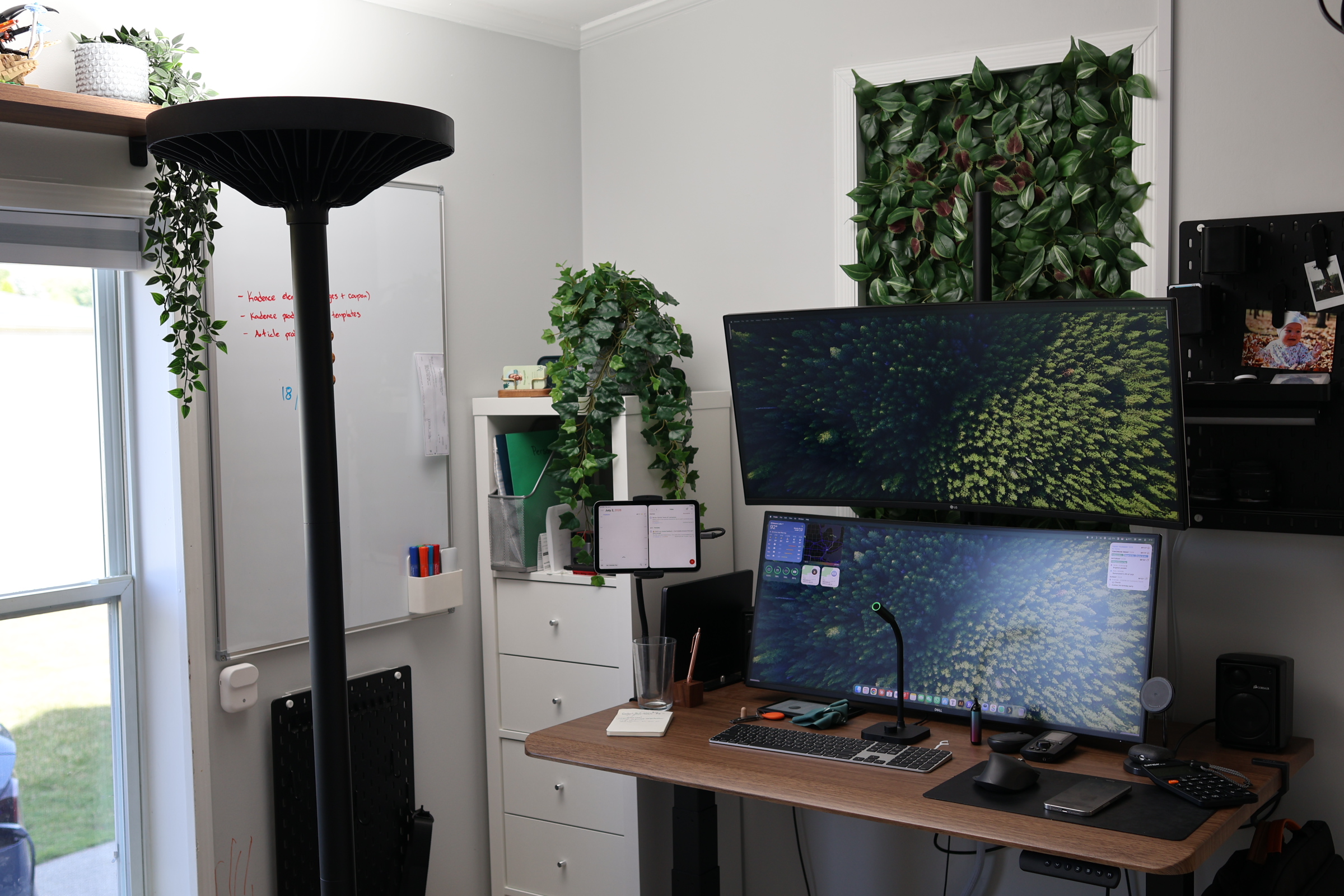
It’s a serious object. 110 pounds assembled, a head about 75 inches up, and a single 550-watt model at $2,400. There’s no app and no automation. Everything is analog.
Free · 95 pages
You’re reading about one piece of this. The book is the whole day.
The Circadian Blueprint covers setting your body clock with light — the timing, the doses, and which products actually deliver them. Every number came off my own spectrometer.
Check your inbox to confirm. Plus a short note each month on what I’ve tested — unsubscribe anytime.
That analog simplicity is either a feature or a limitation depending on who you are, and I’ll come back to it.
How I Tested It
Every number here comes off my own bench. A spectrometer for color and melanopic output, a flicker meter sampling at 10 kHz, an IR camera for heat, and a wall meter for power draw.
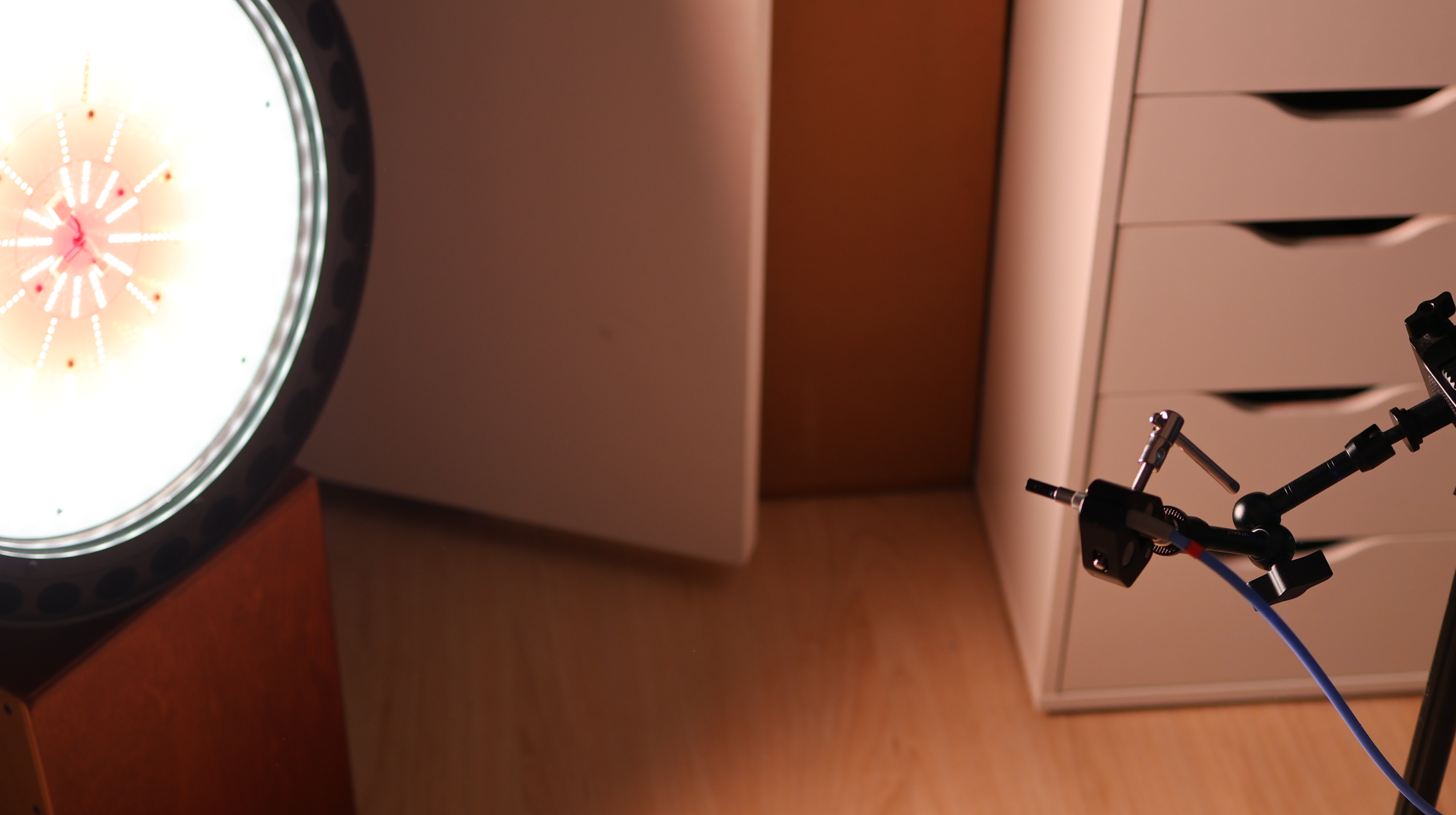
I measured each channel on its own and in combination, at two feet and at realistic standing distance.
The Claims That Actually Hold
Chroma leads with color fidelity, and this is where it earns the price. On the white channel I measured CRI Re 97.4 and TM-30 Rf 97.
That’s the strict CRI (Re), not the friendlier Ra, which reads 98.5. Chroma advertises “98+ Rf,” so they’re essentially dead-on.
Then there’s the “no cyan gap” claim. Most white LEDs have a dip in the 480–500nm cyan region.
The Skylight’s white doesn’t dip there. Its spectrum actually peaks at 494nm, right in the middle of that band. I went in expecting to knock a few points off their marketing. The white channel didn’t give me the chance.
The Flicker Test
Chroma makes a big deal of being “true flicker-free” with no PWM, so I pushed on it.
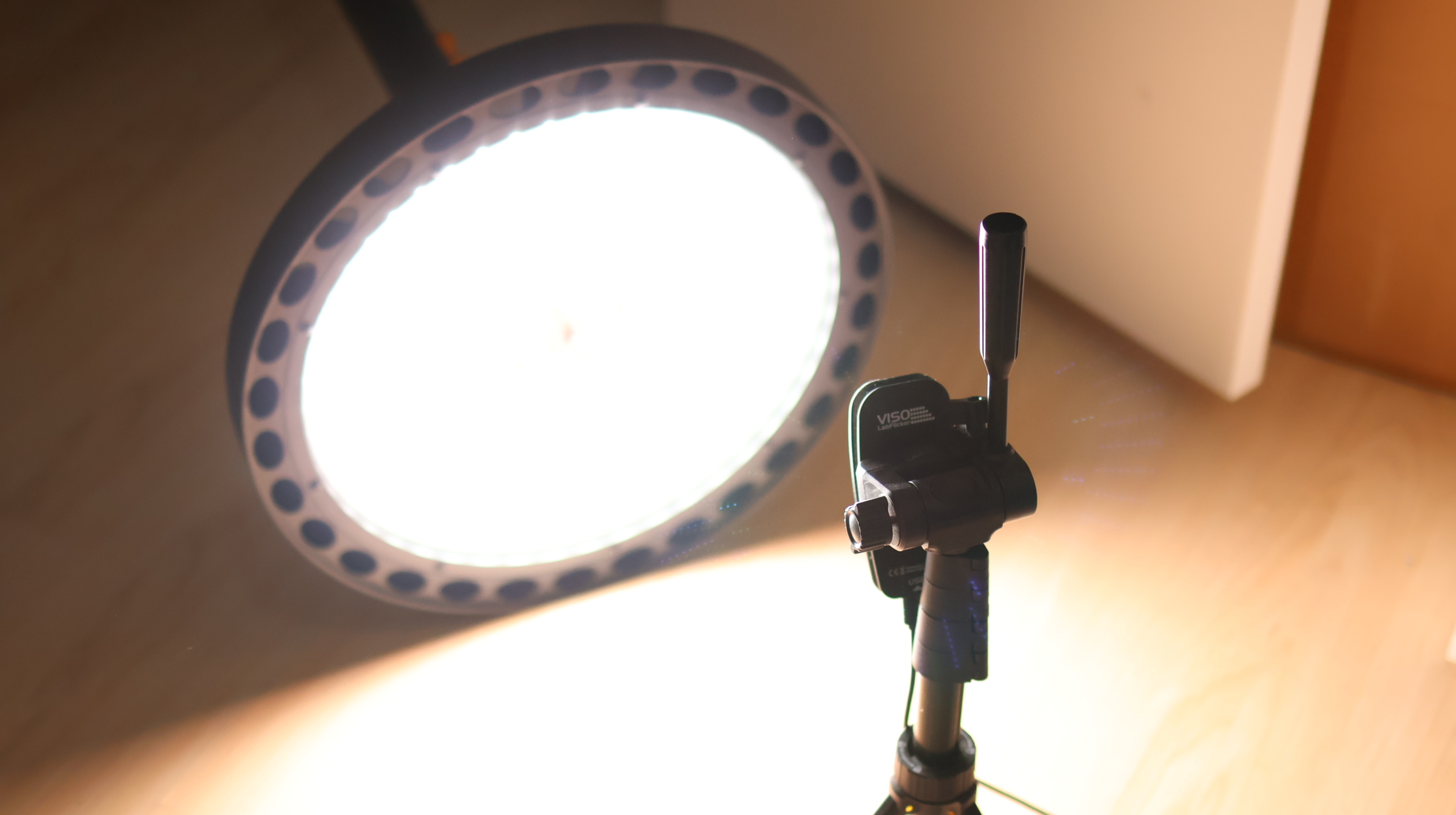
At full power the white channel measured 0.41% flicker at 120Hz, basically a flat line. Dimmed is where I found the one asterisk. At a low setting it rose to 4.27% at 3.3kHz.
That’s still very low, still well inside safe territory, and it’s not the low-frequency PWM they criticize competitors for. So the claim holds in practice. It just isn’t literally zero once you dim it.
Is It Actually Bright Enough?
Here’s the honest catch. The white channel reads about 10,322 lux at two feet, a big number, but two feet isn’t where you sit.
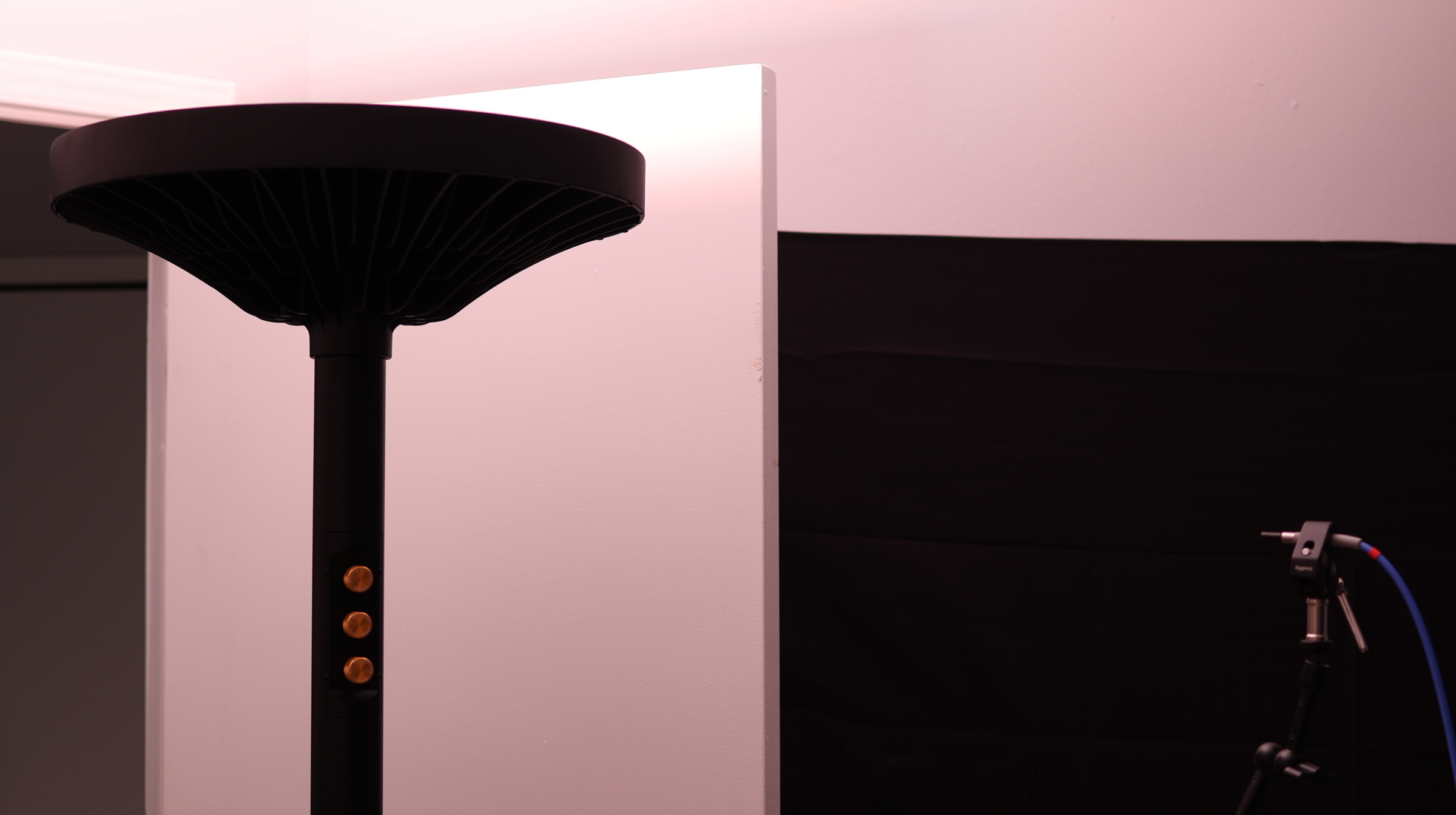
At standing distance, white alone drops to roughly 798 lux and 675 melanopic EDI. That’s a real circadian signal, but not the face-full-of-light you’d get from a SAD lamp. On its own, the white felt a little dim to me, and I usually ran all three channels together for a brighter, warmer room.
Why ceiling height changes everything
Most of this lamp’s light works by bouncing off your ceiling, so the room matters more than the spec sheet. With a low ceiling near the 75-inch head, you get a brighter hotspot and more glare.
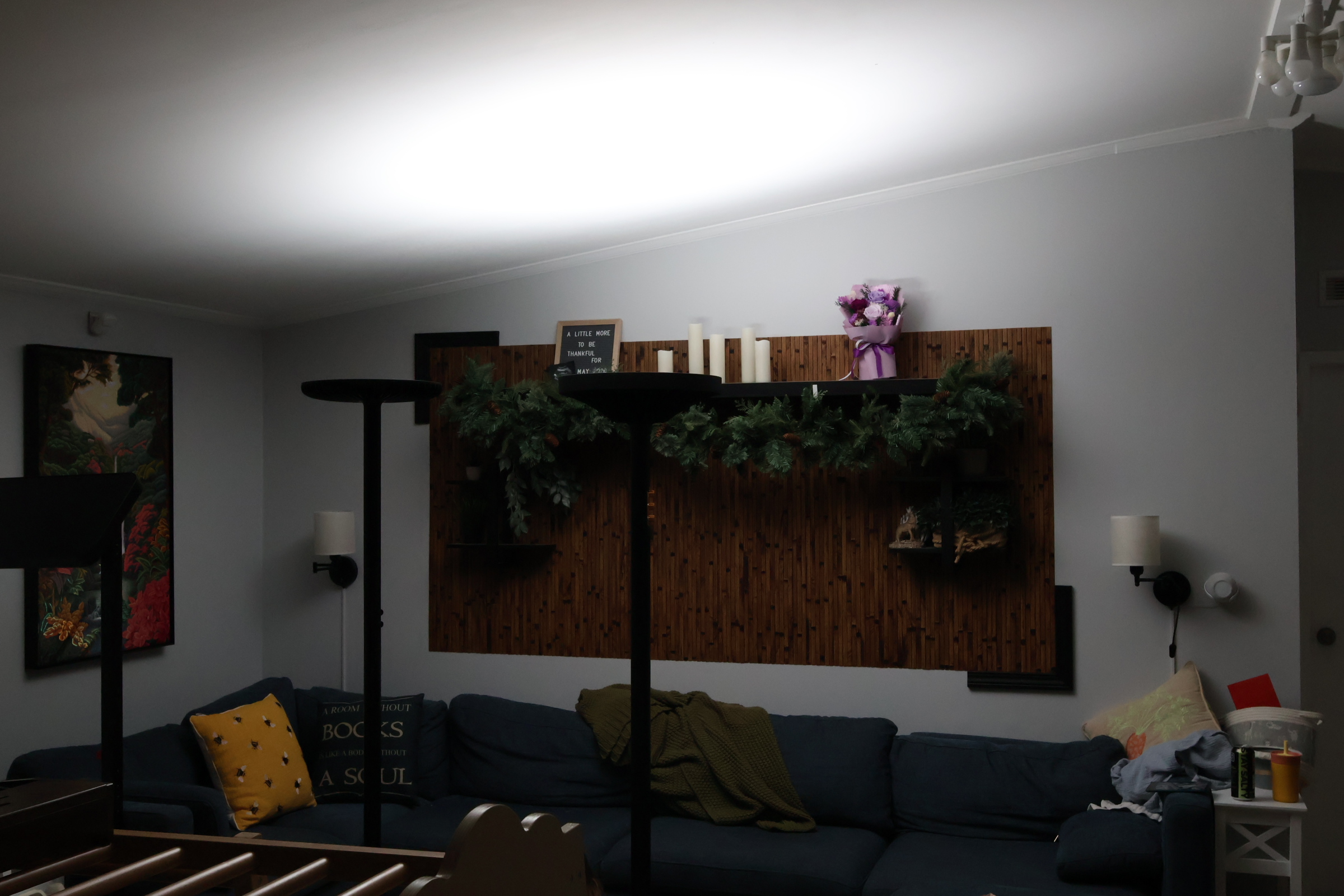
With an 8-foot-plus ceiling, the light spreads into something ambient and comfortable, but less of it reaches your eyes. It’s a genuine trade-off between comfort and dose, and worth knowing before you buy.
There’s a real upside to all that bouncing, though. You never stare into the light source.
A lot of people can’t stand looking at a bright lamp. Because the Skylight fires up and reflects down, the room just feels evenly lit and ambient, with nothing you have to look away from.
The Amber and Red Channels
This is what actually separates the Skylight. The amber channel measured 1631K with a melanopic ratio of just 0.14, and the red is effectively non-melanopic at 0.03. You can light a room in the evening without telling your brain it’s daytime.
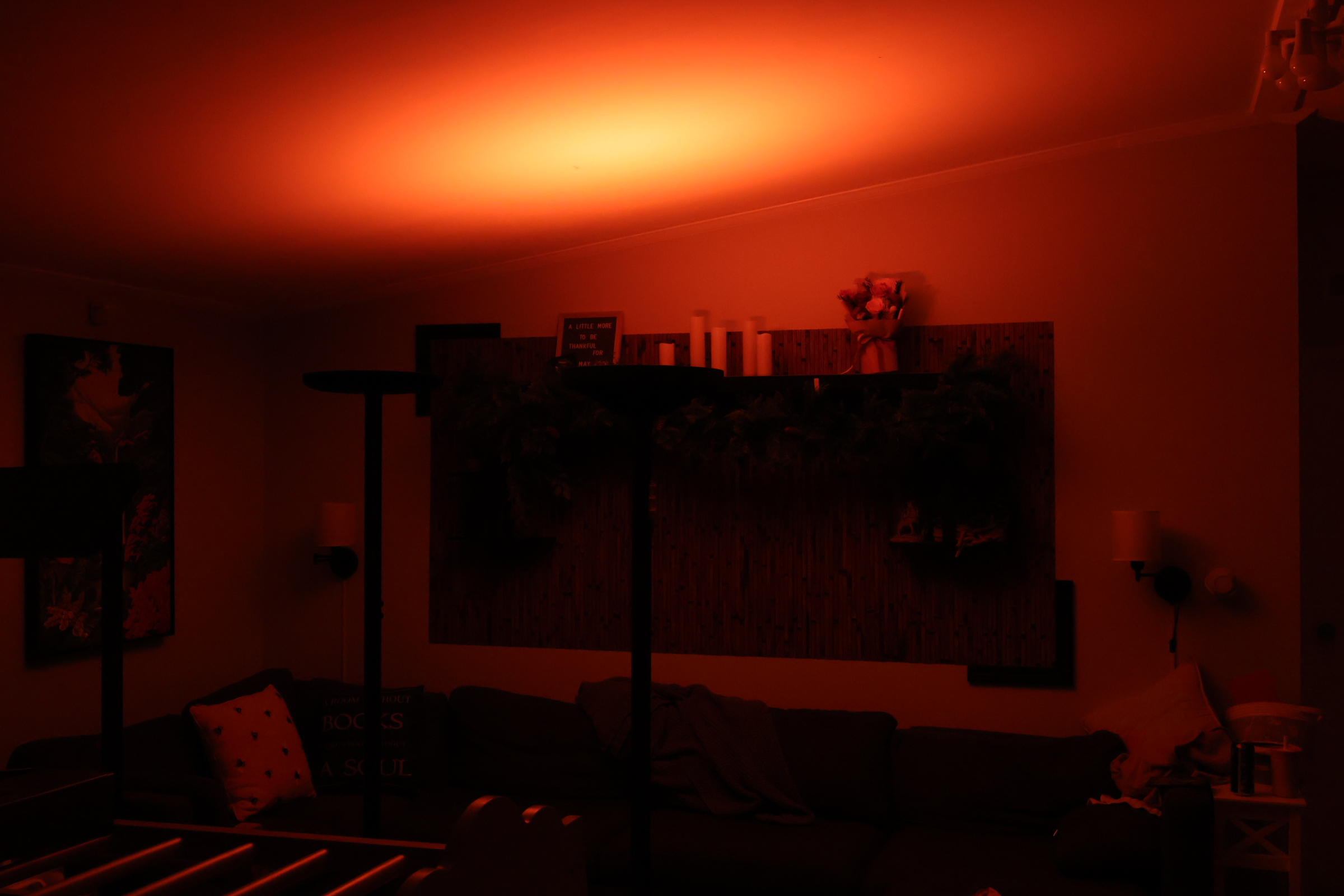
The moment it clicked for me was unplanned. We had a home birth, and the midwives arrived around 3 a.m. with no lights on in the house.
Instead of flipping on harsh overheads, I ran the amber and red channels and lit the whole living room in a warm, dim glow. Bright enough for everyone to see, without blasting anyone with alerting light at 3 a.m.
A smart bulb can do red. What it can’t do is this amber.
Build, Controls & Living With It
The build is a tank. At 110 pounds with a huge base, this thing is essentially impossible to knock over, a real plus with kids or a dog. The flip side is that assembly is a two-person job, the top cable connections are short and fiddly, and you’re not relocating it on a whim.
The upside hiding in there is a 16-foot power cord, which gives you real freedom in where it lands.
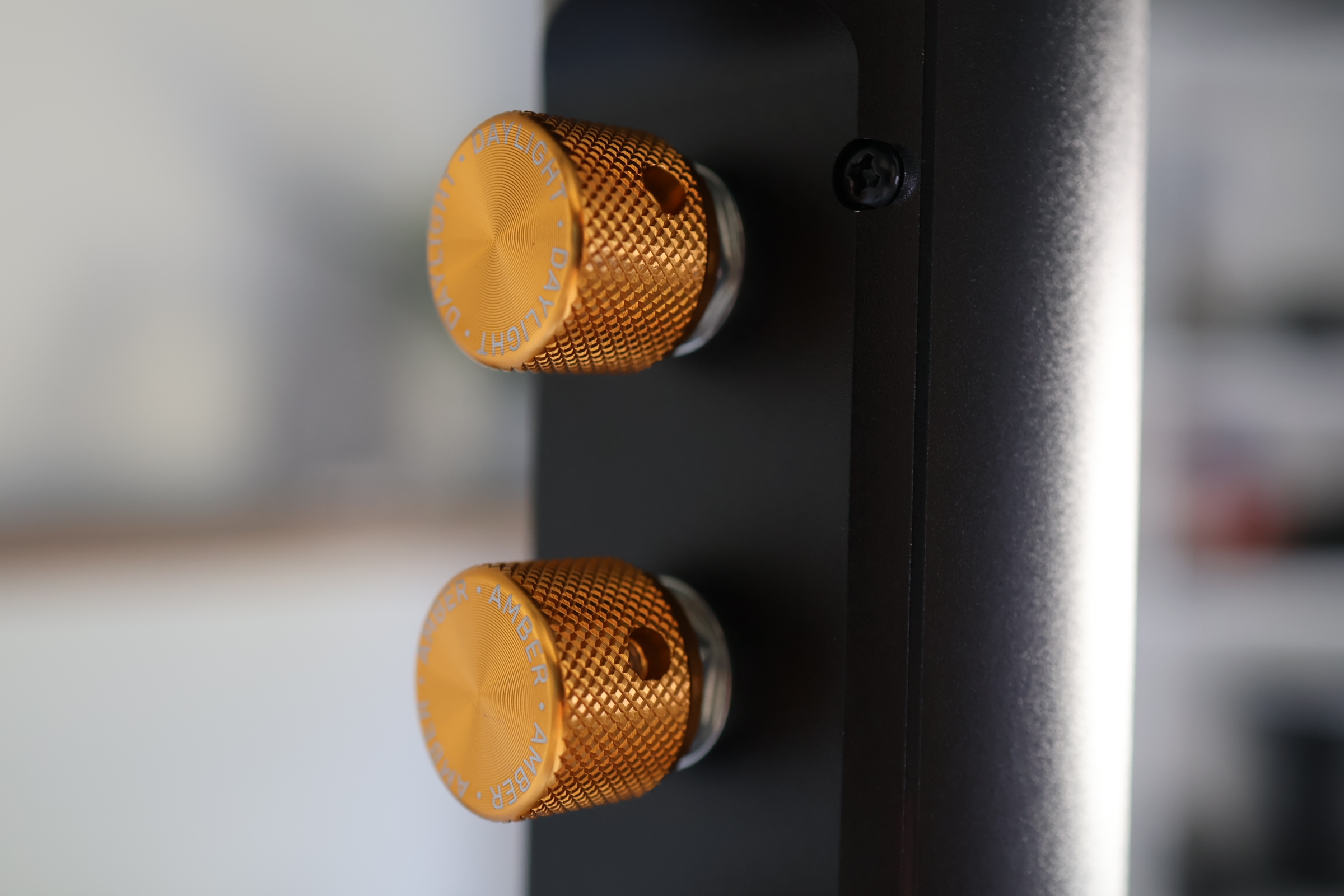
The knobs are a highlight. Knurled metal, smooth, with a satisfying click, the nicest controls I’ve handled on a lamp.
My one quibble is the very bottom of the dimming range on the white channel, where the light jumps on rather than easing in. It doesn’t happen on amber or red.
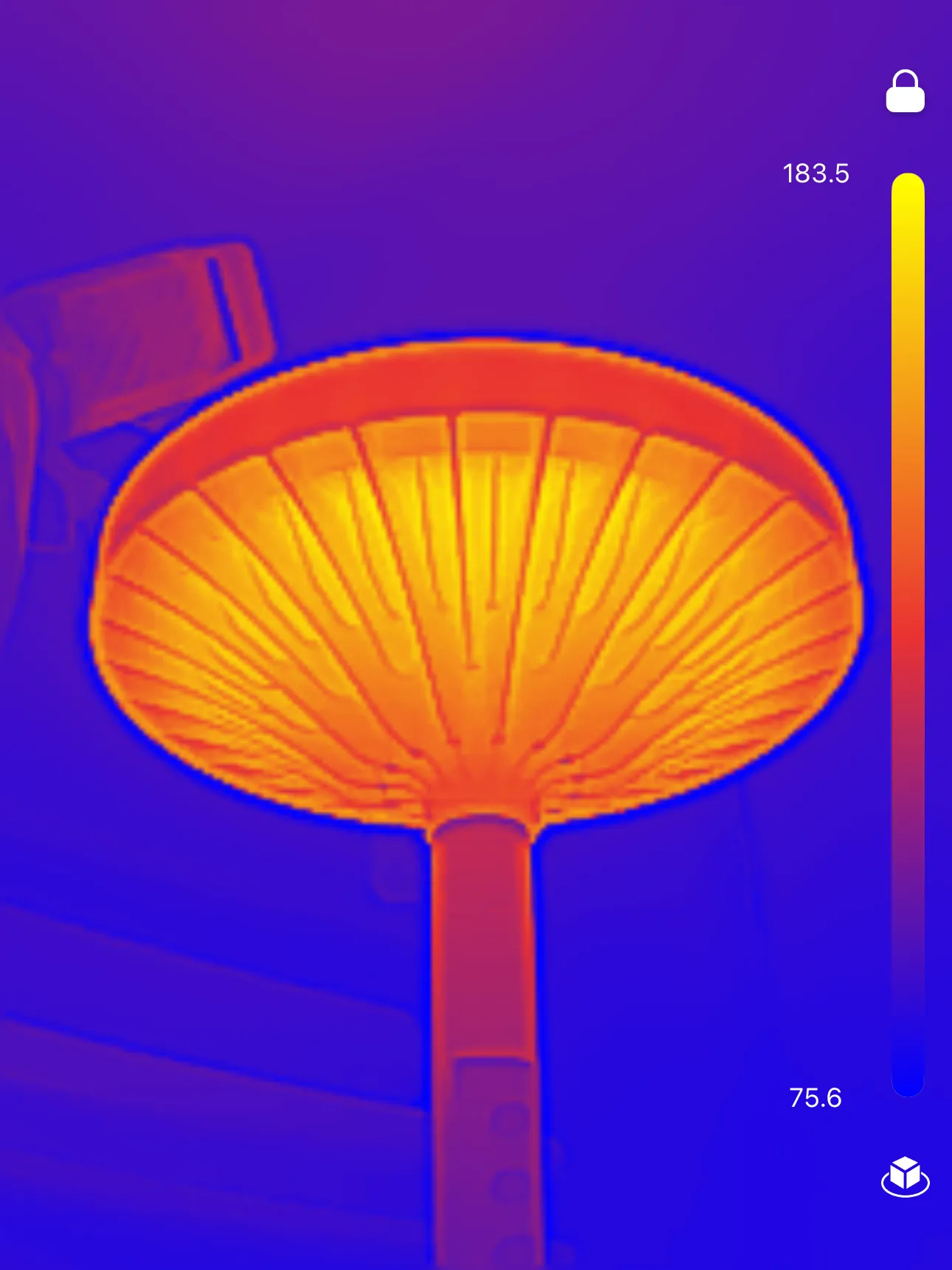
One practical note. At full output the shade hit 183.5°F on my IR camera. It’s passively cooled with no fan, so it runs silent, but don’t grab it up top.
Skylight vs. Sky Portal
Chroma makes two lights people constantly mix up, so let’s clear it up. The Chroma Sky Portal is a desk light, a SAD-lamp-style device you sit near. The Skylight is room lighting you set high and bounce off the ceiling.
The other comparison worth making is against the Brighter Lamp, the other premium daylight floor lamp in this space. In short, the Skylight trades raw brightness for far better color and true evening channels, and it can’t be tipped over. I measured both in the Chroma Skylight vs Brighter Lamp comparison.
Should You Buy It?
Buy the Chroma Skylight if you want the best light quality you can put in a home, you value the dedicated evening channels for protecting your sleep, and the $2,400 is money you’re comfortable spending on lighting you’ll use daily. It’s for a room you live in, not a lamp you move around.
Skip it if you mainly want maximum brightness, if you want app control and automation, or if the price and 110-pound heft are dealbreakers.
The Skylight is the rare premium product where the light genuinely lives up to the marketing. Whether that light is worth $2,400 is the only real question, and that one’s about your room and your budget.
chroma
Skylight
The best light quality I’ve measured in a home lamp: Rf 97, no cyan gap, flicker-free, with dedicated amber and red evening channels. It’s $2,400 and 110 lb and only moderately bright alone, but nothing else renders color or protects the evening like it.
Frequently Asked Questions
Common questions about the Chroma Skylight
-
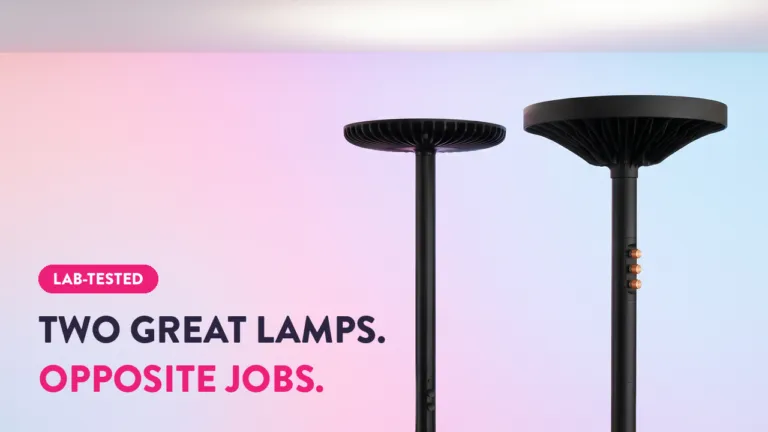
Chroma Skylight vs the Brighter Lamp: I Put Both on My Meters
Two premium daylight floor lamps, opposite priorities. I put the Chroma Skylight and the Brighter Lamp on the same spectrometer and flicker meter — here’s which one is right for you.
13 minutes -

Chroma Sky Portal Mini: Ultimate Portable Circadian Light?
Is the Sky Portal Mini worth $250? We tested the flicker, spectral output, and battery life of this dual-mode SAD lamp to see if it’s the ultimate travel companion.
6 minutes -
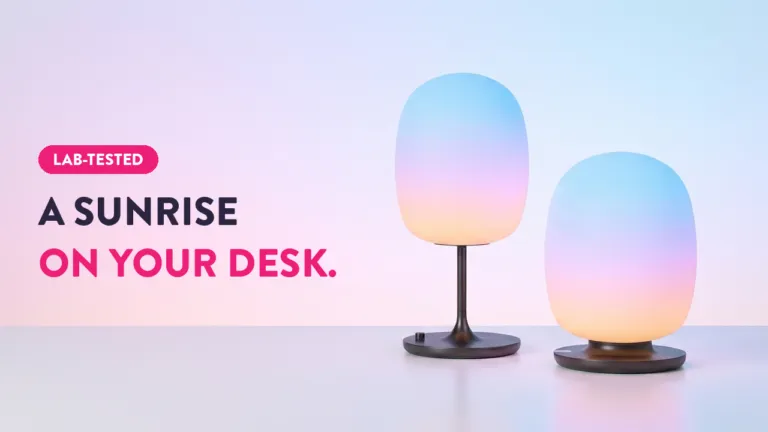
SkyView 2 Lamp Review: Beautiful But Is It Effective?
We analyzed the SkyView 2’s 24-hour cycle. See the spectral graphs, flicker data, and why it’s the most comfortable SAD lamp we’ve tested.
10 minutes