

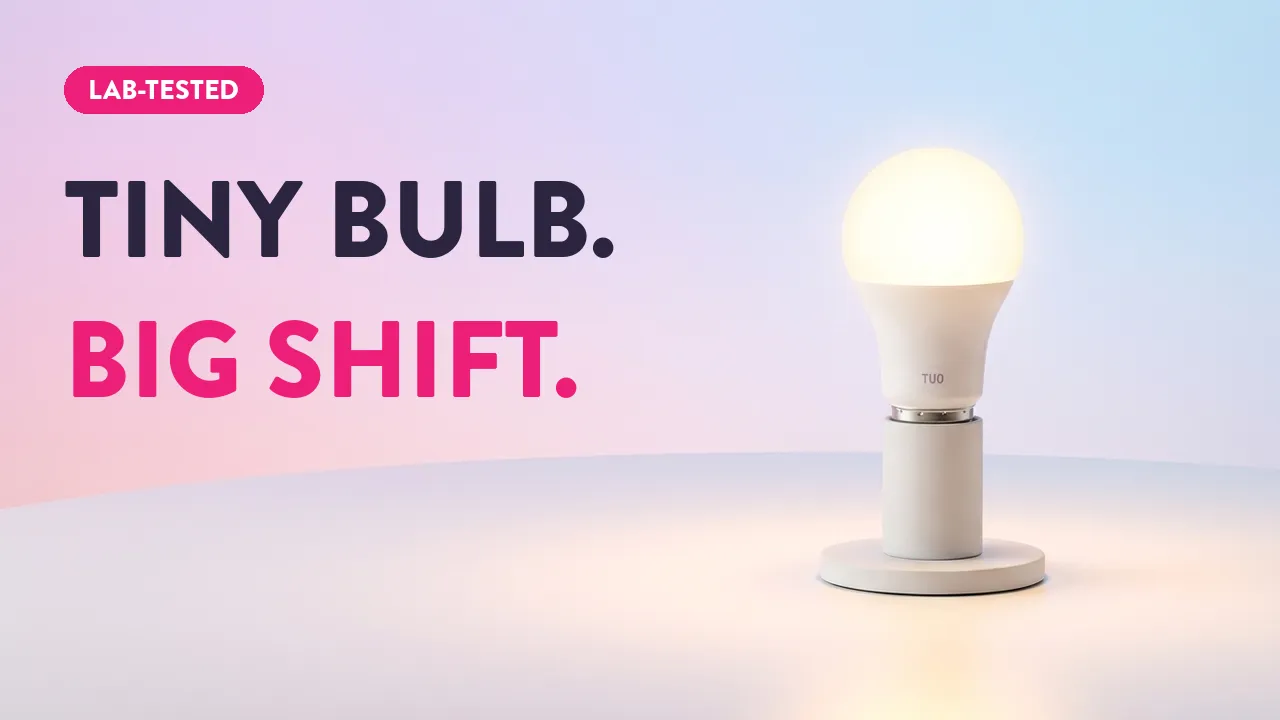

While most circadian alignment protocols rely on targeting the melanopsin cells in your eye (the ones most sensitive to blue light), the Tuo bulb uses a new technique…
My verdict
Tuo Circadian Smart Bulb
The Tuo delivers specialized color-opponent light that has been shown to produce stronger phase-shifting and melatonin-suppression effects than conventional bright light therapy using much less overall light, making it a great option for anyone who finds bright SAD lamps overwhelming. However, visible flickering, especially on higher settings, can be bothersome as well.
- Pro: Offers high-impact circadian alignment with very low light output
- Pro: Has been scientifically tested to be more effective than other forms of light
- Pro: App was reliable and worked well in my usage
- Con: Flickering, especially on higher impact levels, can be very obvious
- Con: Won't work well for travel due to the requirement of a Wi-Fi connection
- Con: Needs to be the dominant light source in your environment to work well
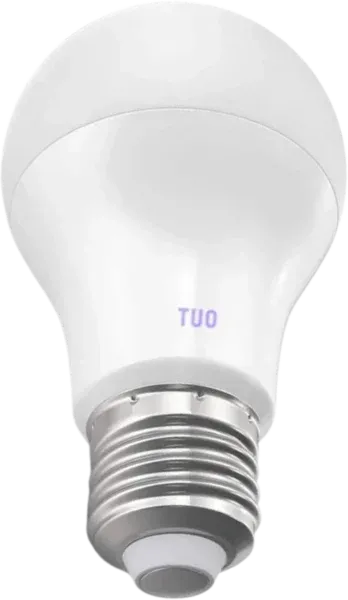
The Tuo Circadian Smart Bulb
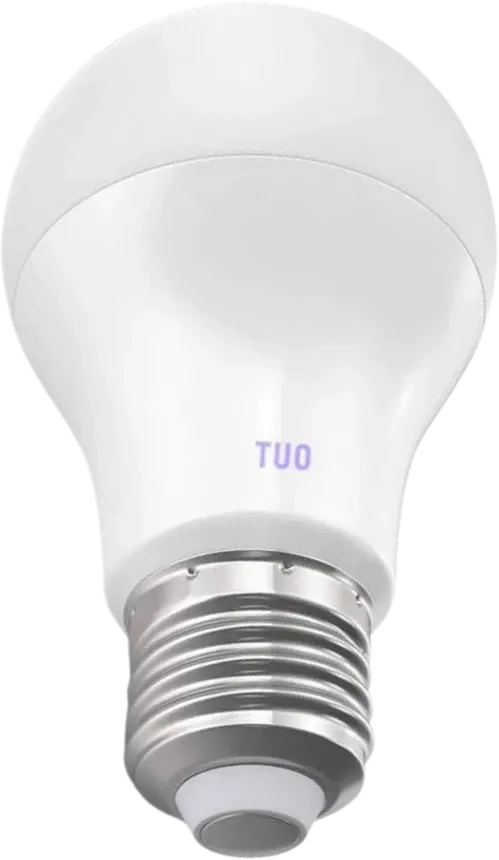
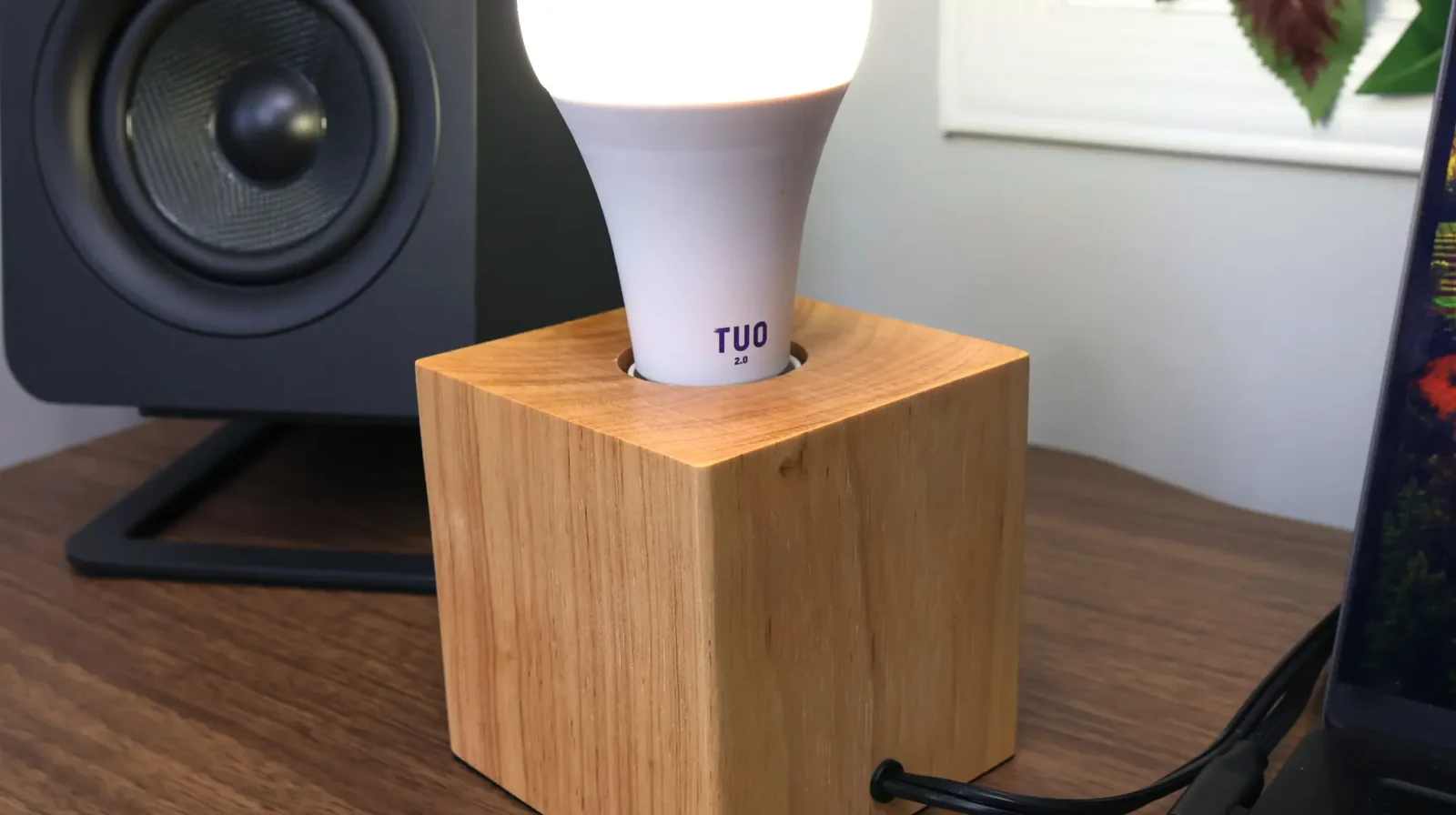
Tuo sells just one A21-shaped light bulb and an optional wooden desk lamp holder. I bought both to try out the full set.
The shadeless lamp is a bit odd at first glance, but this is because Tuo doesn’t want you putting anything between the bulb and your eyes.
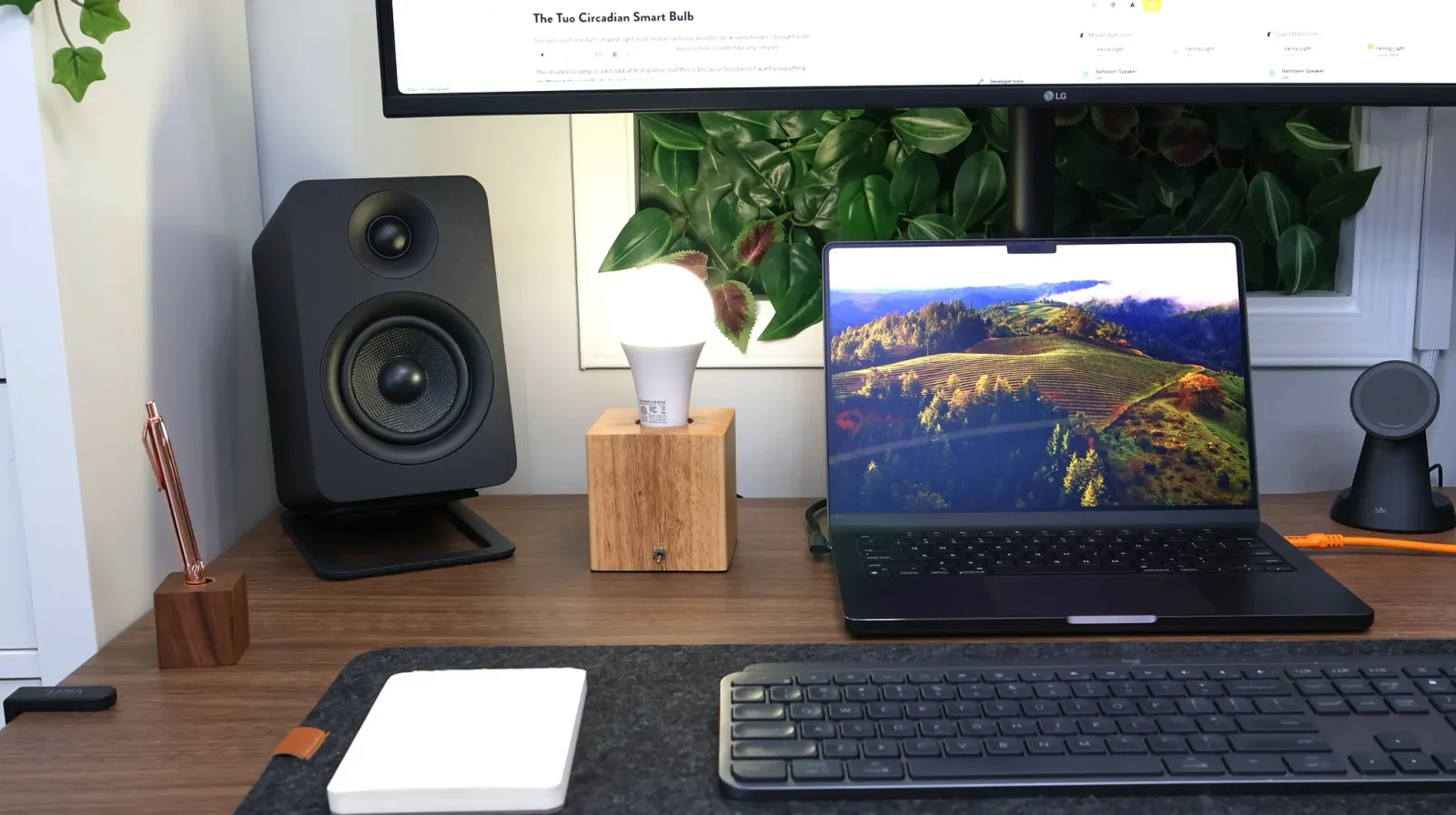
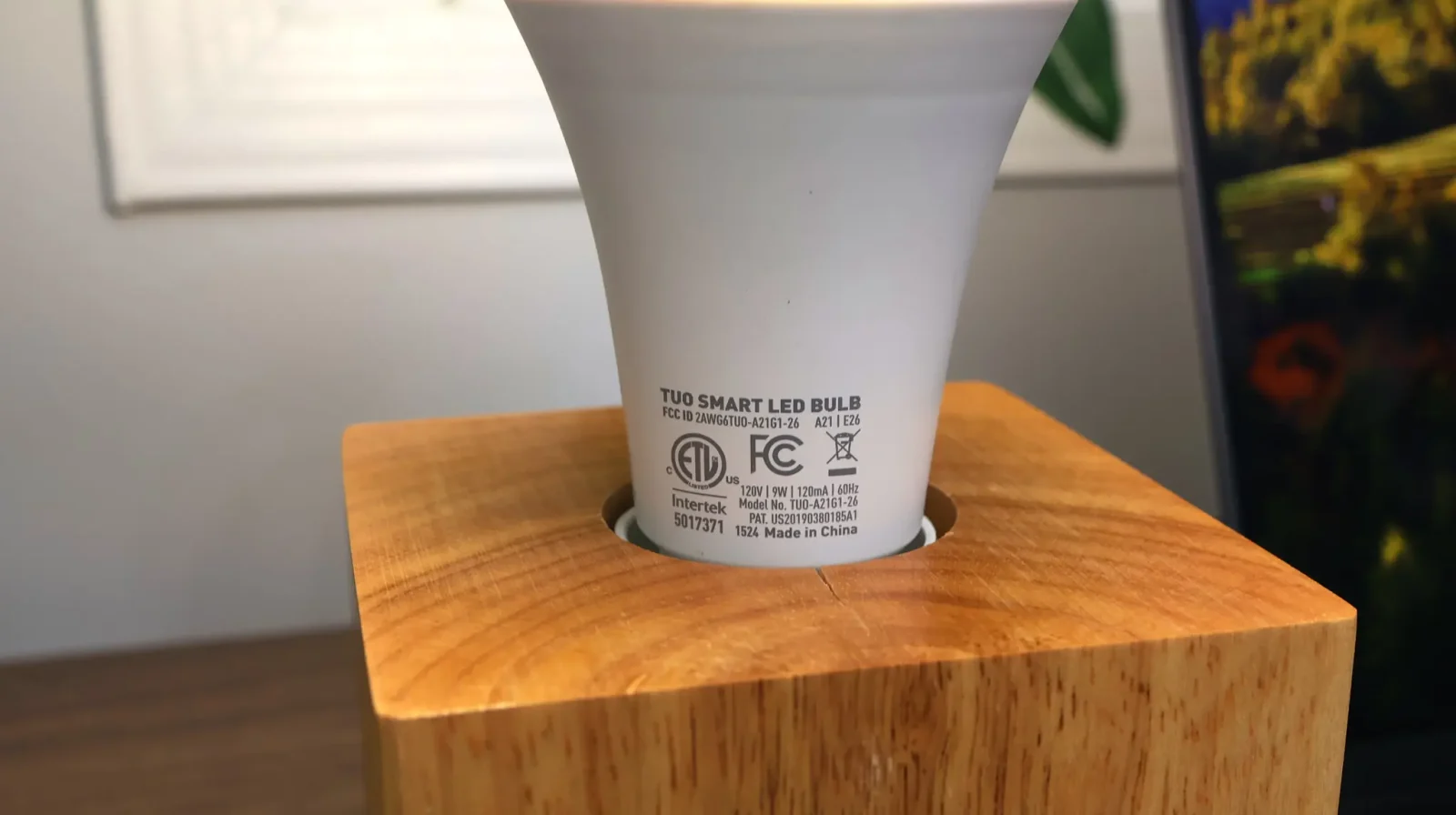
As someone who appreciates a nice clean desk aesthetic, I was slightly annoyed that the nice Tuo 2.0 logo faced backwards no matter how I screwed it in…
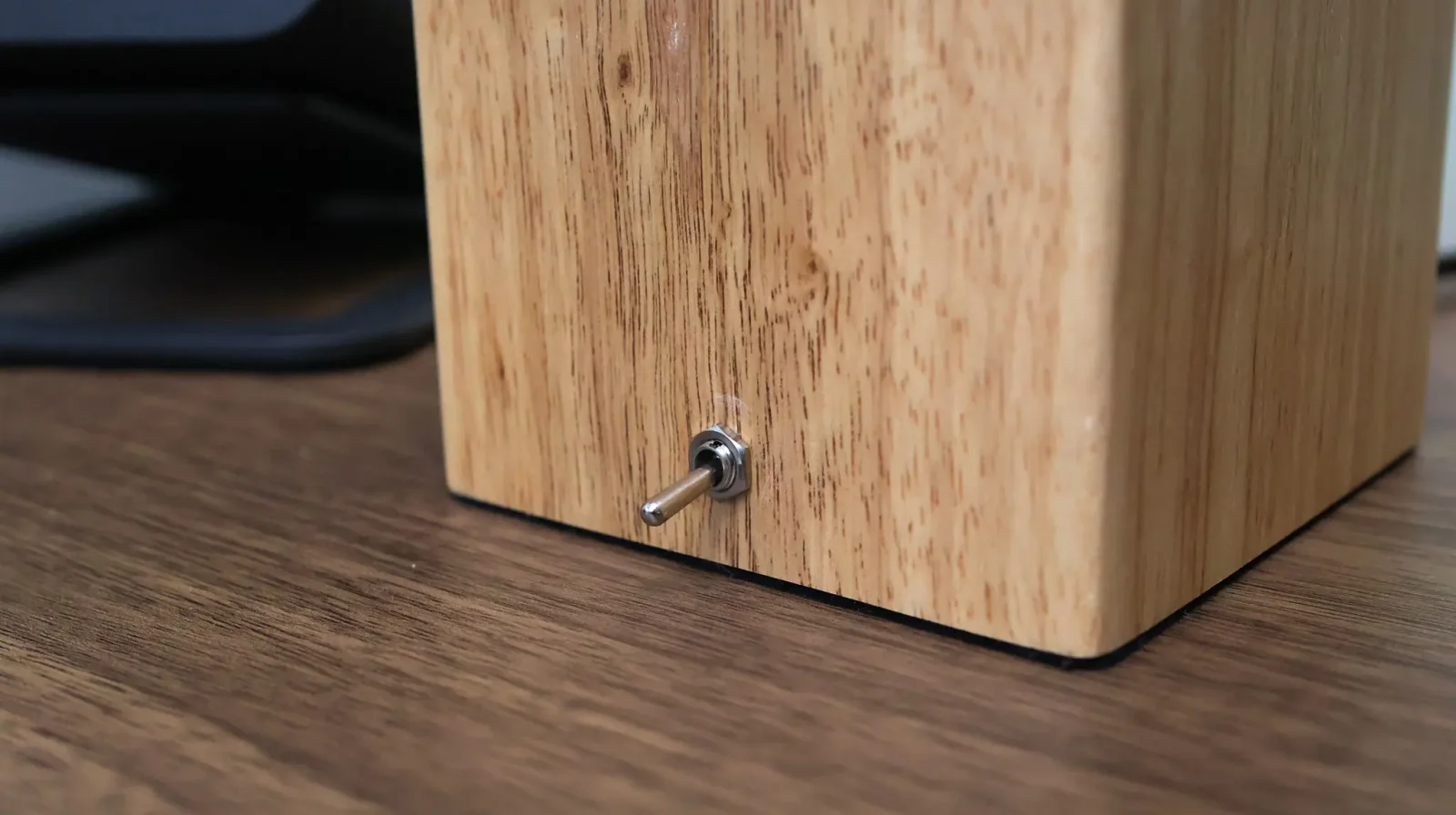
Also, the front switch turns the bulb on when you flip it down, and turns it off when you flip it up, which bothers me. 😆
Now onto the science of how this thing is supposed to work…
Free · 95 pages
You're reading about one piece of this. The book is the whole day.
The Circadian Blueprint covers setting your body clock with light — the timing, the doses, and which products actually deliver them. Every number came off my own spectrometer.
The Science Behind Tuo
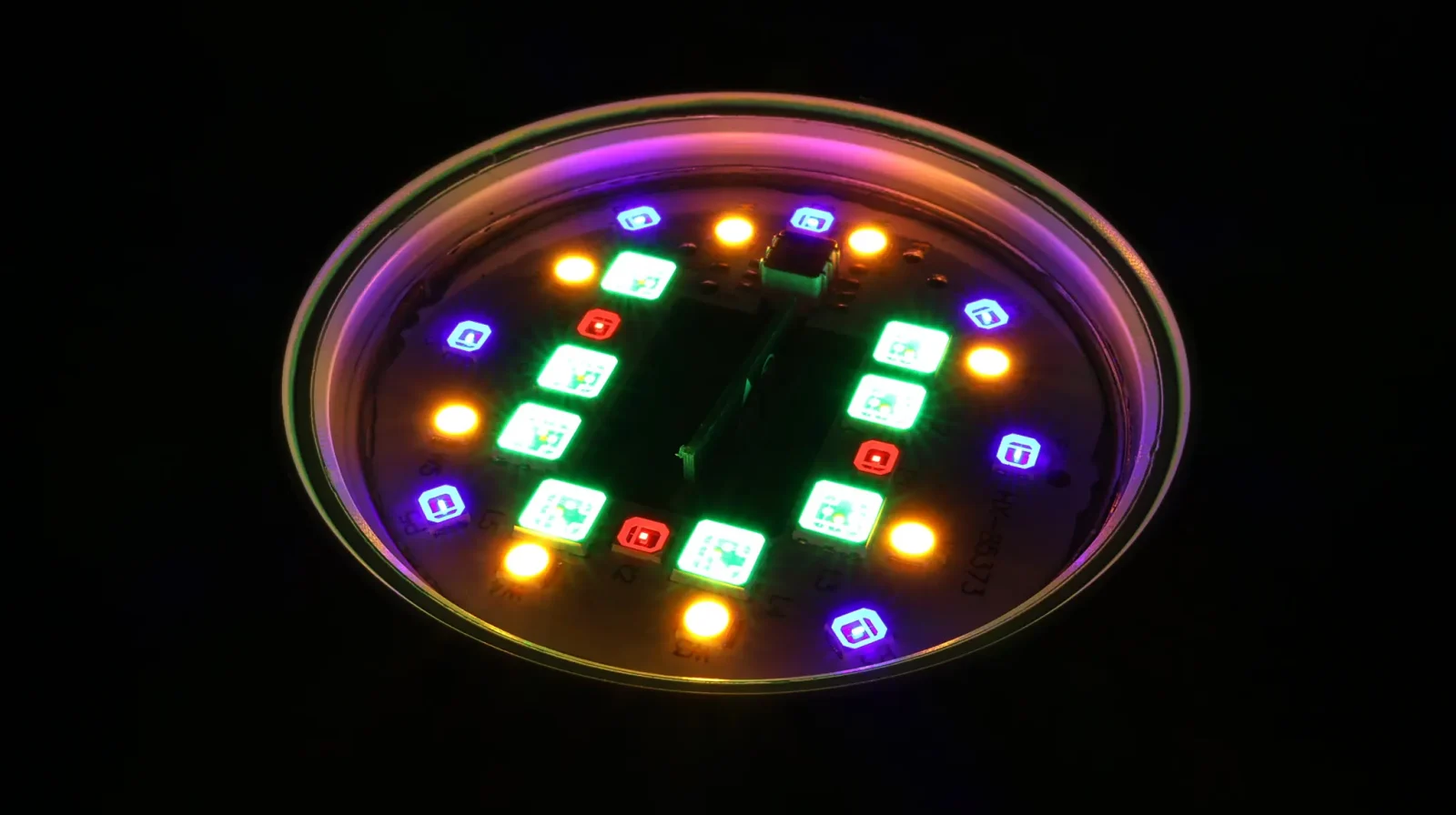
The Tuo bulb works by rapidly switching between violet and orange light—mimicking the color shift you see between the blue sky and orange horizon at sunrise.
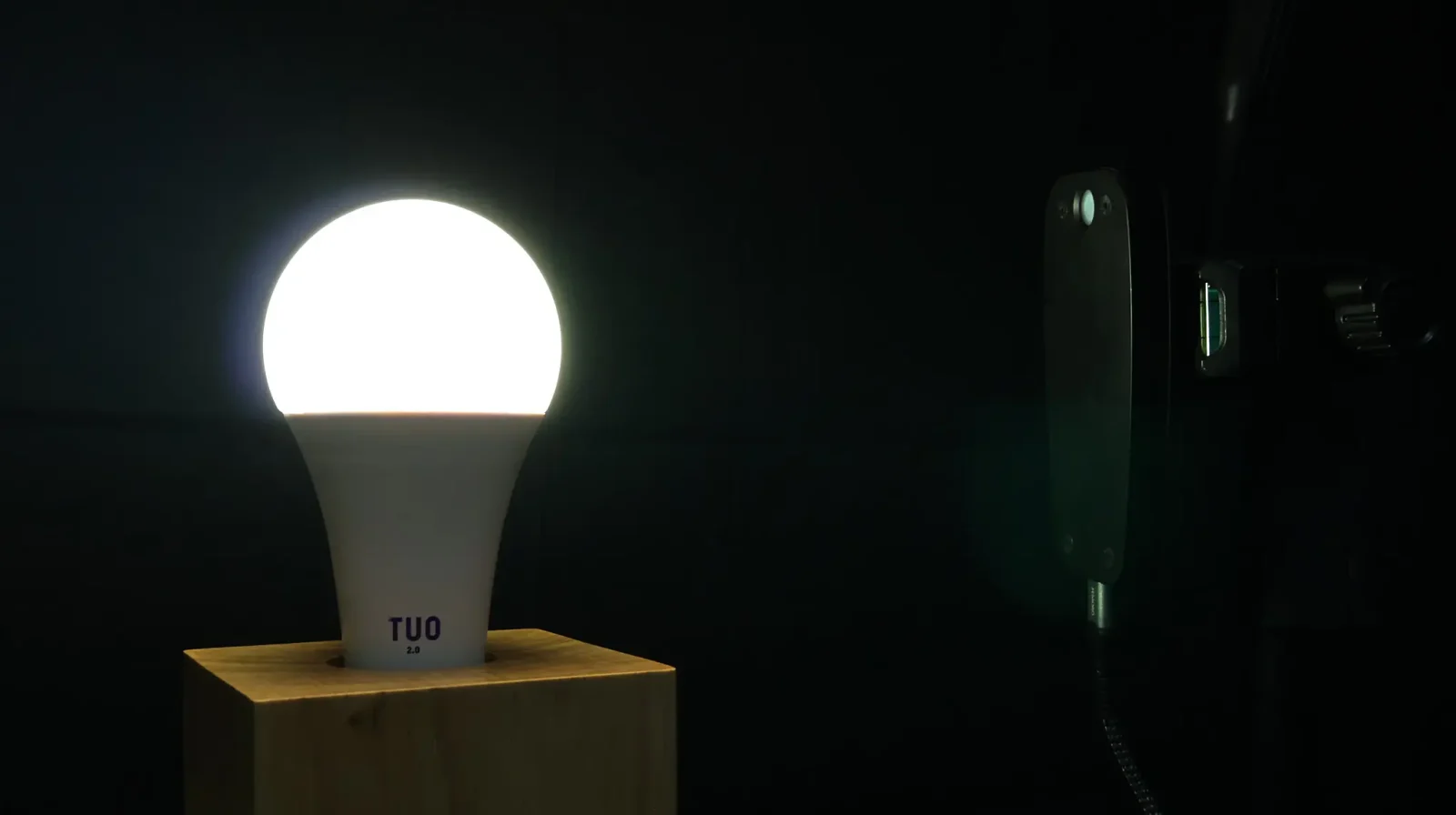
- While it’s impossible to perfectly capture the Tuo experience on camera, I tried my best:
While regular “blue-enriched” bulbs mostly activate the tiny handful (4–7 thousand) of melanopsin cells (ipRGCs), Tuo instead targets the 7 million color-sensitive cones in your retina.
That massive cone input, combined with the natural blue-vs-orange contrast our eyes evolved to detect at dawn and dusk, creates a super-strong sunrise/sunset signal that tells your brain clock: “Hey, it’s morning—wake up and shift earlier”.
Using the Tuo Bulb
Once you set it up, the Tuo bulb is a pretty simple device to use, but you do need an app and an active WiFi connection for it to work properly.
Suggested Usage
Tuo recommends keeping within 6ft or 2m of the bulb during use. They also say 2-4 weeks of use may be required if your sleep patterns are particularly poor.
What the App is Like
The Tuo bulb requires a WiFi connection, and the setup on iOS was flawless for me.
Once you connect your light, you’ll set up your Circadian Plan, which is based on your age, chronotype, and what time you’d like to wake up and fall asleep.
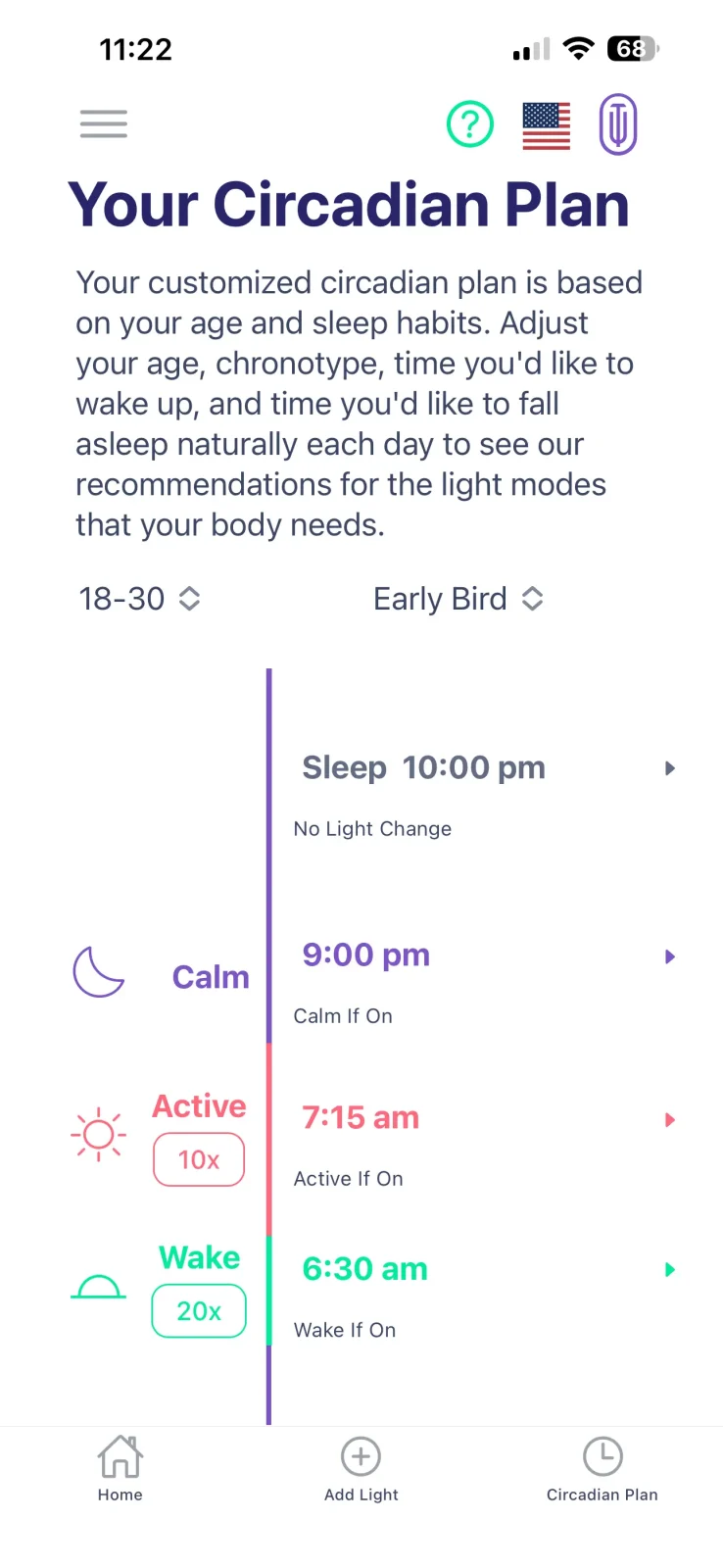
By default, this gives you a Wake window of 45 minutes, followed by a very large Active window, which changes to the Calm mode 1 hour before bed, however, any of these times can be changed here.
On the main screen, you can change the current impact level as well as the color temperature of the light. You can also save the current setting as the default for that mode.
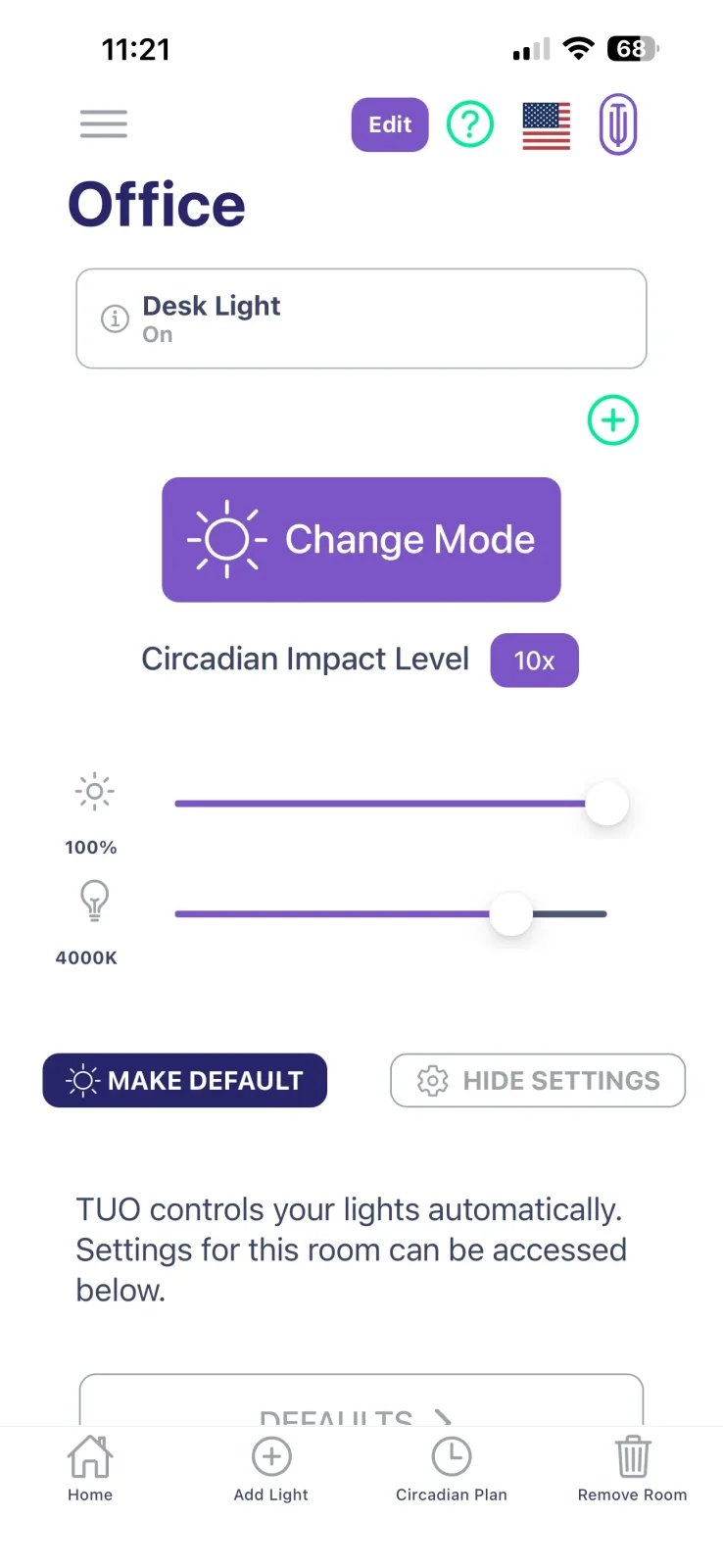
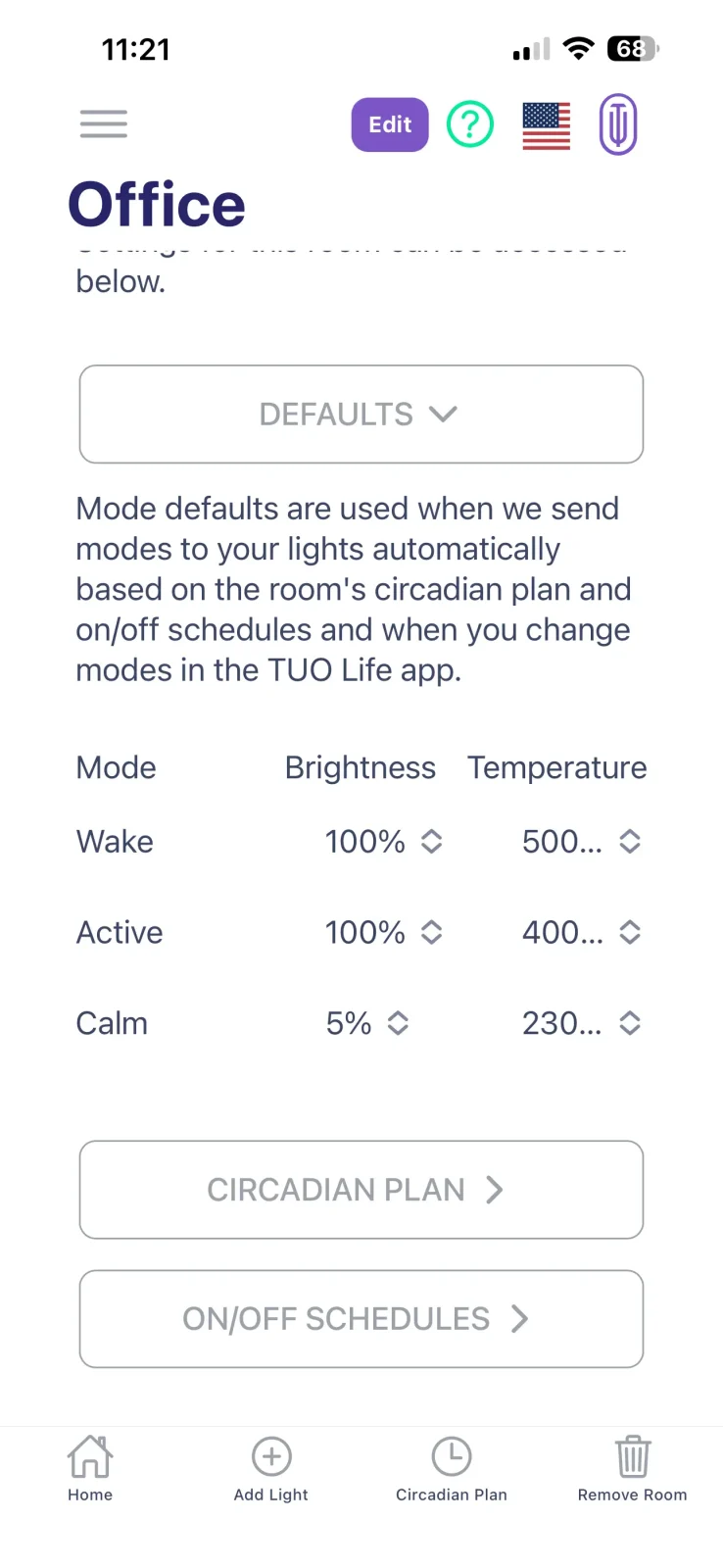
By default, the Wake mode is set to 20X, and Active is set to 10X, while the color switching shuts off completely during Calm mode.
If you want to adjust these however, you can manually change the impact level anywhere from 5X to 35X.
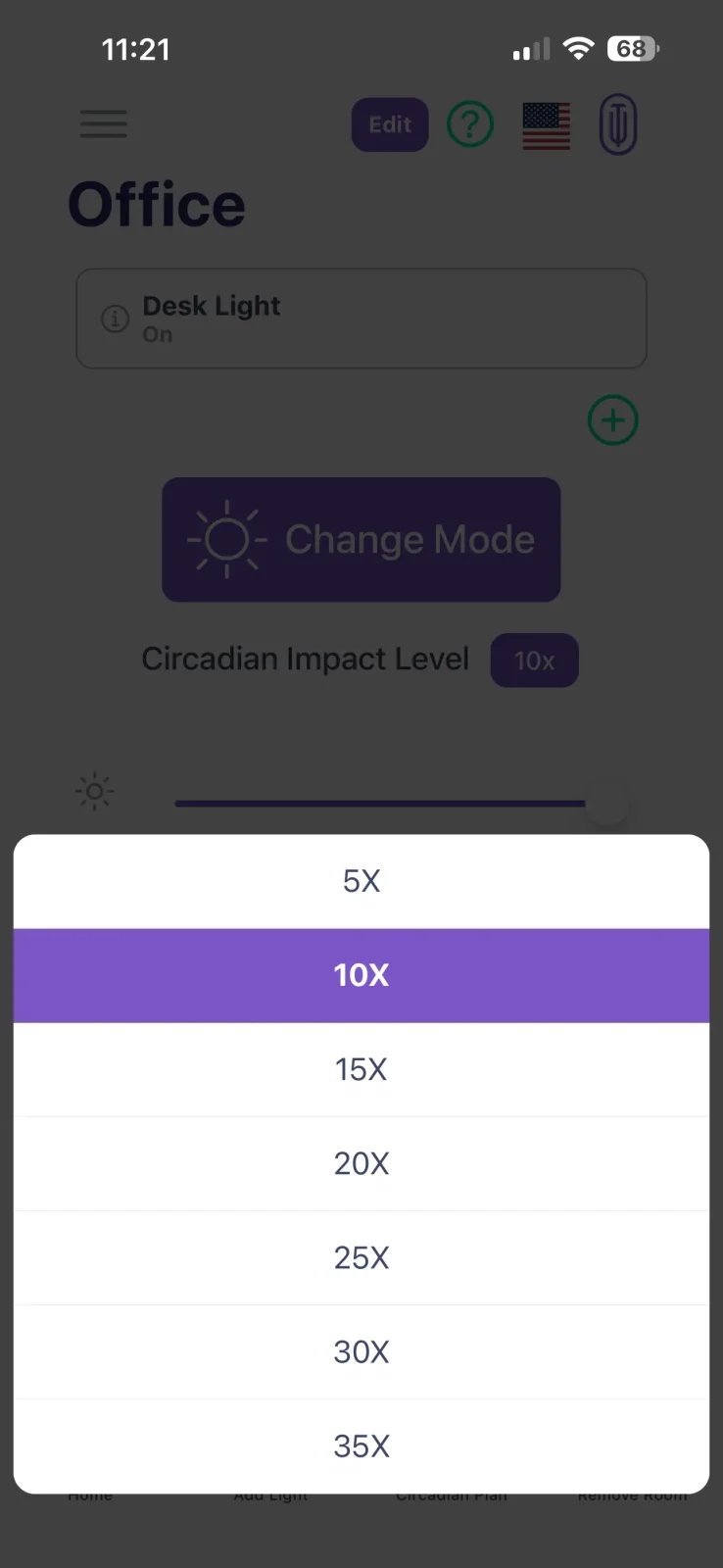
I’m actually kind of amazed there isn’t some kind of warning for the 35X mode since this flickers at 19Hz, well within the sensitive frequency range for epilepsy.
Probably not a concern because of the type of flicker and depth, but 35X is quite apparent!
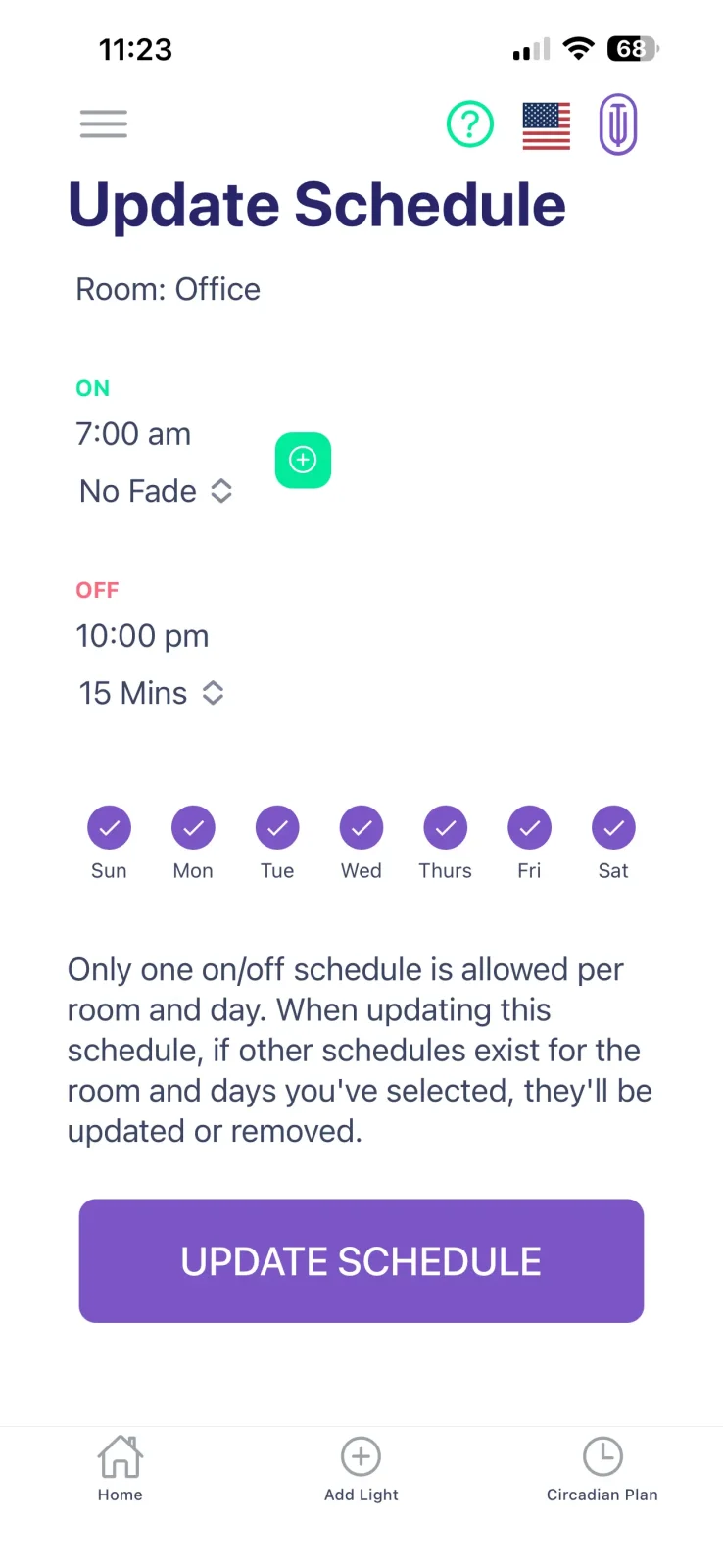
You can also set up an on/off schedule with up to 15-minute fades, which is a nice touch.
There is also an Alexa integration if you use that; however, all the others, like Google and Siri are “coming soon”.
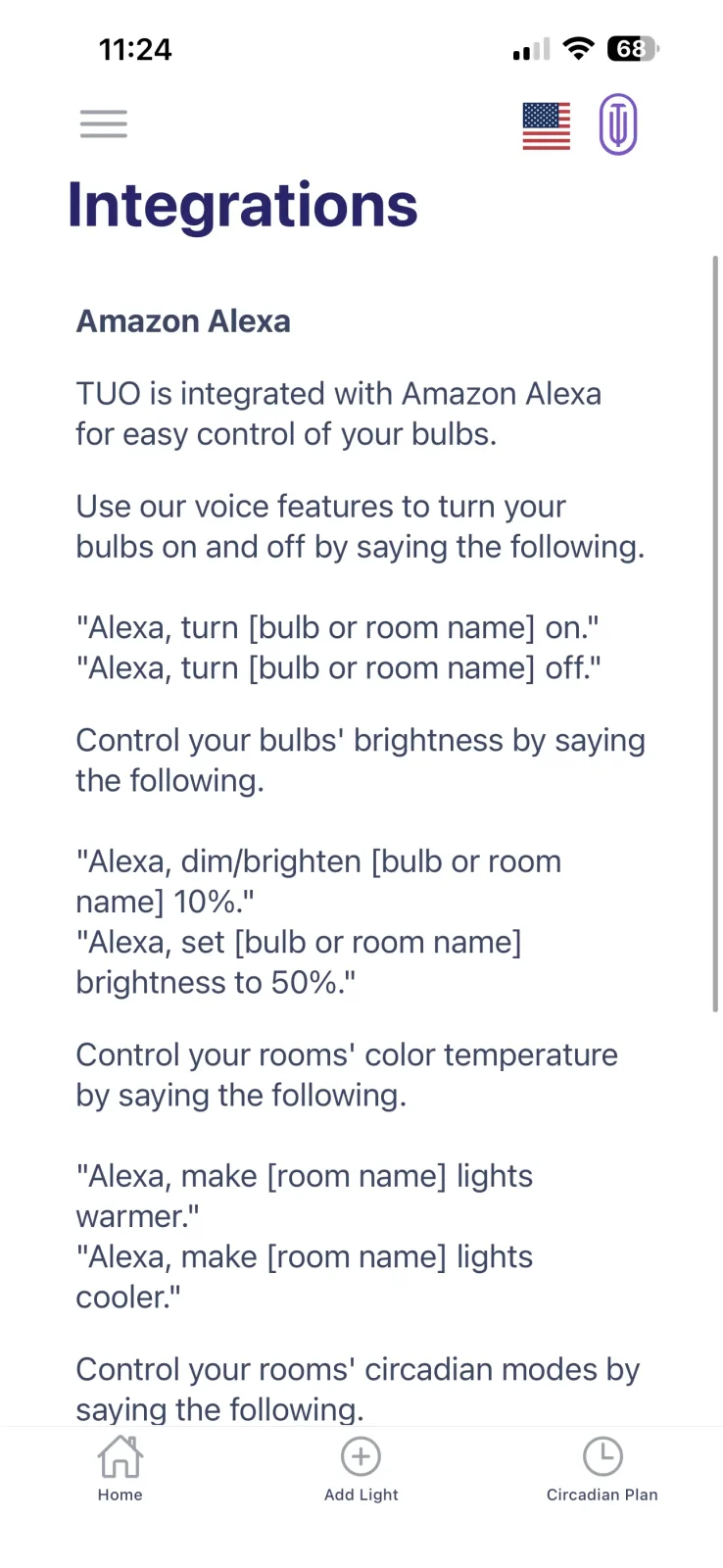
Overall, I didn’t have any bugs or issues with the app, and all the basic functionality it should have is there and worked well for me, nothing to really complain about here.
The Key Study
Now the question is… does the Tuo work?
The technology employed in the Tuo is based on a 2024 study, published in the Journal of Biological Rhythms.
Participants
The study involved just 6 participants, which is a pretty small sample size. Participants were also not blinded to the lighting conditions or the study’s hypotheses. However, the key outcome—circadian phase shifts—was measured objectively through salivary melatonin levels, which are less susceptible to bias or placebo effects.
What Was Done (Methods)
Participants were shown one of three lights for two hours in the early morning hours:
- Static white light: A neutral white that balances cone inputs and minimally stimulates color-opponent pathways.
- Blue light: A 476 nm monochromatic blue LED, which strongly activates one side of the S-cone opponent circuit.
- Color-opponent “white” light: A temporally modulated light alternating between short (427 nm) and long (544 nm) wavelengths at 19 Hz, with a red (637 nm) component added to make it appear white.
After exposure, DLMO was reassessed via hourly salivary samples to calculate phase shifts.
Results
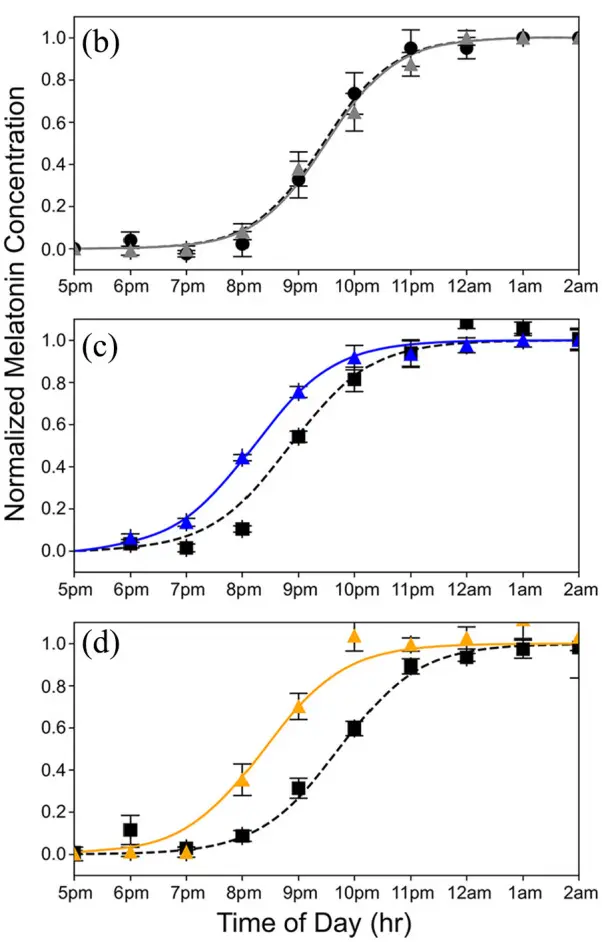
- The static white light produced no significant circadian phase advance (average shift: -2.8 minutes, not statistically significant).
- The blue light advanced the phase by about 40 minutes (statistically significant).
- The color-opponent modulated light was the most effective, advancing the phase by 1 hour and 20 minutes—twice as much as blue light and significantly better than white light.
Conclusion?
While this study has some shortcomings, the objective use of melatonin assays gives me confidence in the results.
Test Results
As usual, I tested as much as I could! One thing I wanted to know for sure was if the modulation was the same as the study.
Flicker Testing and Modulation
Using our lab-grade flicker meter, I first checked the modulation in the Wake and Active modes, which are set to 10X and 20X modulation by default.
Here are those results:
A flat line at the top means steady light; dips mean flicker.
Light output by time. WAKE 20X percent flicker ; WAKE 20X frequency ; WAKE 20X ieee 1789 ; ACTIVE 10X percent flicker ; ACTIVE 10X frequency ; ACTIVE 10X ieee 1789 .
See the numbers
WAKE 20X
- Percent flickerHow far the light dips from its brightest, as a share of the total. Under 1% is steady to the eye.
- Not measured
- Frequency
- Not measured
- IEEE 1789The flicker safety guidance for lighting: how deep the flicker is, for its frequency.
- Not measured
ACTIVE 10X
- Percent flickerHow far the light dips from its brightest, as a share of the total. Under 1% is steady to the eye.
- Not measured
- Frequency
- Not measured
- IEEE 1789The flicker safety guidance for lighting: how deep the flicker is, for its frequency.
- Not measured
With this, I can confirm the Tuo is modulating at 19Hz, which is exactly what we wanted to see, since this is what was used in the study.
If this is too much or too little for you, you can also change these modes anywhere from 5X to 35X, which can significantly affect the visual flickering and the impact of the color switching component.
- 2300K 5X
Light output by x. 2300K 5X.
- 5000K 5X
Light output by x. 5000K 5X.
- 2300K 35X
Light output by x. 2300K 35X.
- 5000K 35X
Light output by time. 5000K 35X.
A flat line at the top means steady light; dips mean flicker. Green: no risk, amber: low risk, red: higher risk (IEEE 1789).
See the numbers
| Percent flicker | Frequency | IEEE 1789 | |
|---|---|---|---|
| 2300K 5X | Not measured | Not measured | Not measured |
| 5000K 5X | Not measured | Not measured | Not measured |
| 2300K 35X | Not measured | Not measured | Not measured |
| 5000K 35X | Not measured | Not measured | Not measured |
I was curious to see how color temperature affected flicker, and it appears the 5000K end has a bit less modulation depth overall than the 2300K setting.
Now the Tuo also has a “Calm” mode setting, which obviously doesn’t use the circadian-activating color switching.
However, I was a bit disappointed to see that this mode still technically flickers.
- 5%, 2700K
Light output by x. 5%, 2700K.
- Full brightness, 2700K
Light output by x. Full brightness, 2700K.
- 5%, 5000K
Light output by x. 5%, 5000K.
- Full brightness, 5000K
Light output by time. Full brightness, 5000K.
A flat line at the top means steady light; dips mean flicker. Green: no risk, amber: low risk, red: higher risk (IEEE 1789).
See the numbers
| Percent flicker | Frequency | IEEE 1789 | |
|---|---|---|---|
| 5%, 2700K | Not measured | Not measured | Not measured |
| Full brightness, 2700K | Not measured | Not measured | Not measured |
| 5%, 5000K | Not measured | Not measured | Not measured |
| Full brightness, 5000K | Not measured | Not measured | Not measured |
- 5%, 2700K
Light output by x. 5%, 2700K.
- Full brightness, 2700K
Light output by x. Full brightness, 2700K.
- 5%, 5000K
Light output by x. 5%, 5000K.
- Full brightness, 5000K
Light output by time. Full brightness, 5000K.
A flat line at the top means steady light; dips mean flicker. Green: no risk, amber: low risk, red: higher risk (IEEE 1789).
See the numbers
| Percent flicker | Frequency | IEEE 1789 | |
|---|---|---|---|
| 5%, 2700K | Not measured | Not measured | Not measured |
| Full brightness, 2700K | Not measured | Not measured | Not measured |
| 5%, 5000K | Not measured | Not measured | Not measured |
| Full brightness, 5000K | Not measured | Not measured | Not measured |
Lumen Testing
Now Tuo claims 600 lumens on the box, but I only measured 355 at 2300K and 320 at 5000K, so nowhere near 600, really. Not sure where they got this number…
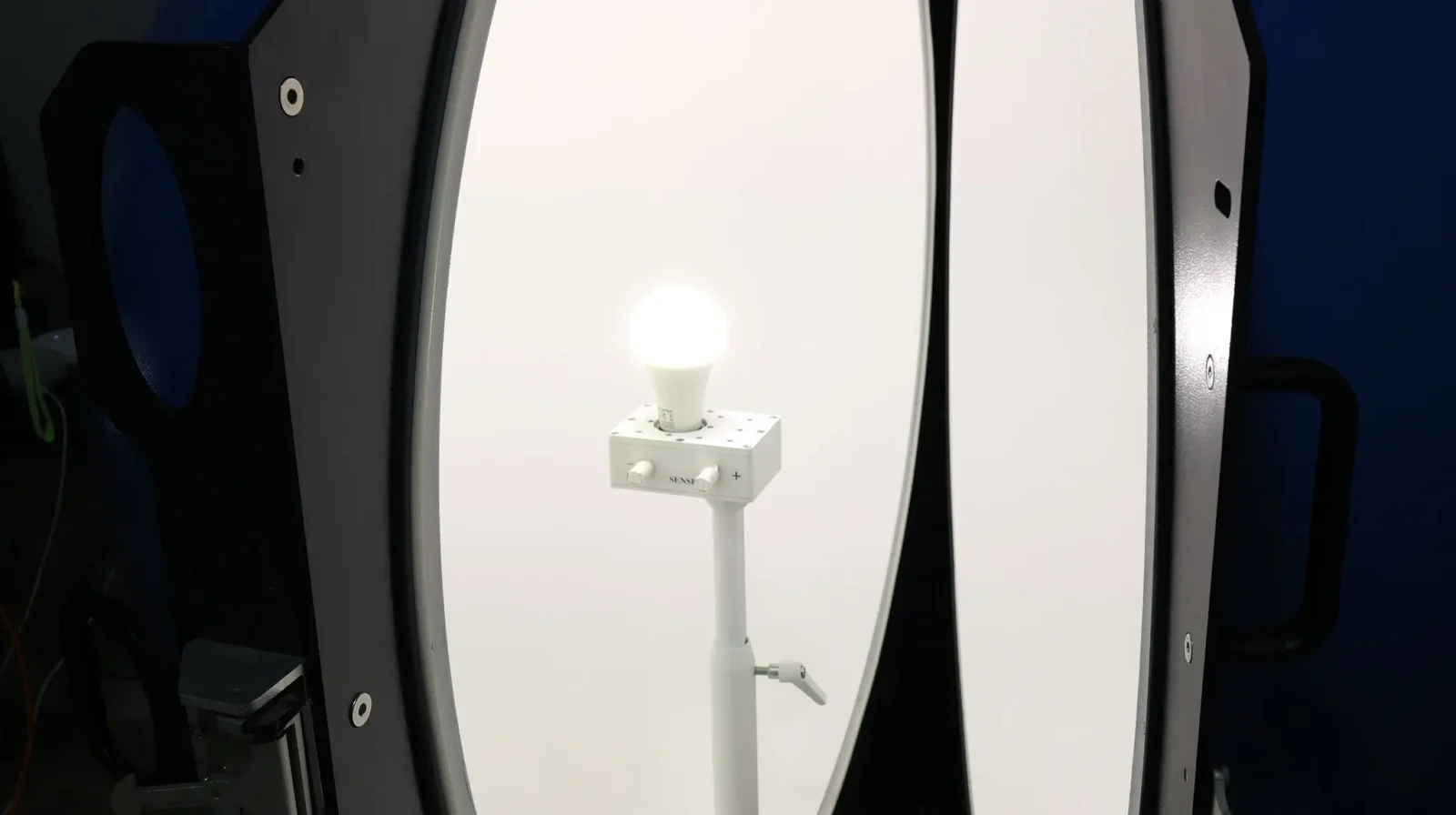
Regardless, I think this is fine since it’s meant to be used “naked,” and an exceptionally bright light bulb would be quite unpleasant to use like this.
Spectral Testing and Output
The Tuo uses violet LEDs in place of the typical blue LEDs, which you can see in the spectral graphs below.
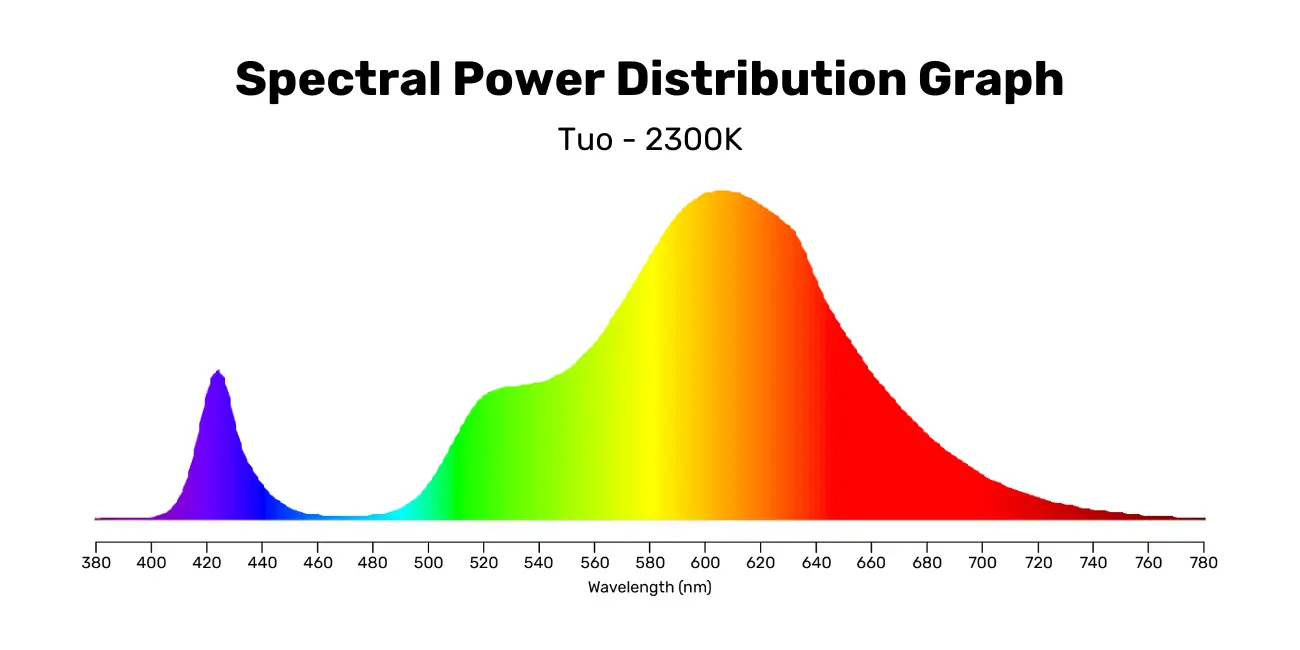
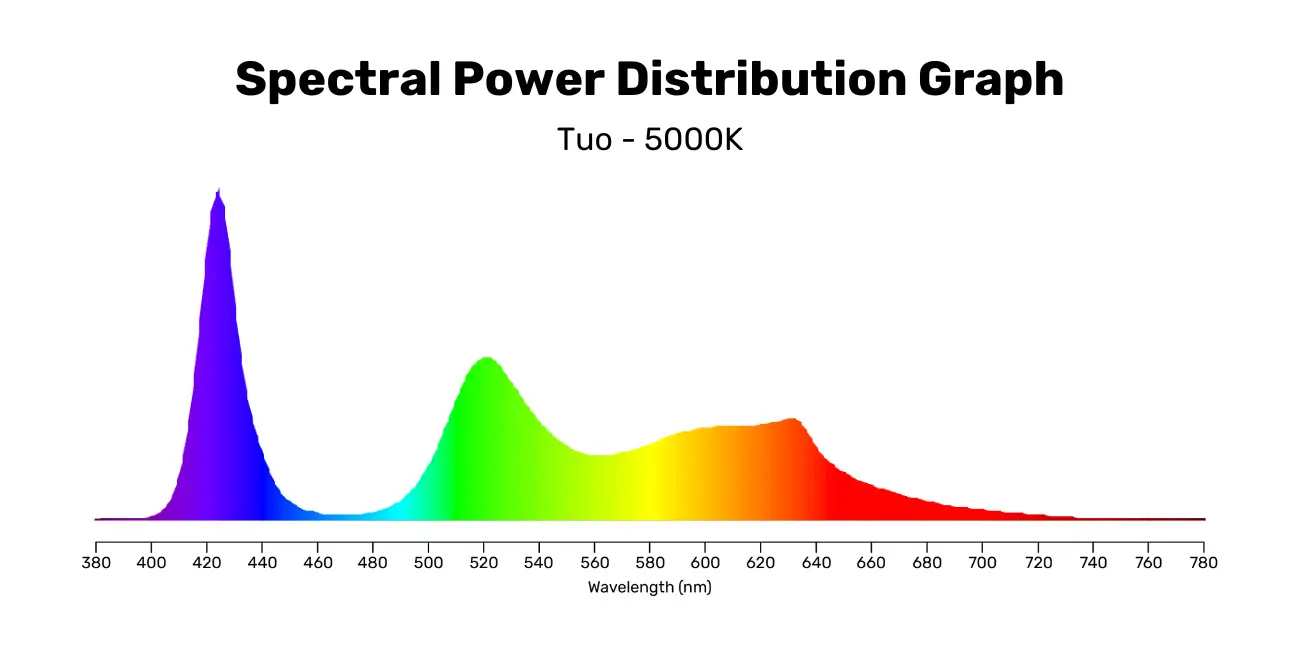
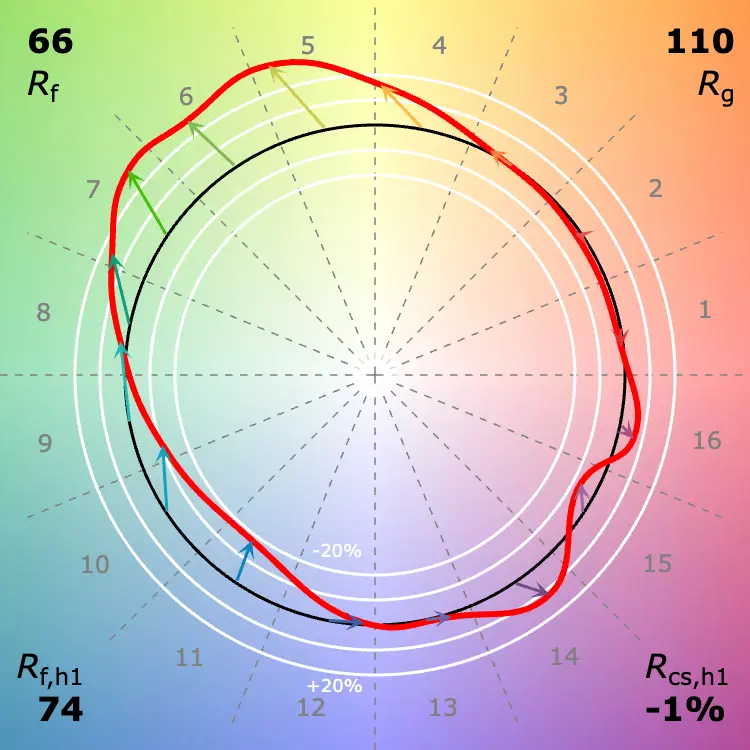
Overall, the color rendering on this bulb is horrendous lol. To be fair, color quality is not the purpose of this light bulb. But for anyone hoping it would be good, it’s not.
The TM-30 fidelity scores come in at 66 out of 100, which is just plain bad, and both the 2300K and 5000K settings have a very high positive Duv of .004 and .01, respectively, which means the Tuo gives off a fairly noticeable green hue.
This is made quite apparent when looking at the TM-30 vector graphs:
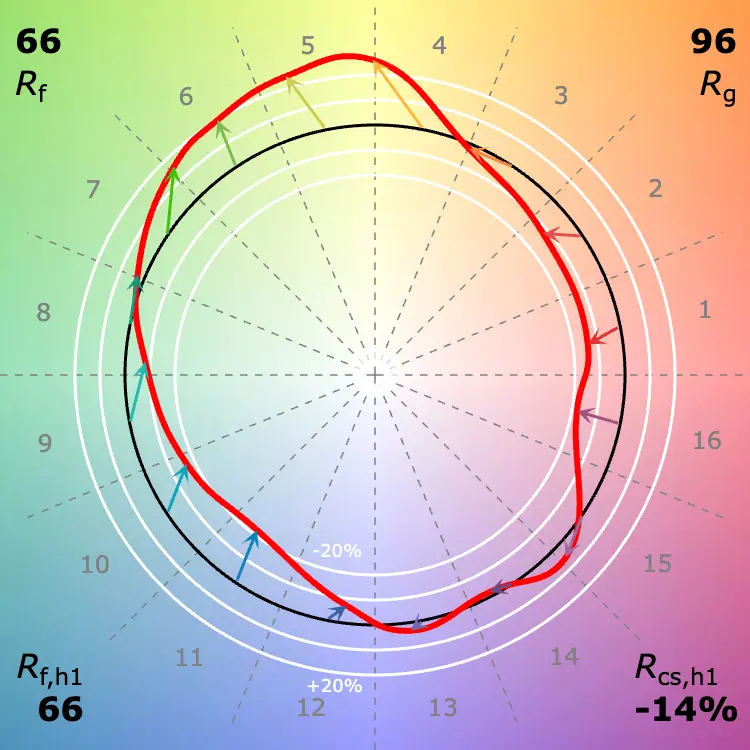
There’s a very good chance you’ll be using this on your office desk, and if you do a Zoom call or something, this will be lighting you up, and it may not be flattering, if that’s something you care about!
My Experience Using the Tuo
Overall, the Tuo experience is good! The app worked very well for me, and I didn’t mind the flickering as much as I thought I would overall. Especially on the 10X setting, 20X can get annoying, but it’s only on for 45 minutes.
Due to my regular exposure to early morning bright lights and the fact that I don’t travel across time zones very often, it’s a bit difficult for me to truly test whether or not this works in an objective sense.
Since you have to connect to WiFi networks to really use this, it’s probably not the best travel SAD device out there either. Although I’m sure it could be done, the experience may be lacking in ease of use. You’re probably better off with a pair of AYOs or something like that.
Tuo Circadian Smart Bulb
Unique mechanism: delivers strong circadian alignment with surprisingly low light output, has clinical data behind its effectiveness compared to standard light, and the app worked reliably in testing. Trade-offs are real — obvious flicker at higher impact levels, a WiFi requirement that kills its travel use case, and you need it to be the dominant light source in the room for it to actually do anything.
Keep reading
 Circadian Lamps
Chroma Skylight vs the Brighter Lamp: I Put Both on My Meters
 Circadian Lamps
Chroma Skylight Review: I Tested the Claims on a $2,400 Light
 Circadian Lamps
The Brighter Lamp Review: I Put the “World’s Brightest” Lamp on My Meters
 Circadian Lamps