

Looking for light bulbs that mimic natural sunlight? We’ve reviewed as many as we can and the ones in this guide are among the healthiest for human beings!
Many lights on the market claim to be full-spectrum or flicker-free, like the sun…
But are they really? And what do these terms even mean anyways?
In this guide, we’re going to cut through the meaningless marketing lingo by testing and reviewing the best lights on the market.
Free · 95 pages
You’re reading about one piece of this. The book is the whole day.
The Circadian Blueprint covers setting your body clock with light — the timing, the doses, and which products actually deliver them. Every number came off my own spectrometer.
Check your inbox to confirm. Plus a short note each month on what I’ve tested — unsubscribe anytime.
What is Full-Spectrum Lighting?
Full-spectrum light bulbs contain a natural visible spectrum similar to the sun.
These lights also have very good color rendering, meaning they reflect light very similar to a natural light source like the sun.
Spectral Power Distribution Graphs
In order to check how uniform a light source is, we have to shine it under a spectrometer. This tool gives us the ability to create an SPD or spectral power distribution graph.
These are the classic graphs you’ve seen of the rainbow of light given off by a light source.
Let’s compare three daylight colored 5000K LEDs:


As you can see, even though all of these lights emit a very similar “color”, the full spectrum LED emits a relatively even amount of light at all wavelengths, with no large unnatural peaks and valleys.
True full-spectrum LEDs also have very good color rendering, oftentimes better than “high CRI” lights that are made specifically for this purpose.
Color Rendering Index
The CRI or color rendering index is used to determine how well a light source reflects certain colors compared to a natural light source, like the sun.
Basically, the fuller the colors in a light source are, the higher the CRI score will be.

While CRI isn’t perfect, nor is it the only system of its kind, it functions just fine for our purposes in this article.
We do take specific note of one of the 15 colors in the CRI standard, R9 or deep red. The reason we take this one into account is that it’s usually what modern LEDs perform worst at, and a low R9 score means skin tones can look slightly off.
Light Flicker
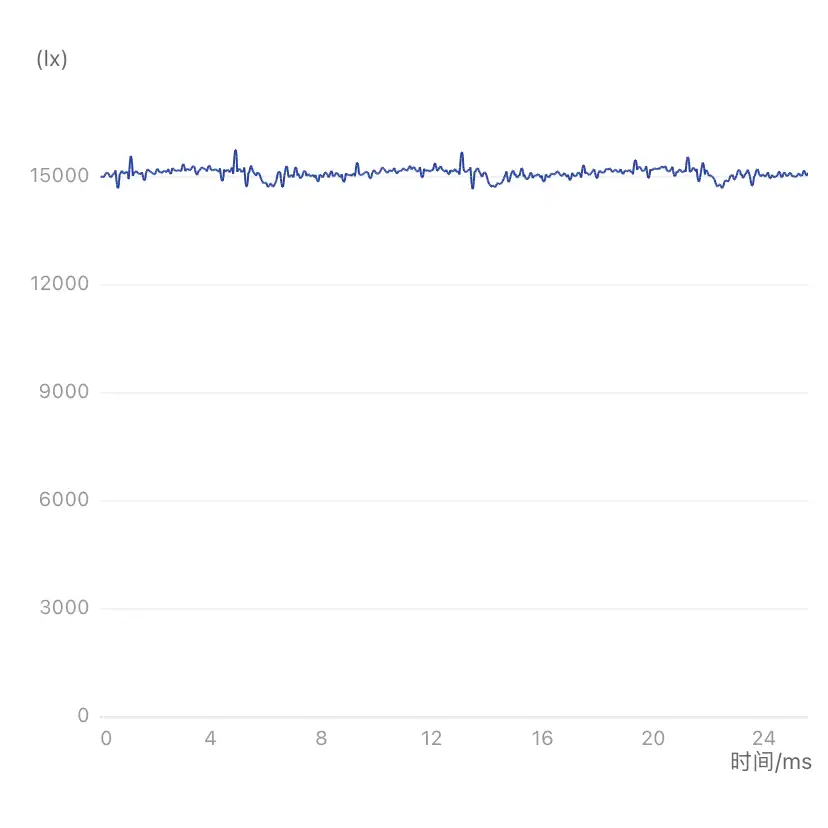
Some LEDs and even some incandescents flicker imperceptibly due to the AC current powering them.
This “invisible flicker” can cause eye strain, irritability, and headaches in certain individuals.
This invisible flicker may not impact you at all, but if it does, we have included metrics for each of the lights on our list.
The Best Full-Spectrum Light Bulbs
Full-spectrum LED lights that accurately mimic natural sunlight are becoming more and more commonplace.
Explore even more lights in our light bulb database:

Here are the best full spectrum lights currently available on the market today:
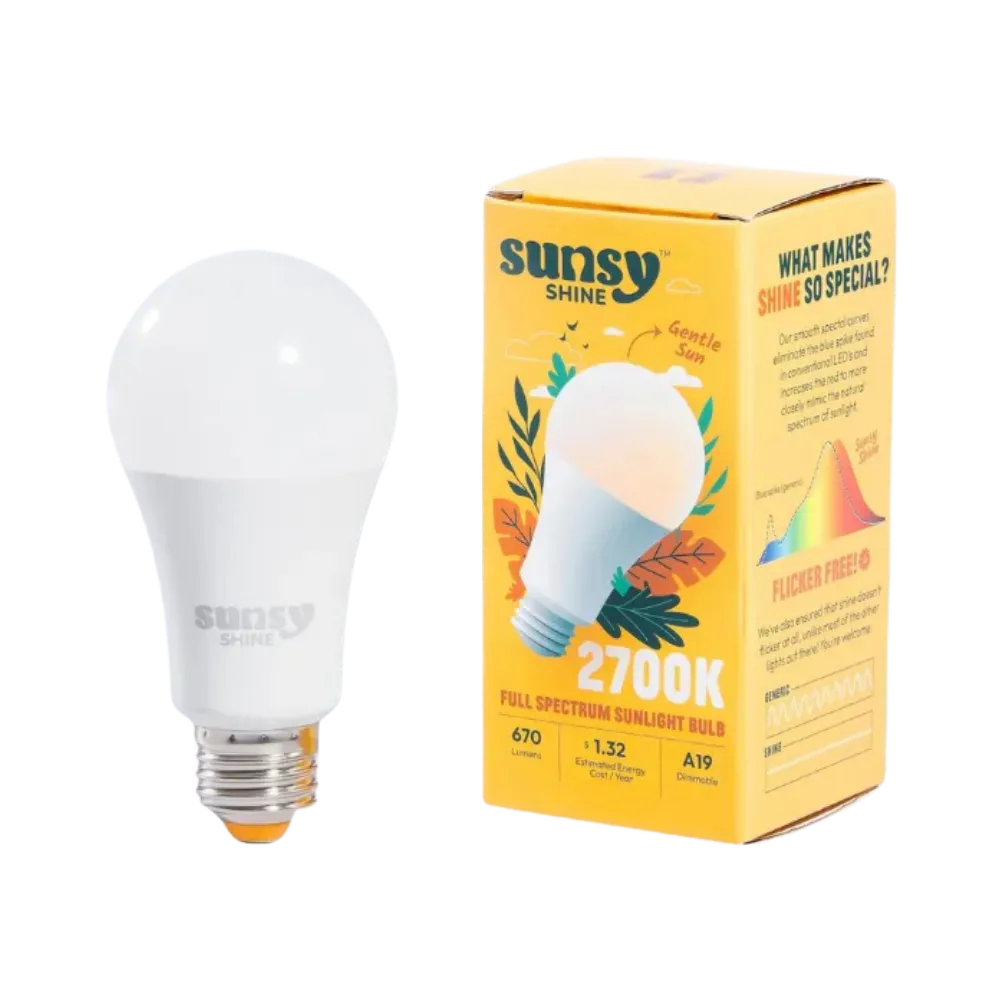
1. Sunsy Shine – Best Overall
Disappointed with the spectrum, flicker, customer support, warranties, and color range of other bulbs, we decided to make our own!
Sunsy Shine is the culmination of that desire! These lights utilize the latest broad-spectrum SunLike diodes and flicker-free drivers.
They come in three color temperatures, so you can choose the one that suits you best.


We tried to combine Yuji’s build quality with Norb’s price point while offering a much better return policy and warranty.
There’s also a bulk order discount. If you buy 10+ or 20+, you can get up to 20% off the entire order.
I think you’ll be quite pleased with these if you’re looking for new light bulbs for your home 😁
Shine 2700K


Shine 4000K


Shine 5700K


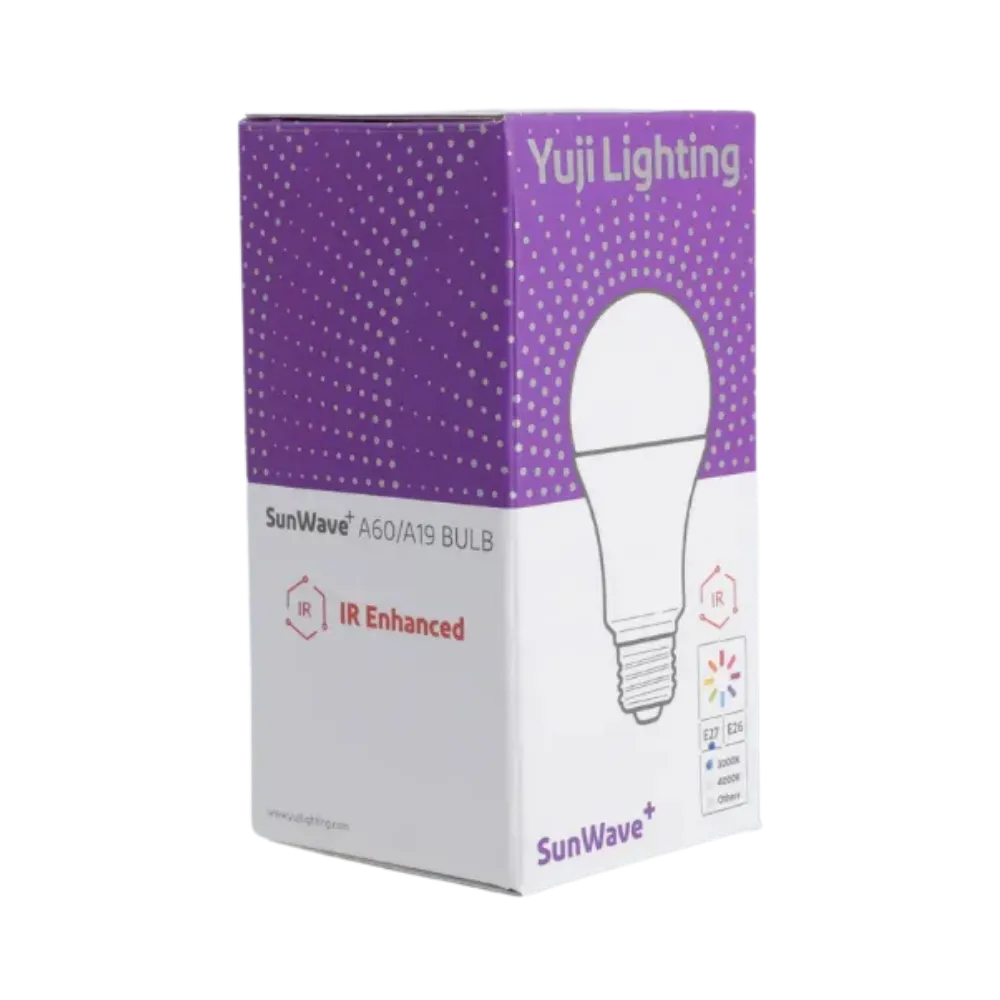
2. Yuji SunWave – Best Infrared
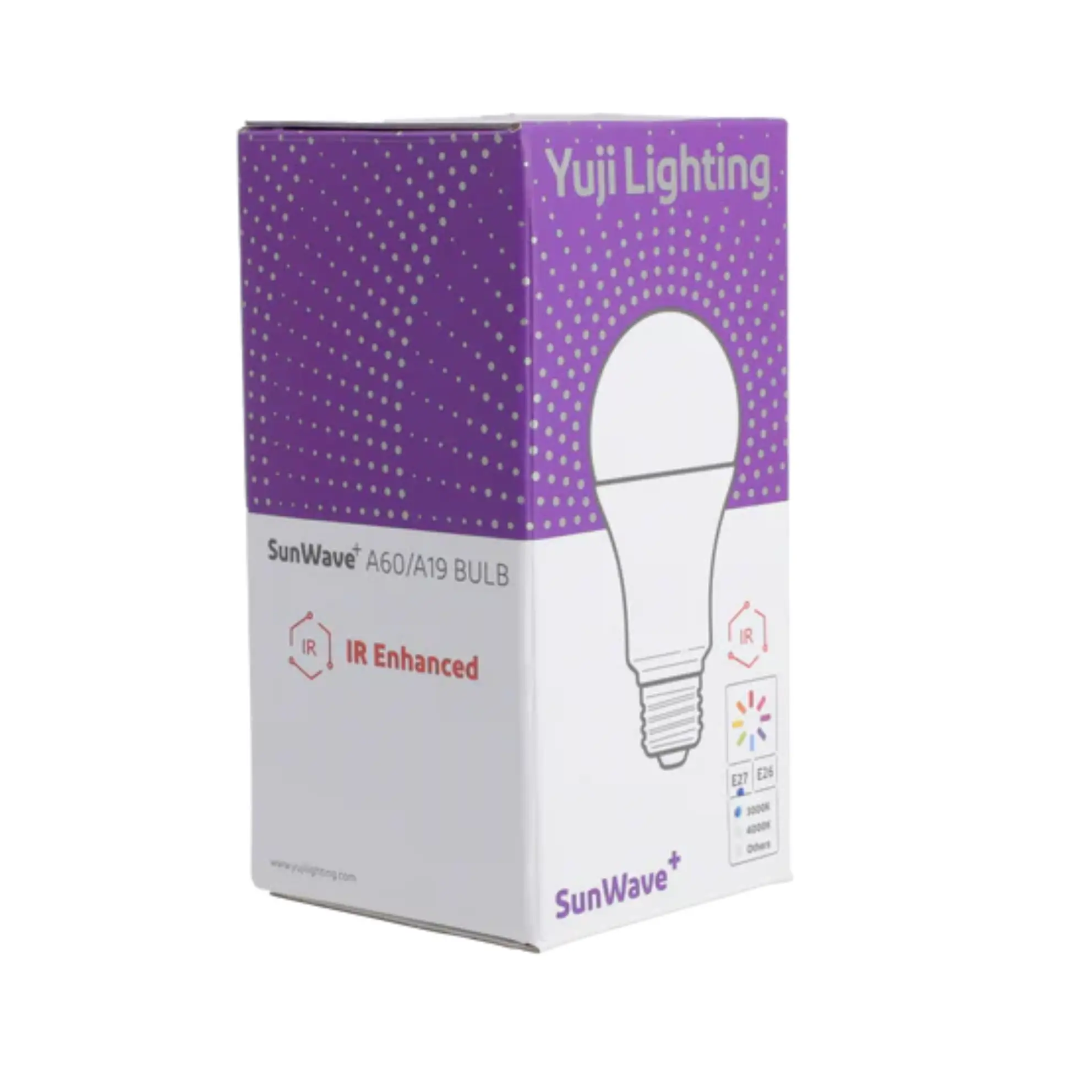
Another brand worth looking at is Yuji’s SunWave+
These are also flicker-free and tend to run a bit brighter but are quite a bit more expensive, and I’m not quite as big of a fan of the spectrum, although these are still vastly superior to normal LEDs!
They come in 3000K, 4000K, 5000k, and 6500K versions. These color temps can be purchased in either a regular A19 or BR30 style.


Yuji also has some SunWave LED strips available for sale if that’s something you’re in the market for.
Yuji SunWave+


🏷️ OYBYJ5 for 5% off
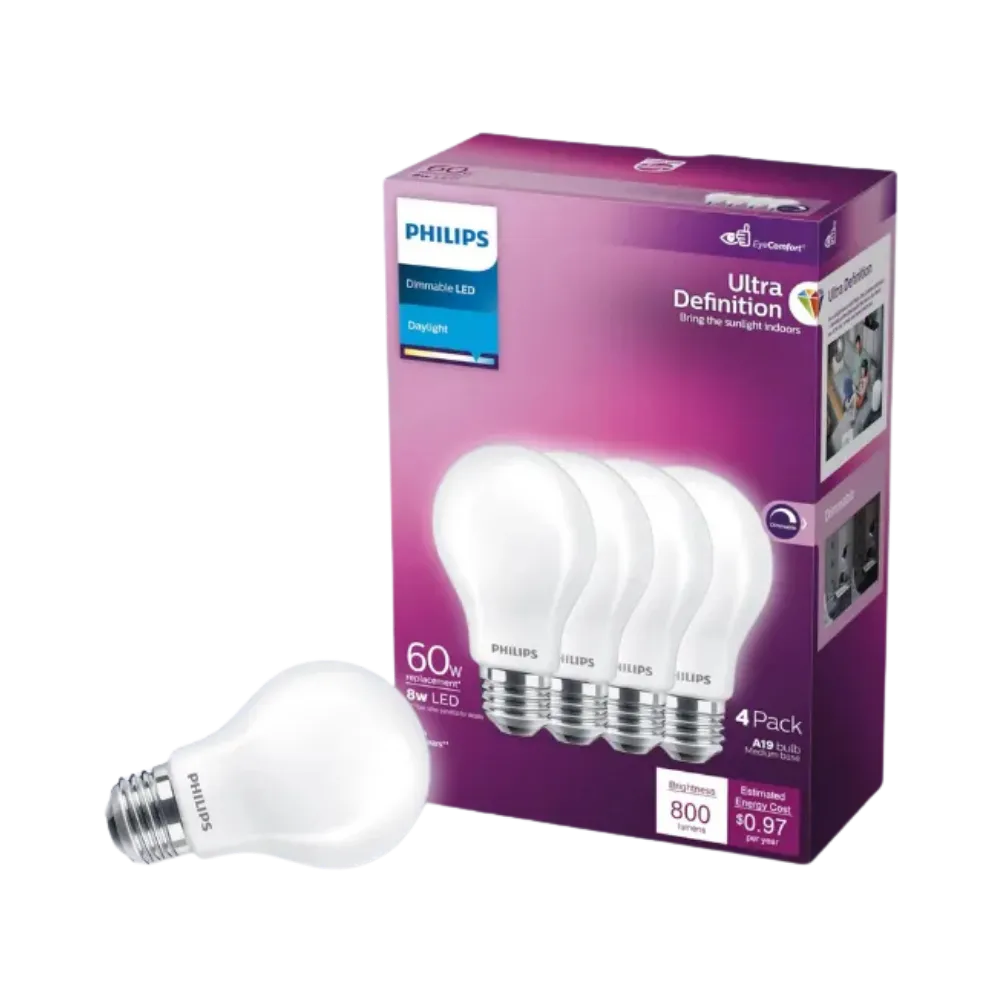
3. Philips Ultra Definition – Best Budget
The new ultra-definition line of bulbs from Philips has a unique color spectrum that’s worth mentioning here.
While it has some large spikes, they’re all concentrated in the longer wavelength red end of the visible spectrum, which I prefer to see over large blue light spikes.
The purpose of these red spikes it to game the CRI R9 score, so it feels a bit dishonest but what can you do.
Here are three spectral graphs from three different 5000K ultra-definition lights:


Not too bad if you ask me! The average CRI for these lights is also around 95 which is very good! And the flicker isn’t too bad either.
Just about all of the 5000K ultra-definition bulbs have similar spectral qualities, and vary in their flicker.
You can view all of them in our Light Bulb Database.
Philips Ultra Definition


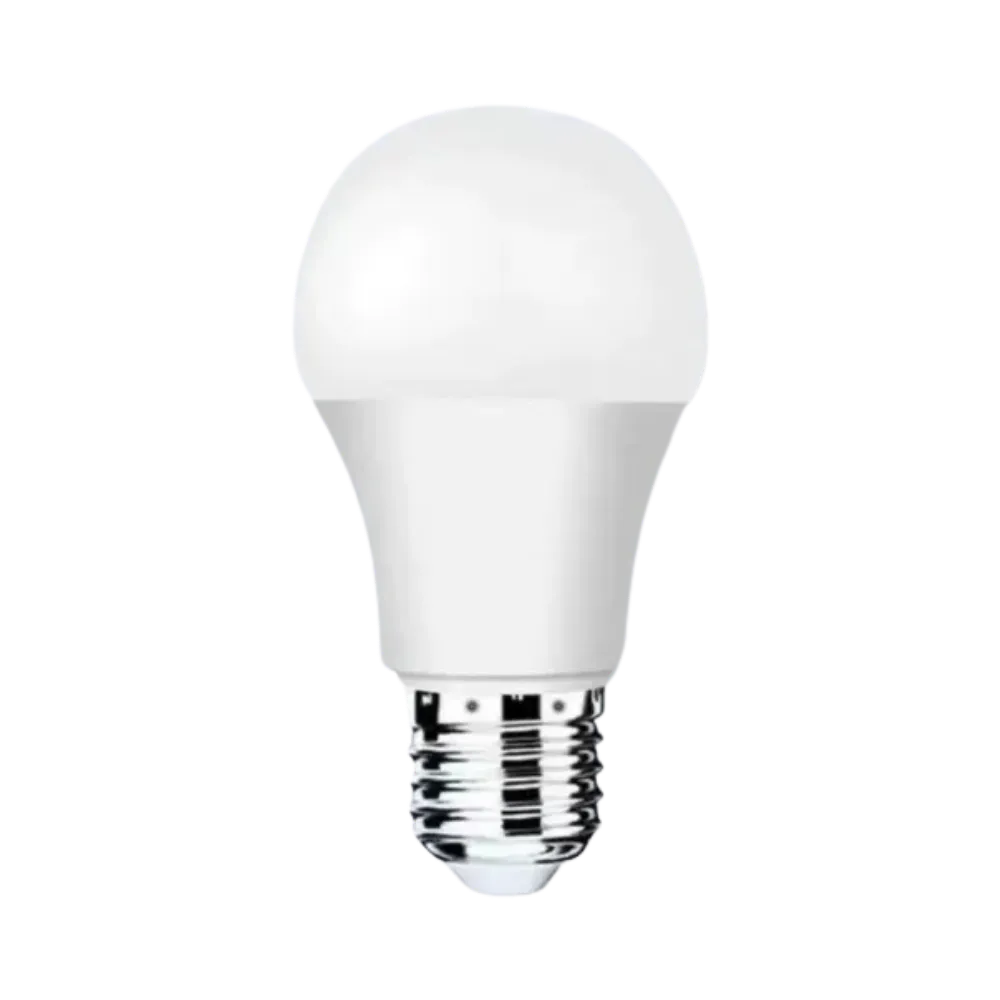
4. Aliexpress Bulbs
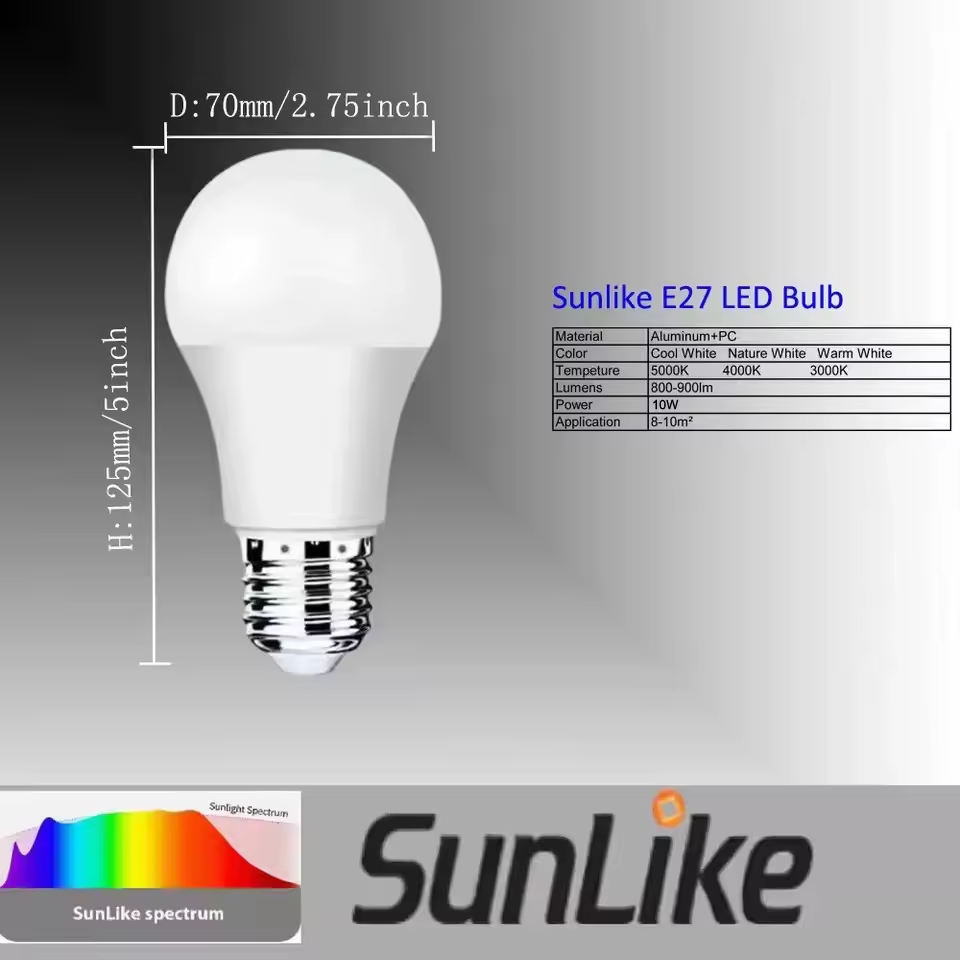
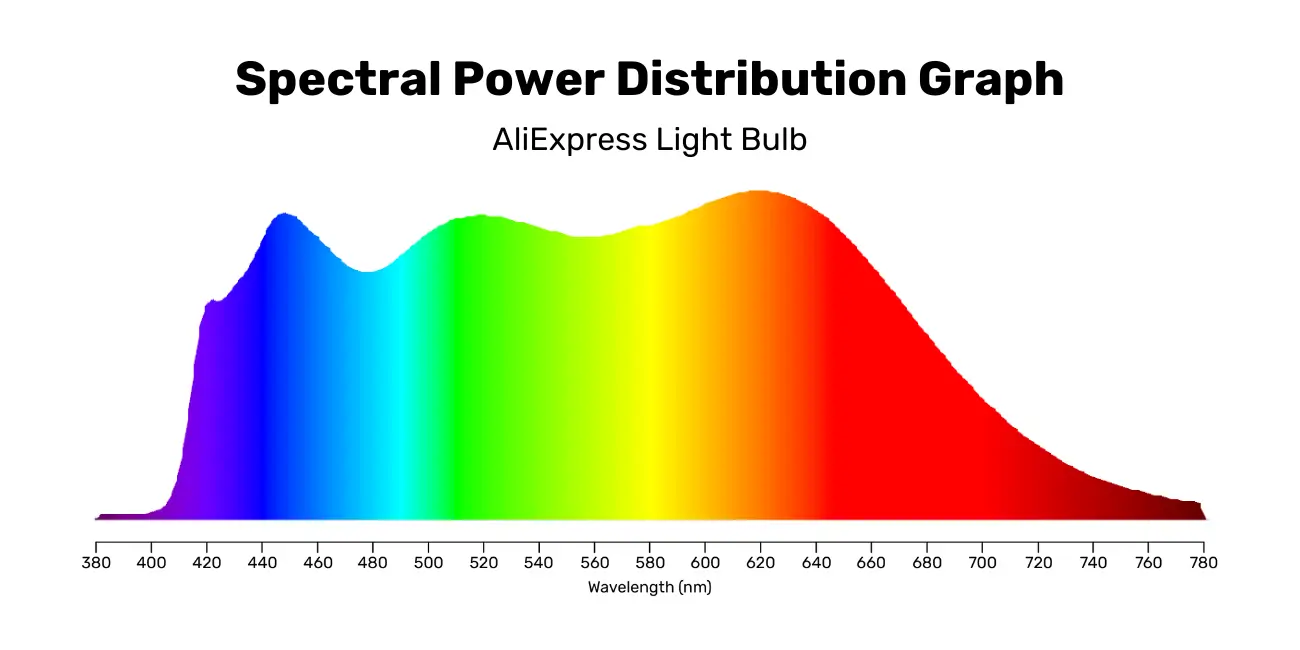
A reader of ours mentioned these, so I bought some to test, and they’re great! This is what I’d recommend if you’re in a 240V country, can’t currently buy Sunsy lights, and don’t want to pay Yuji prices.
Surprisingly, these use genuine SunLike diodes, just like our Sunsy bulbs, and seem to be built decently too (heavy in the hand).
As of right now, there are 3000K, 4000K, and 5000K options available. These are not dimmable like the Yuji bulbs, however.
AliExpress Bulbs
5. Sylvania Natural Series – Honorable Mention
This one is interesting, and I wanted to touch on it for a few reasons:
- Sylvania is outright lying about some of their claims and…
- Some of their lights aren’t too bad.
Sylvania recently came out with its Natural series which boasts its new TruWave Technology.
In their whitepaper for this spectral technology, they claim to output light similar to that of natural sunlight.

Well, we went out and tested 12 different models (all of which can be found in our Light Bulb Database) of TruWave lights to see what all the fuss was, and we were a bit surprised by the results.
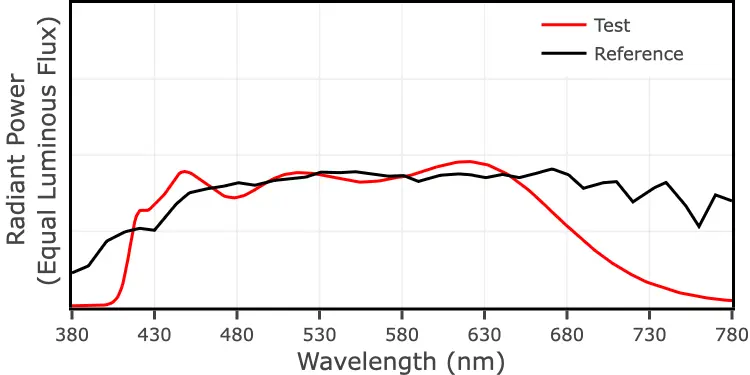
Allow me to explain, below are spectral power distribution graphs for the standard 8w and 11w frosted 5000K A19 light bulbs from Sylvania claiming to utilize “TruWave” technology:


Do these look like the TruWave spectrum advertised above?
No, they don’t. In fact, they look just like the “Typical LED Light” they compare their TruWave spectrum to.
It would seem Sylvania is lying about their lights. Tisk tisk.
But, as it just so happens, the 15w version does actually contain the fabled TruWave spectrum:

While there are a few other TruWave lights we tested that had decent spectrums, the 5000K 15W A21 is my favorite and my recommended choice.
The biggest drawback to the Sylvania Natural lineup is that they’re really lacking in the red light output, which many of the other options do a much better job of.
Sylvania Natural 5000K 15W


Options We Left Out
A couple of other brands and companies sell full-spectrum LEDs, such as the Norb line and GE SunFilled. However, they’ve been left out of this article due to poor quality standards.
Best Adjustable Full Spectrum Lights
An alternative to “smart” lights is the simple switch adjustable light. Simply flip the light switch off and on to change between color temperature modes.
The BioLight
Our favorite option for a full spectrum adjustable light is the BioLight from Block Blue Light.
You can cycle the BioLight between three different color temperatures:


This makes the BioLight a great do-it-all light!
The 4250K setting has fantastic color rendering at a CRI of 97.7 as well as low flicker, and the ability to quickly change it to a very warm and calming 2150K or 1800K light is pretty cool.
The BioLight


🏷️ OPTIMIZE10 for 10% off
Best Full Spectrum LED Strips
If you’re the type who likes to DIY things, this is the route to go!
I’ve found 4 commercially available LED strips that sport a nice high-quality full spectrum light output:
1. AliExpress
This is the only budget-friendly fulls spectrum LED strip currently commercially available that I know of.
It comes in 3000K, 4000K, and 5000K options. If you’re looking for a morning light kind of feeling, go with the 3000K, but if you want the most effective one, go for the 5000K option.
AliExpress Sunlike

- Price: $
- CCT: 3000K, 4000K, 5000K
- Luminous Flux: 1135lm/M
- Voltage: 24V
- Wattage: 12W/M

2. Yuji SunWave
Yuji’s SunWave strips will run you exponentially more than the current budget AlkiExpress offering. However if you can afford it and are looking for a nicer light source, the SunWave diodes are better from a color rendering standpoint.
Yuji also offers a 2700K-6500K tunable SunWave strip, which is currently the only full-spectrum tunable LED strip that I’m aware of. So if you’re thinking you’d love to be able to change the color temp of your DIY SAD lamp throughout the day, this is the easiest way to achieve that!
Yuji also sells premade panels that can make this whole process a lot easier!
Yuji SunWave

- Price: $$$
- CCT: 2700-6500K
- Luminous Flux: 1100lm/M
- Voltage: 12/24V
- Wattage: 18W/M

3. LumiTronix SunLike
A third option and usually the most expensive is the LumiTronix LED strips. These look great! I just haven’t used one myself yet.
They utilize Seoul Semiconductors’ new TRI-R SunLike LEDs found in the Norb and GE light bulbs.
They offer single-color strips anywhere from 3000K to 6500K and claim 1700lm/M for the 5700K so this just might be the best option from a circadian effectiveness standpoint.
LumiTronix SunLike

- Price: $$$
- CCT: 3000-6500K
- Luminous Flux: 1700lm/M
- Voltage: 24V
- Wattage: 19W/M
Sorry, I haven’t tested these yet!
4. Waveform Lighting Absolute Series
Another excellent-looking LED strip comes from Waveform Lighting in the form of their new Absolute Series.
I haven’t personally tested these but the photometric reports and TM30 data provided by Waveform show that they produce a very lovely color!
You will pay for these bad boys though, to the tune of $350 per 5M strip! Yikes.
Waveform Lighting Absolute Series

- Price: $$$$$
- CCT: 5000 & 6500K
- Luminous Flux: 1250lm/M
- Voltage: 12/24V
- Wattage: 17W/M
-

Best Color Light for Sleep: We Tested Down the Top Options
Don’t waste money on fake sleep lights. We narrowed down the market to the best red and amber bulbs. Discover the specific 1600K-1000K lights that work.
7 minutes -
Bedtime Bulb Review: The Best Low Blue Light for Sleep?
We tested the Bedtime Bulb v2 with a lab-grade spectrometer. See the exact blue light levels, flicker data, and why this hybrid bulb might save your sleep.
6 minutes -
NIRA Lights Review: Near-Infrared or Just Marketing Lies?
We tested NIRA A19 & BR30 bulbs. Our lab data exposes the truth about their “flicker-free” claims, spectrum, and lifespan. Read before you buy.
7 minutes
Thank you so much for this article!
Which model would you recommend for EU readers? I think the AliExpress model and BioLight could be good options? What role does the light fixture play in terms of performance, can I use a cheap Ikea fixture and expect the same level of performance as in this article?
Hi Tapio! The Aliexpress model is definitely your best option I’m aware of. The fixture shouldn’t matter at all 🙂
Hey Derek, great stuff as always. I was wondering if one can use a smart bulb as a replacement of sunrise lamps. what do you think about it? Would you be willing to make a list about it? Thanks a lot!
Working on that right now actually! Preliminary testing is pretty much done, looks like Philips Hue + a hub is the way to go here.
I see that Sunsy Shine has BR30 bulbs on Amazon (US), which are not shown on their website. Maybe these are new?
Hey Marc! Yup they’re new and on their way to fulfillment centers right now.
When testing a bulb for how “healthy” it is, you might want to look at how much radio frequency interference it emits into the air around it. Many (most?) LED bulbs emit a lot of this, easily picked up with a portable AM radio nearby. I actually find an AM radio to be a better indicator of something bothering me than dirty electricity. And see that the Sunsy Shine A19 and BR30 both emit such interference (bad) while the candelabra bulbs do not (good). I also find that every LED “filament” bulb I’ve tested (Waveform Lighting, FEIT) does not emit radio interference or dirty electricity, so potentially the healthiest of all for an A19 (seems like hardly anyone makes a filament BR30). Also nice that most LED filament bulbs use real glass rather than plastic, good for people trying to avoid plastic (not sure how much the plastic cover interferes with the perceived quality of light).
Hey Marc! Agree, though it’s tricky to objectively measure this without better equipment I don’t currently have access to. I have AM radio but it’s challenging to use this in an objective sense if you know what I mean. It also varies by electrical grid it seems.
This seminal review on sleep recommended by ‘Why we Sleep’s Matthew Walker on the DOAC podcast. States that sleep + technology suggests evening light can suppress melatonin, but sleep onset often changes only slightly in experiments
(the review repeatedly notes ‘small’ effects on sleep latency, often a few minutes, and generally <10 minutes across these bright-screen studies; sometimes sleep latency is even shorter in the bright condition) and the paper argues that bed time delay + stimulation + notifications may matter more than “blue light” alone.
I really want to upgrade my lights in my house,
I wanted to get full spectrum lights that blocked blue light such as no blue light or bio light however now I don’t really see the point since they’re kind of expensive.
would I be fine with just getting some sunlike bulbs for the day (I’m EU/ Ireland)
and maybe just some low maybe 2000k bulbs for evening (doesn’t need to fully block blue light according to this paper)
Please let me know your opinion since you’re a lot more knowledgable.
paper review link: https://www.sciencedirect.com/science/article/pii/S1087079224000376?ref=cra_js_challenge&fr=RR-1
Hey Douglas!
Great question and I think you’re on the right track!
That paper makes some really solid points. The reality is that behavioral factors (bedtime delay, stimulation, notifications) often matter more than blue light alone when it comes to sleep disruption. Blue light can suppress melatonin, but the actual impact on sleep onset is often pretty small in most studies.
Here’s my take: Your plan is solid. SunLike bulbs for daytime and low 2000k bulbs for evening is a great combo. You really don’t need expensive blue-blocking bulbs unless you have specific issues or want that extra insurance.
The most important thing, which that paper touches on too, is getting bright light exposure in the morning/early day. Research shows that if you get tons of early/late morning light exposure, evening light is much less likely to suppress or disrupt melatonin. So your daytime SunLike setup is actually the more important piece of the puzzle.
Low 2000k in the evening will naturally have less blue anyway, and combined with good morning light habits, you should be in great shape!
Hope that helps!
Hey Derek, it would be great if you could add voltage/voltage span to the light bulb database as a column to help non-US readers – unless all tested are 100-120V.
Also, check out “DiCUNO ProOE” E27 bulb. CRI97, high R9, flicker-free, 100-240V, priced at 1/5th of the Aliexpress sunlike bulb recommended for Europeans.
Available in all Amazon countries, and there are spectrum tests in customer reviews. The tradeoff appears to be a lack of proper cooling as with any cheap bulb.
Hey Mike! Great suggestions, I appreciate it.
You’re right, most are 100-120V but not all. Adding voltage as a column makes total sense, especially with how many EU readers reach out about this.
And thanks for the DiCUNO ProOE tip! I hadn’t come across that one yet. I’ll definitely check it out. If the spectrum holds up and it’s that much cheaper, that could be a solid option for European folks.
Can you share some links?
Ran across some EmeryAllen “dim-to-warm” LED filament bulbs, which advertise a CRI=97 and an R9=97. Bought one and confirm that the light is quite pleasant. However I see with an iPhone slow-mo video that it’s definitely flickering. Pity since I have LED filament bulbs that don’t flicker.
Sorry, too much for my small mind to digest. Simple question, do any of these, particularly the Sunday, emit at least if not more infrared as an incandescent? That is the issue with traditional LEDs I’d like to address that has gotten a lot of attention recently. Thx!!
Hey Bob! Unfortunately no light bulb on the market emits infrared to the same extent as an incandescent. Incandescents do have quite a bit of IR-A, but also a lot of wasteful IR-B and IR-C. There are some LEDs that emit some IR-A like the Yuji SunWave+, we (Sunsy) are trying to make some that are better which should be out by the end of the year.
One of the issues with incandescents is that they emit very little short wavelength light, which the Sun is of course abundant in. A great solution is combining broad spectrum LEDs like Sunsy with a halogen or incandescent which basically gives you the best of both worlds! That’s what we do in our home, and many others do this as well. It’s not a perfect solution, but it’s the best we have.
Hi Derek,
A couple of questions:
Thank you for all your information and articles. They are so useful!
I saw a reddit recently saying philipps had gone down in CRI quality recently…can you confirm? also the ali ones work for 120V, there are some cheaper ones on ali FWIW as well. Cheers and thanks!