

Confused about which blue-blocking glasses you should buy?
We’ve scientifically tested over 120 pairs to narrow down the best of the best so you don’t have to keep pulling your hair out and deciding which company to trust. (but feel free to check the database to find the perfect pair for you!)
How We Did Our Testing
We used our lab-grade spectrometer to take readings of a full-spectrum light source before and after each lens was placed over the spectrometer.
This gave us the ability to compare each pair of glasses apples to apples.
Free · 95 pages
You’re reading about one piece of this. The book is the whole day.
The Circadian Blueprint covers setting your body clock with light — the timing, the doses, and which products actually deliver them. Every number came off my own spectrometer.
Check your inbox to confirm. Plus a short note each month on what I’ve tested — unsubscribe anytime.
So, what did we compare? Two important things…
Reducing Circadian Light
While most glasses claim they block “50% of green light” or “99% of blue light“, these claims are rather vague…
So we improved them!
Instead, we decided to use Circadian Light Reduction.
This is a metric developed by the LHRC that uses a complex weighted algorithm to determine how biologically impactful a light spectrum is to your circadian rhythm.
Since not all blue light or green light is equally impactful to the suppression of melatonin, it’s much better to use this weighed scale to determine what kind of impact a pair of blue blockers may have.
You can read more about circadian stimulus here.
Reducing Lux or Brightness
Lux is basically a measurement of how visually bright a light source is.
Generally speaking, the more circadian light you block, the “darker” your environment will appear.
BUT.
This is not always the case.
Since the light that suppresses melatonin is different from the light we are most visually sensitive to, some lenses can block similar amounts of circadian light but differ vastly in how dark they make the environment seem.
For example, the two lenses below each block around the same amount of lux at 8%.


However, one clearly blocks more blue light, to the tune of 20% more circadian light.
If you’re doing color-sensitive work or don’t want to distort the color of your environment, choose a lens with lower lux reduction.
However, if you are sensitive to light or will be in a very bright environment late at night, a higher lux reduction will be useful, since reducing overall lux or brightness is really a proxy for how much light is getting through the lenses.
And in general, the more like you block, the less melatonin you’ll suppress.
Which Blue Blocker Lenses to Pick
When it comes to blocking blue light at night, you’ve got three main categories to choose from:
Yellow Lenses
These block most of the blue light while letting through almost all the green light.

Examples of what yellow lenses let through:


These lenses are great if you know you’ll have to drive somewhere at night and still need to see very well, or if you’re doing color-sensitive work and don’t want to distort colors too much.
Pros:
Cons:
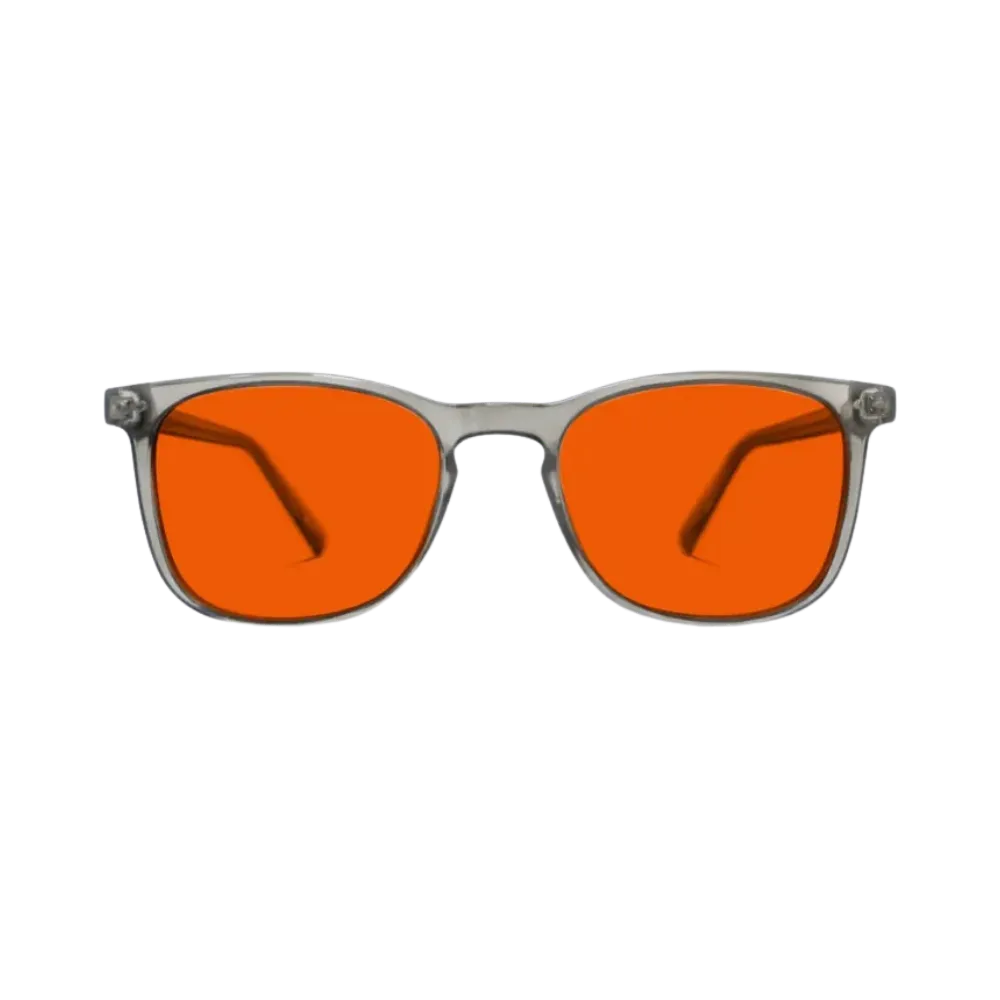
Amber Lenses
These are great middle-grounds that cut down on most blue and green light.

Examples of what amber lenses let through:


These lenses are the best all around for color clarity and blue light-blocking abilities.
These are really the best of both worlds if you don’t have to drive anywhere and just need a pair for out on the town or at home.
Pros:
Cons:
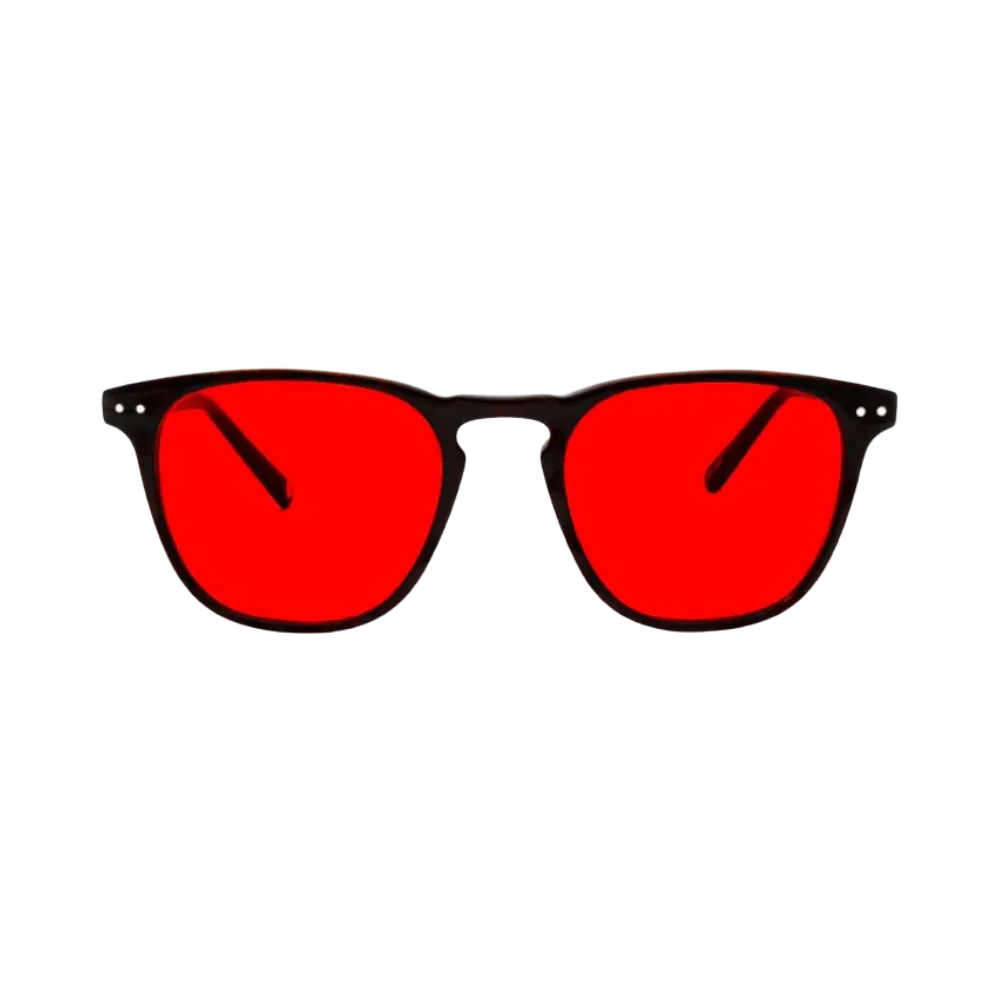
Red Lenses
Red lenses don’t let any blue or green light through.

Examples of what red lenses let through:


These lenses are a must-buy if you find yourself very sensitive to blue/green light.
Anyone with sleep phase disorders or insomnia should consider using red lenses at night to avoid delaying melatonin secretion.
These are also a good pick for anyone looking to fully maximize their sleep quality.
Pros:
Cons:
The Best Blue Blockers
Without further ado! Here are our recommendations:
Best Yellow Blue Blocker
A pair of yellow blue blockers are perfect for cutting down on circadian light without diminishing colors too much.
TrueDark Daylights

These will give you a pretty sizable reduction of over 50% of circadian light, while still retaining amazing color rendering.
What Do They Block?
🏷️ OPTIMIZE for 10% off
TrueDark Daylight Fitovers

The same as the others! These just fit over glasses.
What Do They Block?
🏷️ OPTIMIZE for 10% off
Block Blue Light

If you’re looking for readers or prescription lenses in yellow, BlockBlueLight is the way to go!
What Do They Block?

🏷️ 10% off through link
Best Amber Blue Blockers
Here are our picks for the best amber-colored blue blockers around!
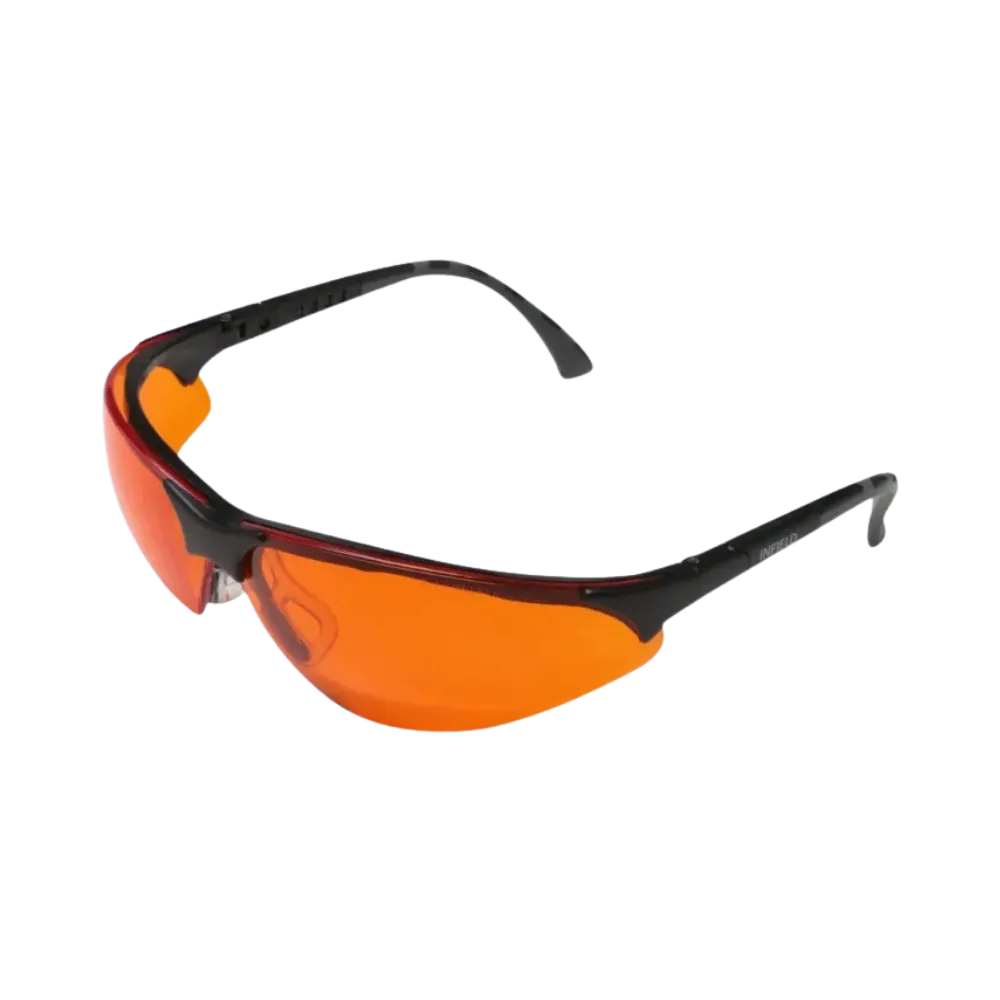
Infield Terminators

These are my favorite budget amber blue blockers!
With the wraparound format, they effectively block all blue light and much of the green, and don’t look half bad either!
What Do They Block?

TrueDark Gradient

These unique lenses block more light at the top, and less at the bottom, which is really what you need!
These are probably my favorite “social” blue blockers.
What Do They Block?

🏷️ OPTIMIZE for 10% off
EyeKeeper Fitovers

If you’re looking for a pair of amber blue blockers to wear over your prescription glasses, these are a great choice!
What Do They Block?

Block Blue Light

If you’re looking for readers or prescription lenses in amber, BlockBlueLight is the way to go!
What Do They Block?

🏷️ 10% off through link
Best Red Blue Blockers
Here are our favorite red lens blue blockers, perfect for insomniacs and biohackers alike!
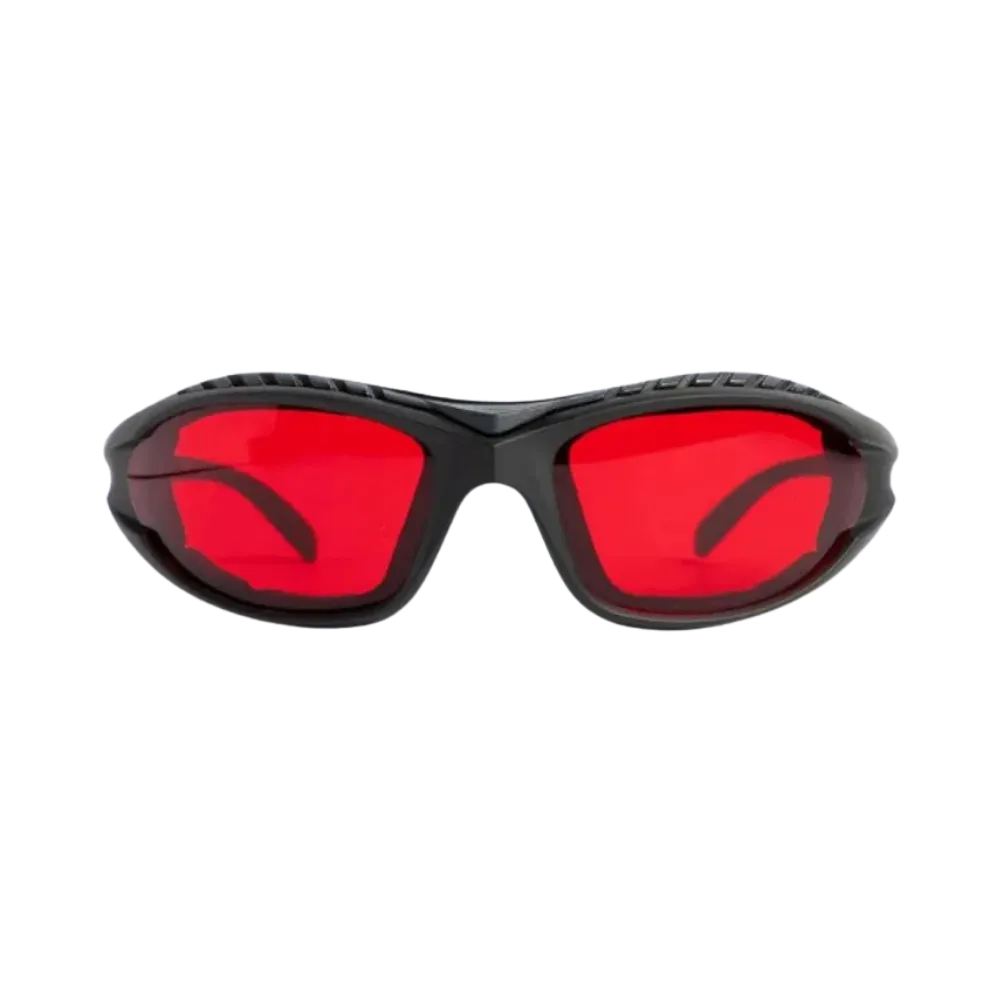
TrueDark Twilight Classics
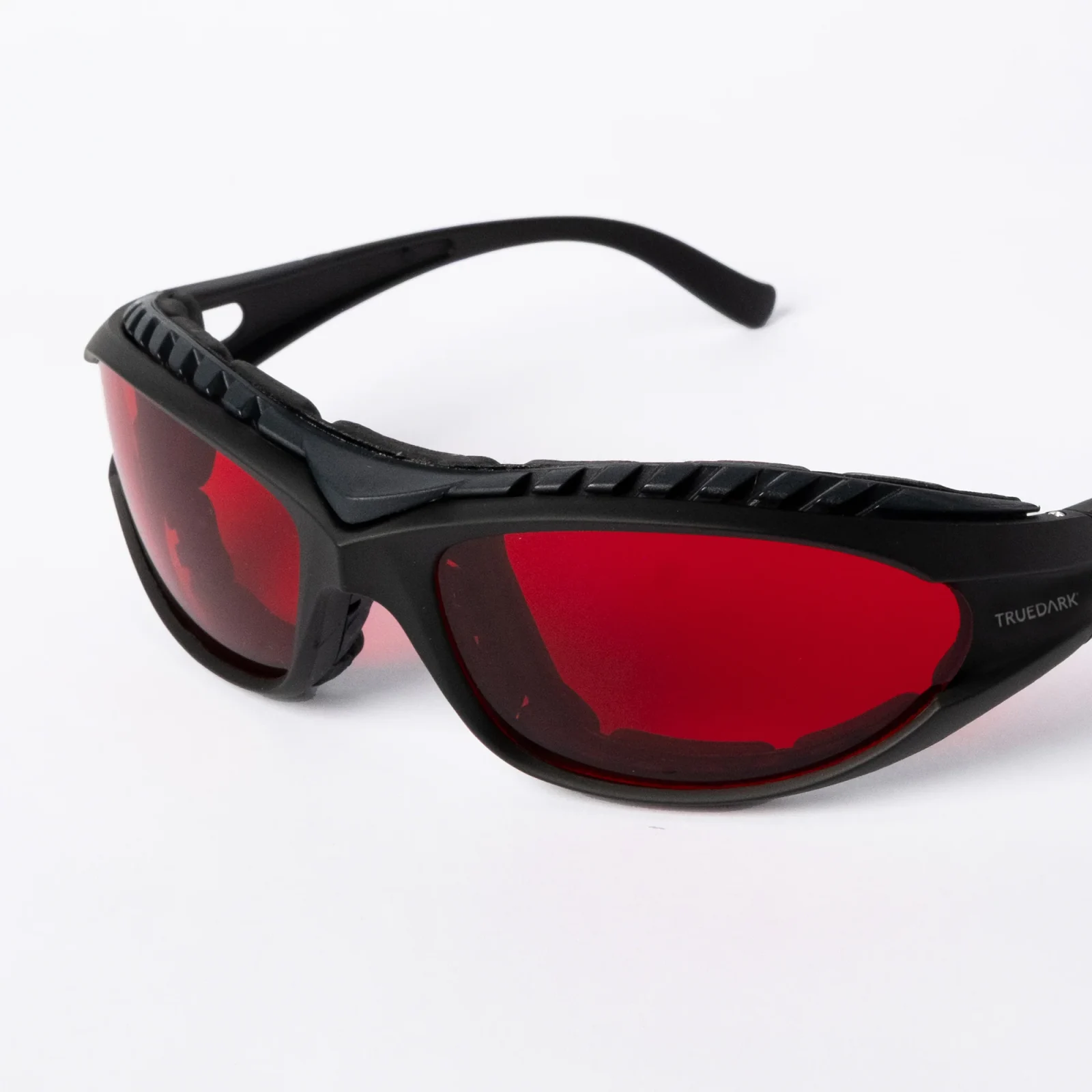
These lenses by TrueDark are the ultimate blue blocker. The best we tested.
Grab these if you’re looking for some glasses that’ll knock you out no matter where you are!
What Do They Block?
🏷️ OPTIMIZE for 10% off
TrueDark Twilights Fitovers

If you’re looking for a pair of lense blue locking glasses that will fit over your glasses, look no further!
What Do They Block?
🏷️ OPTIMIZE for 10% off
And that’s it for our recommendations! Hopefully, you’ve found your pair!
If not, check out our extensive blue blocker database, where you can sort through over 70 of the best blue blockers on the market!

-
VivaRays Review: Lab-Tested Blue Blocking & UV Lenses
Enhance your sleep and energy? We tested VivaRays’ blue light blocking and UV transmission. See how they compare to standard prescription glasses inside.
3 minutes -
5 Best Blue Light Glasses Review: Lab Tested (2026)
Staring at screens all day? We tested 100+ blue light glasses. Discover the best clear and tinted lenses for blocking digital blue light.
8 minutes
Hello! The Okany glasses seemed to perform extremely well in your tests. They are now $15 on Amazon…is that too good to be true? Is it the same product? Thanks so much for any insight!
https://a.co/d/0YXM4VK
Hey Jake yes those are the same ones we tested!
Hi, great recommendations! I have a typical flatter asian nose bridge so most of these frame styles without adjustable nose pads probably would slip off my face. Are there any particular models you would recommend? Thanks
Good question Ren, that’s something I hadn’t considered adding to the filters, I’ll get on that! On a cursory glance I see that Block Blue Light has some, but I’m sure there are others!
Great! Thanks Derek. I know you mentioned wrap around frames block more blue light overall, but in practical use would you say they make a substantial difference to sleep quality compared to standard frames (that don’t block blue light from the top)?
I think overall, for most people, normal frames are going to work just fine! Blue light suppresses melatonin on a dose response curve, and since basic shaped glasses block the vast majority of that light any left is normally not enough to have a very large impact on melatonin suppression.
Now, some people are hyper sensitive, and in those rarer cases I’d say it’s worth going for something more comprehensive.
Hey Derek,
Interested in the Infield Terminator blue light glasses. Do you know whether the nose pads are adjustable or fixed? Just wondering since I have a shorter nose bridge.
Hello! Ty for all your efforts and sharing this website. I use it frequently for buying decisions to make my personal environment light healthy. Currently, I want to protect my vision from blue light in different spaces outside of my own but confused by the clear lens variety in this database. What is the purpose of clear lenses if it shows negligible blue light blocking in the light reduction graph? If an environment uses bulbs that give off bad blue light, the clear lenses wouldn’t provide any protection.
It’s really a matter of how much light you’d like to block. VERY clear lenses do indeed block very little blue light, however even a slight tint can bring a blue spike down a reasonable amount. But again, to what degree is a function of personal preference.
Someone who is around a lot of artificial light but does color sensitive work like video editing fro example, couldn’t afford to wear yellow lenses blue blockers as they block too much, and so they might opt for a clearer lens.
This is why we provide the raw spectral graphs and blue light blocked percentages on the database, so that individuals can decide for themselves which lenses align with what outcome they’re hoping to achieve.
Hi Derek,
Can’t seem to find any information on whether the infield terminators have adjustable nose pads? Since I have a short nose bridge wondering whether these would be suitable for me?
Also would you say that the higher end options have any technical benefits to the lower cost options, or is it mainly style and brand name eg with Roka?
Hi Ren! No they are not adjustable.
The main benefits are primarily build quality (better springs, hinges, lens clarity/longevity), style, etc. Technically as far as light blocking goes as long as they have similar specs in our database they perform the exact same.
Hi Derek, your Reddit post was fun; I helped with research into melatonin impregnated sunglasses years ago when was starting my physics degree. You might be interested to test https://melaninproducts.com/product/melavision-sunglasses these.
Hey Richard! I’ve not seen these, we’ll take a look, thanks!
any info on these? https://www.walmart.com/ip/seort/18059770856
Hey Jacey, I’ll see about getting some to test.
This seminal review on sleep recommended by ‘Why we Sleep’s Matthew Walker on the DOAC podcast. States that sleep + technology suggests evening light can suppress melatonin, but sleep onset often changes only slightly in experiments
(the review repeatedly notes ‘small’ effects on sleep latency, often a few minutes, and generally <10 minutes across these bright-screen studies; sometimes sleep latency is even shorter in the bright condition) and the paper argues that bed time delay + stimulation + notifications may matter more than “blue light” alone.
I really want to upgrade my lights in my house get blue light light blocking glasses.
I wanted to get full spectrum lights that blocked blue light such as no blue light or bio light however now I don’t really see the point since they’re kind of expensive.
would I be fine with just getting some sunlike bulbs for the day (I’m EU/ Ireland)
and maybe just some low maybe 2000k bulbs for evening (doesn’t need to fully block blue light, just be dim)
Please let me know your opinion since you’re a lot more knowledgable.
paper review link: https://www.sciencedirect.com/science/article/pii/S1087079224000376?ref=cra_js_challenge&fr=RR-1
Thank you for doing a tremendous amount of work! I’ve used your reviews to select SAD light boxes. Thank you! I was wondering if you had tested the following blue blocking glasses? I’ve been using them for a while, but don’t know if they’re actually doing any good! They are quite cheap, which is why I bought them. Thanks again!
NoCry Blue Light Blocking Safety Glasses
https://www.amazon.com/dp/B091BH3FCX?ref_=ppx_hzsearch_conn_dt_b_fed_asin_title_1&th=1
Hey Greg, yes, we have tested those. They should be in the database.
Hi Derek
I came here after stumbling on your Reddit post and I have got to say I am very grateful for you outlining everything out so well.
I got to your Reddit post after finally succumbing to the heavy marketing on Instagram from this Blue light blocking glasses company “Aouhra” and bought their Valentine’s Day bundle (Link here: Flow® | Unisex Red Lens Blue Light Glasses – Aouhra.com)
After tracking my shipment (shipped out of China through Yanwen), I somewhat deduced that this company was likely some type of drop shipping company and I went down a rabbit hole of trying to locate the possible manufacturer of the glasses and came across a Chinese manufacturer called Shinu Eyewear (Link here: Blue Light Computer Glasses – SHINU EYEWEAR STORE).
After looking through the glasses you tested and through Shinu Eyewear’s website, it seems like there are a few products you tested that appear to be from Shinu (at least to me as it looks like the white background photo and frame are almost 100% identical). For example, the Block Blue Light, compare to these (Link: SHINU Red Lens Glasses Women Sleep Better Blue Light Blocking Glasses – SHINU EYEWEAR STORE).
Anyway, this is a long-winded way of saying, do you know if it is possible to know about the underlying manufacturer for these brands, this might make your testing a bit larger reaching as well. If not / you dont know, then I understand but would like to selfishly request that if you can, test out the Aouhra “Flow State” glasses I bought.
Thanks so much!
Hey Derek, this site is awesome! Just came across a Jack Kruse video on Blue light blocking and saw he was promoting “Lucia Eyes” brand glasses years ago (also appears to still wear the “Todd” frame in many of his more recent clips). They are interesting because their 50% blocking “daylight lenses” version appears to be relatively transparent and not yellow at all, they specifically promote these for computer work/gaming. I was curious if you have plans on reviewing any of their lenses or at least know if there is any efficacy to a transparent lens blocking any blue light?
Hey Franklin! Absoltely those are on my list to test. We’re in the process of completely revamping the blue blocker database with much better data and visualizations so it’ll be a part of that once it’s complete.