

Alright, in this article, we’ll take an in-depth look at the Northern Light Technologies lamps and how they compare to all the other SAD lamps we’ve tested thus far.
The Lamps
Northern Light Technology is a Canadian SAD lamp company that has been around for a while, and its more industrial design choices indeed show this.
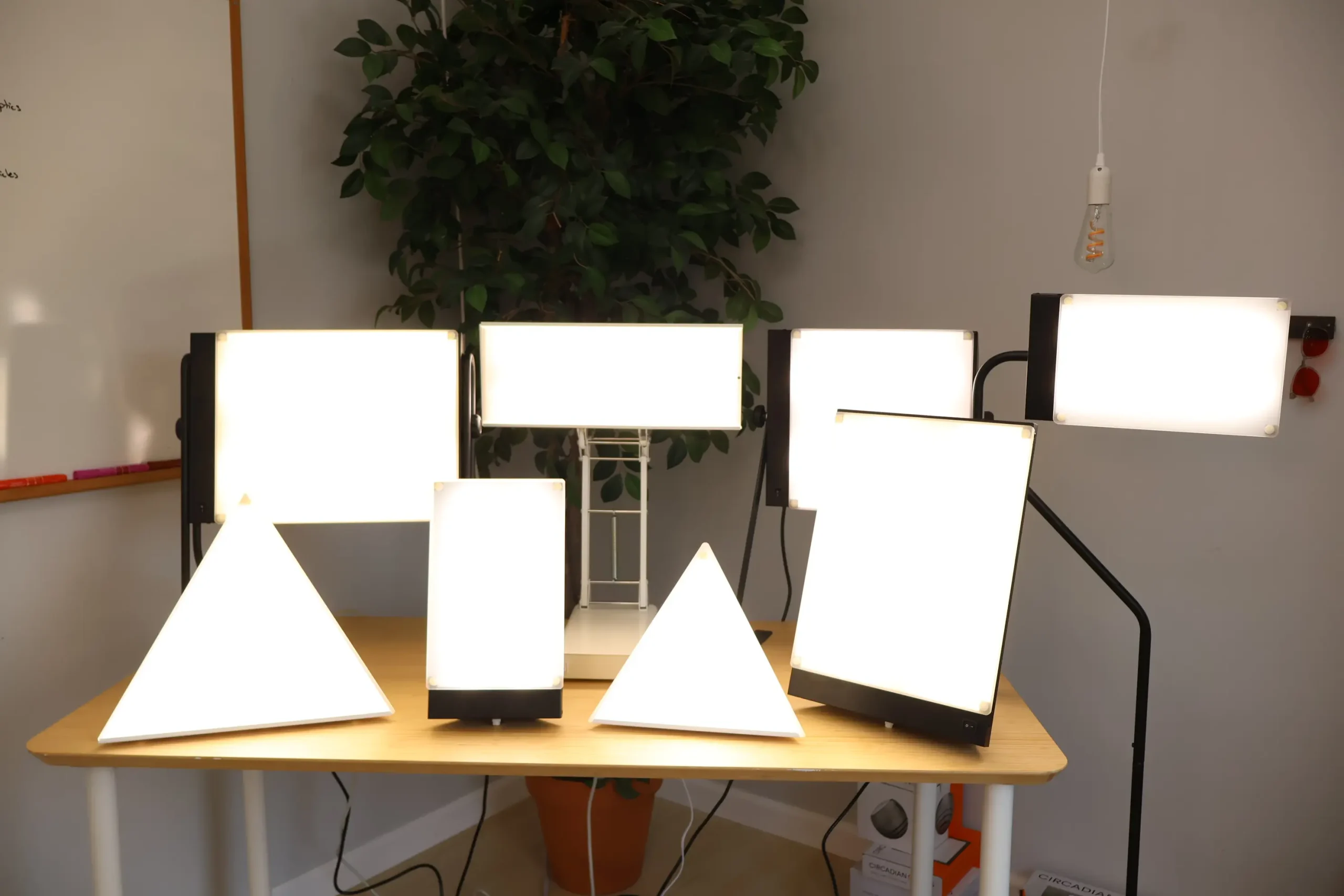
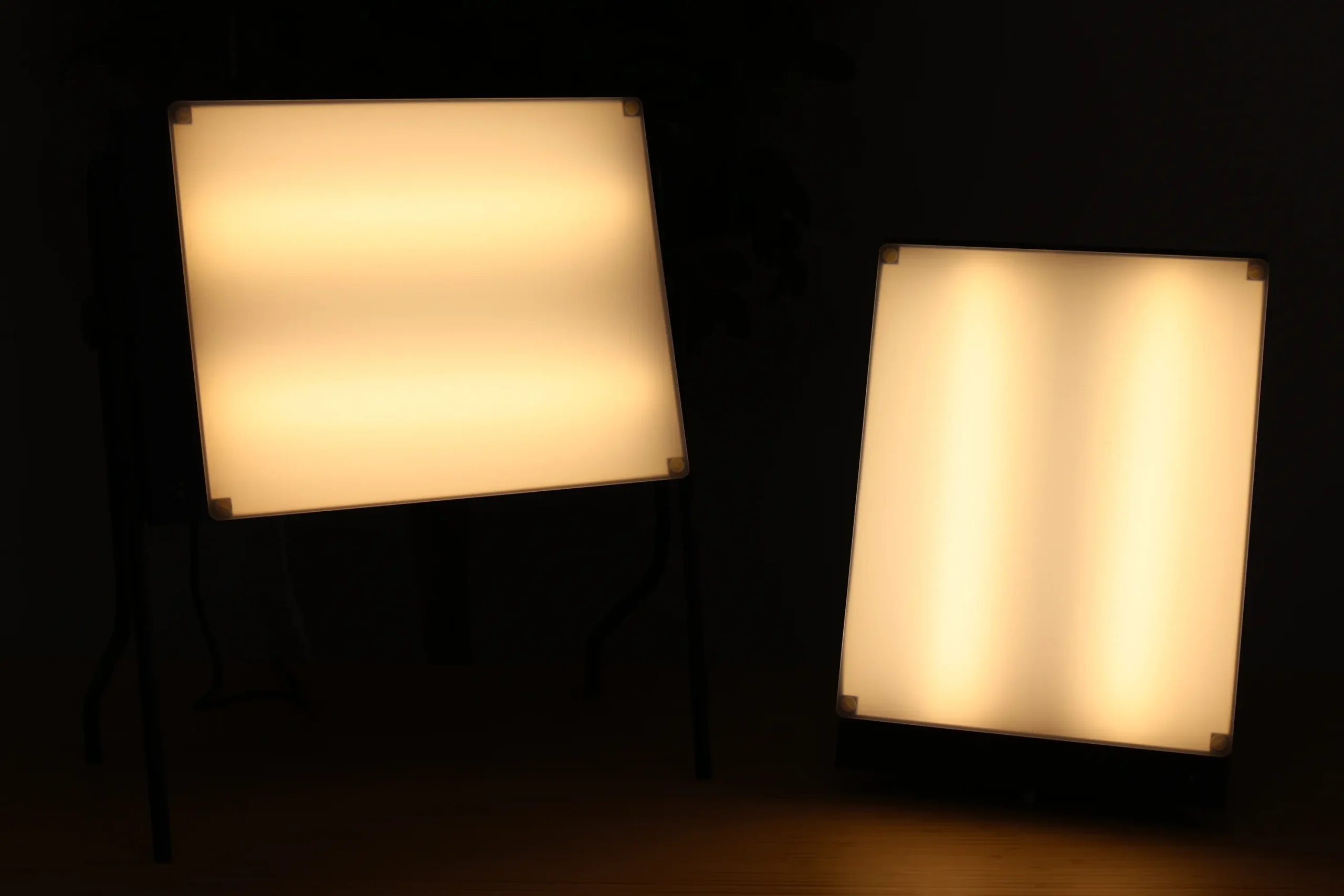
For this review, I got my hands on every model they sell, nothing left out! Something to note: These all utilize tube lights, except the Luxor models, which actually use E26 light bulbs.
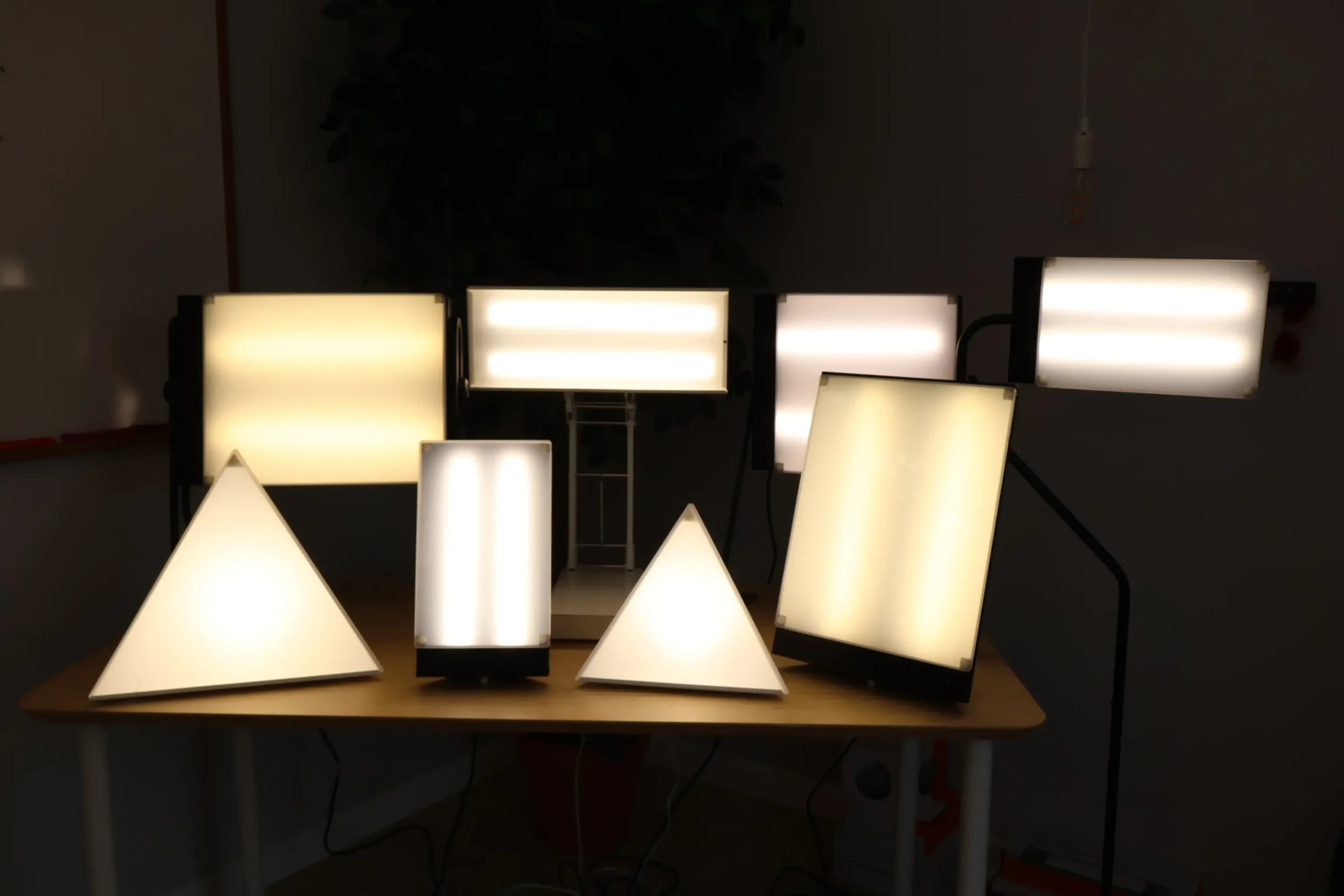
This means, however, that they don’t emit perfectly diffused light, unlike many of the LED panel-based SAD lamps available.
Free · 95 pages
You’re reading about one piece of this. The book is the whole day.
The Circadian Blueprint covers setting your body clock with light — the timing, the doses, and which products actually deliver them. Every number came off my own spectrometer.
Check your inbox to confirm. Plus a short note each month on what I’ve tested — unsubscribe anytime.
The actual light sources themselves appear something like this during use:
The benefit of this approach is that these SAD lamps are highly repairable. Which cannot be said of most of the others I’ve tested. This is an old-school design choice, and it’s likely why NLT is comfortable offering a 7-year warranty on every lamp they sell.
Something to keep in mind if longevity is a concern of yours!
Testing the Lamps
Let’s jump right into the test results, shall we?!
Lux and Circadian Light
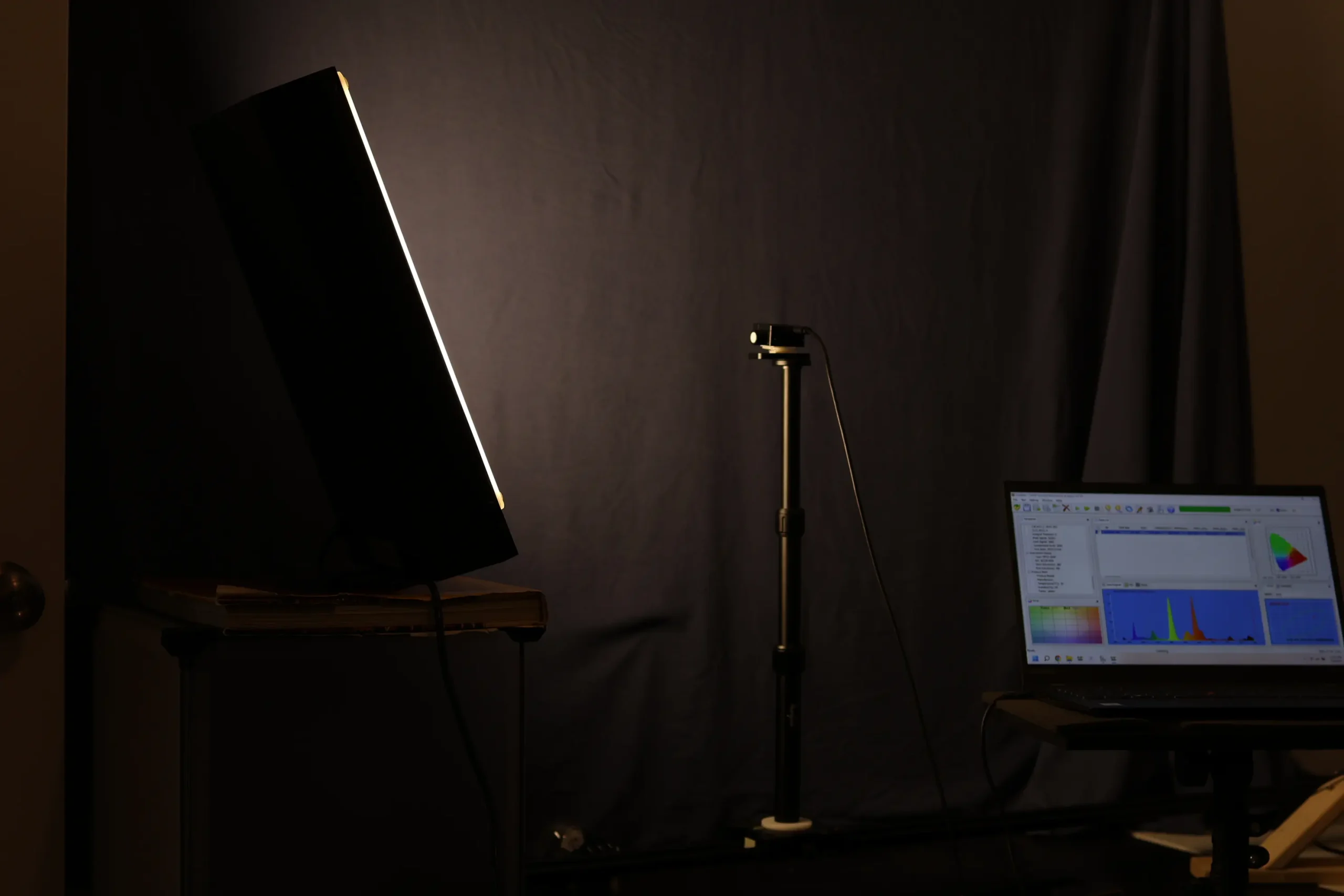
We placed each lamp in front of our lab-grade spectrometer for approximately an hour to obtain a good average emission.
Here are the lux numbers for each lamp at 1 foot:
As you can see, the NLT Desk Lamp is coming in first place! Definitely the brightest of the NLT lamps. With the BOXelite coming in second.
And while I’m not the biggest fan of the “10,000” lux suggestion (see below), here is where each lamp hits this limit according to our testing:
Lux however, is sort of an outdated metric with regard to testing a light source’s ability to activate the circadian rhythm. For that, we actually want to test the circadian light, which is more specific to the blue/green range.
Pay close attention to what happens to the BOXelite’s score from before.
Since the BOXelite uses fluorescent bulbs, the lower lux of the LED models actually catch up once we consider circadian light. This is because the fluorescent bulbs emit less blue light than the longer-wavelength green light, which the lux calculations rely on.
If you want the most effective NLT lamp, the NLT Desk Lamp II is clearly the best option. However, all of them are reasonably powerful, so visual comfort and physical dimensions can also play a role.
Spectral Properties
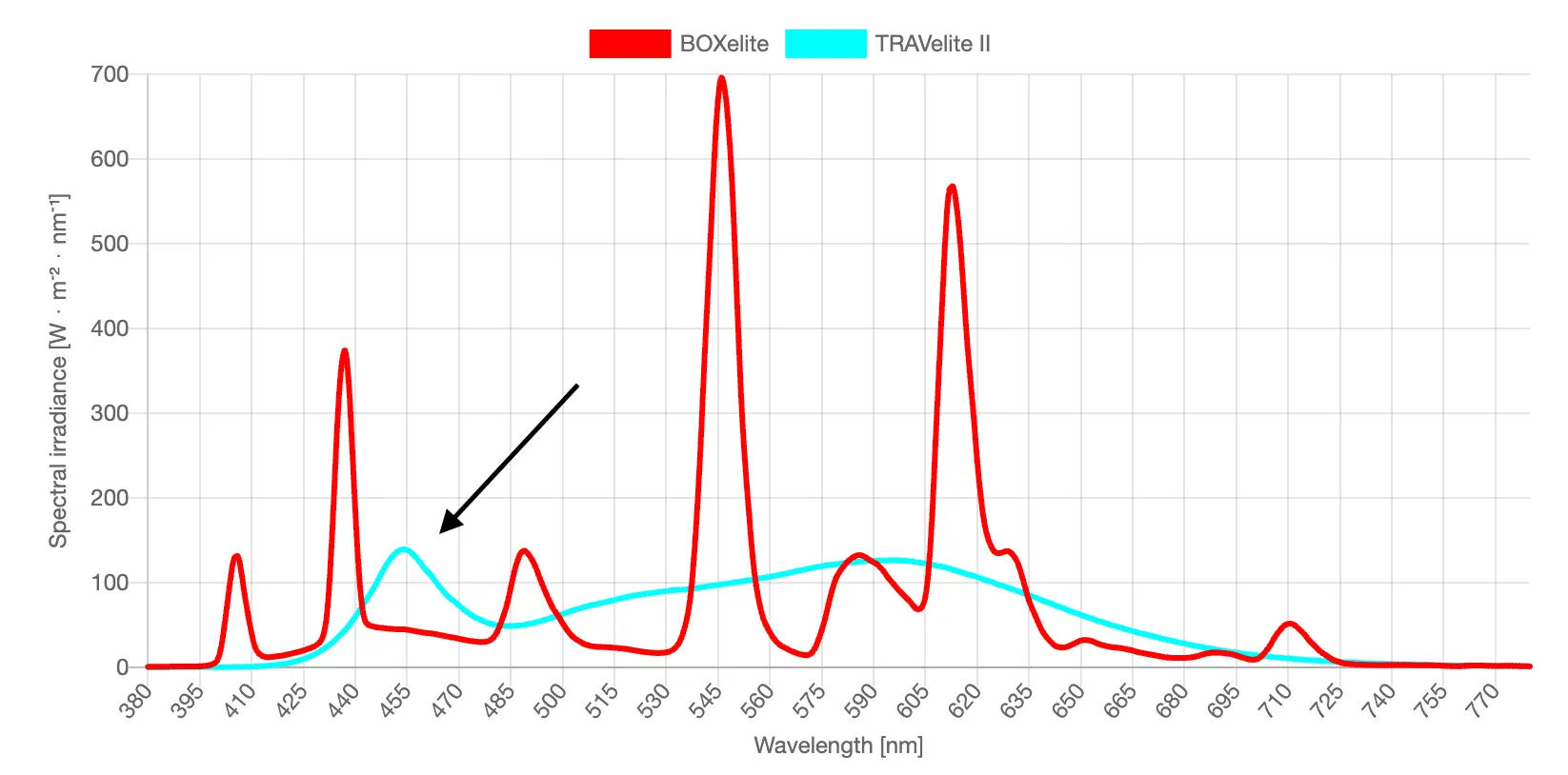
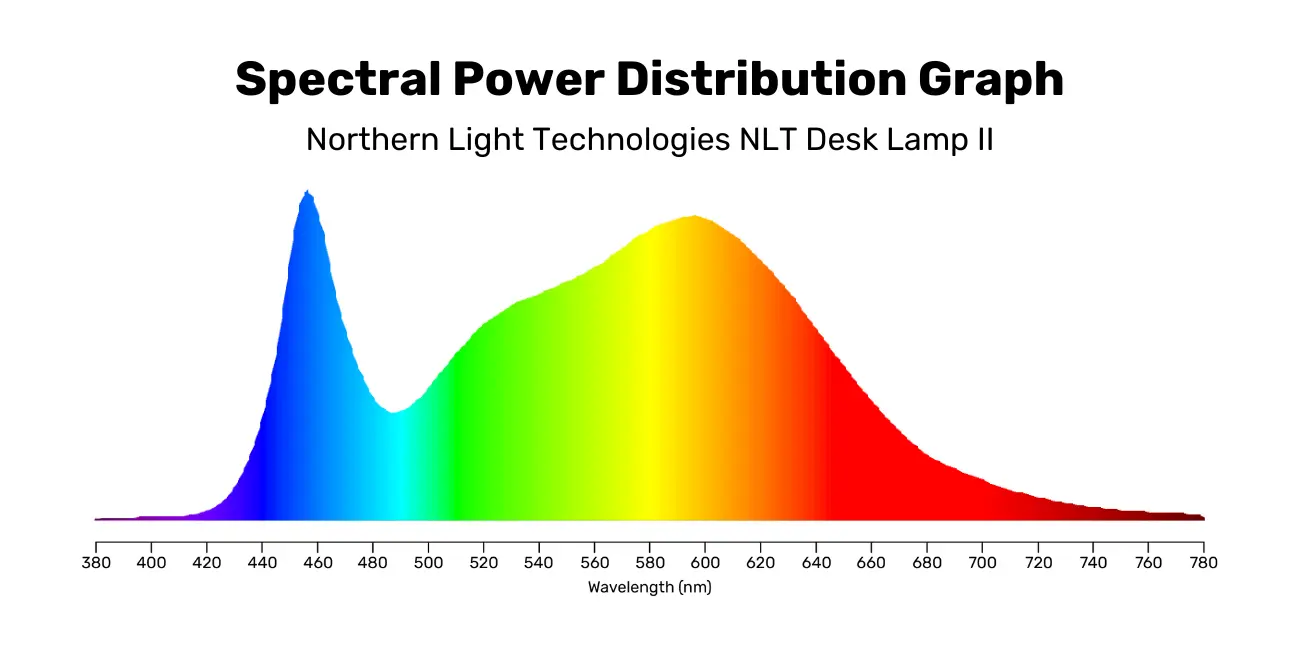
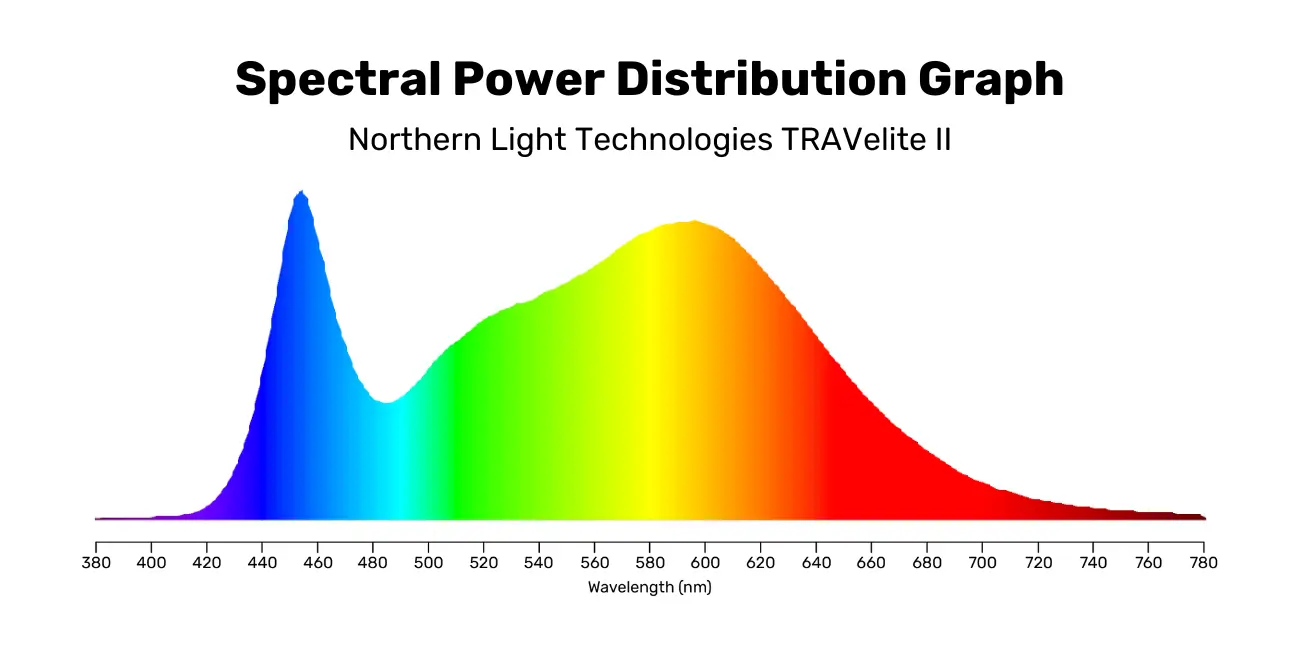
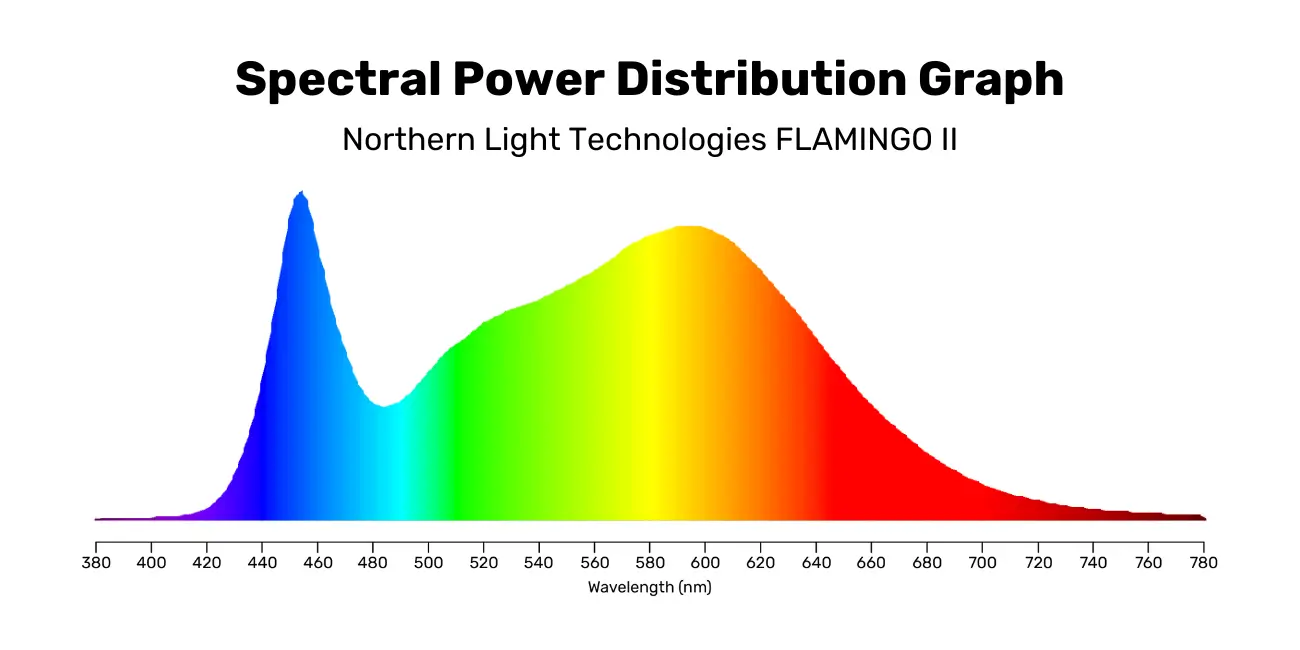
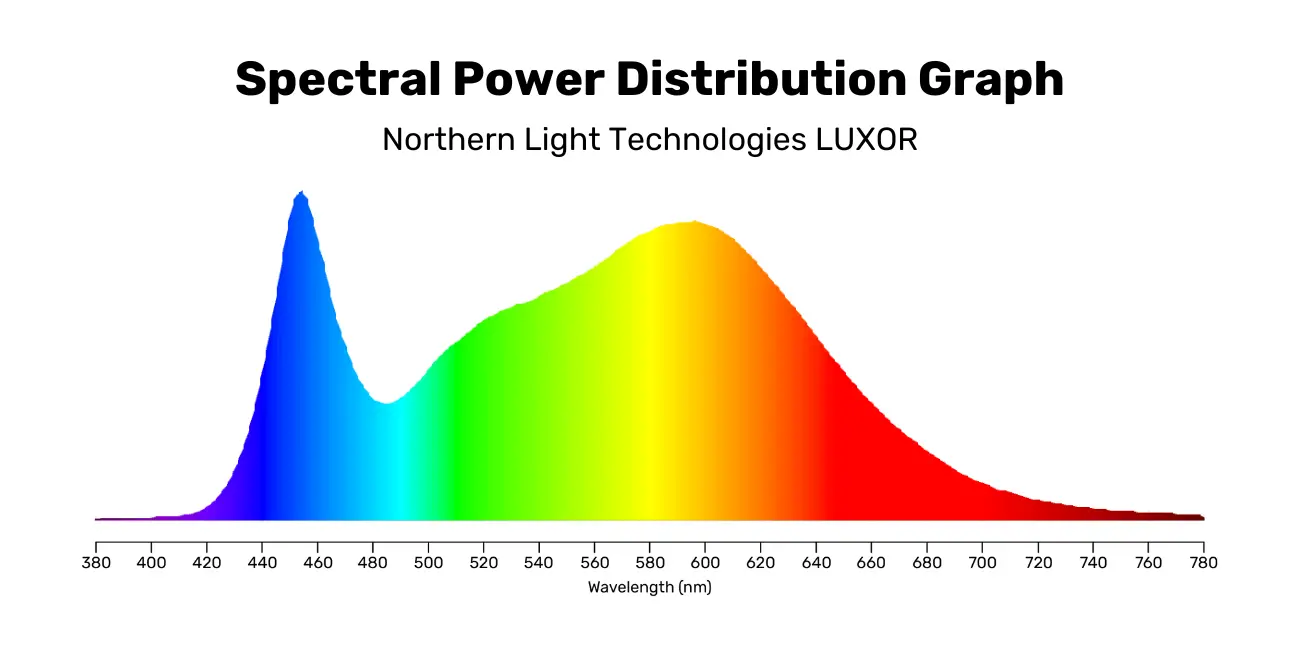
As far as the spectral graphs go, almost all of these lamps emit fairly average light, nothing to write home about here.
The CRI Re or color rendering is relatively low on these at around 80 out of 100, so don’t expect them to make you look your best on camera!
The BOXelite that uses fluorescent lamps is even worse in this regard, which is typical of a fluorescent light source.
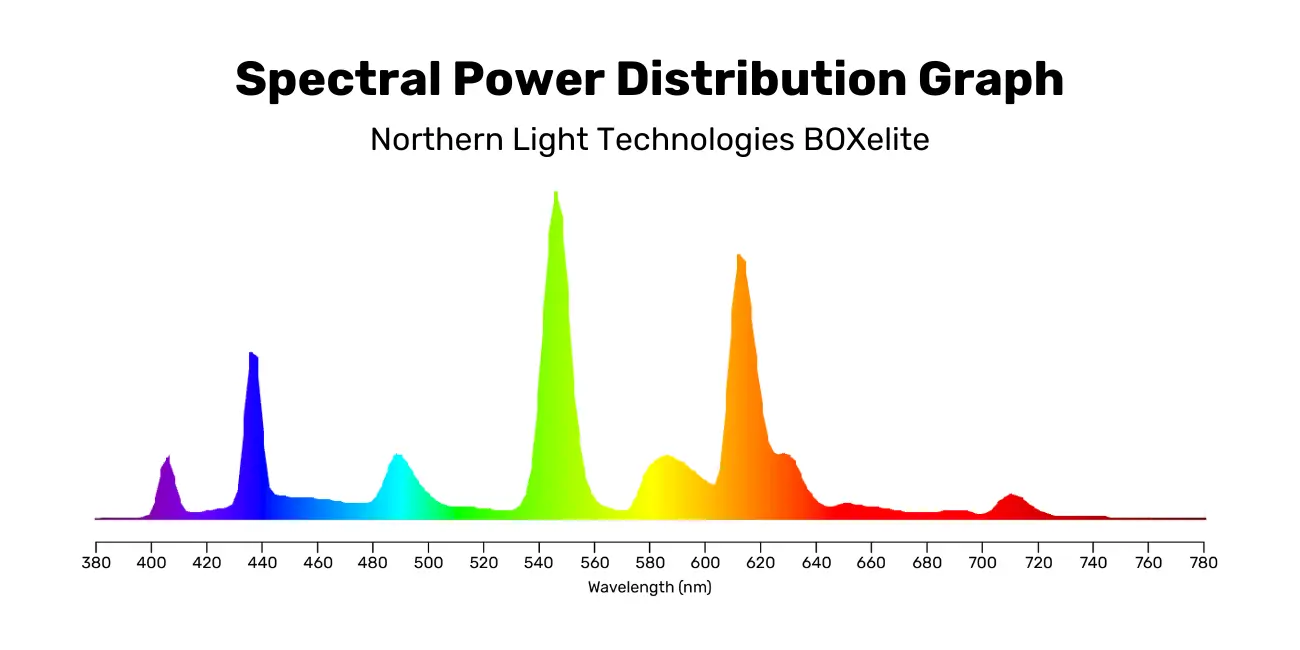
Granted, color rendering and color accuracy or “naturalness” aren’t exactly the most important technical aspects for a SAD lamp to focus on. But if that’s a deciding factor for you at all, it’s worth knowing this isn’t something the NLT lamps excel at.
Light Flicker
We also have a lab-grade flicker meter, which we use to test for invisible light flicker. A subset of the population seems to be affected by this type of flicker, especially the type found at 120Hz.

Here are our results:
As you can see, all of the LED models exhibit significant 120Hz flicker, which is unfortunate to see… The fluorescent models, however, perform quite well! So if flicker is a concern, the BOXelite is the better choice here.
It is worth noting that the LUXOR models are not set in stone, as they simply utilize high-wattage E26 bulbs. This means you could easily swap the bulb out for any you’d like, and eliminate the flicker.
Visual Comfort
SAD lamps can be uncomfortable to use for long periods of time, depending on their Glare score, which we determine by measuring lux output per square inch of illuminating area.
I usually find a score of under 100 to be the most comfortable. However, you can easily go over this comfortably; it seems to vary between people.
I’ve done my best to estimate the Glare for NLT lamps, since they aren’t flat LED panels, but diffused tube lights; this was a bit harder than usual. In any case, these are all reasonably comfortable even at a glare of around 200.
Consider that the SOLshine lamp we tested comes in at a Glare of almost 3,000!
The NLT Lamps
Here we’ll take a closer look at each lamp!
NLT Desk Lamp II
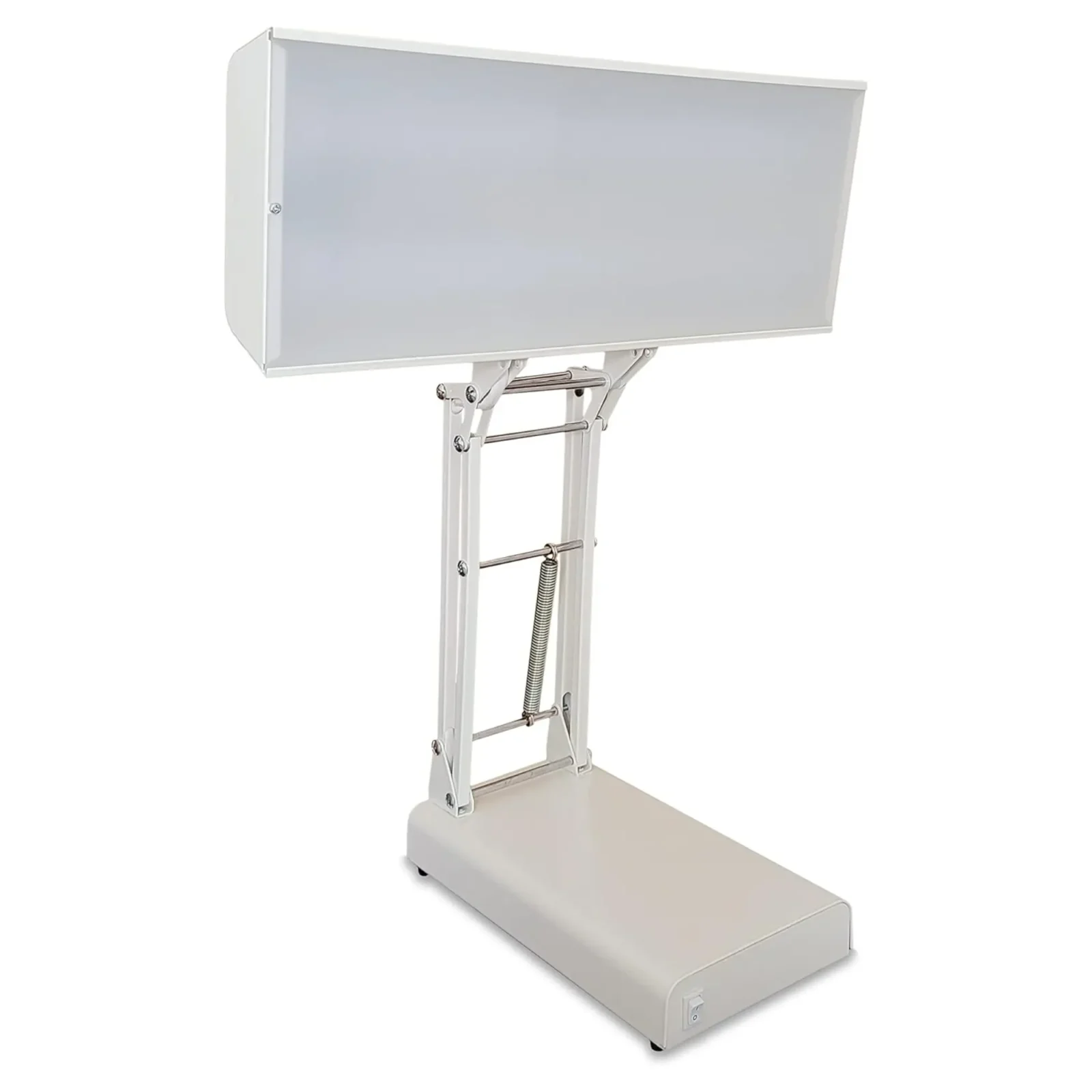
This is a heavy-duty desk lamp and the most powerful of NLT’s lineup. It has quite a bit of range and can be moved up and down and tilted, which gives you a lot of freedom as to where it’s angled.
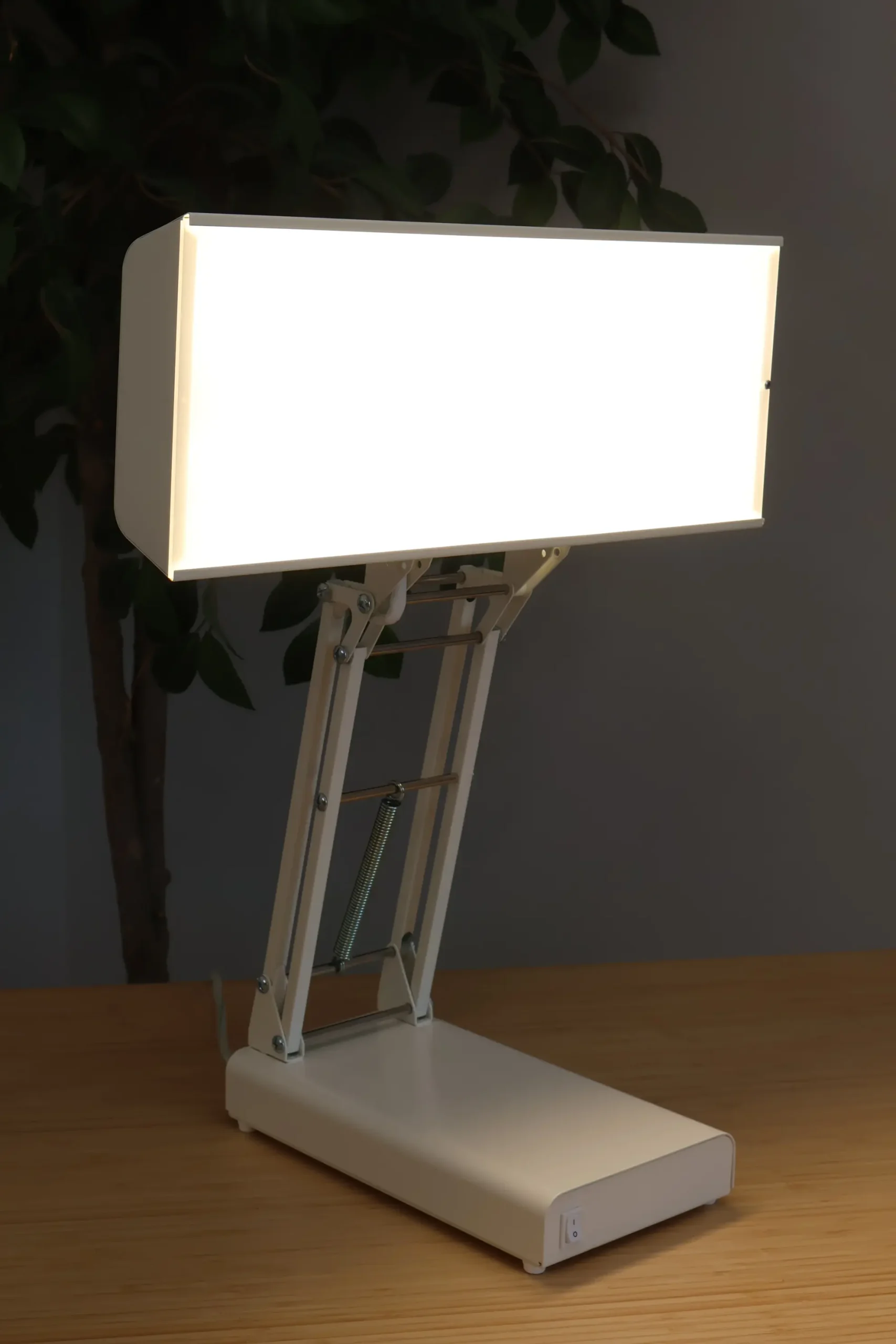
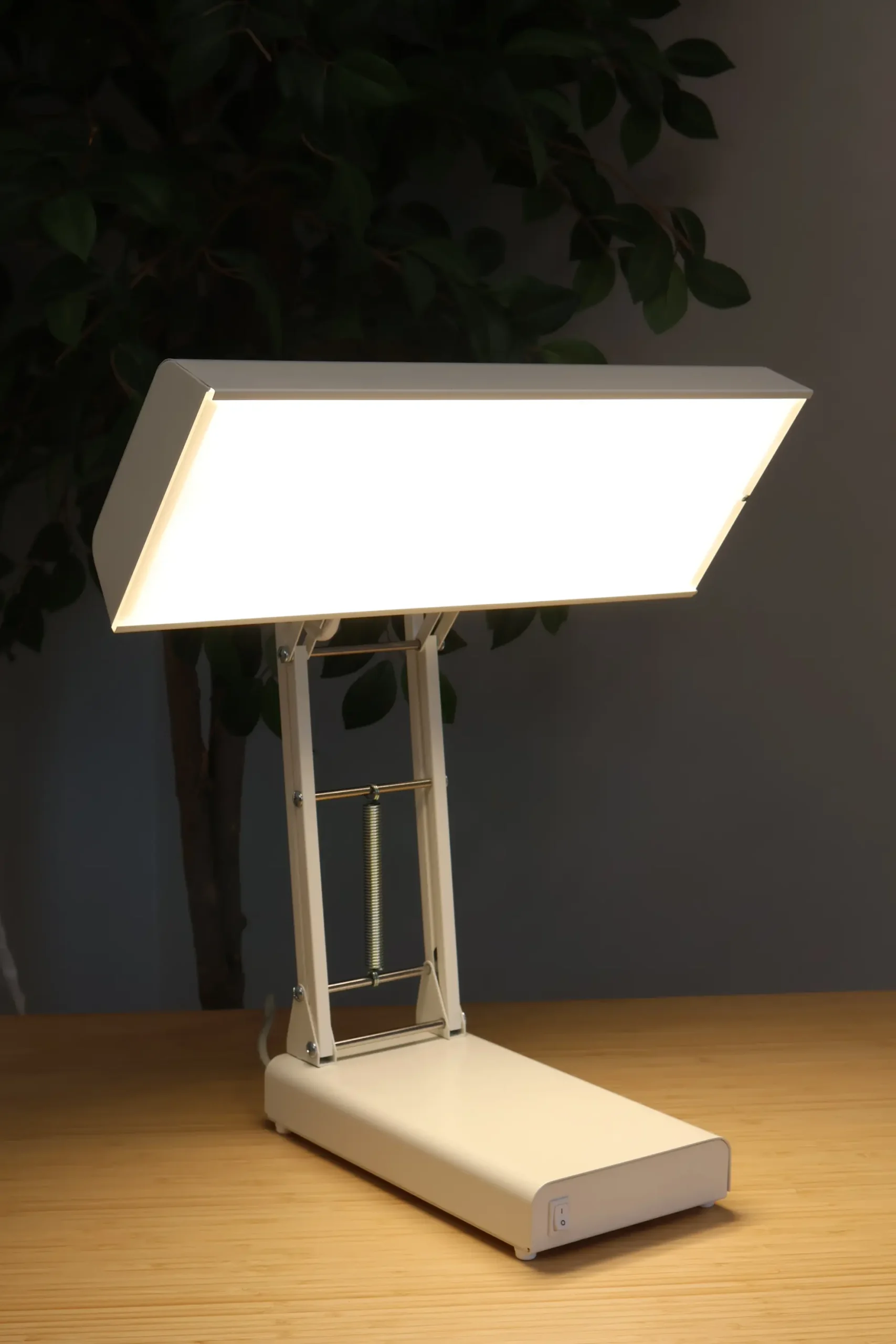
It is a bit large and industrial-looking, but again, that does lend itself to repairability and longevity.
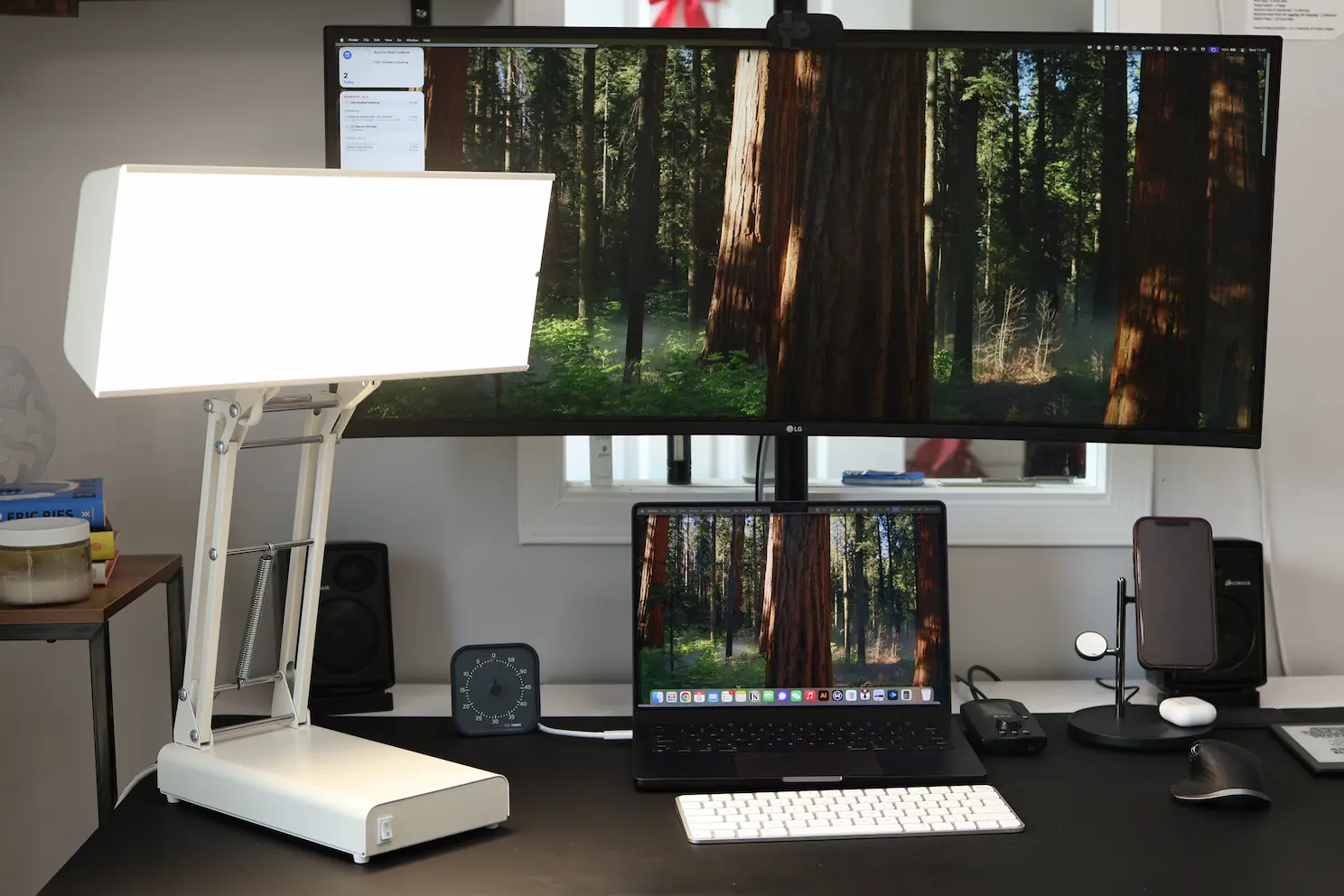
I’d grab this one if you’re looking for a long-lasting, effective lamp.
NLT Desk Lamp II
Pros:
Cons:
- Lux: 12,680
- Circadian Light: 14,930
- Glare: 205
- CCT: 4050K
- Brightness Levels: 1
- Color Temperatures: 1
BOXelite/OS
This is NLT’s only fluorescent model and comes in two versions. One with a simple vertical stand and one with an adjustable stand that allows you to adjust the lamp’s angle.
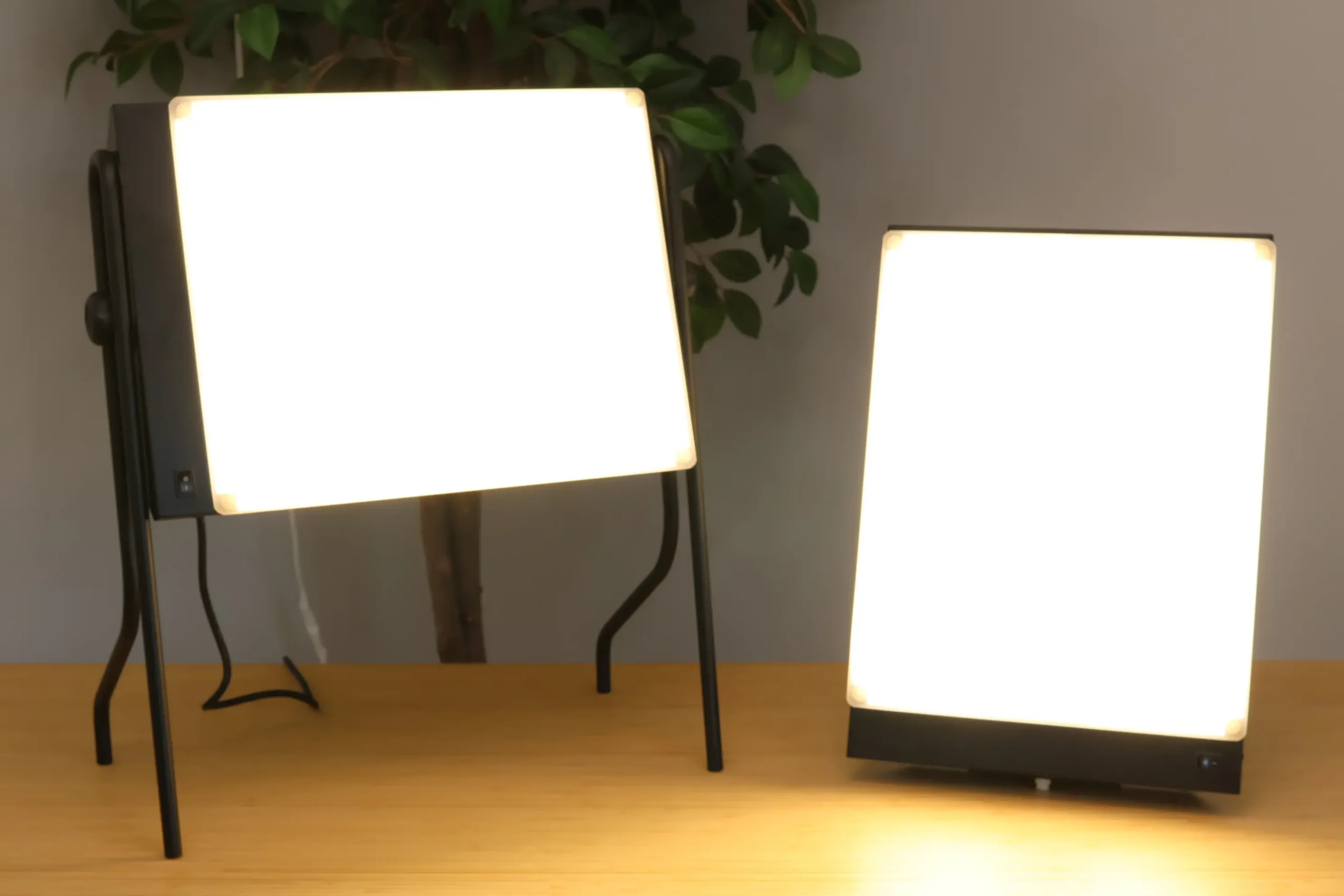
Once again, to give you a better idea of what the lamps actually look like in use:
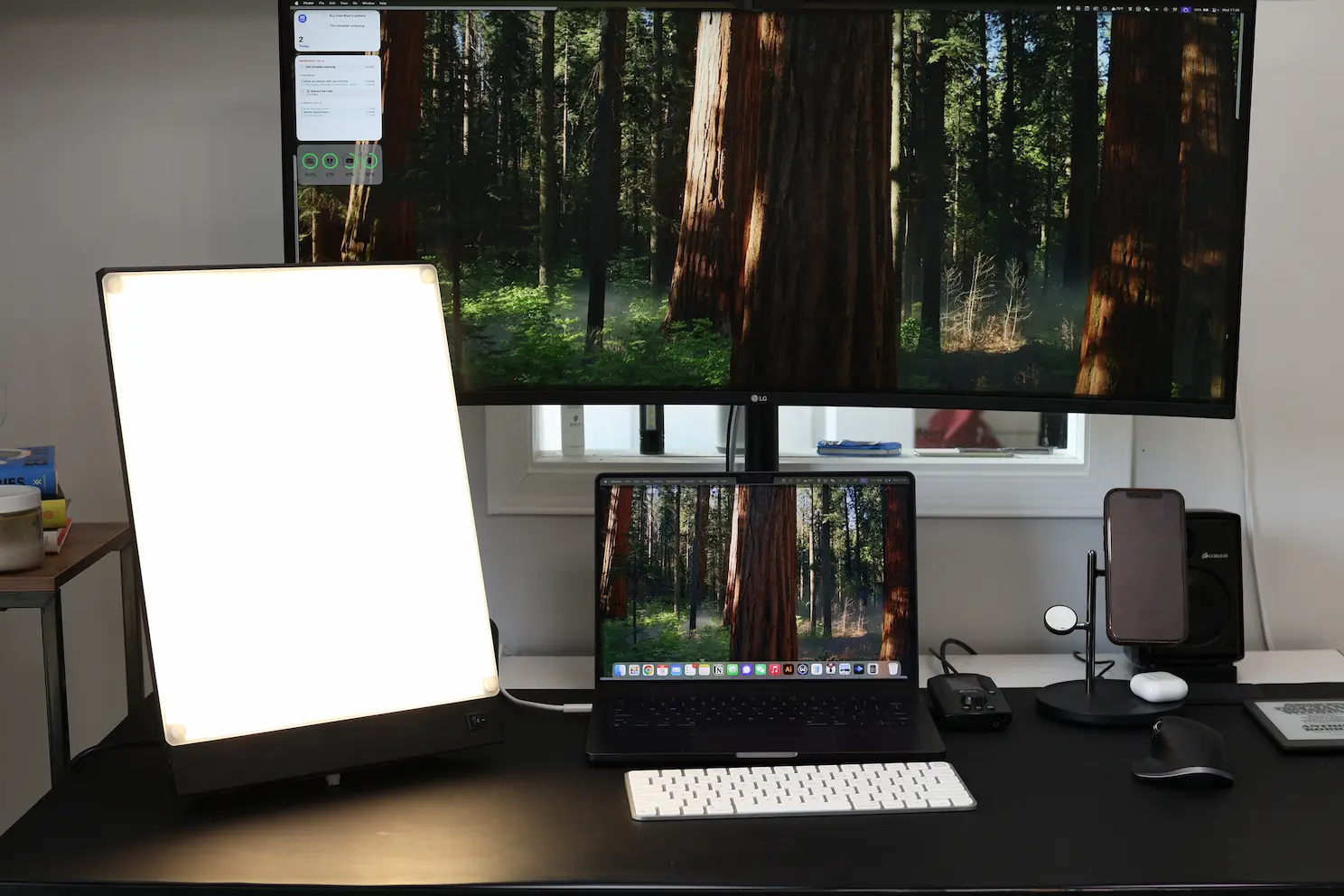
The normal BOXelite fits alright on a desk, but is definitely rather large:
While the BOXelite OS was just way too big in this configuration for my desk. You’ll need more room for this setup.

It can rotate all the way up or down, though, so maybe that’s something you could see yourself using?

With a glare rating of 85, the BIOXelite is the most comfortable lamp NLT makes if that is an essential factor to you.
BOXelite
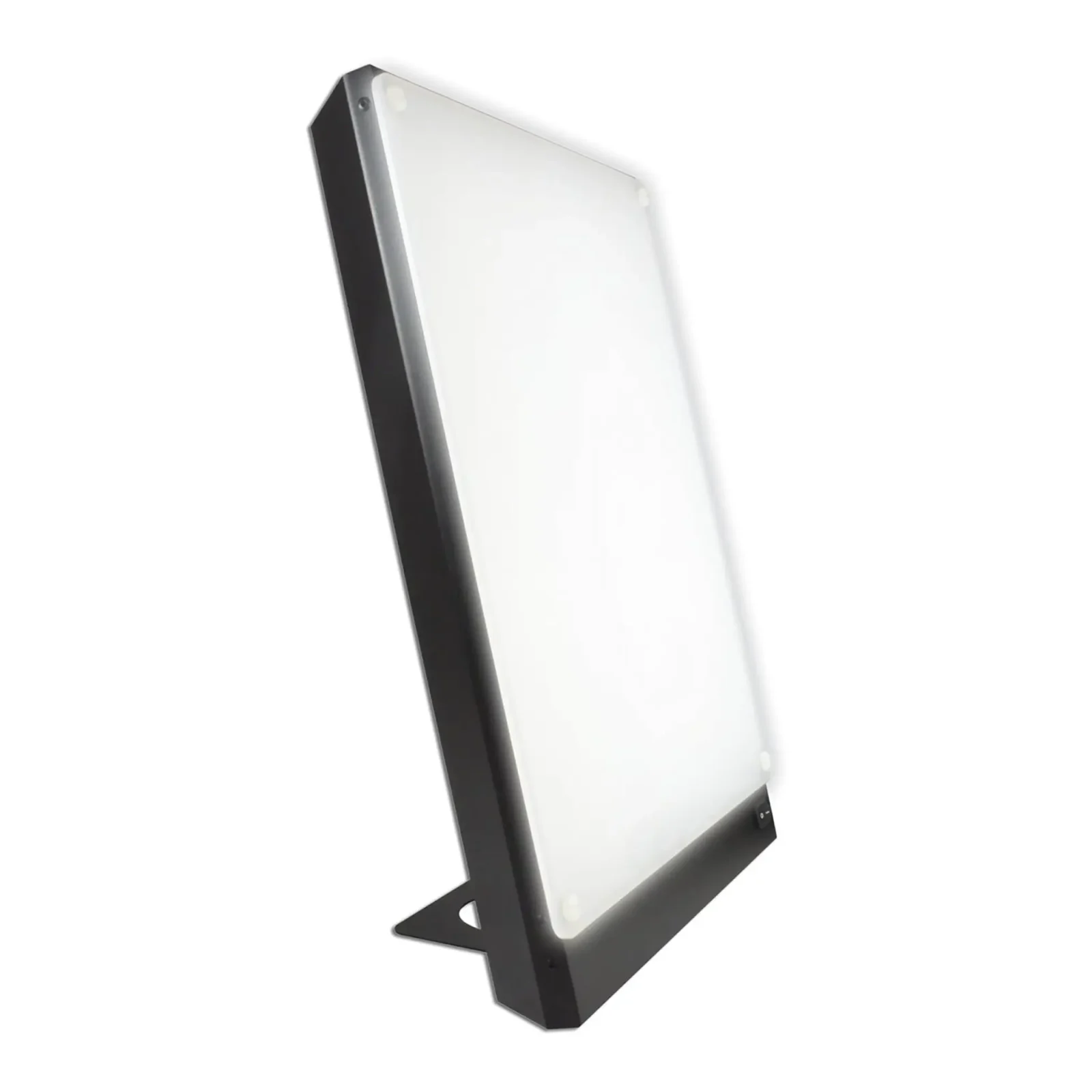
Pros:
Cons:
- Lux: 10,225
- Circadian Light: 8,520
- Glare: 85
- CCT: 3700K
- Brightness Levels: 1
- Color Temperatures: 1
BOXelite OS
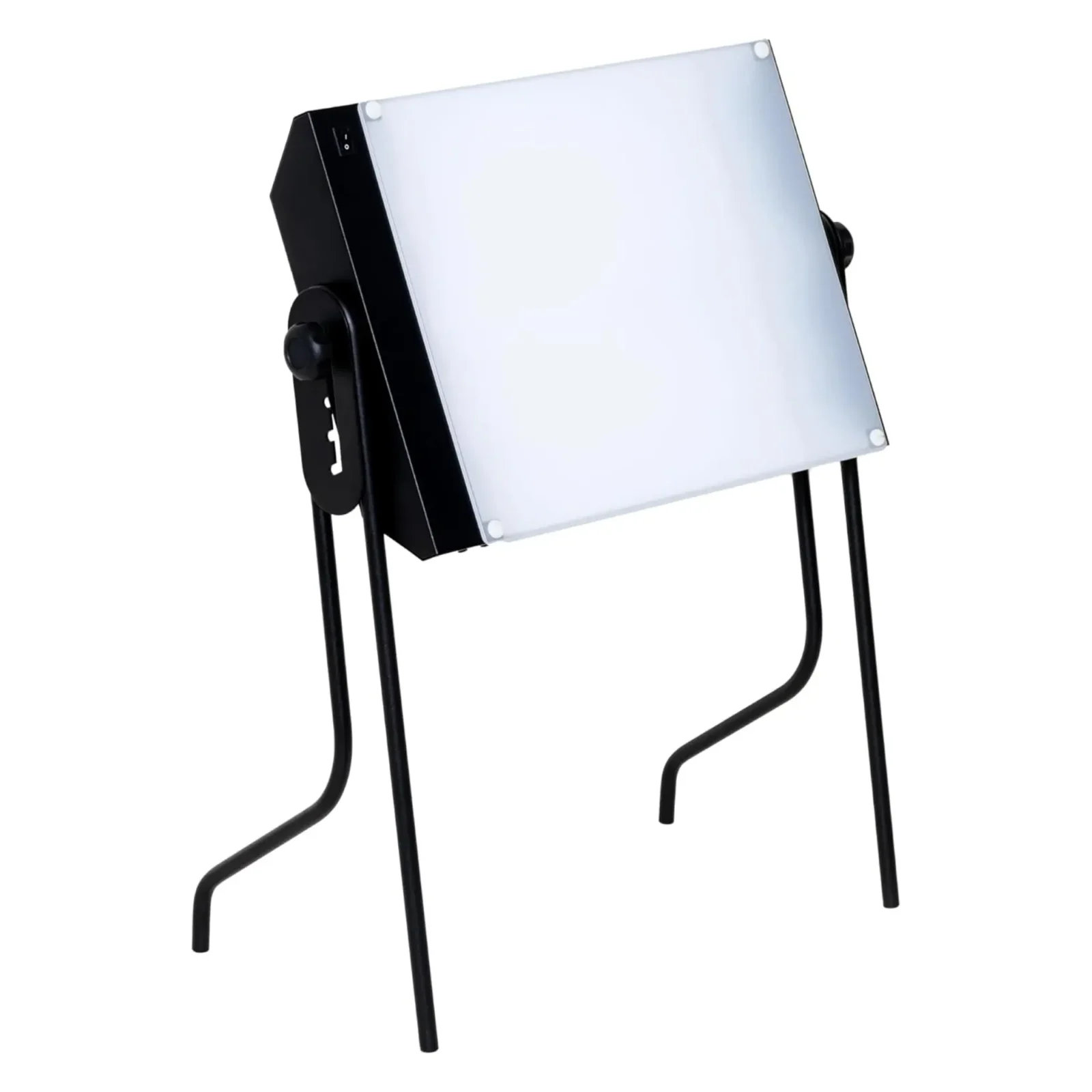
Pros:
Cons:
- Lux: 10,225
- Circadian Light: 8,520
- Glare: 85
- CCT: 3700K
- Brightness Levels: 1
- Color Temperatures: 1
TRAVelite II
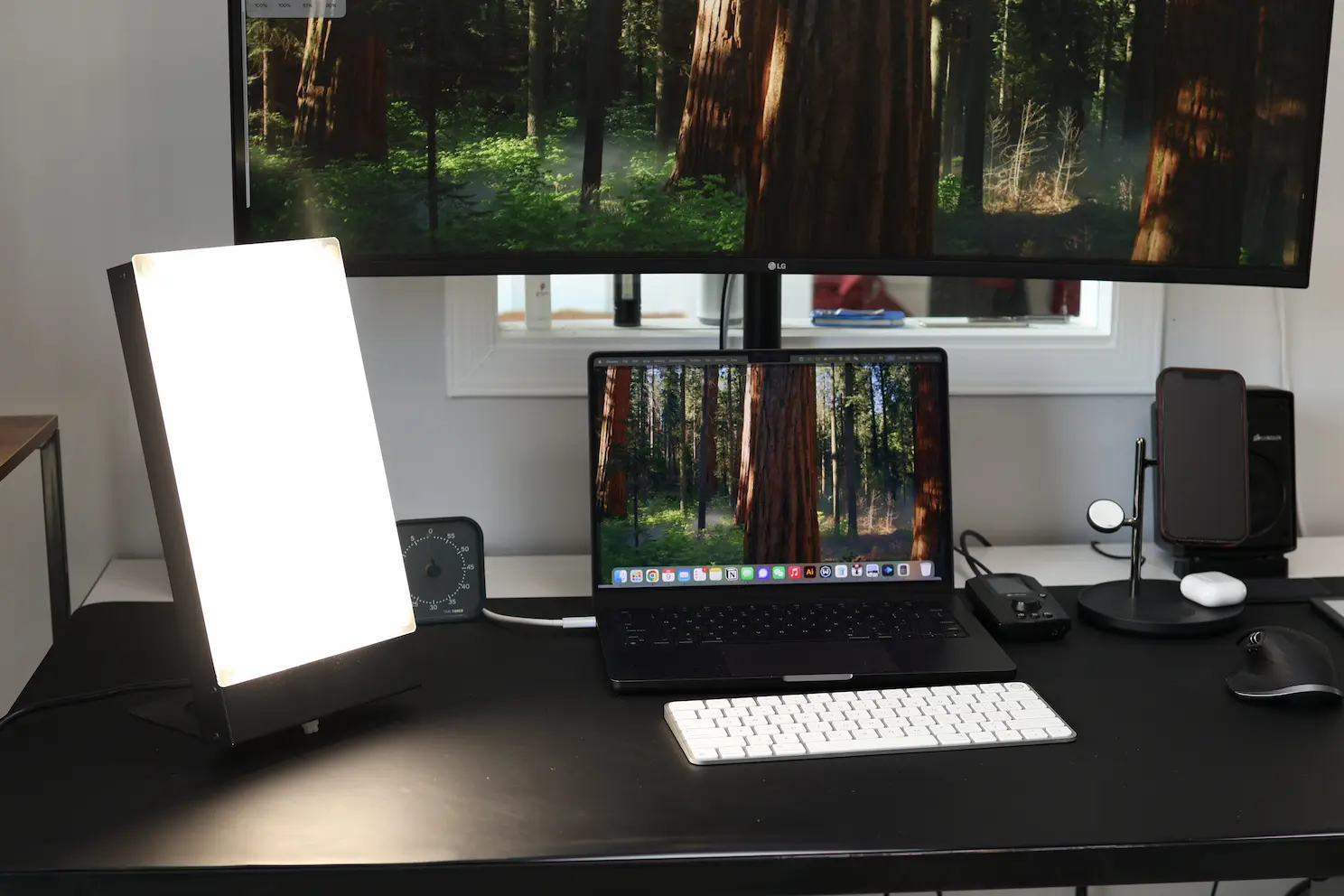
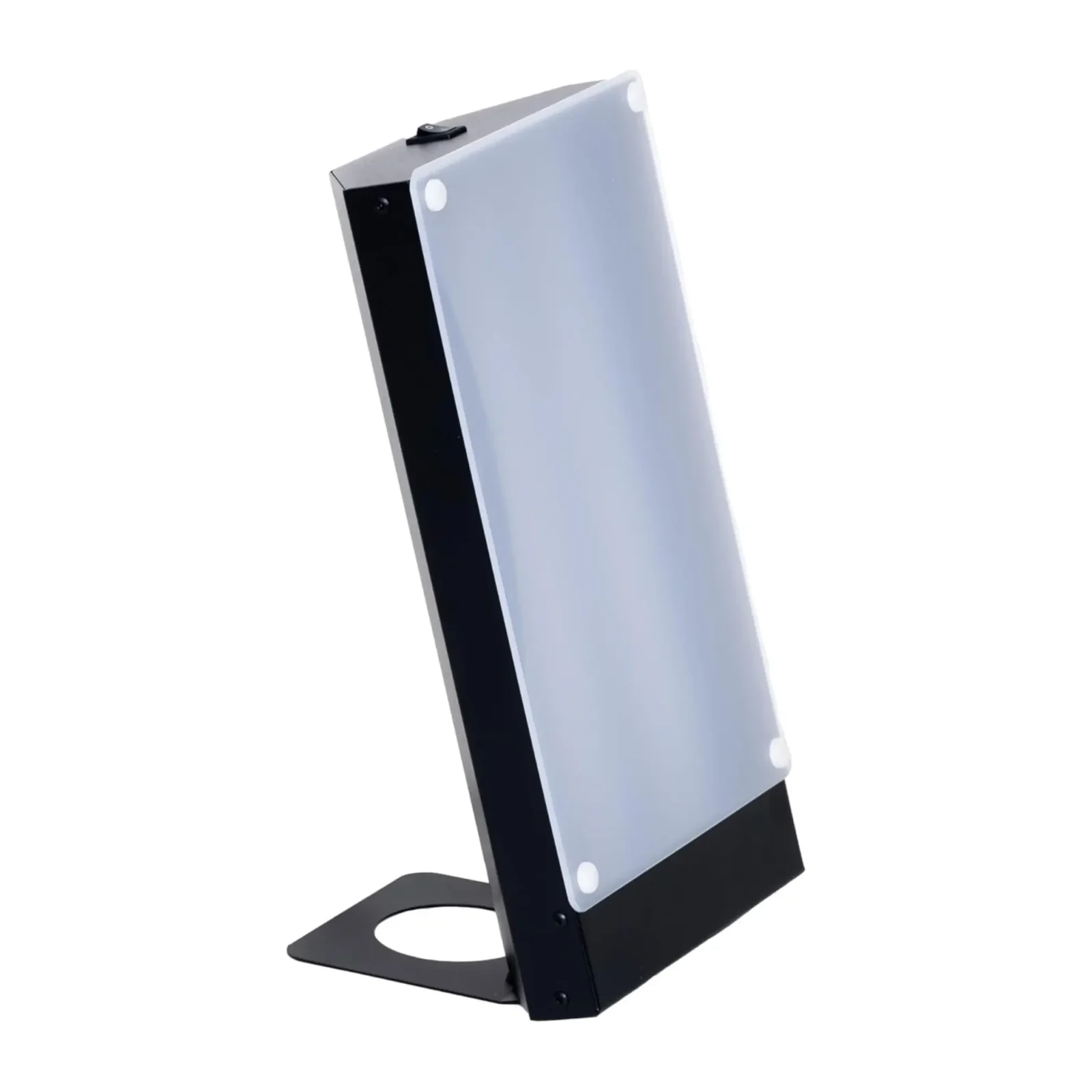
This might be my favorite NLT lamp because it’s reasonably small, has decent output (more than the Luxors), and doesn’t look too bad either, despite its simplicity.

Here it is on my desk:
TRAVelite II
Pros:
Cons:
- Lux: 7,330
- Circadian Light: 8,505
- Glare: 170
- CCT: 4200K
- Brightness Levels: 1
- Color Temperatures: 1
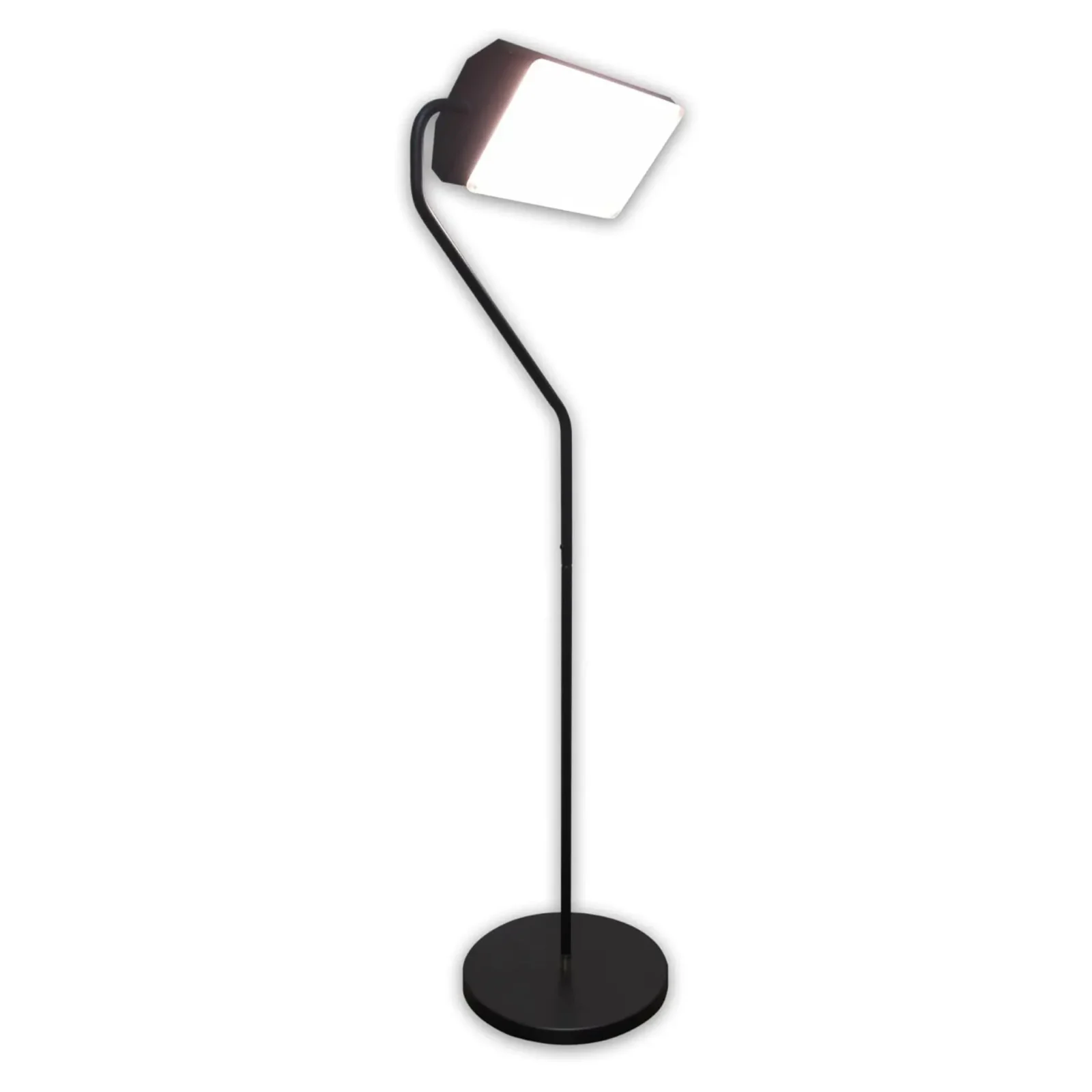
FLAMINGO II
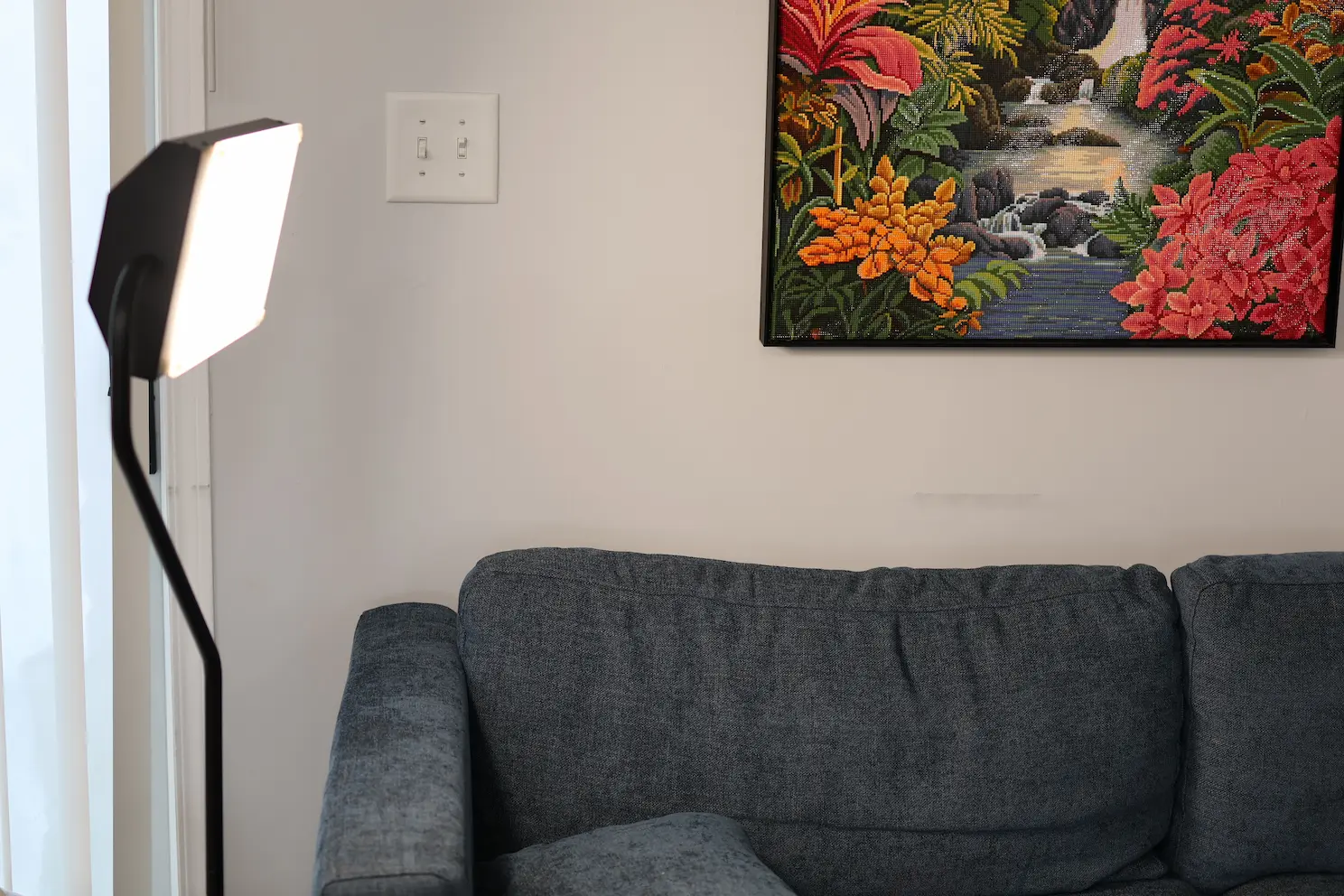
This is the floor lamp. An excellent option for a desk-free experience, or maybe near the couch, or something like that.

This is actually the same lamp as the TRAVelite II, just with a floor stand.
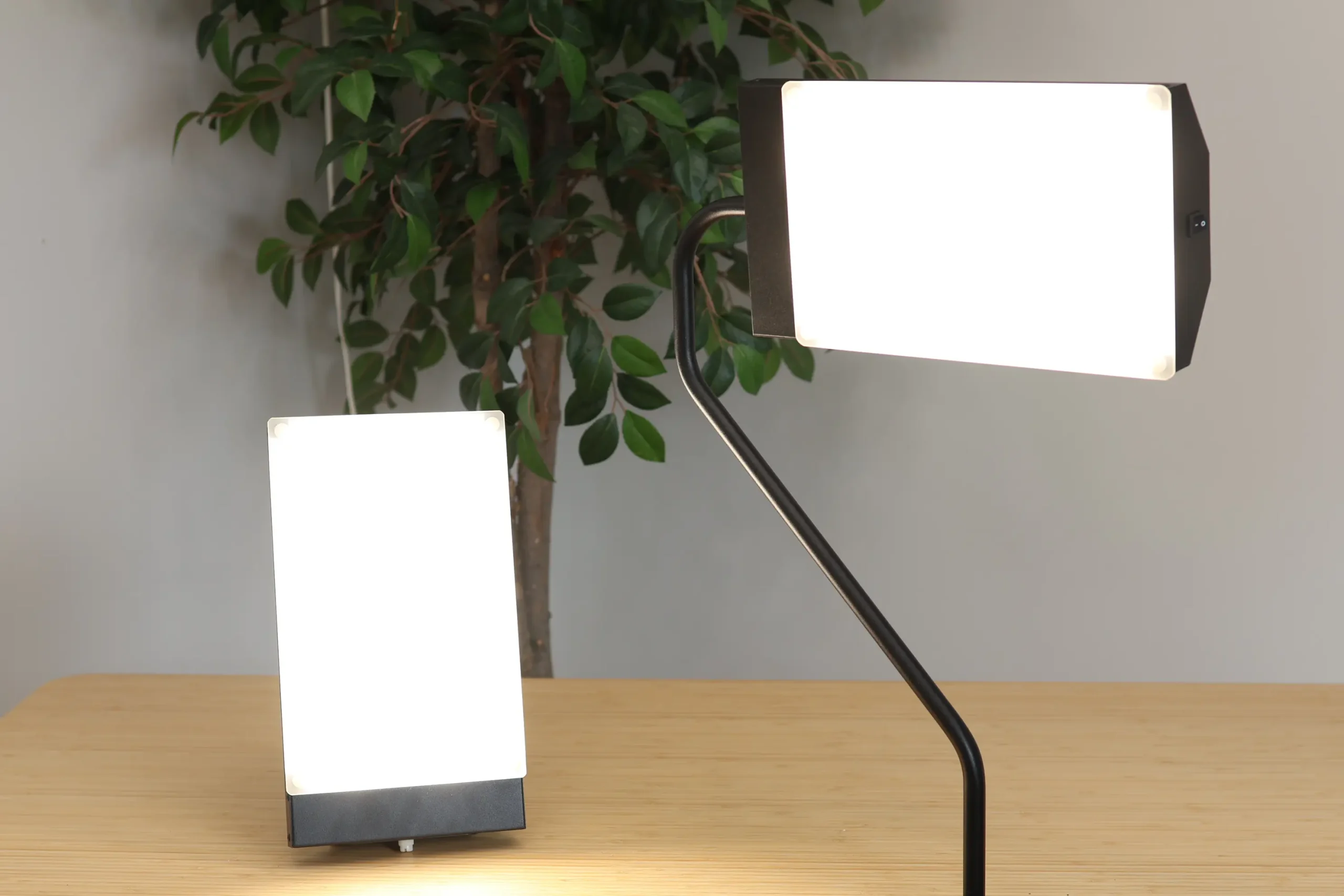
It’s a pretty decent height for use at a couch or somewhere you might be sitting in the morning, drinking coffee or reading.
FLAMINGO II
Pros:
Cons:
- Lux: 7,240
- Circadian Light: 8,345
- Glare: 168
- CCT: 4200K
- Brightness Levels: 1
- Color Temperatures: 1
LUXOR and Mini LUXOR
Both of these lamps feature a straightforward E26 light bulb fixture inside them.
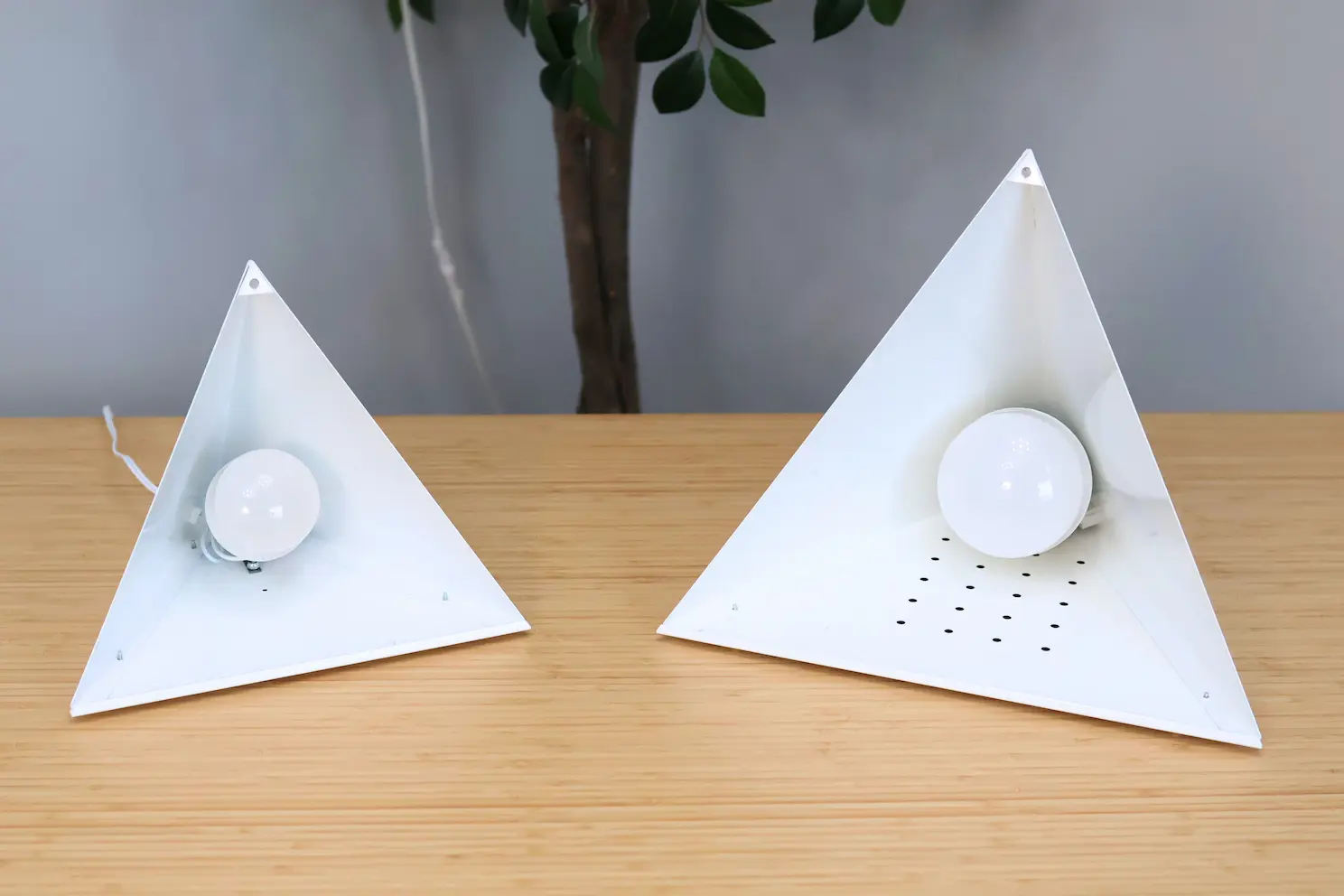
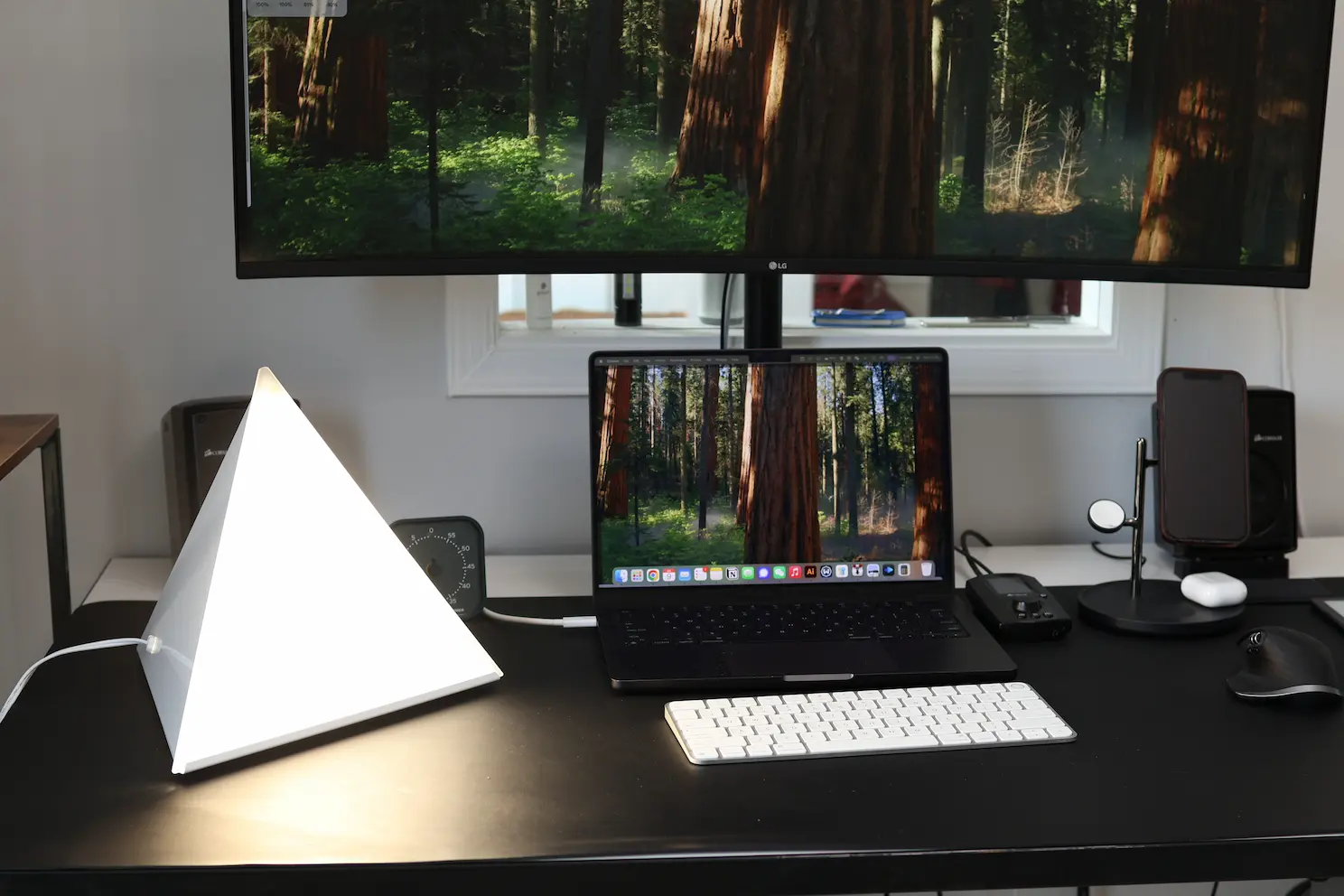
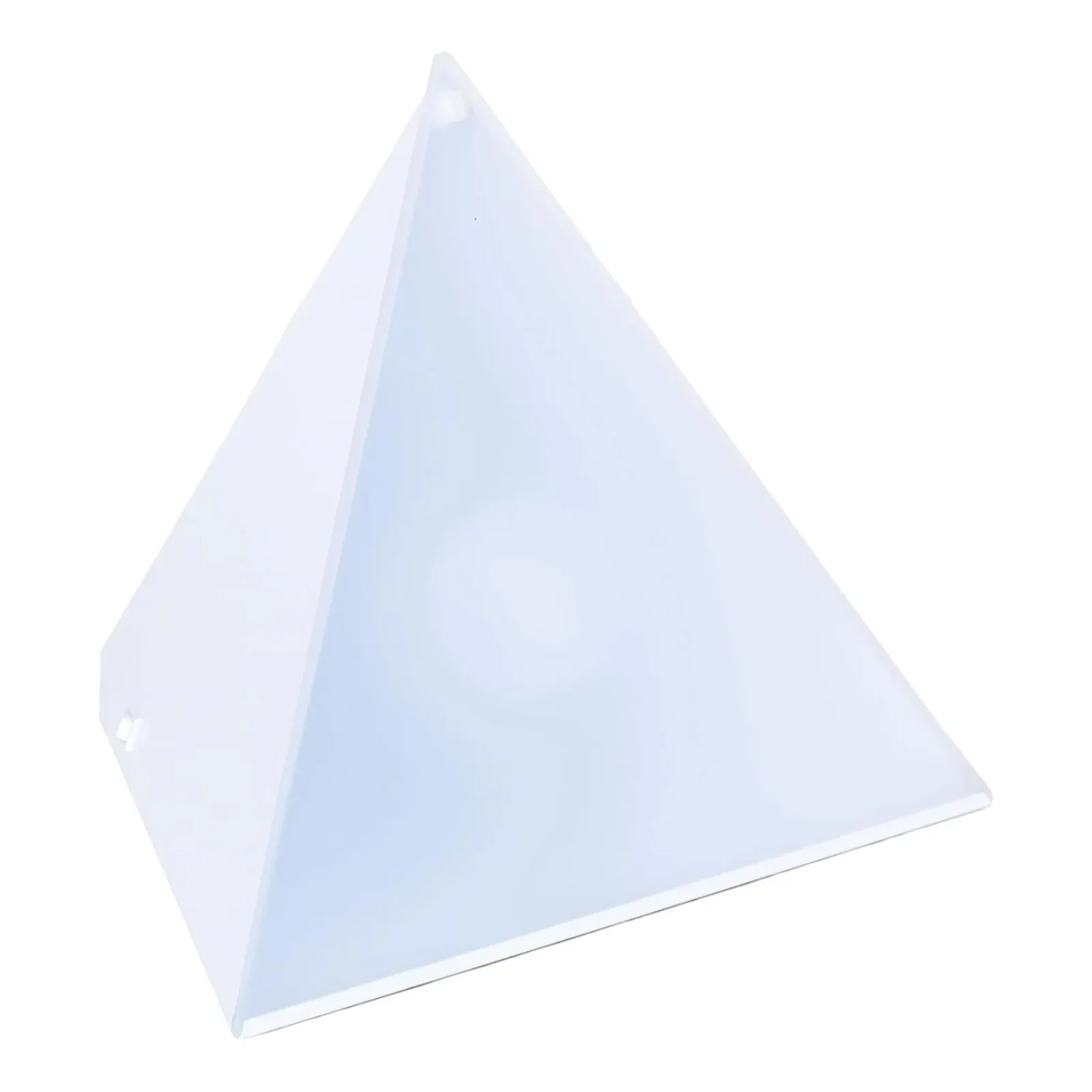
Here they are lit up side by side:

They both fit reasonably well on my desk; however, the smaller Mini LUXOR definitely blends in better due to its smaller size.

LUXOR
Pros:
Cons:
- Lux: 7,340
- Circadian Light: 7,200
- Glare: 92
- CCT: 3950K
- Brightness Levels: 1
- Color Temperatures: 1
Mini LUXOR

Pros:
Cons:
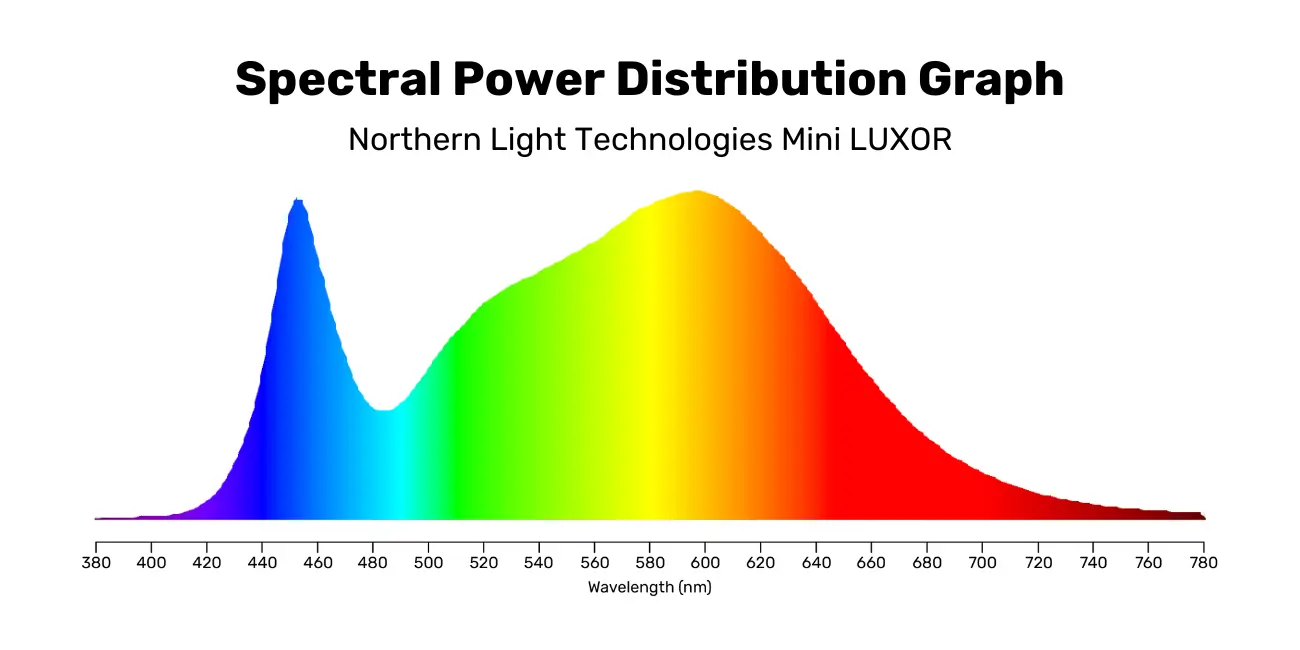
- Lux: 5,720
- Circadian Light: 5,810
- Glare: 132
- CCT: 4000K
- Brightness Levels: 1
- Color Temperatures: 1
LiteUP
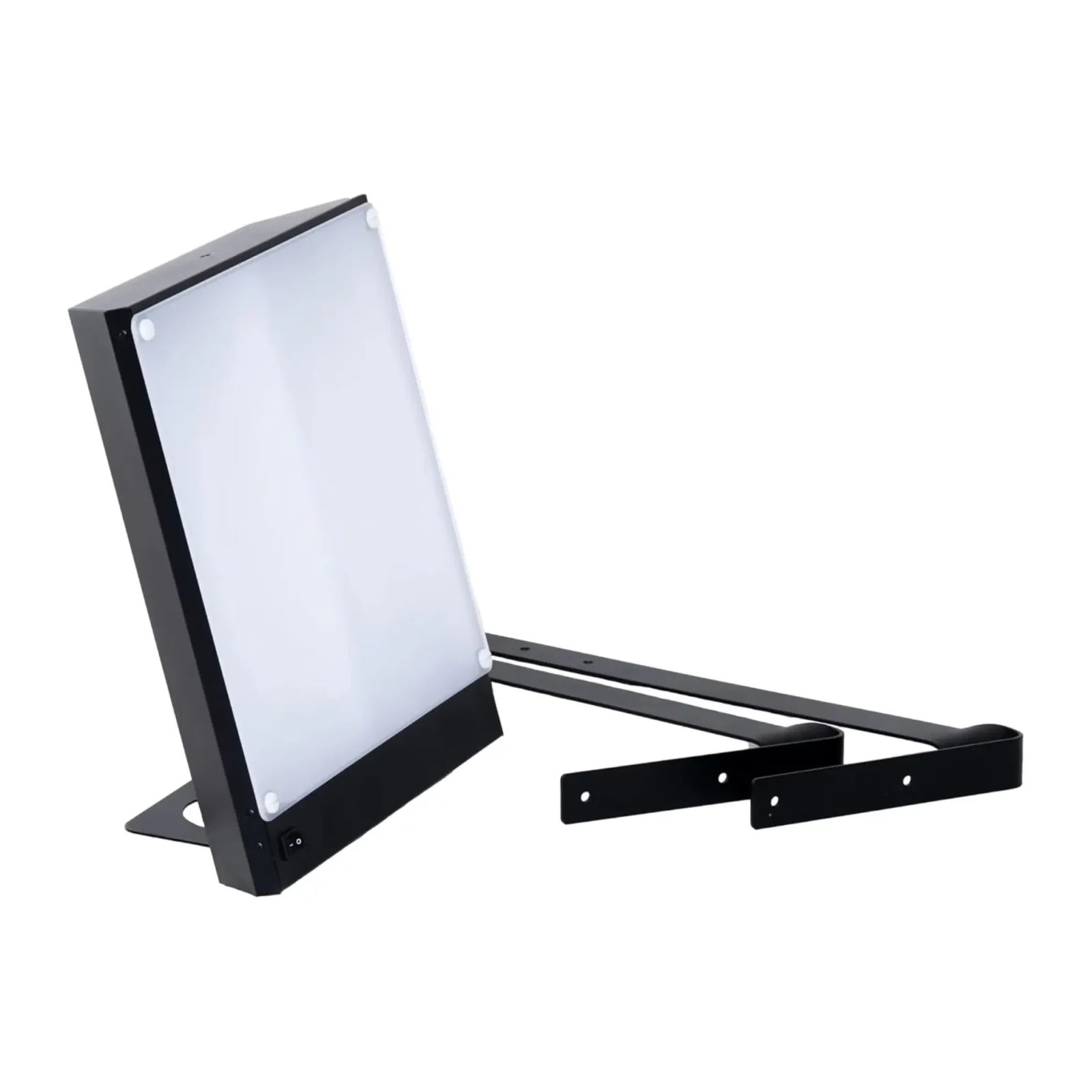
This is the wall-mounted lamp NLT sells:
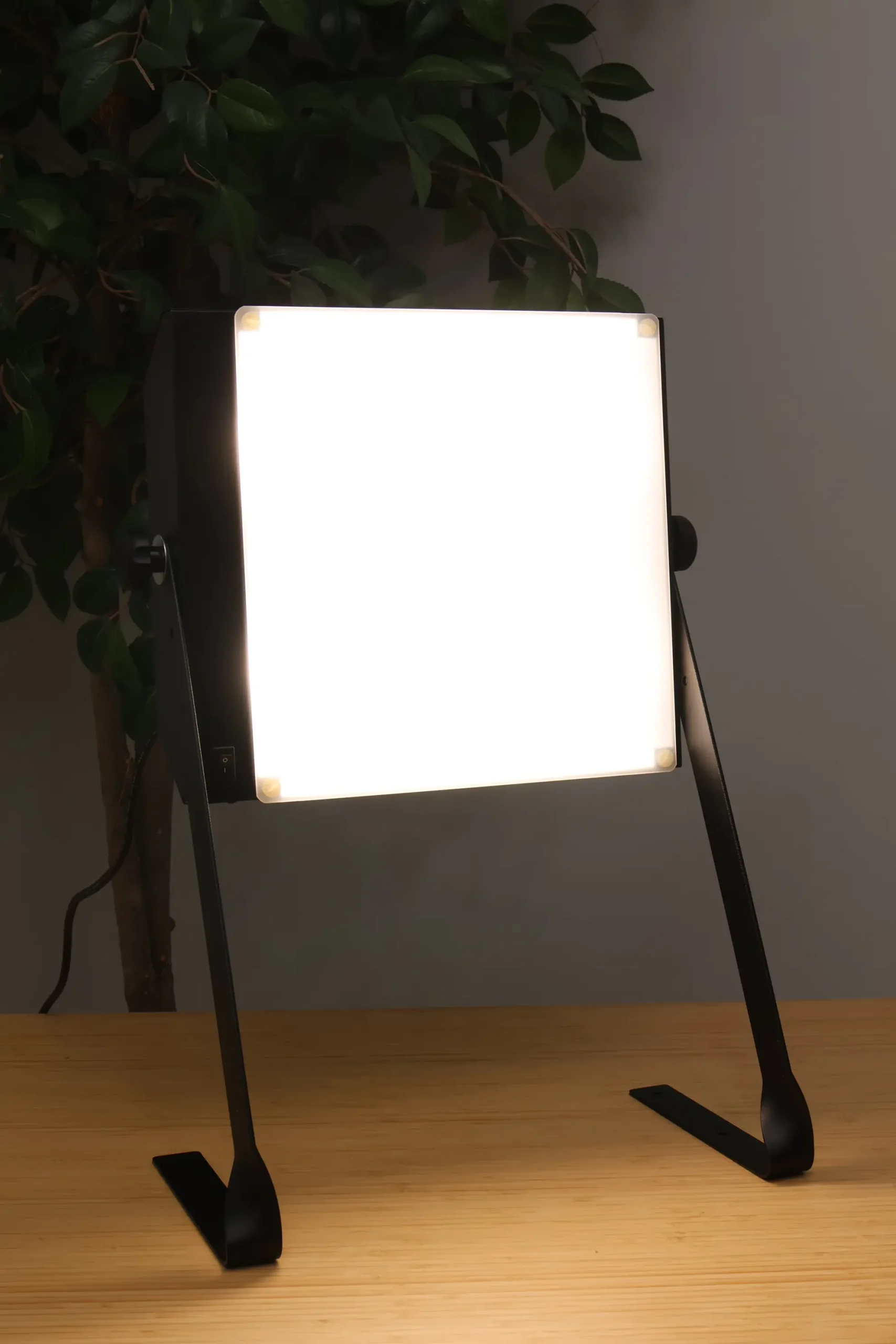
It comes with two bolts and legs similar to the BOXelite OS, however, of course, this is meant to be screwed into the wall.
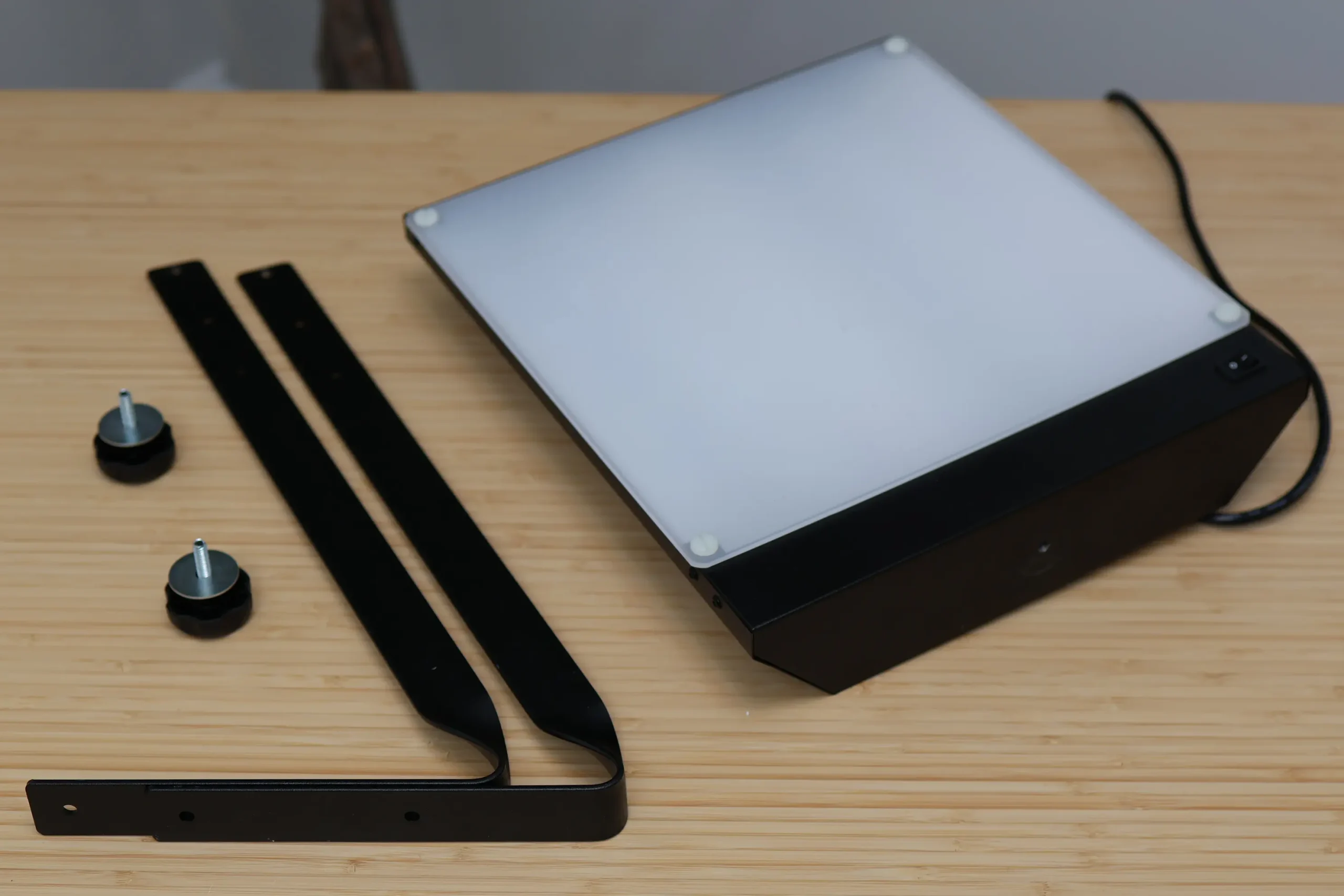
It doesn’t come with mounting hardware, so you’ll have to supply that, but it does have a handy sheet that gives you the exact mounting dimensions.

I would secure this to a stud, as the lamp is quite heavy and needs to be off the wall. Don’t want it to fall!
LiteUP
Pros:
Cons:

- Lux: 7,800
- Circadian Light: 9,435
- Glare: 181
- CCT: 4200K
- Brightness Levels: 1
- Color Temperatures: 1
-
SOLshine Review: Lab-Tested “Photo-Nutrition” Light
We tested the SOLshine PhotoVites & bioBulb. See our spectral graphs, infrared output, and why this full-spectrum lamp outperforms standard SAD lights.
6 minutes -
Best Verilux HappyLight? We Tested All 10 Models
Confused by the HappyLight lineup? We compared the Luxe, Alba, Touch, & more. See our lab data on brightness and glare to find the right one.
8 minutes -
Sunrise Sensations SAD Lamp Review: Stylish but Weak?
These wooden SAD lamps look great, but do they work? Our lab tests reveal the truth about their lux levels, remote issues, and flicker-free performance.
4 minutes
哇,这篇测试也太详尽了吧!用光谱仪和什么CCT的,听着就专业。不过说真的,这些灯管忽闪忽闪的,还不如老式荧光灯安全啊!不过要是追求修修补补到7年,那NLT的管子灯确实挺实在。不过说到底,谁还用这么复古的灯啊?😂
Agreed! I think they should be updated. Still a very old design style. I certainly appreciate the idea, these will be very repairable, but the flicker is quite bad.
These lamps are kinda clunky and flicker more than I’d like. Sure, they’re repairable, but that’s not a huge plus if you gotta deal with flicker headaches daily.
Agreed!
Wow, it’s super interesting to see how these lamps stack up against each other! I’ve had a SAD lamp before, but never thought about light flicker – that’s so crucial, especially for us sensitive types, huh? Thanks for shedding light on this!
You’re very welcome 🙂
The NLT BOXelite slightly exceeds 10,000 Lux–But scores lower in the circadian/blue light wavelength–Is is still effective for anyone trying to reset their circadian rhythm?
Hi Brian! Yes it’s still effective, though there are some nuances here.
10,000 lux is a well established threshold for light therapy and SAD treatment, so you’re getting plenty of brightness. The circadian/blue light scores (M-EDI, CLA) give us additional insight into how well the light activates melanopsin receptors specifically, but they don’t tell the whole story.
In practice, the BOXelite’s 10,000+ lux output should be sufficient for circadian entrainment, especially if you’re using it consistently in the morning. The lower blue scores just mean it may not be as efficient per unit of brightness compared to some newer LED options with better spectral output.
Other factors like duration of use, angle of incidence on the eye, and consistency matter a lot too. If you’re getting good exposure time with the BOXelite, it should work well for resetting your rhythm.
Hi! I ended up returning my Carex Day-light Elite (very bad smell) and the Boxelite OS (the legs takes up too much space on my desk). I am now with the Desk Lamp 2. I was afraid of the flicker, but frankly I dont notice any flickering… Perhaps you got a bad sample? Anyway, I have found the perfect lamp for me with the NLT Desk Lamp 2 : very bright, good spectrum, not too big, high repairability and, at least to my eyes, no flickering. Also, bonus, I can use the lamp for simple lighting when I put the lamp pointing down.