
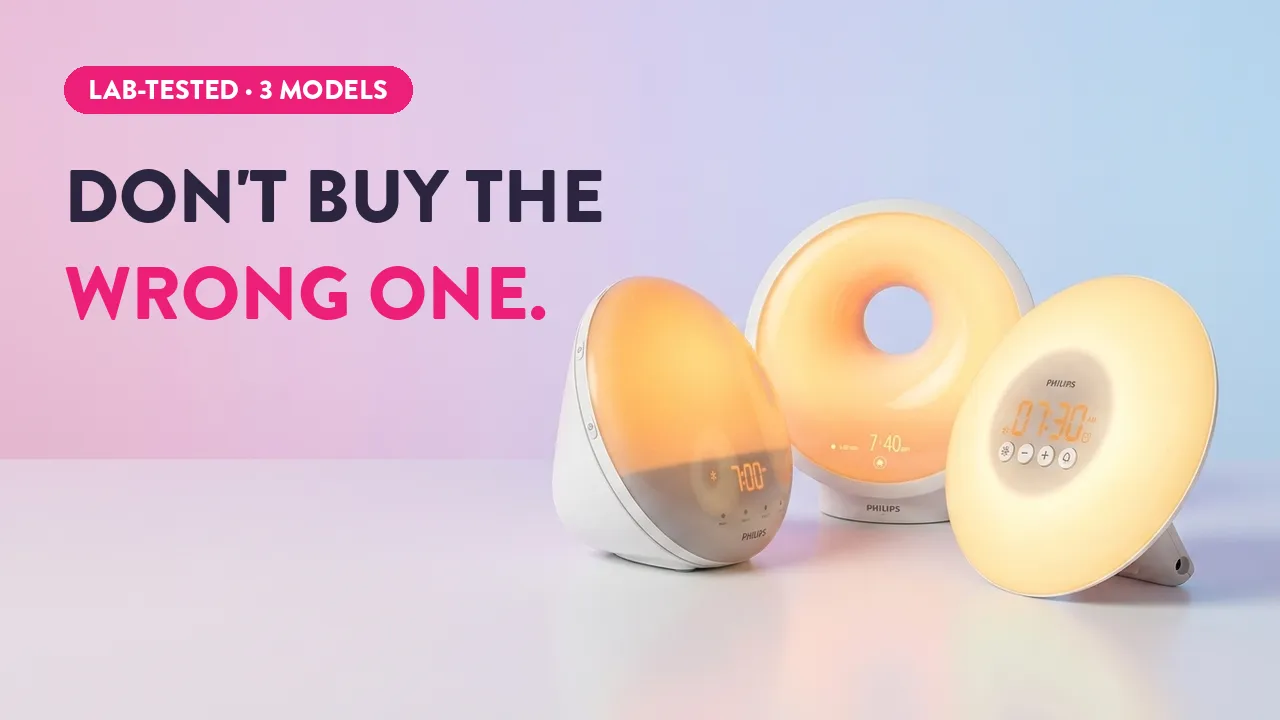


Maybe you’re unsure which SmartSleep lamp to buy, the HF3500, HF3520, or HF3650?
In this article, we’ll scientifically test and compare these 3 SmartSleep models so you’ll know exactly which fits your requirements!
If you’re on the hunt, check out our best sunrise alarm clock list! →

The “smart” SmartSleep a.k.a the HF3670 has been discontinued, so we’ve excluded it from this test.
The Overview
All of these offer effective sunrise light output. The 3500 is the only one with good flicker, while the 3520 and 3650 have custom sunrise duration settings.
If you’re looking for the brightest one, get the 3650. Its menu system can be confusing, so if that’s a turn-off and you’re still looking for the next brightest, it’s the 3520.
And while the 3500 is the budget option, you cannot turn off the alarm beep.
Free · 95 pages
You're reading about one piece of this. The book is the whole day.
The Circadian Blueprint covers setting your body clock with light — the timing, the doses, and which products actually deliver them. Every number came off my own spectrometer.
Comparing Features
Before we jump into the science and testing let’s go over what sets these models apart from each other features-wise.
Ease of Use
I found both the 3500 and 3520 pretty straightforward to use. There is no real complaint here.

The 3650 on the other hand is a kind of nightmare, not gonna lie. Granted it does have quite a few more features and settings, and once you get it set up how you like, it’s okay, but this might not be such a good thing for most people.
Here is a small selection of the menus you’ll run into:


This is not the sunrise alarm clock you buy your grandma!
I often found myself having no idea where I was nested within the icon-based menu system and had to refer back to the manual to know what I was doing.
Just to give you an idea, here is the icon list from the HF3650 manual:

Yeah, it’s not great.
Sunrise Settings
The HF3500 is stuck with a fixed 30-minute sunrise, while the 3520 lets you choose between 20 to 40 minutes, and the 3650 has a slightly wider range from 5 to 40 minutes.
If you’re into faster, shorter sunrise times, the 3650 might be your pick. The 3500 also only has 10 brightness settings, while the 3520 and 3650 both have 20, making them a bit easier to dial in.
All of the SmartSleep lamps will remain on for 60 minutes after they reach peak brightness unless you shut them off.
General System Settings
If you like a pitch-black room, it’s worth noting that the 3500’s menu/clock face cannot be completely turned off, unlike the 3520 and 3650.
The 3500 can only have 1 alarm, while the 3520 and 3650 both allow for 2 alarms.
PS: You cannot turn off the beeping on the HF3500’s alarm. This is its biggest con.
Backup Alarms
If you experience a power outage, the internal clock and backup alarm on the 3650 can function for 8 more hours. If during a power outage, the alarm time is due, the alarm will beep for 30 seconds.
The 3500 and 3520 do not have this feature. In fact, I don’t know of any other sunrise alarm clock that does, so if power outages are common for you, perhaps this feature is worth splurging for.
Unwinding & Sunset
The 3520 and 3650 have a sunset simulator mode for winding down, if you like this kind of thing.

You can set this anywhere from 5 to 60 minutes, choose your starting brightness, and whether to play soft rain or ocean wave sounds.
The audio gets quiet as the light dims which I thought was a nice touch! This type of thing can be useful if you sleep better with some kind of “nightcap” or sleep routine.
Alarm Audio Samples
For those of you looking to use the audible portion of these alarms, we’ve recorded them!
HF3500
The HF3500 has only one alarm option, the classic beep.
HF3520
The HF3520 has 5 alarm tones, all of which are also found in the 3650.
HF3650
The HF3650 has 7 nature sounds to choose from, they’re not bad, but a little repetitive. There are also two sounds for the sunset mode as well as an ocean wave soundtrack for the breathing mode.
Testing and Comparing the Sunrises
To see how much light each SmartSleep gives off, we placed them inside our integration sphere to run some tests.

Total Lumen Output
With the sphere, we can measure the total light output, depicted in lumens:
Surprisingly the 3520 seems to put out more total light than the 3650.
Lux and Optimal Ranges
Of course, total lumen output is nice to know, but practically speaking we want to know just how effective these lights are at various distances.
For this, we measured lux and noticed something unexpected…

Even though the HF3520 produces more total light, the 3650 is more directional, so its lux is higher.
I always recommend you start out using a sunrise alarm clock at around 250 lux and adjust from there.
Different lamps will emit different lux at different ranges though, so this is why we test each setting every 6 inches.
Below are some lux and distance tables for each lamp. The darker the pink, the higher the chances of early or delayed awakening, Whiter squares indicate these are good starting points


So as you can see, all three lamps are capable of putting out reasonably effective doses of light up to at least 1.5 feet away.
Brightness Ramp Up
For sunrises, I like to see a nice gradual brightness ramp and this is what we see on all three SmartSleep lamps:
Output by time. HF3500 ramp length 25 min; HF3520 ramp length 29 min; HF3650 ramp length 29 min.
See the numbers
HF3500
- Ramp length
- 25 min
HF3520
- Ramp length
- 29 min
HF3650
- Ramp length
- 29 min
None of them stand out as a winner or loser here.
Sunrise Effect Videos
Here we’ve recorded each lamp’s sunrise and sped them up to 10 seconds to give you an idea of what they look like in action!
Testing Flicker
We also like to check the flicker for lights.

When checking the flicker on these lamps, there is one very clear winner, and it’s the humble 3500.
HF3500
Even while dimmed, the HF3500 barely flickers at all! Nice to see.
A flat line at the top means steady light; dips mean flicker.
Light output by time. Full brightness, Brightness percent flicker ; Full brightness, Brightness frequency ; Full brightness, Brightness ieee 1789 ; 50%, Brightness percent flicker ; 50%, Brightness frequency ; 50%, Brightness ieee 1789 .
See the numbers
Full brightness, Brightness
- Percent flickerHow far the light dips from its brightest, as a share of the total. Under 1% is steady to the eye.
- Not measured
- Frequency
- Not measured
- IEEE 1789The flicker safety guidance for lighting: how deep the flicker is, for its frequency.
- Not measured
50%, Brightness
- Percent flickerHow far the light dips from its brightest, as a share of the total. Under 1% is steady to the eye.
- Not measured
- Frequency
- Not measured
- IEEE 1789The flicker safety guidance for lighting: how deep the flicker is, for its frequency.
- Not measured
This is where the good flicker news stops though.
Both the 3520 and 3650 flicker a lot at 100% and 50% brightness as you can see below:
HF3520
A flat line at the top means steady light; dips mean flicker.
Light output by time. Full brightness, Brightness percent flicker ; Full brightness, Brightness frequency ; Full brightness, Brightness ieee 1789 ; 50%, Brightness percent flicker ; 50%, Brightness frequency ; 50%, Brightness ieee 1789 .
See the numbers
Full brightness, Brightness
- Percent flickerHow far the light dips from its brightest, as a share of the total. Under 1% is steady to the eye.
- Not measured
- Frequency
- Not measured
- IEEE 1789The flicker safety guidance for lighting: how deep the flicker is, for its frequency.
- Not measured
50%, Brightness
- Percent flickerHow far the light dips from its brightest, as a share of the total. Under 1% is steady to the eye.
- Not measured
- Frequency
- Not measured
- IEEE 1789The flicker safety guidance for lighting: how deep the flicker is, for its frequency.
- Not measured
HF3650
A flat line at the top means steady light; dips mean flicker.
Light output by time. Full brightness, Brightness percent flicker ; Full brightness, Brightness frequency ; Full brightness, Brightness ieee 1789 ; 50%, Brightness percent flicker ; 50%, Brightness frequency ; 50%, Brightness ieee 1789 .
See the numbers
Full brightness, Brightness
- Percent flickerHow far the light dips from its brightest, as a share of the total. Under 1% is steady to the eye.
- Not measured
- Frequency
- Not measured
- IEEE 1789The flicker safety guidance for lighting: how deep the flicker is, for its frequency.
- Not measured
50%, Brightness
- Percent flickerHow far the light dips from its brightest, as a share of the total. Under 1% is steady to the eye.
- Not measured
- Frequency
- Not measured
- IEEE 1789The flicker safety guidance for lighting: how deep the flicker is, for its frequency.
- Not measured
This flickering occurs at around 120Hz and reaches nearly 100%, placing it squarely within the risk portion of the IEEE 1789 flicker standard.
If you’re at all concerned about flickering lights, best to avoid these two.
Caveat: If you know 120Hz flicker doesn’t bother you, disregard these tests. Since these products are used primarily with your eyes closed while you’re sleeping I’m not sure what kind of effect they may have.
Overall Thoughts + Which One?
The HF3650 is the brightest and offers the best sunrise customization out of the three, so if you think you’d like to fine-tune yours that’s your best bet. It does have some flicker, though, so if that’s a concern, go with the HF3500 instead.
If you want two alarms instead of one but want to avoid the complex menu system of the 3650, grab the 3520.
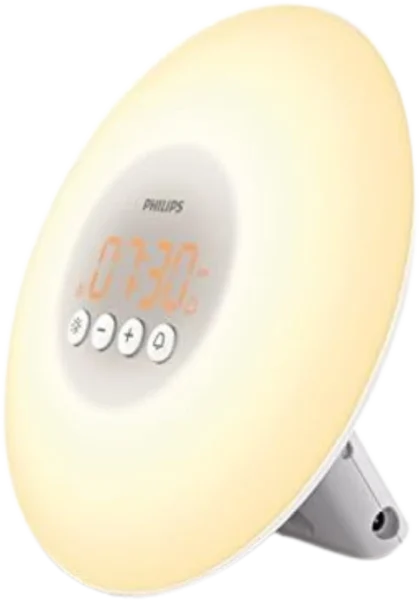
SmartSleep HF3500
Best of the Philips lineup on the basics: simple to use, effective light output for the price, and almost no flicker — a real win over the 3520 and 3650. Trade-offs are a single alarm only, no sunrise duration customisation, and a sunrise that holds one color temperature instead of warming through.
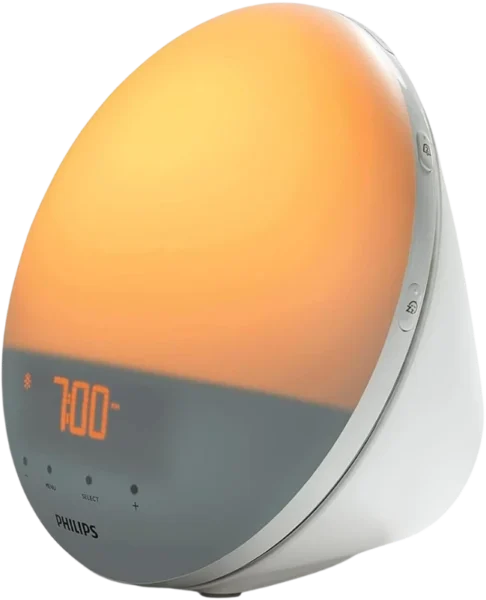
SmartSleep HF3520
Step up from the HF3500: brighter output, easy operation, and dual alarms instead of just one. The main trade-off is pretty bad flicker.
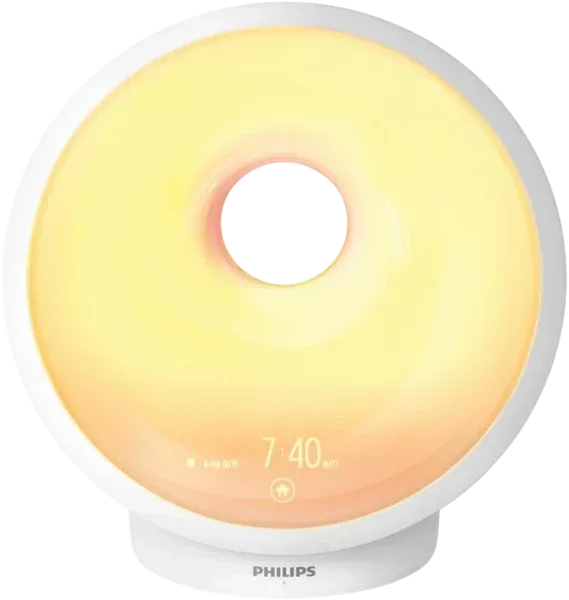
SmartSleep HF3650
Top of the SmartSleep range: brightest sunrise in the lineup, deep sunrise customisation, plus sunset and wind-down features for the evening side. Trade-offs are a menu system that's genuinely hard to learn and pretty bad flicker.
Keep reading
 Sunrise Alarms
Dreamegg Sunrise 1 Review: Hatch Looks, Under a Quarter of the Light
 Sunrise Alarms
Rise Centered Sunrise Alarm Clock Review: Gorgeous, and Dimmer Than You Think
 Sunrise Alarms
Casper Glow Light Review: Great Night Light, Weak Alarm?
 Sunrise Alarms