My verdict
Propeaq 3
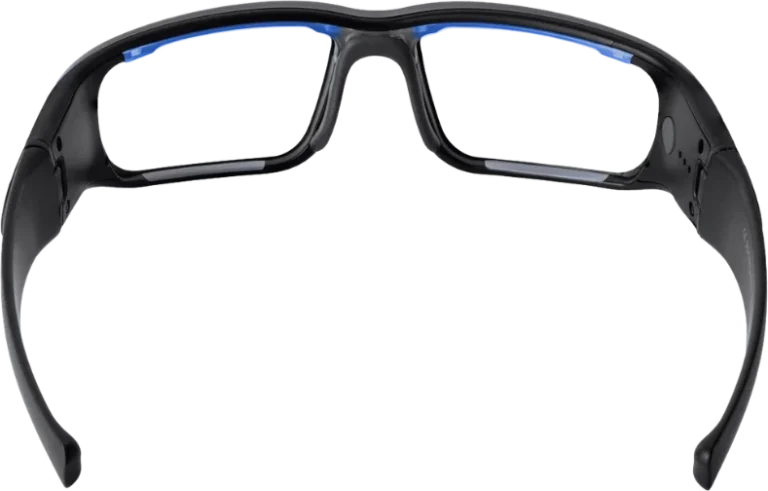
The best-looking light therapy glasses I’ve tested, and the weakest. The Propeaq 3 delivered 157 lux melanopic EDI at the eye, well short of the 250 it claims and under a third of what the Luminette 3 or AYO+ put out on their lowest settings. Skip it for light therapy.
- Pro: Looks like a normal pair of glasses, not a headset
- Pro: Effectively flicker-free (0.17%)
- Pro: Pop-in orange lenses turn it into an evening blue blocker (97% of blue blocked)
- Pro: Light at 41g, with a 30-minute auto shut-off
- Con: 157 lux melanopic EDI, against a claimed 250
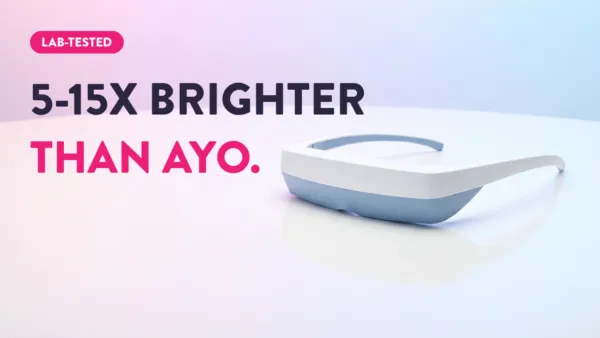
- Con: Under a third of the output of the Luminette 3 or AYO+
- Con: Ships with no lenses, and the orange lenses cost extra
- Con: The orange lens still lets about 10% of circadian light through in a warm-lit room
- Con: You wear it instead of your own glasses, not over them
See the lab results
Amber lens
- 92%
- Body-clock light blocked
- 38.1%
- Visible light through
Light the lens lets through
Chart by wavelength. Propeaq 3.
Colors through the lens
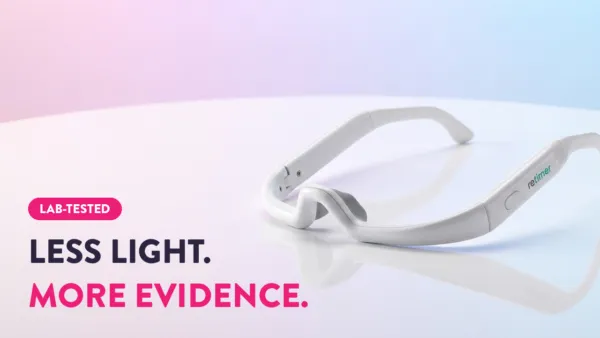
The Propeaq glasses are the only light therapy glasses I’ve tested that actually look like glasses. That’s the whole pitch, and it’s a good one.

The problem is the light. I put the Propeaq 3 on my spectrometer headform and it fell well short of its own spec, and far behind the other light therapy glasses I retested this round. If you just want the ranking, my best light therapy glasses guide has the full field.
What the Propeaq 3 Is
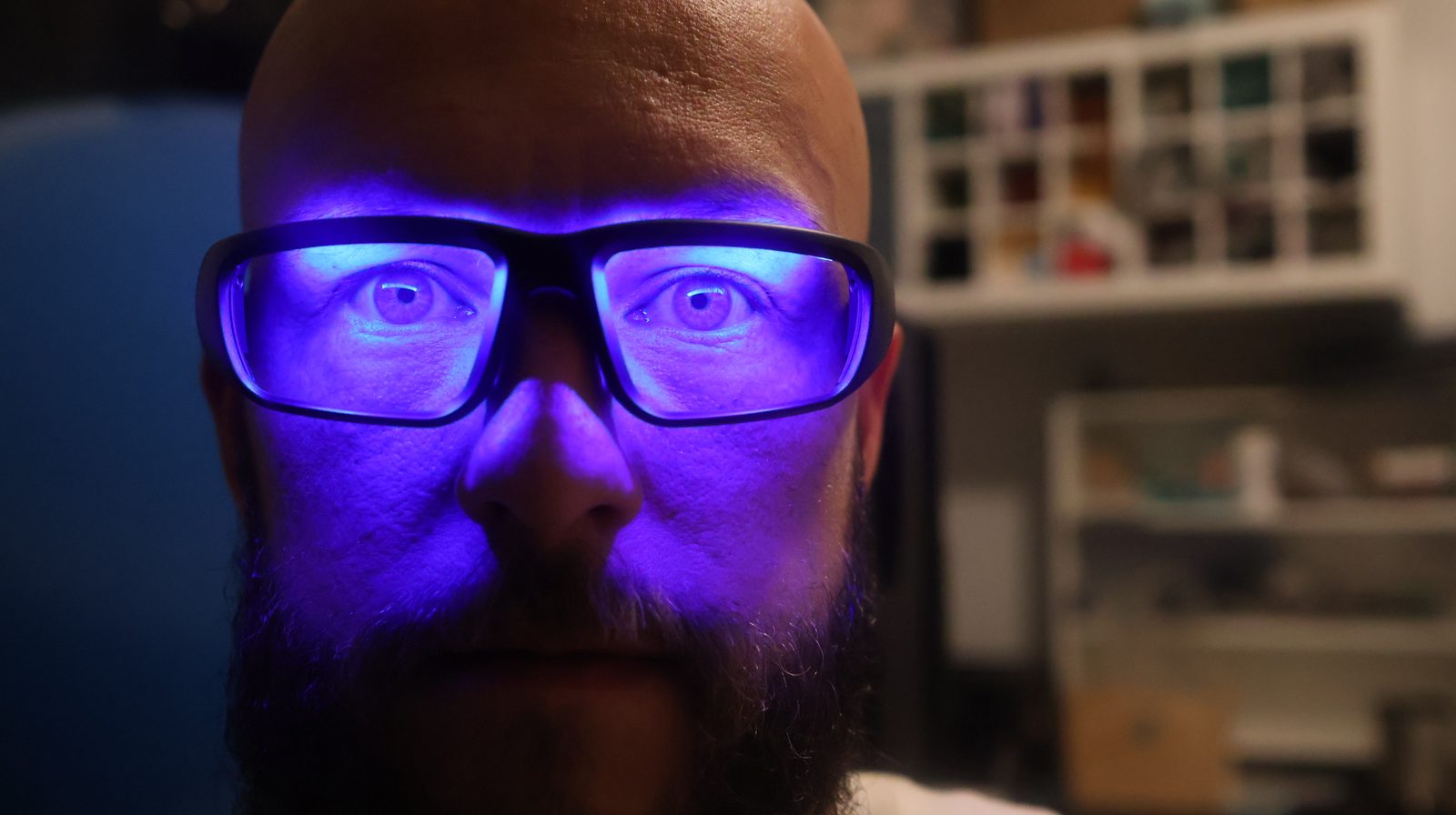
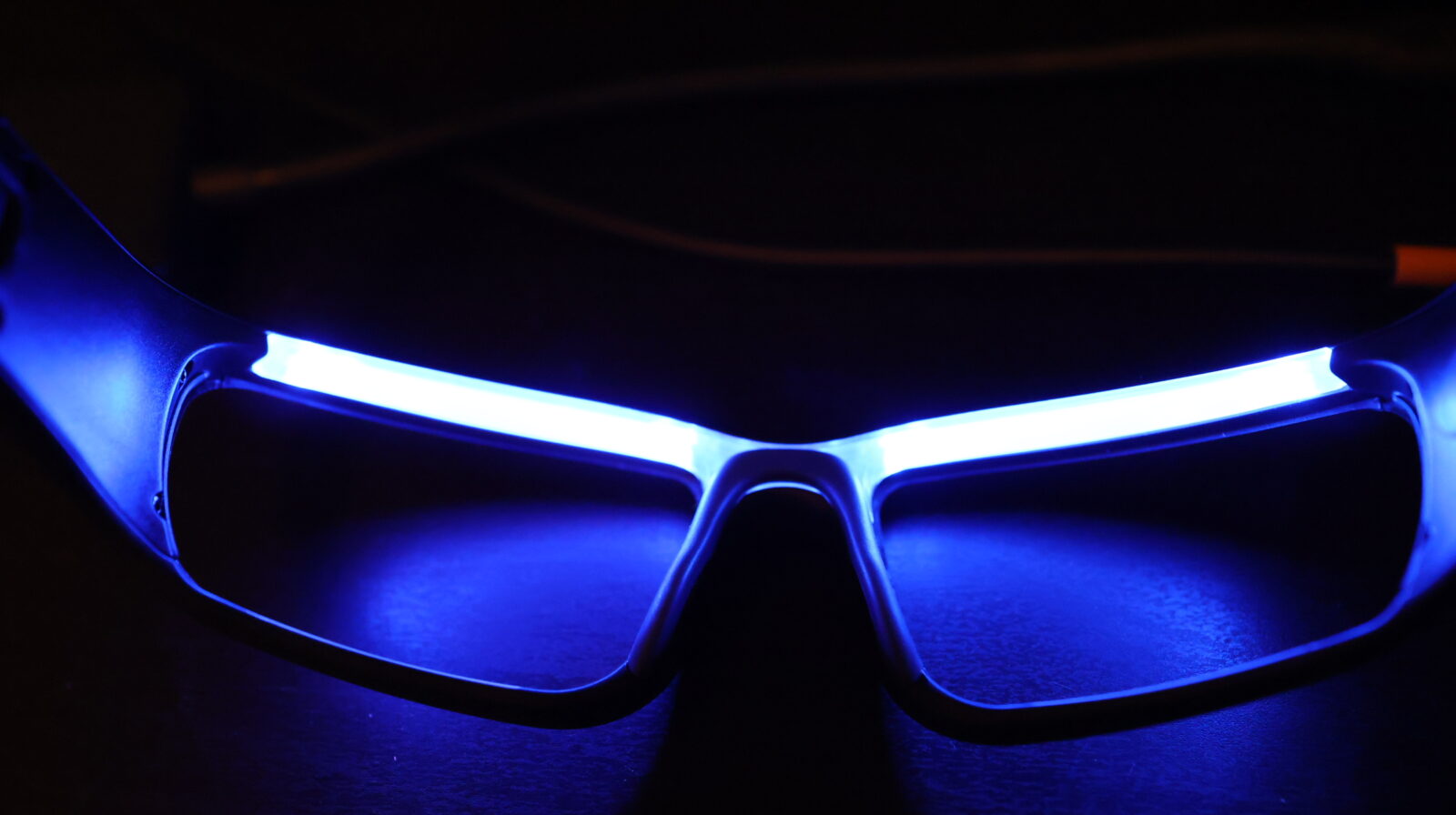
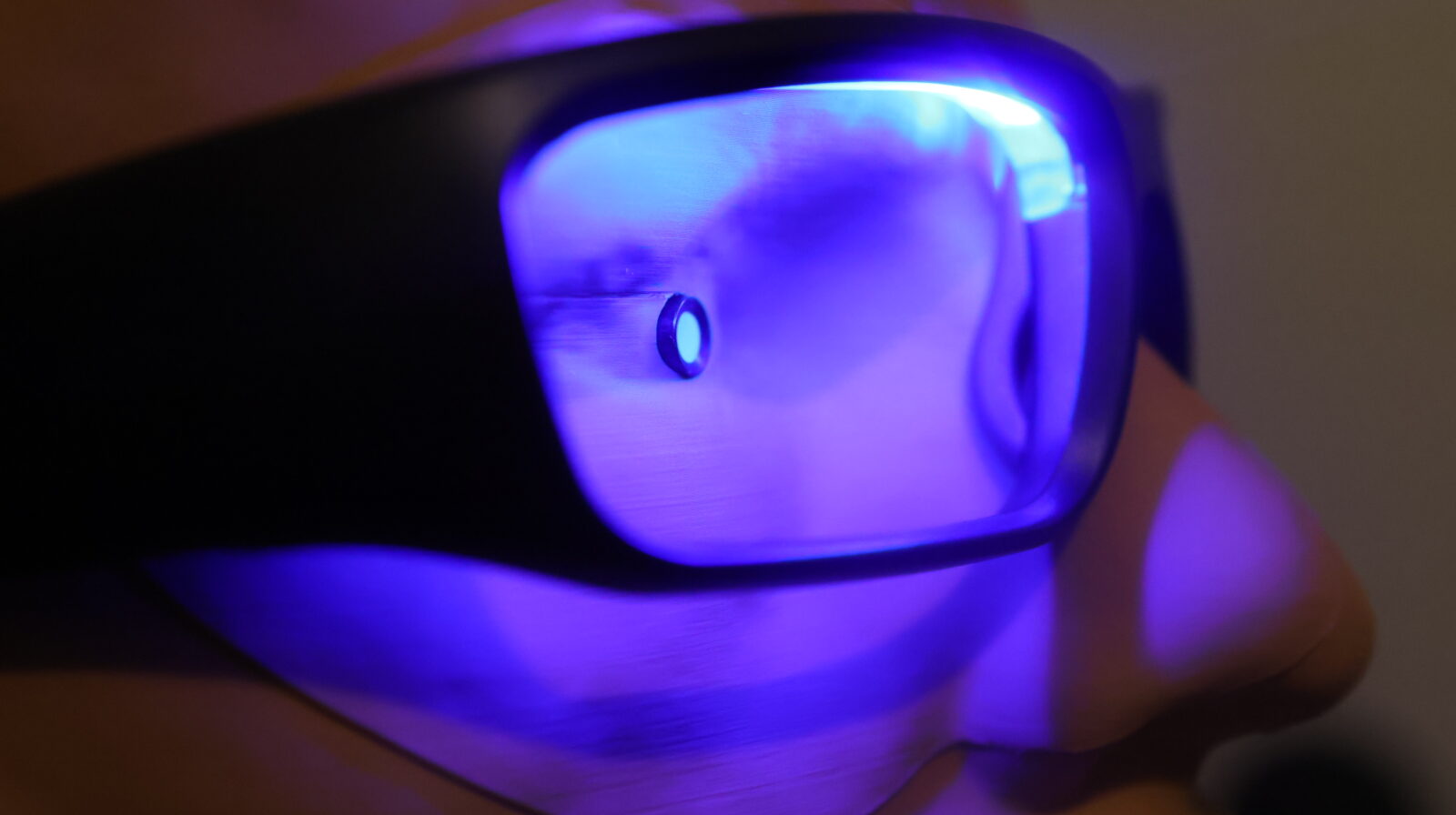
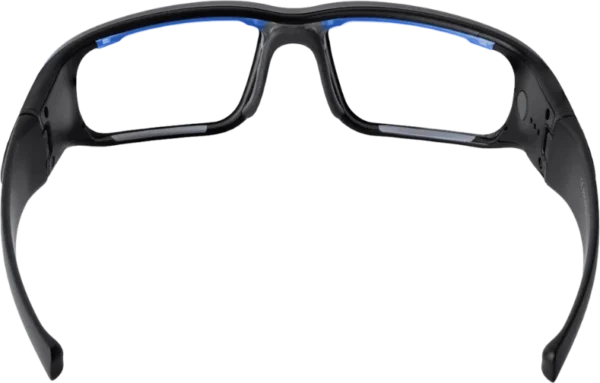
The Propeaq 3 is a frame with blue LEDs built into the top rim. They shine down into your eyes for a 30-minute session, then switch off on their own.
Unlike the original Propeaq, the 3 ships with no lenses at all. You wear it as an empty frame for light therapy, and pop in lenses if you want them.
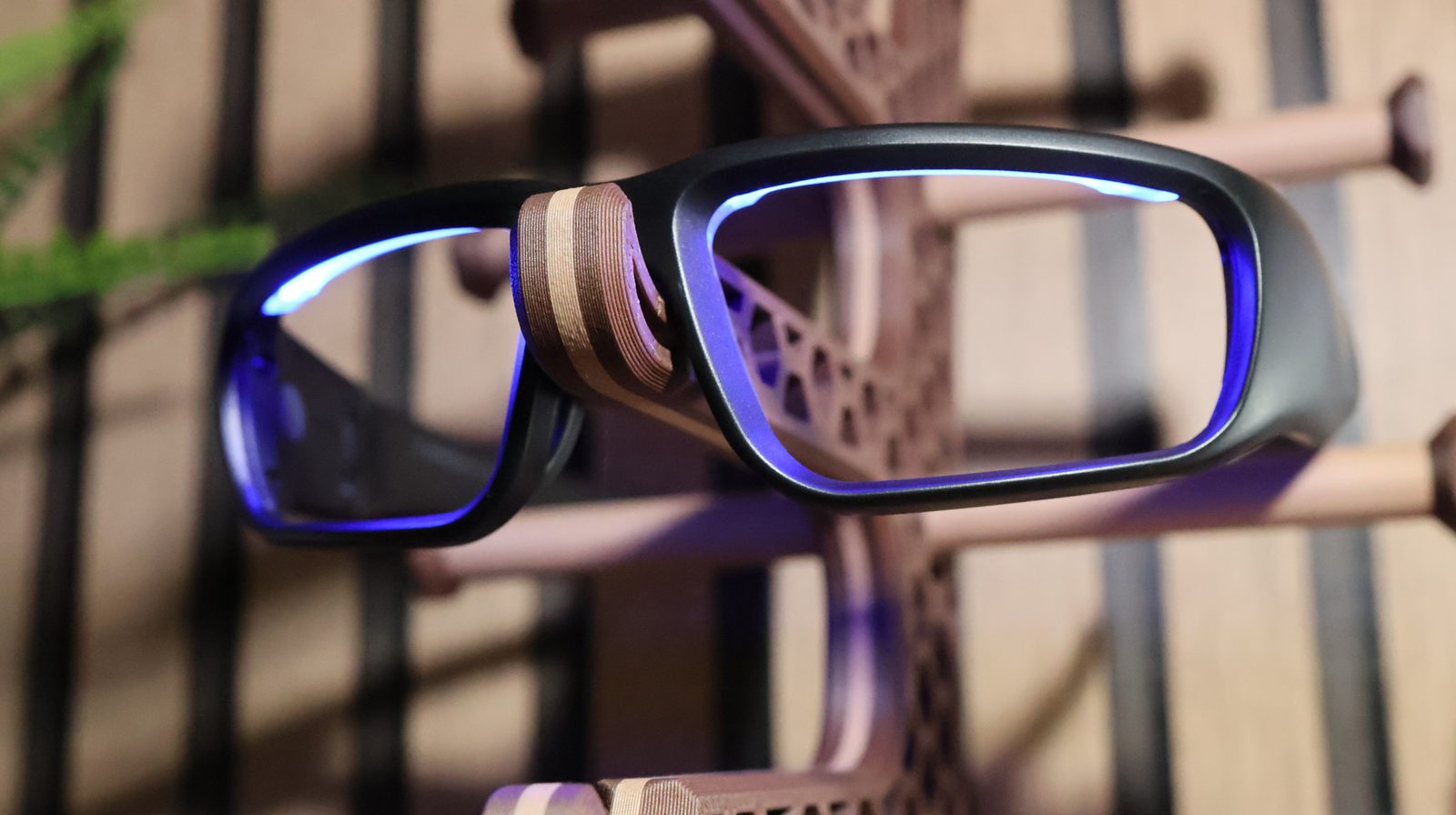
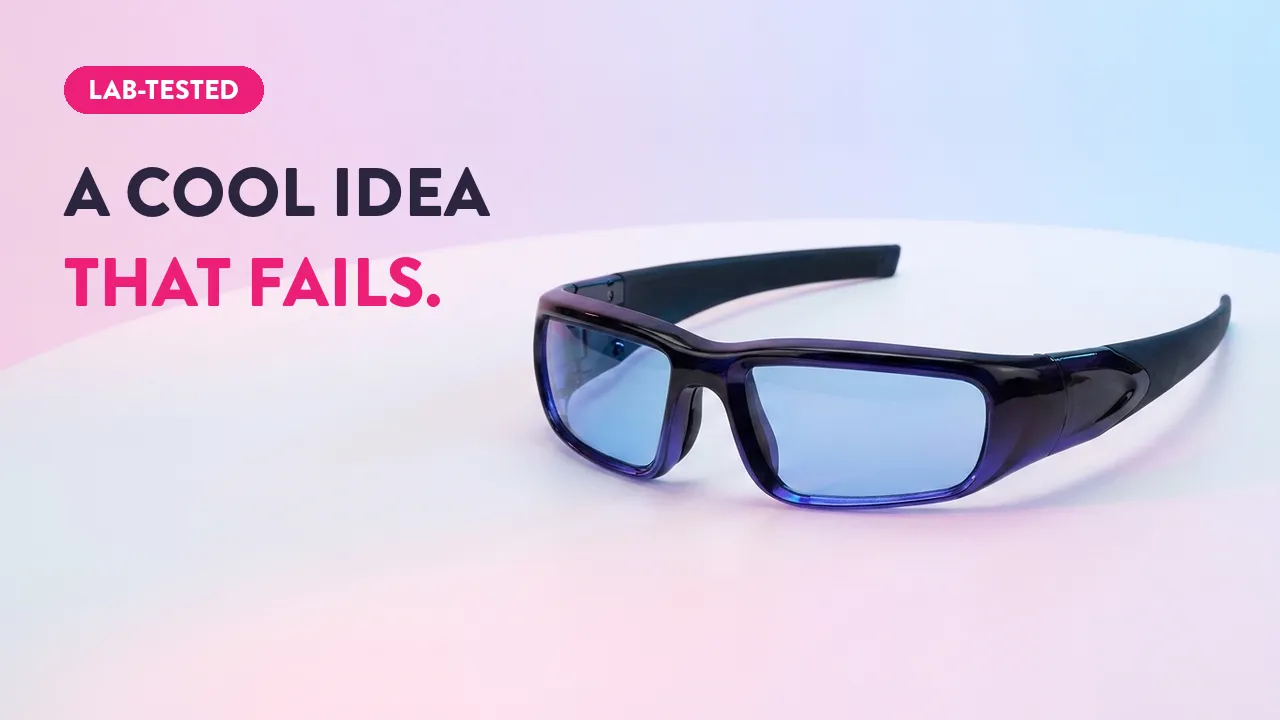
Propeaq sells two lens sets separately: orange blue-blocking lenses for the evening and dark blue sunglass lenses, both €29.95. The frame itself is €199 on Propeaq’s site.
Free · 95 pages
You're reading about one piece of this. The book is the whole day.
The Circadian Blueprint covers setting your body clock with light — the timing, the doses, and which products actually deliver them. Every number came off my own spectrometer.
Specs
| Weight | 30g (measured) |
|---|---|
| Light | Blue, 468nm claimed (461nm measured) |
| Claimed output | 250 M-EDI |
| Session | 30 minutes, auto shut-off |
| Battery | About 6 days at one session a day |
| Charge time | Under an hour |
| App | My PROPEAQ Timetooler (light schedules for sleep, jet lag and shift work) |
| Price | €199, lenses extra |
How I Tested It
I tested the Propeaq 3 the same way as every other pair of light therapy glasses this round: on a foam headform with a calibrated spectrometer sitting where your eye would be.
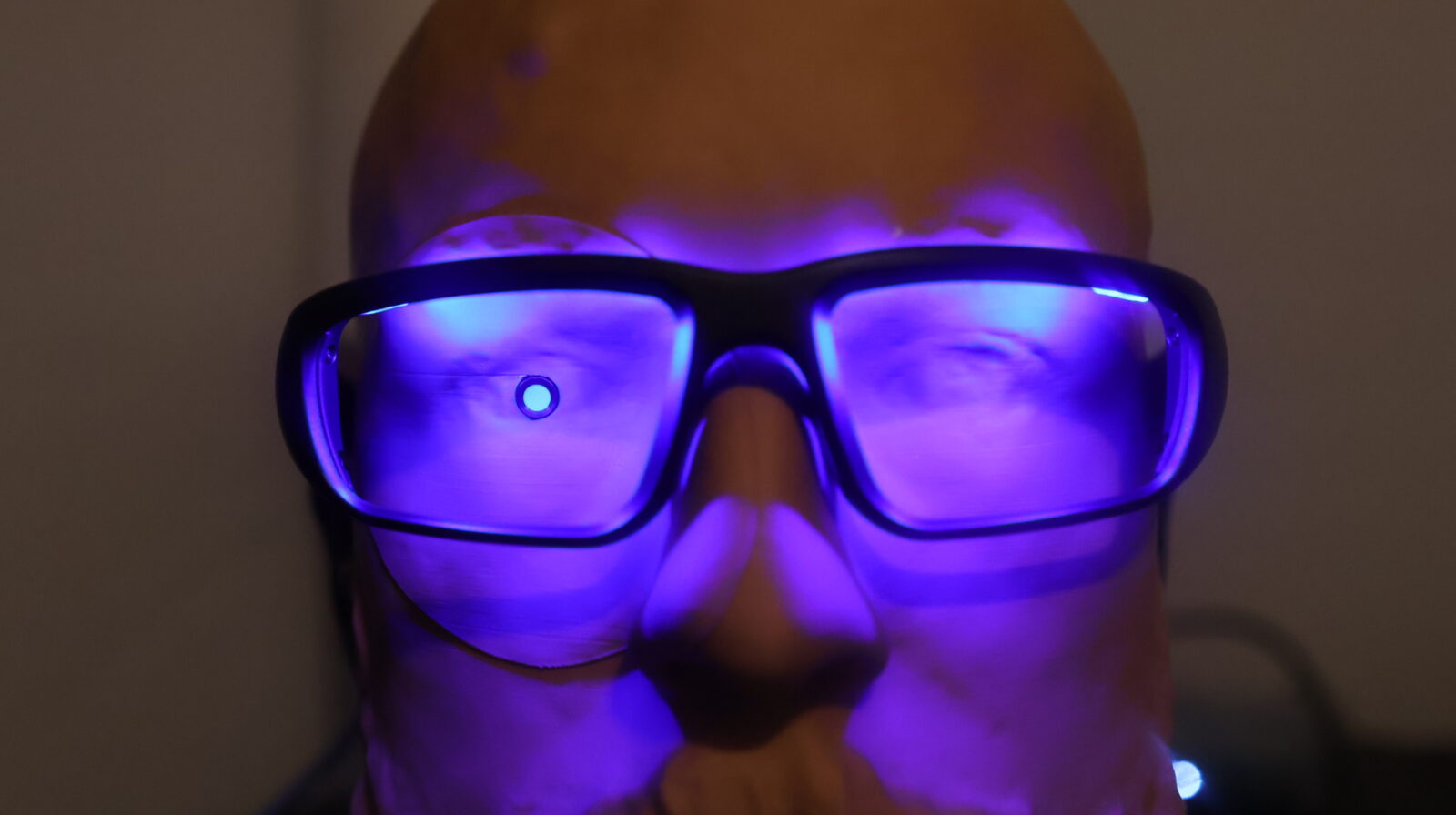
That gives me the actual light reaching the eye, not the light at the LED. I measured the spectrum and melanopic EDI with the spectrometer, flicker with a flicker meter sampling at 20 kHz, and the orange lens with a transmission spectrometer.
How Much Light Reaches Your Eye
Propeaq claims 250 M-EDI at 468nm. I measured 157 lux melanopic EDI with a peak at 461nm.
That’s about 37% under the claim. The wavelength miss doesn’t matter much, since 461nm still hits melanopsin well. The output miss does.
Spectrum chart. Propeaq 3, melanopic DER 10.15.
See the numbers
Propeaq 3
- Color tempColor temperature only describes white light. This light is too colored to have one.
- Colored light
- Body-clock lightMelanopic DER: how much light this lamp gives the body clock for its brightness, compared with daylight at 1.00. Higher means more body-clock light per lux.
- 10.15×
A narrow blue spike at 461nm, and almost nothing else.
The 250 figure isn’t random. It matches the daytime minimum recommended by a 2022 expert consensus: at least 250 lux melanopic EDI at the eye.[1] The Propeaq 3 claims to clear that bar and doesn’t.
If you’ve seen lux figures for these glasses, ignore them. I measured 15.5 lux, which sounds useless, but narrowband blue barely registers on the photopic lux curve. Melanopic EDI is about 10x the lux number here, and it’s the metric that matters for your circadian rhythm.
Full measurements
- Melanopic EDI: 157 lux
- Illuminance: 15.5 lux
- Peak wavelength: 461nm
- Mel-DER: 10.1
- Flicker: 0.17%
- Blue-light hazard (weighted): 0.20 W/m²
How It Compares
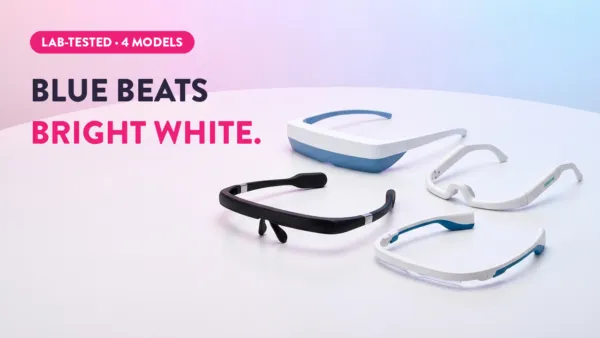
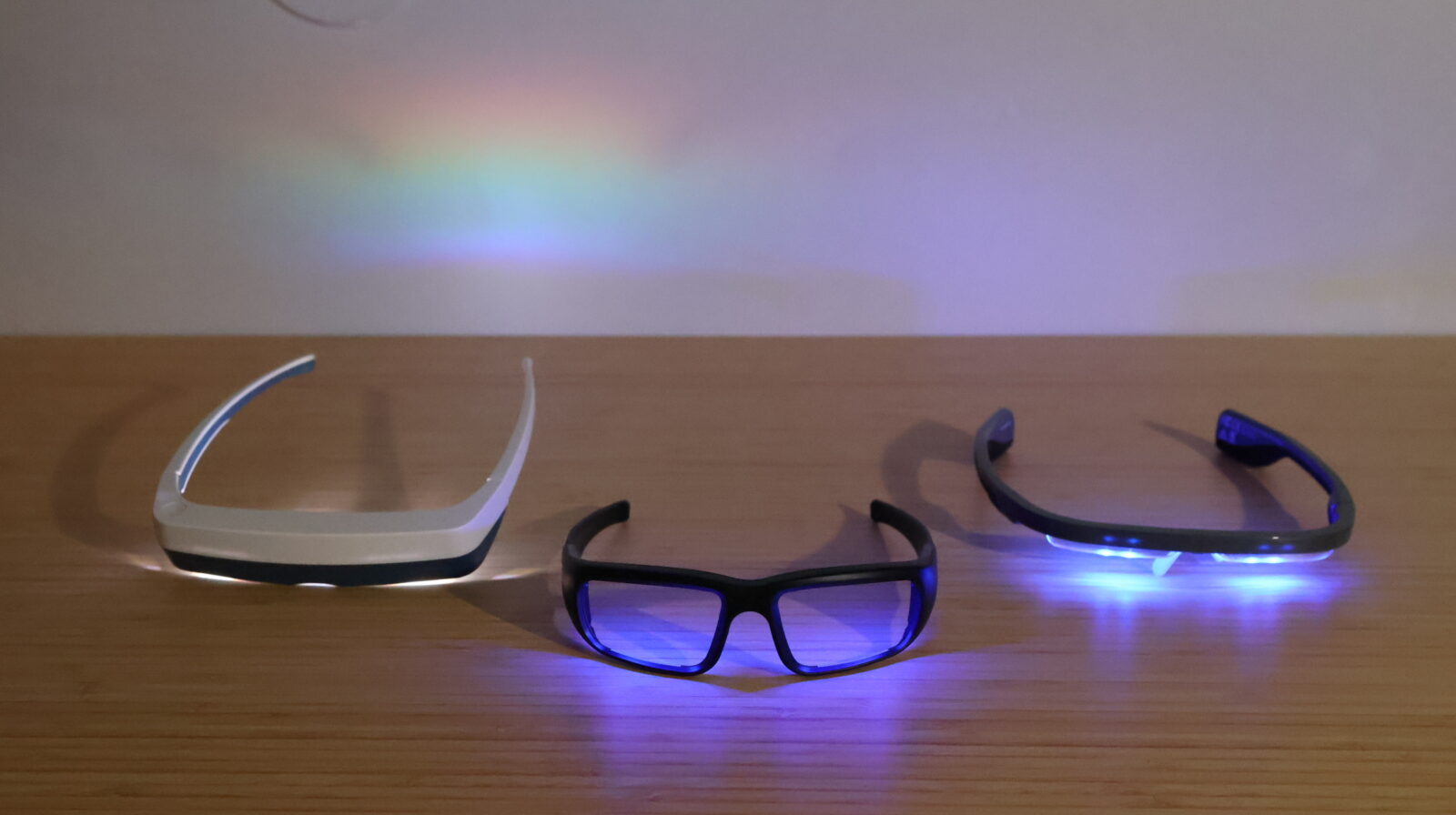
This is where the Propeaq 3 falls apart. I measured the Luminette 3 and AYO+ on the same headform and spectrometer in the same week.
The Propeaq 3 has one setting, at 157 lux melanopic EDI. The Luminette 3 runs from 486 on low to 1,282 on high, and the AYO+ from 511 to 1,011.
The Propeaq 3 has one setting, and it’s under a third of the others’ lowest.
The Luminette 3 on its lowest setting delivers about 3x what the Propeaq 3 does, and about 8x on high. The AYO+ lands in the same range.
Neither of those looks as normal on your face. But both of them do the thing you’re buying light therapy glasses for.
Flicker
The Propeaq 3 is effectively flicker-free. I measured 0.17% modulation, which is far below anything you’d see or feel.
A flat line at the top means steady light; dips mean flicker.
Light output by time. Propeaq 3 percent flicker 0.17%; Propeaq 3 frequency Steady light; Propeaq 3 ieee 1789 No observable effect.
See the numbers
Propeaq 3
- Percent flickerHow far the light dips from its brightest, as a share of the total. Under 1% is steady to the eye.
- 0.17%
- Frequency
- Steady light
- IEEE 1789The flicker safety guidance for lighting: how deep the flicker is, for its frequency.
- No observable effect
If you’re flicker-sensitive, this isn’t the reason to skip it.
The Orange Lenses
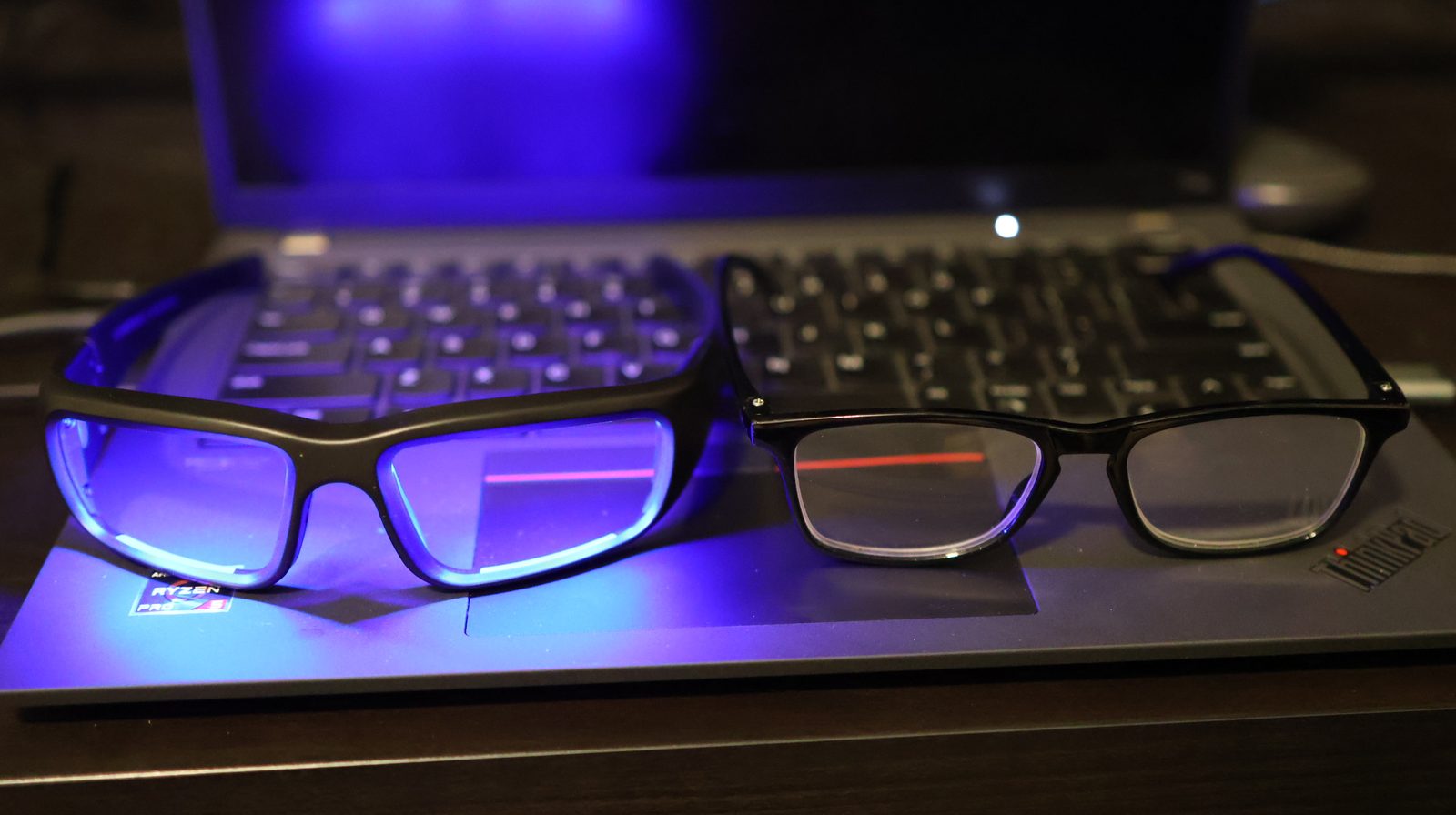
The orange lenses are the Propeaq’s best idea. One frame covers morning light therapy and evening blue blocking, which is handy for travel.
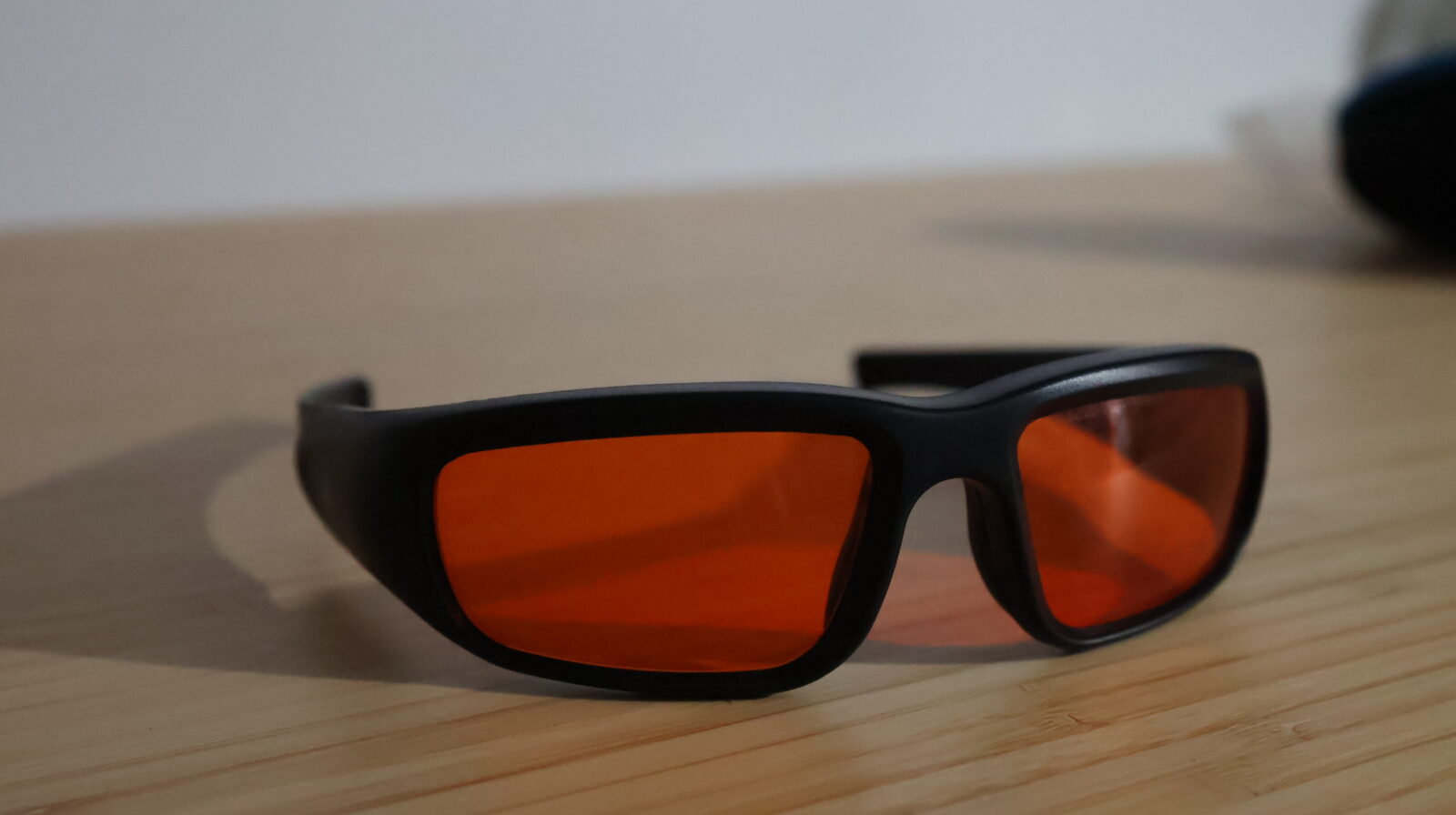
I measured them on my transmission spectrometer:
- Blue light blocked (400 to 500nm): 97.2%
- Melanopic light blocked: 89 to 92%, depending on the room lighting
- Visible light transmission: 38%
Light passed by wavelength. Propeaq 3 body-clock light blocked 92%; Propeaq 3 visible light through 38.1%.
See the numbers
Propeaq 3
- Body-clock light blockedMelanopic light blocked: the share of the light that sets the body clock that this lens stops (CIE S 026).
- 92%
- Visible light throughVLT: how much of the light you see gets through. Lower means a darker lens.
- 38.1%
Solid below 470nm, but 6 to 9% gets through from 480 to 510nm, right where melanopsin is most sensitive.
That’s a decent evening lens, not a sleep-grade one. Under warm 2700K evening lighting, about 10% of the circadian light still gets through.
The best red lenses I’ve measured let through 1 to 2% under the same light, so the Propeaq lens passes roughly 5x as much. If a blue blocker is your main goal, my best blue blocking glasses guide has stronger options.
Should You Buy the Propeaq 3?
Skip it if you want light therapy. At 157 lux melanopic EDI it misses its own claim and the 250 minimum it’s built around. The Luminette 3 gives you 3x the light on its lowest setting and works over prescription glasses.
Get it only if looks matter more than dose. If you won’t wear anything that looks like a headset, and you want one frame that also blocks blue light at night, the Propeaq 3 is the only option. Just know you’re getting a weak dose.
If you don’t wear prescription glasses and want something small, the AYO+ is the better compact pick.
Light therapy glasses
Propeaq 3
The best-looking light therapy glasses I’ve tested, with a handy pop-in blue-blocking lens for the evening. But it delivered 157 lux melanopic EDI, short of its 250 claim and under a third of the Luminette 3 or AYO+. A nice idea with too little light.
Frequently Asked Questions
Do Propeaq glasses work?
They put out real circadian light, just not much. On my headform the Propeaq 3 delivered 157 lux melanopic EDI, below the 250 it claims. It may give you a small morning nudge, but the Luminette 3 and AYO+ deliver 3x as much or more.
Do the Propeaq 3 glasses come with lenses?
No. The Propeaq 3 ships as an empty frame. Orange evening lenses and dark blue sunglass lenses are sold separately, €29.95 each on Propeaq’s site.
Can you wear Propeaq glasses over prescription glasses?
No. The Propeaq is the frame, so you wear it instead of your glasses, not over them. If you wear prescription glasses, the Luminette 3 is the better fit, since it held its output over clear lenses in my testing.
How long should you wear the Propeaq 3?
Propeaq’s session is 30 minutes, and the glasses switch off on their own when it ends. Propeaq recommends a session in the morning, about 30 minutes after you wake up.
Are the Propeaq orange lenses good blue blockers?
Decent, not great. They blocked 97.2% of blue light and 89 to 92% of melanopic light in my testing. The best red lenses I’ve measured let through 1 to 2% of melanopic light in a warm-lit room, so these let roughly 5x as much through.
Propeaq vs AYO: which is better?
The AYO+. It delivered 511 to 1,011 lux melanopic EDI on my headform, against 157 for the Propeaq 3. The Propeaq 3 only wins on looks and the swappable evening lenses.
References
- Brown TM, Brainard GC, Cajochen C, et al. Recommendations for daytime, evening, and nighttime indoor light exposure to best support physiology, sleep, and wakefulness in healthy adults. PLoS Biology 2022;20(3):e3001571 https://doi.org/10.1371/journal.pbio.3001571 ↩