

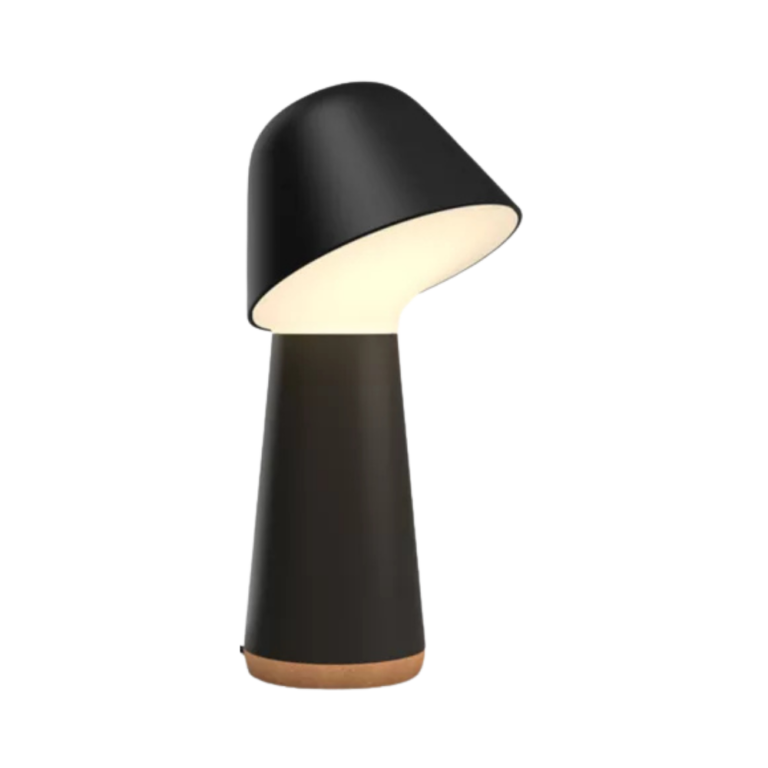
I bought the 15 most popular sunrise alarm clocks and put every one of them in front of a lab-grade spectrometer and a flicker meter. Not to read the box — to see what they actually do at the distance you’d really use them.
If you’ve seen these called wake-up lights, light alarm clocks, sunlight alarm clocks, or dawn simulators, that’s all the same product. One category, a dozen names.
Here’s what’s worth buying in 2026, and what I’d skip — backed by the numbers, not the marketing.
How sunrise alarm clocks work — and do you need one?
A sunrise alarm clock wakes you with light instead of sound. It starts dim and ramps up over 30 to 90 minutes, so you surface from sleep gradually the way you would on a camping trip with the sun coming through the tent — minus the tent.
Free · 95 pages
You’re reading about one piece of this. The book is the whole day.
The Circadian Blueprint covers setting your body clock with light — the timing, the doses, and which products actually deliver them. Every number came off my own spectrometer.
Check your inbox to confirm. Plus a short note each month on what I’ve tested — unsubscribe anytime.
The mechanism is worth understanding if you want to dial yours in, but it’s more than you need to pick one. I covered the full science of dawn simulation separately — start there if you want the depth.
Are they actually worth it?
For most people who struggle to wake up, yes — and I don’t say that lightly about a category this full of junk. The catch is that the cheap ones are often too dim to do the job at a real bedside distance, which is exactly the thing a spec sheet won’t tell you and a light meter will. Buy a good one and it works. Buy a dim one and you’ve bought a bedside lamp with an alarm.
Do you need one if your phone already does this?
This is the objection I see most, and it’s fair. Google Clock has a sunrise feature, iPhone has the gradual wake, and there are HomeKit routines that fake it. There’s also the smart-bulb route — Hue, LIFX, IKEA bulbs scheduled to ramp at wake time.
The problem is light dose. I haven’t put every phone on the meter, but you’d be lucky to pull 50 lux off a screen held 8 inches from your face — and that’s about as close as anyone actually uses a phone. The clocks I recommend below put 275 to 395 lux at 18 inches, from a panel of LEDs aimed at your pillow. A phone physically can’t get there. The app is simulating a sunrise; the clock is delivering one.
A sunrise app and a sunrise clock are not the same purchase.
The sunrise alarm clocks I tested
I tested the Hatch Restore 2 and 3, all four Lumie Bodyclocks, the three Philips SmartSleep lamps, the Philips Hue Twilight, the Casper Glow, and the Loftie Lamp. I also picked up a few cheap Amazon budget lamps to see whether any of them punch above their price.

A couple of well-known options have been discontinued (the Philips SmartSleep HF3670 and the original Hatch Restore 1), so I left those out.
Here’s where I landed, but the rest of the article is why:
- Best Overall: Lumie Bodyclock Shine 300
- Smoothest Sunrise: Philips Hue Twilight
- Runner-up: Philips SmartSleep HF3650
- Most Features: Hatch Restore 3
- Budget Friendly: JALL Wake Up Light
How the picks compare
If you just want the short version, here it is. Everything below this table is the evidence behind it.
|
Clock |
Lux @ 18“ |
Sunrise |
Flicker |
Best for |
Link |
|---|---|---|---|---|---|
|
Lumie Shine 300 |
360 |
15–90 min |
Risky when dimmed |
Brightest, most adjustable |
|
|
Philips Hue Twilight |
395 |
5–60 min (needs hub) |
Low |
Smoothest, most realistic sunrise |
|
|
Philips HF3650 |
325 |
5–40 min |
Risky |
Nightlight + backup alarm |
|
|
Hatch Restore 3 |
285 |
5–60 min |
Low |
Routines + white noise |
|
|
JALL Wake Up Light |
275 |
10–60 min |
Low |
Best value |
One number in that table does most of the work: lux at 18 inches, roughly where your face is on the pillow. Every one of these clears the ~250 lux I’d aim for. How they get there, and what else they do once they’re on your nightstand, is the rest of the article.
Testing the sunrises
Before the features, the light — because the light is the whole reason to trust any of this. I’ll cover ease of use and customization further down.
Lux at the bedside
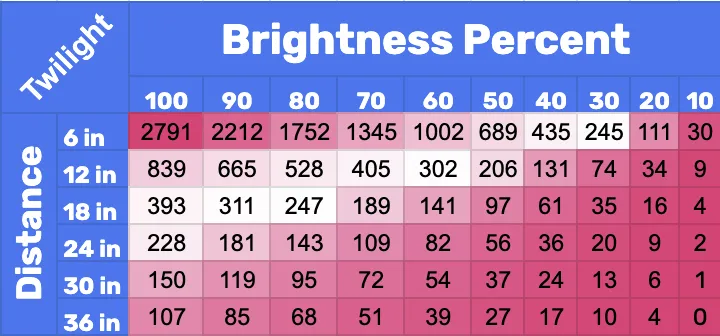
The only light measurement that matters for waking you up is how much actually reaches your eyes. So I put each clock in front of the spectrometer and measured lux every six inches, across brightness settings.

Measuring head-on.
At a foot, the Hue Twilight leads the entire field at 840 lux, the Shine 300 right behind at 730, then the HF3650 (650) and the Hatch Restore 3 (610).
Here’s the part the spec sheets won’t tell you: the compact, dim-looking clocks (the Hatch especially) punch well above their size, because they fire their light forward instead of spilling it around the room. A Lumie throws light in every direction, which looks impressive on a shelf and wastes most of it on your ceiling. The Philips and Hatch units aim it at your face. That’s why a small Hatch out-measures lamps that look far brighter sitting next to it.
How far should it be, and how bright?
So what do you do with that?
In my piece on the science of dawn simulation, I land on about 250 lux as a starting point — some people end up happiest around 120, some push to 400, but 250 is a sane default. To hit it you need two things: a clock bright enough to get there, and enough brightness steps to fine-tune.
On a nightstand you’re realistically about 18 inches away. At that distance, some lamps don’t come close — the Loftie and Casper Glow never reach 250 lux. These are the ones that do:
The Philips HF3500 just scrapes it (250), the JALL (275), HF3520 (280), and Hatch Restore 3 (285) clear it comfortably, and the HF3650 (325), Shine 300 (360), and Hue Twilight (395) have real headroom — the Hue most of all.
That headroom matters more than the single number, because it’s what lets you sit anywhere in the 120–400 band depending on your sweet spot. Each pick below gets its own distance-to-lux chart so you can find yours.
Sunrise length
The lamps vary a lot in how long a sunrise you can set, and it matters more than people expect.
Only the Shine 300 and the Luxe 700FM go all the way to 90 minutes. That matters, because the Norman dawn-simulation study1 (the one whose contour maps I borrow for the “ideal sunrise” graphic below) ran 90-minute ramps. Those two clocks are the only ones that let you replicate the standard study protocol.
The JALL runs 10–60, the Hatch 5–60, the HF3650 5–40. The Hue Twilight does 5–60 if you have the Hue hub. And then there’s a cluster that gives you a single fixed 30-minute ramp and nothing else: the Philips HF3500, Casper Glow, and Lumie Rise 100. The Loftie is locked to 9 minutes, which is barely a sunrise.
If you want to experiment with long, gentle wake-ups, the Shine and the Luxe are your shortlist.
Sunrise curves
A sunrise clock should follow the shape of a real dawn — a slow, gentle climb that only steepens near the end.

Source: Norman et al. (2000), Chronobiology International. Log-scaled, so not to scale — but the shape is the point.
Here’s what that should look like:
Here’s what that should look like. And here, for contrast, is the Loftie:
It starts gently enough, then jumps too fast near the end — the kind of ramp that can yank you awake instead of easing you out. Combined with the 9-minute cap, it’s not really doing the job.
The Hue Twilight has the best curve of anything here: the smoothest climb, and it shifts color as it goes, cool blue-white easing into warm white the way an actual sunrise does. The Philips SmartSleep lamps have clean curves too, and the Lumie Bodyclocks are solid. The Casper Glow’s curve is fine — it’s just too dim to matter.
The Hatch is the odd one. Like the Loftie it gives you a pile of named sunrise options, but unlike the Loftie they vary a lot — some good, some strange.
If you go Hatch, “Morning in Prague” is the best of the bunch — that’s the one I’d set.
As for the Amazon lamps, the Reacher and JALL both ramp decently, but the JALL is clearly brighter, so that’s the one I kept.
Flicker
I measure flicker for the people it matters to. If that’s not you, skip ahead — it isn’t a dealbreaker for me personally.

Quick version: LEDs run on DC, your wall runs on AC, and a cheap driver can’t fully smooth the gap, so the light pulses. Good drivers either push the pulse rate high enough that it’s harmless or remove it entirely. For sensitive people, bad flicker can mean headaches, eye strain, and fatigue — though it may matter less here than with a lamp you stare at all day.
Most of the field is clean. Almost no flicker, or a little harmless high-frequency stuff, from the Hue Twilight, JALL, both Hatch units, the Lumie Rise 100 and Glow 150, the Philips HF3500, the Loftie, and the Casper Glow (which gets a touch riskier once you dim it).
Here they are dimmed:
Four landed in the risky bucket: the Philips HF3520 and HF3650, and the Lumie Shine 300 and Luxe 700FM. The Shine 300 actually looks fine at full brightness — but dim it and roughly 200 Hz flicker shows up.
Here they are dimmed:
So two of my picks are in that group. If flicker is a real concern for you, that’s worth knowing going in — the Hue Twilight, Hatch Restore 3, and JALL all sit in the clean group, and the Hue’s the brightest of the three at the bedside.
Comparing the features
Light gets you most of the way to a decision. The rest is whether the thing is pleasant to live with.
Ease of use
The easiest by a mile is the Philips Hue Twilight — everything lives in the app, so there are no cryptic buttons or icon menus to fight. The Hatch Restore is nearly as painless for the same reason, with one catch: a lot of the good stuff sits behind a subscription.
After the two app-driven lamps, it drops off fast. The worst is the Philips HF3650 — loaded with options, but the entire menu is buried in icon-only navigation with no labels, and you spend the first week guessing what each symbol means.

The Lumie Shine 300 is the runner-up in frustration: a lot of buttons and arrows, and it’s not obvious which does what. Both of these are among the most effective clocks I tested, so you may want one anyway — just know the setup will fight you for a few days.

The generic Amazon lamps were a mixed bag, a couple nearly unusable with barely-legible manuals. The three I kept are okay, not great.
Audible alarms
I’d skip the audible alarm entirely — the whole point is to wake to light. But if you want a backstop or you’ve got alarm anxiety, the options vary.
The Lumie Bodyclocks and Philips SmartSleep lamps have nice nature-based tones. The Lumie Rise 100 and Philips HF3500 only have a single basic beep — and the HF3500 won’t let you turn it off, so avoid that one if you want a silent wake.
The Loftie, Hue Twilight, and Casper Glow have no audio at all. And the Hatch Restore has the best of the bunch — good-sounding alarms through a forward-facing speaker that’s also the loudest here.
Alarm scheduling
The two smart lamps (the Hue Twilight and the Hatch Restore) are far and away the easiest here, and the obvious choice if you change your wake time often, or work shifts and want different sunrises on different days. You set it all in the app and forget it.
Among the rest, the Lumie Luxe 700FM and Shine 300 let you set a separate alarm per day. The Philips HF3520 and HF3650 give you two.
The Lumie Rise 100 and Glow 150 and the Philips HF3500 are single-alarm — fine by me, except the Lumies have to be re-enabled every single day. The alarm turns off in the morning and won’t fire again unless you switch it back on. Yes, it’s as dumb as it sounds.
Clock-face dimming
If you sleep in a properly dark room, you want a clock you can shut off completely at night. Every lamp here can — except the Philips HF3500, which goes very dim but never fully dark, and won’t auto-dim, so you’re working the side button by hand.
Nightlight and sunset
Nearly all of them fade down at night if you want a wind-down light; only the HF3500 doesn’t. I usually ignore these (they tend to be fiddly), but two are worth singling out. The HF3650’s nightlight is genuinely good: tap the top, soft orange glow on or off, and I actually used it. And the Hue Twilight lets you reprogram its buttons, including a very dim red option — about as sleep-safe a nightlight as you’ll get, even if it’s not strictly a “sunset” mode.
White noise
If you want the clock to double as a white noise machine, this is short.
The Lumie 150, 300, and 700 each play a single white-noise file and that’s it. For anything more, it’s the Hatch Restore — a full library of sounds in the free tier, including nature-and-noise blends and even versions tuned for dogs (they trim the high frequencies that bug them). None of the other lamps come close.
Which sunrise alarm clock should you buy?
Quick recap, then the case for each:
- Best Overall: Lumie Bodyclock Shine 300
- Smoothest Sunrise: Philips Hue Twilight
- Runner-up: Philips SmartSleep HF3650
- Most Features: Hatch Restore 3
- Budget Friendly: JALL Wake Up Light
Best Overall: Lumie Bodyclock Shine 300

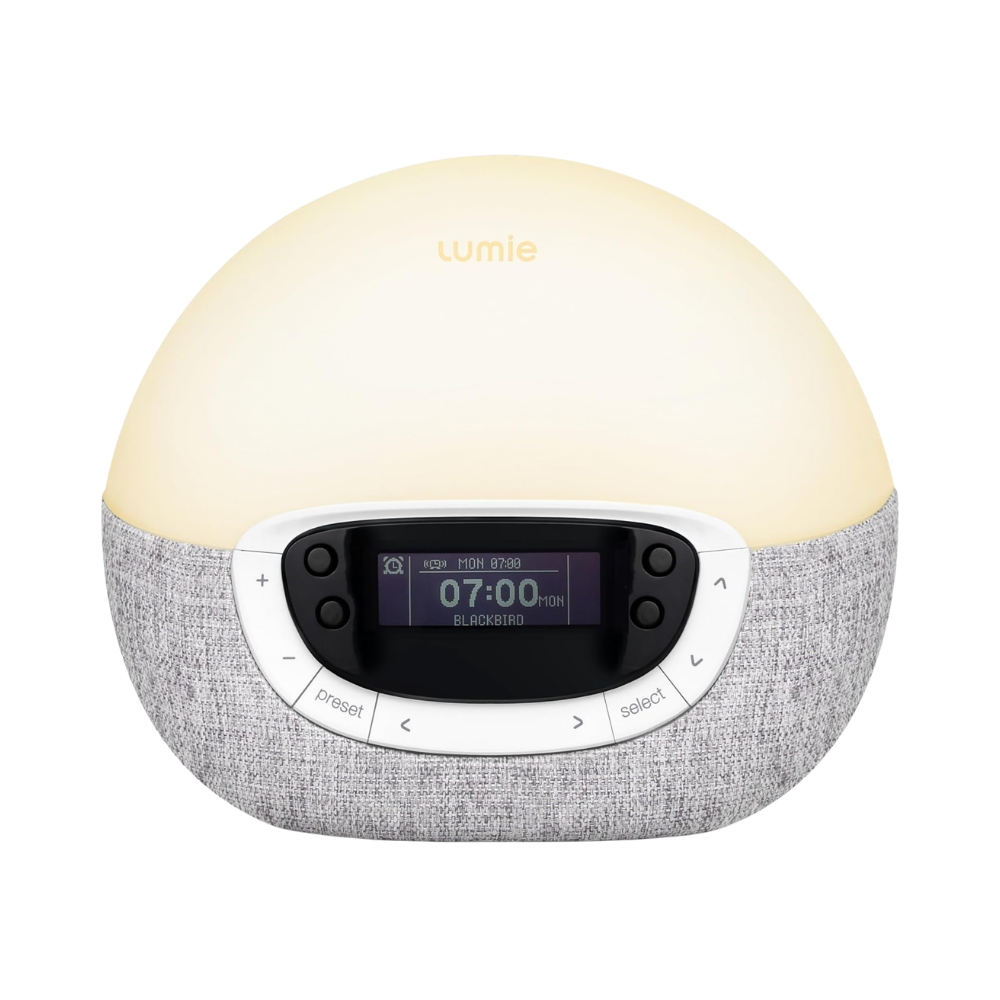
The Shine 300 is the brightest traditional sunrise clock I tested (730 lux at a foot, 360 at a realistic 18 inches), and it pairs that with a 15-to-90-minute sunrise and 20 brightness steps. Nothing else here is this adjustable, and it does it all with no hub and no app, which is why it’s the one I’d hand most people.
It also auto-dims and can shut its screen off completely in a dark room, with a nightlight and sunset mode if you want them.
The downsides are real but minor: the interface takes a few days to learn, and there’s roughly 200 Hz flicker once you dim it. Doesn’t bother me; might bother you.

Buy it if you want the brightest, most flexible sunrise and the longest ramp on the market, with nothing to set up but the clock itself. Skip it if flicker sensitivity is a real issue, or you’d rather control everything from an app. Read my full Lumie Bodyclock review.
Best Overall
Lumie Shine 300
Best raw brightness and the only 90-minute ramp this side of the Luxe 700FM, no hub required. Trade-offs: flicker when dimmed, and a menu that takes a minute.
Pros
Cons
Smoothest Sunrise: Philips Hue Twilight
If the sunrise itself is what you care about most, the Hue Twilight is the best of the lot. It’s the brightest at the bedside of anything I tested (840 lux at a foot, 395 at 18 inches), and its ramp is the smoothest — a gradual climb that shifts from cool blue-white to warm white as it brightens, the way a real dawn does. None of the others change color like that.
Watch the color shift, not just the brightness.
It’s also a bit different physically: there’s a downward-firing LED in the top, so you can turn it around and bounce a softer, less head-on light if that suits your setup better.
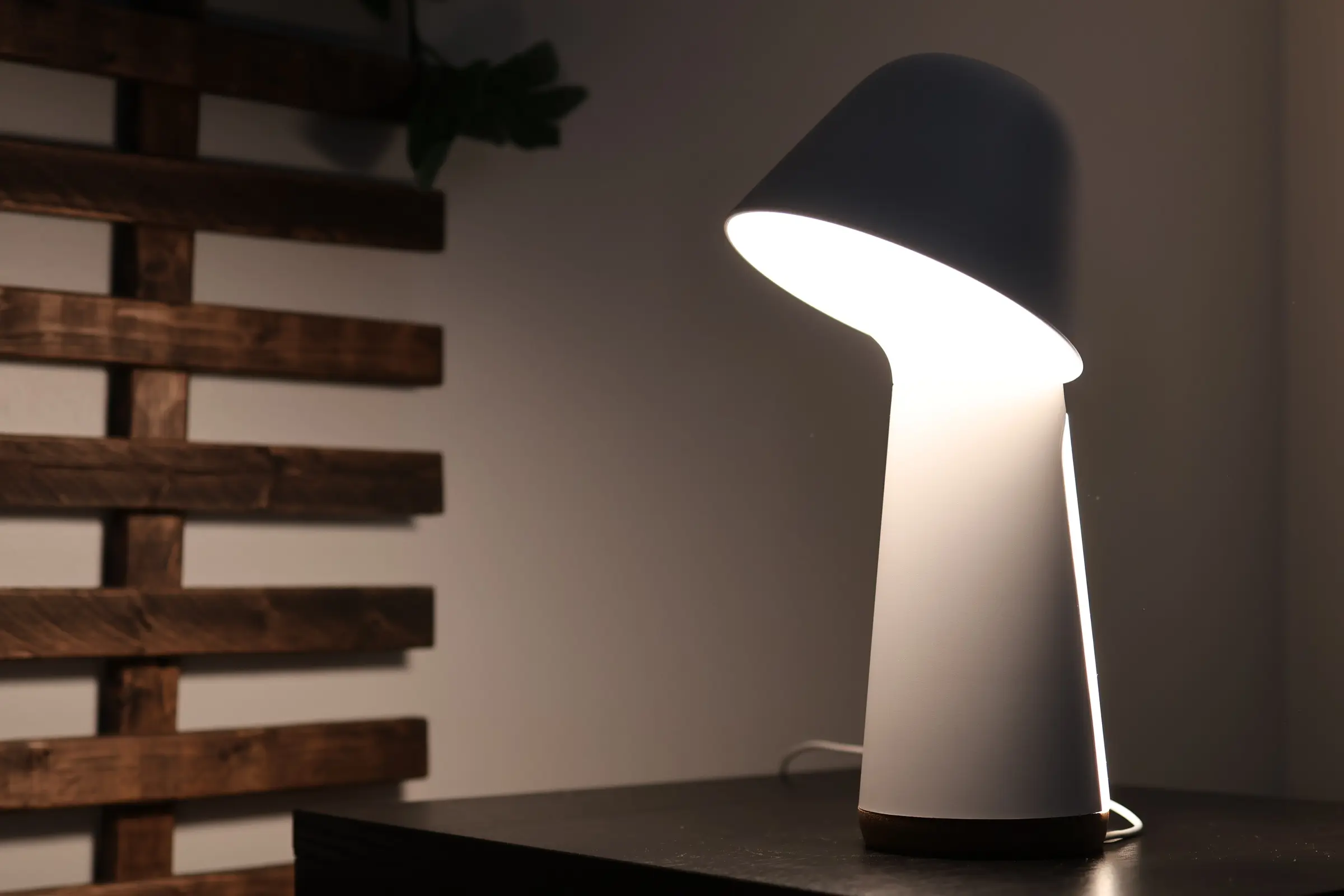
Everything runs through the Hue app, which makes it the easiest here to schedule — and if you already own Hue bulbs, it’ll wake your whole room with them. Those room lights won’t wake you on their own (that’s the lamp’s job), but coming to in a gently lit room is a nice touch.
The one real catch, and the reason it’s not my overall pick: you really need the Hue hub. Without it the settings are crippled. So the true cost is the lamp plus the bridge, plus buying into the Hue ecosystem.
Buy it if you want the most beautiful, smoothest, most customizable sunrise — and you’re fine adding the hub (or already live in Hue). Skip it if you want a standalone clock with no app or extra hardware. Read my full Philips Hue Twilight review.
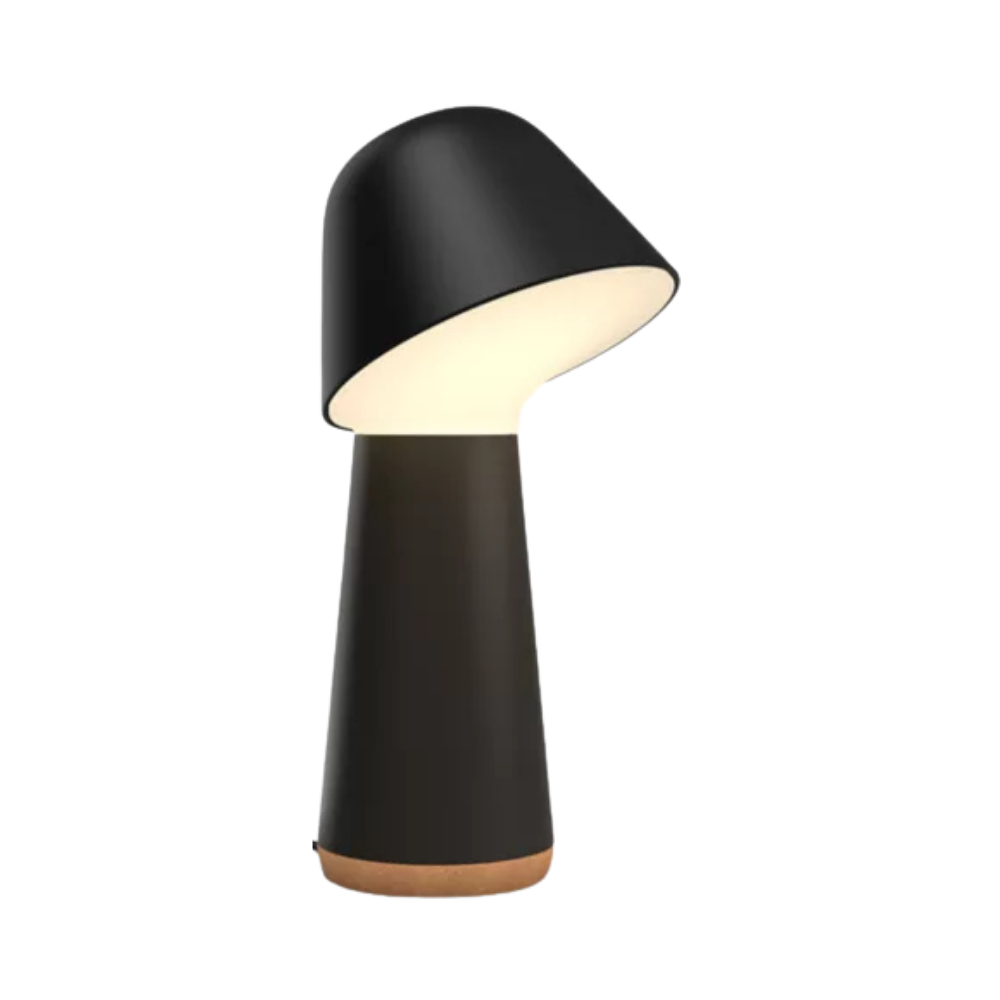
Smoothest Sunrise
Philips Hue Twilight
The brightest at the bedside and the smoothest, most realistic ramp, with a true blue-to-warm color shift and easy app control. Trade-offs: needs the Hue hub to be any good, and pulls you into the ecosystem.
Pros
Cons
Runner-up: Philips SmartSleep HF3650
Just behind the Shine on brightness (650 lux at a foot, 325 at 18 inches), the HF3650 earns its spot on the extras. And the tap-the-top nightlight is the one nightlight feature here I actually reached for.
Its menu, as covered above, is genuinely painful — icon-only and unlabeled. But push past that and there’s a clock that turns its face fully black at night and has nicer alarm tones than most.
The standout is the backup alarm: during a power outage the internal clock and alarm keep running for 8 hours, and if your alarm time hits mid-outage it’ll beep for 30 seconds. If a missed alarm is a genuine fear, that’s a real feature.
Flicker isn’t great on this one, though — it’s in the risky group.

Buy it if you want near-top brightness plus a nightlight and a power-failure backstop. Skip it if the icon-only menu sounds like a daily annoyance, or flicker matters to you. Read my full Philips SmartSleep review.
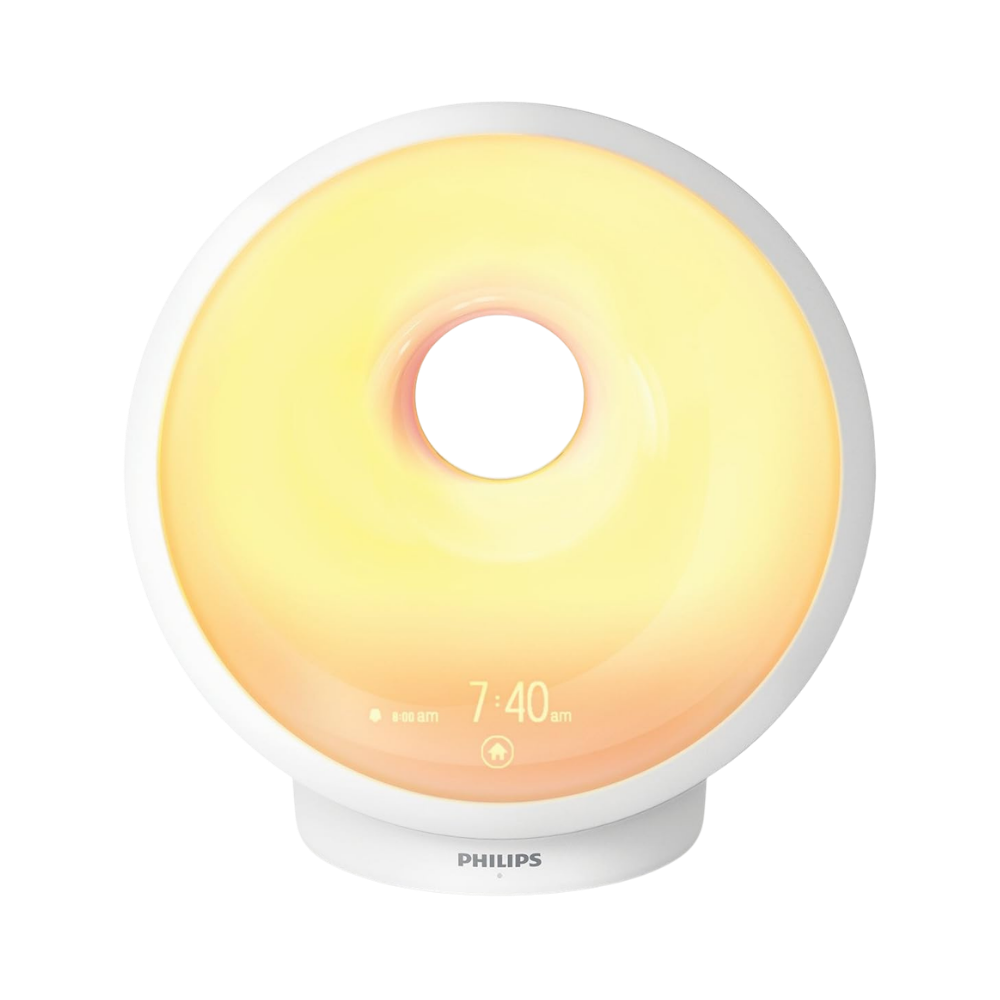
Runner-up
Philips HF3650
Second-brightest traditional clock here, with a nightlight and backup alarm. Trade-offs: a confusing menu and flicker.
Pros
Cons
Most Features: Hatch Restore 3
The Hatch Restore 3 is about 30% brighter than the Restore 2 (285 lux at 18 inches vs. 209), so if you want a Hatch, get the new one. It aims its light forward, so even though it’s small it lands fine at the bedside.

But light was never the whole pitch here. This is really a wind-down-and-wake-up routine machine that happens to do sunrises. Two physical buttons up top run your routines and the alarm; everything else lives in a genuinely well-built app. You can stack unwind routines, sleep cues, white noise, and wake-up sequences — and they can shuffle day to day so it’s not the same loop every night.

A routine I built: stretch, a story, a little meditation, then nature sounds fading out.
Despite the subscription, I ended up loving it. The free tier still includes every sunrise and works as an excellent white noise machine — which none of the other lamps here can claim. The catch is that the best routine-building features sit behind the paywall.

Two more notes: brightness adjustment is clunkier than it was on the Restore 2, and it does emit some EMF if that’s something you track.
Buy it if you want the night-and-morning routine, the app, and the best white noise in the category. Skip it if you want maximum sunrise brightness, or you resent subscriptions on hardware you already bought. Read my full Hatch Restore review.
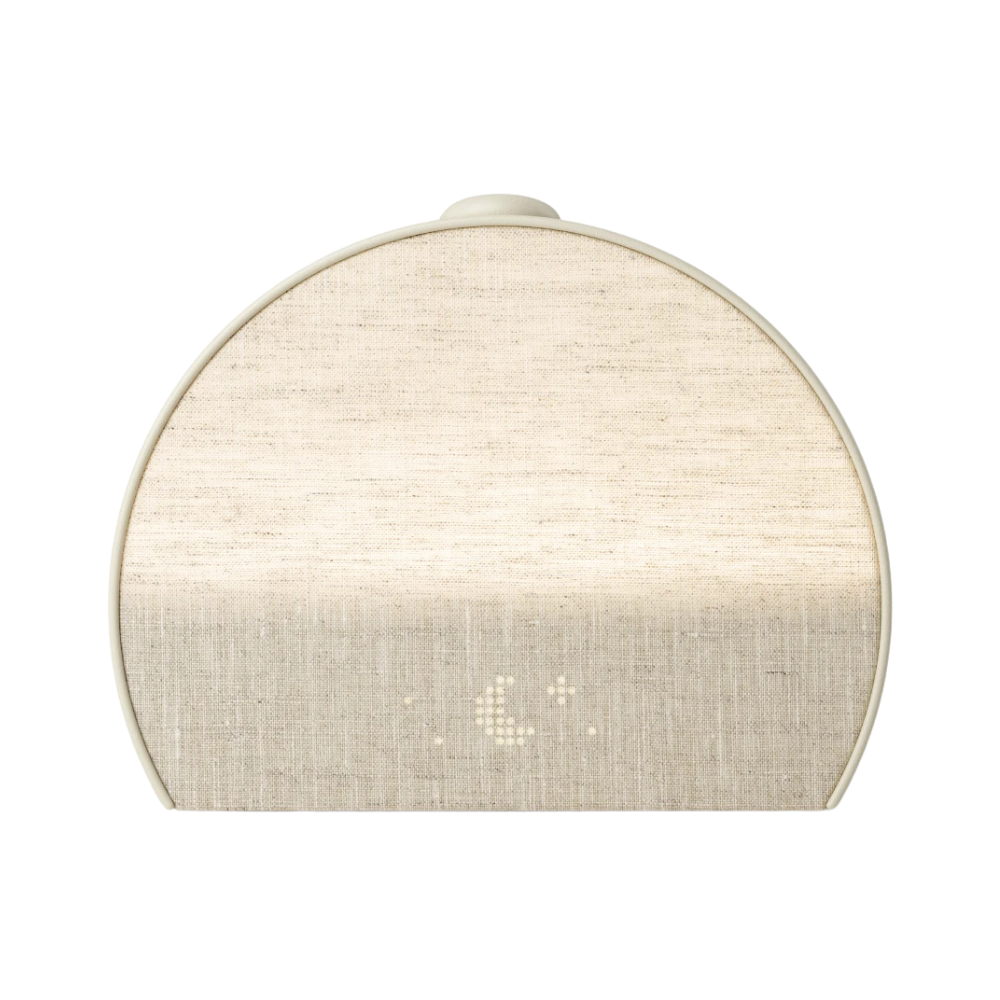
Most Features
Hatch Restore 3
Brighter than the 2, with a superb app, routines, and white noise. Trade-offs: dimmer sunrise than the top picks, best features behind a subscription, clunkier brightness control, some EMF.
Pros
Cons
Budget Friendly: JALL Wake Up Light

The JALL surprised me. For a cheap Amazon lamp it’s genuinely bright: 545 lux at a foot, 275 at 18 inches, clearing the 250 mark without trouble. Pair that with a 10-to-60-minute sunrise and 20 brightness steps to dial it in.
The Philips HF3500 costs about the same and performs similarly, but you can’t silence its beep — so the JALL gets the nod. It also lets you set two alarms, which the HF3500 won’t.
No auto-dimming, so a fully dark room means turning it off by hand. At this price, I’ll take that trade.

Buy it if money’s tight and you want the most capable sunrise per dollar. Skip it if you want a polished interface or app features — this is honest hardware, nothing more. (And it’s not a Hatch look-alike, despite what the listings imply — it’s its own thing.)
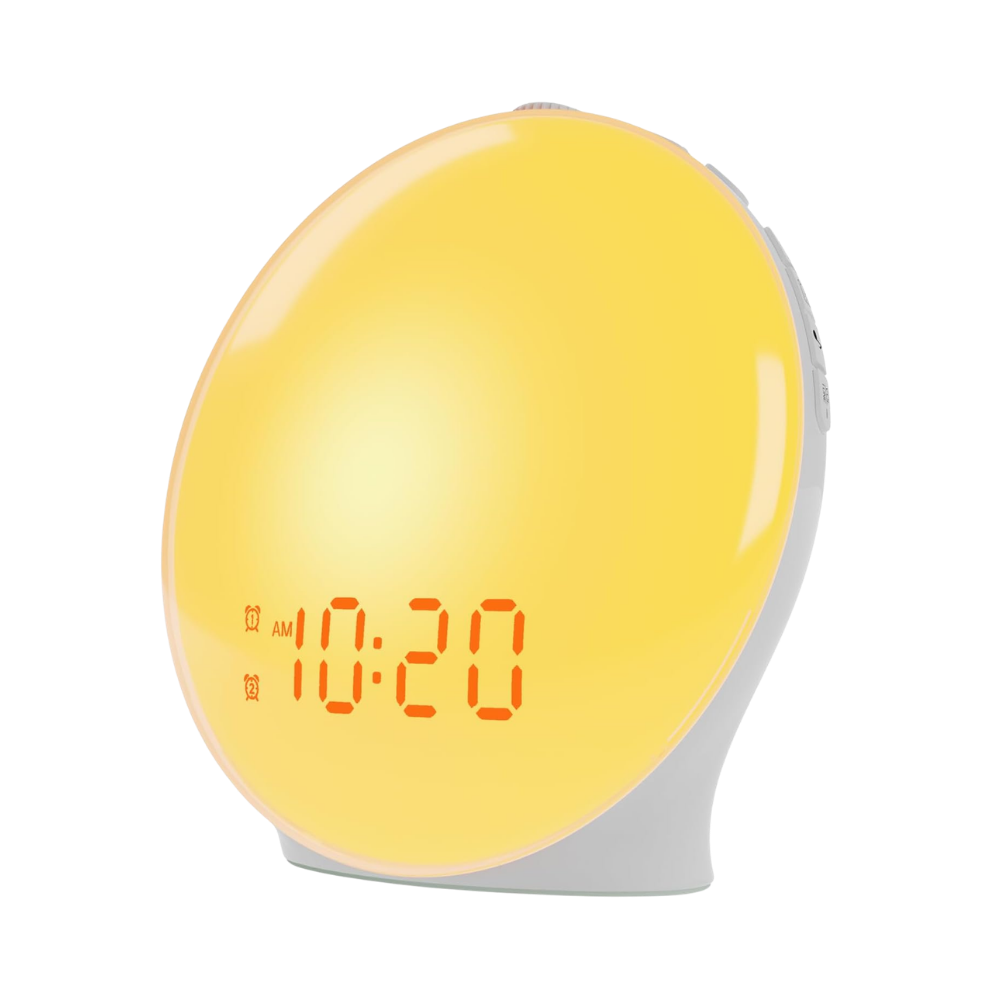
Budget Friendly
JALL Wake Up Light
Real brightness and a 60-minute ramp for the price, mostly flicker-free. Trade-offs: fiddly buttons, no auto-dimming, less output than the top picks.
Pros
Cons
Cross-shopping Hatch, Philips, and Lumie?
If you’ve narrowed it to these three brands, here’s the quick read.
Go Lumie (the Shine 300) for the brightest, longest, most adjustable sunrise in a standalone clock — the best pure wake-up light. Go Philips (the HF3650) if you want nearly that brightness plus a nightlight and a power-outage backup, and you can stomach the menu. Go Hatch (the Restore 3) if the morning is only half of it and you want a full night-and-morning routine with great white noise.
And if the sunrise quality itself is the priority (the smoothest ramp, the color shift), that’s the Hue Twilight, as long as you’ll add the hub.
Brightness in a standalone clock: Lumie > Philips. Features and polish: Hatch > Philips > Lumie. Best sunrise experience: Hue, hub and all. Pick the axis you care about most.
[A full three-way Hatch vs. Philips vs. Lumie breakdown is coming as its own article — I’ll link it here when it’s live.]
Frequently Asked Questions
Common questions about sunrise alarm clocks
The verdict
If you want the best sunrise in a standalone clock, buy the Lumie Shine 300: brightest, longest ramp, most control, nothing to set up. If the sunrise experience itself is what you’re after and you’ll add the hub, the Hue Twilight is the most beautiful and smoothest of the lot. Want near-top brightness with a nightlight and a power-outage backstop? The Philips HF3650. Want your whole evening and morning handled (routines, white noise, the lot)? The Hatch Restore 3. And if money’s tight, the JALL does more than it has any right to.
Whatever you pick, get it bright enough to clear 250 lux at your bedside. That one number is the difference between a sunrise clock that works and an expensive lamp with an alarm.
-
Rise Centered Sunrise Alarm Clock Review: Gorgeous, and Dimmer Than You Think
A hand-carved Himalayan salt sphere that makes the loveliest light of any clock I’ve tested, and the least of it. Here’s what the spectrometer, the flicker meter and a 30-minute video actually found.
21 minutes -
Casper Glow Light Review: Great Night Light, Weak Alarm?
We tested the Casper Glow Light. See our spectral data, flicker analysis, and why this portable sleep lamp might be better for travel than waking up.
7 minutes -
Lumie Bodyclock Review: Lab Tested (Shine vs. Luxe)
We tested 4 Lumie Bodyclocks. See the lux output, flicker analysis, and why the Shine 300 is the brightest but might not be the best choice.
9 minutes
I’ve seen some people online suggest to get a WiZ bulb for $10-20 and use a “sunrise” routine. as an alternative to buying an expensive sunrise alarm. Do you have an opinion about the relative effectiveness of this “hack”? Are sunrise alarms worth it? If anything I was considering the Philips 3520 or the Jall
I’ve tried a few and the only smart light sunrise effects I liked were from Philips Hue. I’m planning on doing a review and comparison at some point but if you’re going to go that route that’s my recommendation.
But yes some kind of sunrise alarm is a great addition to the bedroom! The HF3520 and JALL are both good options.
Hey there,
First of all, thank you so much for your detailed review, best one out there!
I am thinking about buying one of Lumies or Philips Sunrise Alarm Clocks (I live in Europe, so the 24-hour time doesnt bother me).
But I cannot really decide, which one to get. Also Philips has a newer model (the HF3671), which comes with app integration and 4 different room sensors, which you did not mention in your reviews.
Ive read all your reviews but since Im new into this and dont know which sunrise time is the best for me or if flicker will bother me. I really dont wanna make a bad purchase, since it is a lot of money.
So, from a “biohacking standpoint”, will all the Lumie and Philips models do its job great?
I would really like to have some bluetooth option (like the Lumie Luxe models), but also the sensors in the newer Philips one sound great.
On the other side, I really want the best biological light specifications (since thats what its supposed to do).
Thanks alot!
Hi Finn 👋 thank you!
So the Philips HF3671 has been discontinued here that’s why I haven’t reviewed it at this time.
If you can get your hands on the 3671 I’d bet that’s very similar to the 3650 model. Ultimately it depends on what you’re looking for. The Luxe might be a good option just because you want that Bluetooth and it has plenty of sunrise customization settings to play with just like the Shine 300.
I think for most people a lot of these will work great from a biological light perspective. Some might want TONS of light in which case the Shine 300 is the big winner (aside for, the Twilight) but that may not be wise for most as too much light can be too disruptive.
My concern with these alarm clocks is that they are AC powered, so there is an EMF risk by keeping them on the night table, am I wrong?
You’re not wrong! If that’s a concern a possible solution is to use one further away, so maybe going with a brighter lamp like the Shine 300.
Any sunrise alarm clock suggestions for travel (or van life, which is why I am really asking)? A decent compact option that takes up little room, and in my case, something that can mount to the wall would be nice.
Wall mounting would be nice! That’s something I’ve wanted to see for a while… but alas for now I think the only solution that comes close is a shelf.
Casper Glow might be your best bet? it’s got the smallest footprint overall.
Thank you for this thorough review!
Wondering if you have any information on the Beurer WL75? It says it has a lux of 2000? However, you commented that the Lumie Shine 300 brightness might be too disruptive, so maybe the Beurer might be entirely too bright? Also, not sure if the Beurer allows you to completely turn off the backlight — I’ve inquired with them about that. Looking for a light that can be scheduled as an alarm, but also helps with circadian rhythm problems. Thanks!
Hi Mellisa! Totally missed that one… No mention of what distance that 2000 lux reading is from so hard to compare it. I’ll have to try to get my hands on one and test it!
I have one kid on the bottom bunk and one on the top. Which will effectively wake them both if I place it across the room? No audio please. Just sunrise and a feature to easily turn the sunrise off on no school days.
In your case Nicole, I’d say the Shine 300 would be the best bet because it’s the brightest and spreads it’s light well. There’s also weekly scheduling available so you can alter the alarm time per day.
My wife and I share a bed. Will I need to get a light for both nightstands, or can I one across the room and it still work as it should?
Hey Colton! You can certainly try across the room, in which case the Shine 300 is probably your best bet, since it’s the brightest of the bunch. However you may find that it’s not effective enough, in which case I suppose you can always buy a second one haha
Hello Derek,
A very thorough and informative review, thank you !
I’m still hesitant between some models, but I was wondering if there is a way to know which sunrise alarm emits more EMF and why ?
Also, would it be sufficient to put the sunrise clock across the room to avoid this issue ? Something like 10ft away, perhaps a bit less.
Thanks in advance if you answer.
Hey Theo, I suppose this would depend on which kind of EMF we’re talking about, but yes distance always helps! However the downside to that is 10 feet would significantly reduce the effectiveness of the light. I can’t say for sure if that would work for you or not…
Hello again,
i was mainly thinking about the Lumie Bodyclock Shine 300 or one of the Phillips model, the HF3520 or HF3650.
I’d go with the Shine 300 then since it’s the brightest.
First, thank you for these amazingly thorough reviews!
I currently have a JALL—it’s maybe 4 years old——and while it’s been ok, it’s now running fast and I find it incredibly hard to program. Changing the time, setting the alarm and tuning into a radio station takes ages. What’s the most user-friendly clock you’ve tried? Thank you!
Hey Michaela! User friendly is certainly hard to come by with sunrise alarm clock lol
Maybe the Lumie Luxe700FM? The controls and menu combo I found easier to use than most of the others, but it’s not a cheap option. Beyond that none of them are really that user-friendly, some are just more or less than others! Like the Philips HF3650 is horrendous fro that perspective while the other Philips are easier, I’d not call them amazing.
Hey Derek thanks for the great roundup! I bought the Hue Twilight based off it and while it is a great lamp, it has a fatal flaw in that you CANNOT automate it without buying another device called a “Hue Bridge”. I wouldn’t have purchased it if I had known, but this wasn’t mentioned in the article. Would it be possible to add this detail to the “Alarm Scheduling” section so others have a heads up?
Hey Jack! Yes I’ll add that, thanks for mentioning, don’t think that was the case when I first reviewed this.
Thanks for all this testing- definitely the most thorough out there!! It’s disappointing that so many great clocks have such serious flicker (although perhaps better for my budget)… Are there any low flicker lamps you would recommend besides jall- which seems to allow a night light, but not to have a full sunset sequence (as far as I can tell…)?
Hi Sam! Yeah a bummer I know… The Philips HF3500 might be a good option? The Lumie 100 and 150 are also decent from a flicker standpoint, sorta of depends on what other features you might be looking for!
Oh thanks for the reminder about Lumie lamps! I’m going to try the 150 🙂
Hi,
This is a very detailed comparison, thank you.
About the JALL Wake Up Light, what version (model name) did you test? The K6, or the K8?
Main differences: K8 has a reflective screen, while K6 has a matte surface. K8 has FM radio, K6 doesn’t. K8 has dual alarm, K6 doesn’t.
The “check price” link is redirecting to K6, but since you said that there are 2 alarms, I think it’s the K8 that you tested.
It seems that both don’t have the same brightness (K8 is supposedly more vivid).
Hey Aron! Nice catch, not sure what happened there, you’re correct. I’ve fixed all of the links.
it’s still not completly fixed, when you go to JALL at the end of the article you have two redirectioms and both lead to a different model. The same goes for the link in the beginning.
To be more specific – the link from the title of the JALL WITH DESCRIPTION in the category “Which Sunrise Clock Should You Buy?” leads to this model https://a.co/d/7GH6otE
And at the end of the JALL part you have the “Check Price” link which leads to: https://a.co/d/4VTeO1I
There is also this one which is not in your article: https://a.co/d/7xXxrmu
So which one did you actually test? Would be really grateful for the info.
These go in and out of stock pretty often so perhaps I need to just add multiple links. All of these lamps are functionally the exact same, basically just different exterior colors.
Thanks for such a detailed review! You didn’t include the Lumie Luxe 750DAB. Is there any way for me to find out what its flicker is like?
I don’t have any easy way of accessing it here! However I’m fairly certain it’s the same as our 700FM minus the radio running. However if you want to test the flicker for yourself it should be basically free u pot 120-240Hz using the slow motion on your phones camera. Since 120Hz flicker is the most harmful this is useful for finding it that is there. Beyond that you’d have to shell out some money for a dedicated flicker meter which aren’t usually that easy to come by.
Any sunrise alarm clocks that do not have a night light function? We live fairly far north and want to get something for my 10-year-old as she has a hard time waking in the morning in winter. She tends to use any light source in her room for middle of the night reading so we’ve had to outright ban alarm clocks as most can be used for this purpose.
Interesting use case! I’m actually not seeing any that don’t have some sort of feature she could take advantage of…
Best bet might be some kind of smart light based sunrise solution that she doesn’t have access to turn on?
Hi Derek,
Thanks for such a detailed review, possibly the best comparison I’ve seen. Wish I’d read this before I made the mistake of buying a €30 generic from Amazon, which makes a VERY loud click when the sunrise light starts – not the gentle gradual wakeup I expected!
Just wondering if you’ve ever examined the MOMCOZY Sunrise Wake-up Light? I ask because neither Hatch, JALL, or the Philips HF3650 are available in my region (Ireland). There are other similar looking Philips models available here (HF3531/01 and HF3519/01, both readily available – and the HF3651/01, which is almost impossible to find), so I’m wondering if they just have slightly different model numbers for different markets.
I’m reluctant to purchase a Lumie due to space constraints (tiny bedside table, and no room for anything larger!). Unfortunately I’m one of those folks who can sometimes hear a high frequency noise from Hue bulbs, so the Twilight is probably a nope for more reasons than the price. Not sure if the Hue Go 2.0 would be a viable option as the bulb is enclosed (so any HF noise should be muffled), but don’t know if the brightness is sufficient for use as a sunrise alarm.
Any advice you can give would be amazing! Thanks in advance 🙂
Hi Jenny! I havn’t tested Momcozy at this time so I can’t say for sure how it performs…
As for the Philips, that might be your best bet. I’m thinking the different models just refer to different regions for the most part.
The Hue GO is an interesting idea as well, I was planning on testing a bunch of Hue and other smart light sunrise options soon, so I’ll know more about how they perform then!
Hi. I’m looking at buying a sunrise alarm clock for my daughter (age 4), who’s just moved into her own room. For me the most important features are: the right kind of light for when she falls asleep, a gentle night-light during the night, and a smooth wake-up with light. Radio or extra sounds aren’t important.
We live in Europe, so a model with a 24-hour time display would be ideal.
Could you suggest which model might be best for this situation?
Hi Anita! To be honest a smart light might be the best option since you can automate and schedule that, and perhaps most importantly she won’t be able to really mess that process up by getting nosy haha. In that realm a Hue bulb with the hub would be best.
For sunrise clocks you can setup recurring sunrises like the Lumie or Philips models, but I don’t know of any that will allow for nightlight or sunset features on an automatic schedule. You’d have to manually engage the sunset every night, and the controls are not really 4-year old friendly, some aren’t even ver adult friendly quite frankly 😅
All of the Lumie models and the Philips HF3560 and I believe the HF3520 however do offer sunsets that can end in a nightlight or turn off, you’ll just have to be the one to manually engage these each night.
Thanks for the review, I was wondering what’s your take on the dreamegg sunrise clock. Also, how do I know if high amounts of flicker could be bothersome for me? Are there any signs?
Hey Manik! I have tested the Dreamegg and it’s just too dim to recommend.
As for the flicker, it’s a little tough to say. If you phone does slo-mo recording check out some rooms in your house, you’ll be able to see if your lights are flicker at 120Hz or not. Then you can swap some out for flicker free versions and see if that makes a difference in how you feel.
Of course placebo/nocebo play a role here which is what makes this difficult but that’s the gist of it.
Great article! I was wondering if you have any recommendations for someone who wants to use this as a wake up light as well as SAD light therapy. I’m a very light sleeper so easily wake up to sounds and light as well. I cannot stand lights that flicker so that is an important one for me ha. I don’t need any fancy functions on it (like I don’t care for a sound alarm function, I don’t need to see the time, I don’t need white noise etc), it’s really just about the light for me. Any recommendations other than the JALL one? I can’t find it here in The Netherlands.
Hi Josie! Honestly, sunrise alarms all on their own have been shown in multiple studies to have similar effects to SAD lamps, so that alone may be okay. However if you’re looking for something to use afterwards I’m not sure many of these qualify as they’re much dimmer than a traditional SAD lamp.
Usually I recommend the Shine 300 for this since it’s easily the brightest, however it does flicker… another option is potentially a Hue bulb setup as you can get these very bright depending on the location and the sunrise effect is quite good as well!
Do you recommend for partners sleeping in the same bed? Two sunrise clocks? The ideal distance window is small. What’s ideal for one partner will fall firmly in the pink for the other.
Very true Jane!
Ideally yes you’d have two clocks, but the ideal is of course always more expensive 😅
Hey! Thanks for the awesome article and extensive testing. I was wondering what made the hue twilight lower on the list when it came positive out of a lot of tests? Besides the price obviously. Thank you!
It’s pretty good! However right after I reviewed this they discontinued it for many months, so I thought the product was gone… now it’s apparently back and even more expensive! lol
It’s not bad! But I think you can do much better with Hue smart lights for much less money.
I ended up getting the Jall. Thanks for all your comprehensive reviews; they really helped in figuring out which to get. For the Jall, I’ll say it has pretty much everything I needed except a couple things:
Hi! It obviously took a great amount of time and research to put this all together, so thank you! This is new to me and I’m looking to purchase one but am torn between three of them: The Lumie Shine 300, the Hatch Restore 3 and the Phillips HF3650. I’m leaning towards the Lumie because I think I’d rather have the brighter light. But I also like all the bells and whistles of the Hatch with the wind down routines. It just didn’t seem that bright in your video demonstrations. I have a lot of trouble staying asleep at night and wake up feeling tired. I don’t care about an audible alarm really or that it’s in 12 or 24 hr. mode. I’m thinking the benefit of the longer 90 minutes of sunrise on the Lumie would be good but did get a little confused on the aspect of the ramp up curve. I live in Texas. One of the things I wanted to ask about though was the clock display. I do want the clock to show at night, but not too bright at all. I have blurry vision without my glasses, so my current clock has a larger display. I’m wondering if you can tell me which one might have a display that’s easier to read at night without being too bright. It doesn’t look to me like any of them have very large numbers but maybe the Hatch is a little bigger? Or is the lighted display of the Lumie better? Thanks for whatever info you can give me on this and what your opinion might be. I appreciate it!
Hey Cody! Thanks so much for the kind words — really glad the article was helpful!
Great questions. Let me break it down for you based on your priorities:
Lumie Shine 300 — You’re right that the brighter light is a big plus, and the 90-minute ramp is genuinely useful for people who have trouble waking up feeling refreshed. The ramp-up curve just refers to how the light increases over that 90-minute window — it starts very dim and gradually builds, which helps your body come out of sleep more naturally. As for the display, the Lumie uses a small LED readout that’s relatively dim and easy to keep at a comfortable brightness at night, but the numbers are on the smaller side, which could be a challenge without glasses.
Hatch Restore 3 — You’re right that it didn’t test as bright in my demos. It has more of a warm, ambient glow rather than true high-intensity sunrise simulation. The wind-down routines and the app-based customization are genuinely great, but if brightness is your priority, it’s not the strongest performer. The display is app-controlled and can be dimmed down nicely, and the numbers are a bit larger than the Lumie’s.
Philips HF3650 — Solid performer, reliable, but a little hard to use. Clock face is good though.
Given your situation — trouble staying asleep, waking up tired, want a bright light, in Texas (so likely getting decent sunlight but maybe not the morning kind) — I’d probably lean toward the Lumie Shine 300. The brightness and longer ramp are the better fit for what you’re describing. The display isn’t huge, but the dimming options are solid.
If the clock display is a dealbreaker, the Hatch might edge it out for that reason alone — but you’d be trading off on the brightness that you said is your priority.
Hope that helps narrow it down! Unfortunately it’s a world of tradeoffs! Let me know if you have any other questions.