

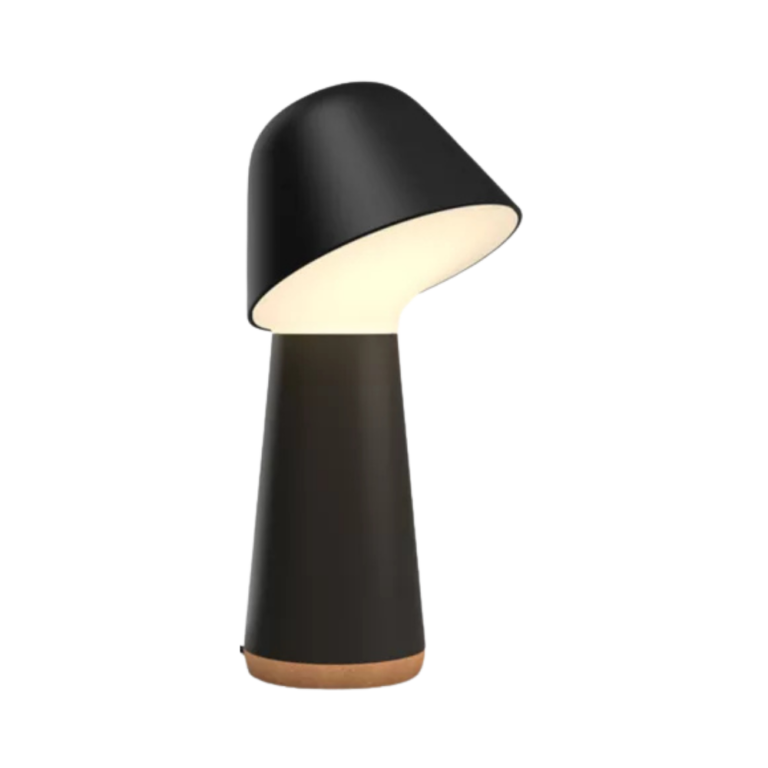
I bought the 15 most popular sunrise alarm clocks and put every one of them in front of a lab-grade spectrometer and a flicker meter. Not to read the box — to see what they actually do at the distance you’d really use them.
If you’ve seen these called wake-up lights, light alarm clocks, sunlight alarm clocks, or dawn simulators, that’s all the same product. One category, a dozen names.
Here’s what’s worth buying in 2026, and what I’d skip — backed by the numbers, not the marketing.
How sunrise alarm clocks work — and do you need one?
A sunrise alarm clock wakes you with light instead of sound. It starts dim and ramps up over 30 to 90 minutes, so you surface from sleep gradually the way you would on a camping trip with the sun coming through the tent — minus the tent.
Free · 95 pages
You’re reading about one piece of this. The book is the whole day.
The Circadian Blueprint covers setting your body clock with light — the timing, the doses, and which products actually deliver them. Every number came off my own spectrometer.
Check your inbox to confirm. Plus a short note each month on what I’ve tested — unsubscribe anytime.
The mechanism is worth understanding if you want to dial yours in, but it’s more than you need to pick one. I covered the full science of dawn simulation separately — start there if you want the depth.
Are they actually worth it?
For most people who struggle to wake up, yes — and I don’t say that lightly about a category this full of junk. The catch is that the cheap ones are often too dim to do the job at a real bedside distance, which is exactly the thing a spec sheet won’t tell you and a light meter will. Buy a good one and it works. Buy a dim one and you’ve bought a bedside lamp with an alarm.
Do you need one if your phone already does this?
This is the objection I see most, and it’s fair. Google Clock has a sunrise feature, iPhone has the gradual wake, and there are HomeKit routines that fake it. There’s also the smart-bulb route — Hue, LIFX, IKEA bulbs scheduled to ramp at wake time.
The problem is light dose. I haven’t put every phone on the meter, but you’d be lucky to pull 50 lux off a screen held 8 inches from your face — and that’s about as close as anyone actually uses a phone. The clocks I recommend below put 275 to 395 lux at 18 inches, from a panel of LEDs aimed at your pillow. A phone physically can’t get there. The app is simulating a sunrise; the clock is delivering one.
A sunrise app and a sunrise clock are not the same purchase.
The sunrise alarm clocks I tested
I tested the Hatch Restore 2 and 3, all four Lumie Bodyclocks, the three Philips SmartSleep lamps, the Philips Hue Twilight, the Casper Glow, and the Loftie Lamp. I also picked up a few cheap Amazon budget lamps to see whether any of them punch above their price.

A couple of well-known options have been discontinued (the Philips SmartSleep HF3670 and the original Hatch Restore 1), so I left those out.
Here’s where I landed, but the rest of the article is why:
- Best Overall: Lumie Bodyclock Shine 300
- Smoothest Sunrise: Philips Hue Twilight
- Runner-up: Philips SmartSleep HF3650
- Most Features: Hatch Restore 3
- Budget Friendly: JALL Wake Up Light
How the picks compare
If you just want the short version, here it is. Everything below this table is the evidence behind it.
|
Clock |
Lux @ 18“ |
Sunrise |
Flicker |
Best for |
Link |
|---|---|---|---|---|---|
|
Lumie Shine 300 |
360 |
15–90 min |
Risky when dimmed |
Brightest, most adjustable |
|
|
Philips Hue Twilight |
395 |
5–60 min (needs hub) |
Low |
Smoothest, most realistic sunrise |
|
|
Philips HF3650 |
325 |
5–40 min |
Risky |
Nightlight + backup alarm |
|
|
Hatch Restore 3 |
285 |
5–60 min |
Low |
Routines + white noise |
|
|
JALL Wake Up Light |
275 |
10–60 min |
Low |
Best value |
One number in that table does most of the work: lux at 18 inches, roughly where your face is on the pillow. Every one of these clears the ~250 lux I’d aim for. How they get there, and what else they do once they’re on your nightstand, is the rest of the article.
Testing the sunrises
Before the features, the light — because the light is the whole reason to trust any of this. I’ll cover ease of use and customization further down.
Lux at the bedside
The only light measurement that matters for waking you up is how much actually reaches your eyes. So I put each clock in front of the spectrometer and measured lux every six inches, across brightness settings.

Measuring head-on.
At a foot, the Hue Twilight leads the entire field at 840 lux, the Shine 300 right behind at 730, then the HF3650 (650) and the Hatch Restore 3 (610).
Here’s the part the spec sheets won’t tell you: the compact, dim-looking clocks (the Hatch especially) punch well above their size, because they fire their light forward instead of spilling it around the room. A Lumie throws light in every direction, which looks impressive on a shelf and wastes most of it on your ceiling. The Philips and Hatch units aim it at your face. That’s why a small Hatch out-measures lamps that look far brighter sitting next to it.
How far should it be, and how bright?
So what do you do with that?
In my piece on the science of dawn simulation, I land on about 250 lux as a starting point — some people end up happiest around 120, some push to 400, but 250 is a sane default. To hit it you need two things: a clock bright enough to get there, and enough brightness steps to fine-tune.
On a nightstand you’re realistically about 18 inches away. At that distance, some lamps don’t come close — the Loftie and Casper Glow never reach 250 lux. These are the ones that do:
The Philips HF3500 just scrapes it (250), the JALL (275), HF3520 (280), and Hatch Restore 3 (285) clear it comfortably, and the HF3650 (325), Shine 300 (360), and Hue Twilight (395) have real headroom — the Hue most of all.
That headroom matters more than the single number, because it’s what lets you sit anywhere in the 120–400 band depending on your sweet spot. Each pick below gets its own distance-to-lux chart so you can find yours.
Sunrise length
The lamps vary a lot in how long a sunrise you can set, and it matters more than people expect.
Only the Shine 300 and the Luxe 700FM go all the way to 90 minutes. That matters, because the Norman dawn-simulation study1 (the one whose contour maps I borrow for the “ideal sunrise” graphic below) ran 90-minute ramps. Those two clocks are the only ones that let you replicate the standard study protocol.
The JALL runs 10–60, the Hatch 5–60, the HF3650 5–40. The Hue Twilight does 5–60 if you have the Hue hub. And then there’s a cluster that gives you a single fixed 30-minute ramp and nothing else: the Philips HF3500, Casper Glow, and Lumie Rise 100. The Loftie is locked to 9 minutes, which is barely a sunrise.
If you want to experiment with long, gentle wake-ups, the Shine and the Luxe are your shortlist.
Sunrise curves
A sunrise clock should follow the shape of a real dawn — a slow, gentle climb that only steepens near the end.

Source: Norman et al. (2000), Chronobiology International. Log-scaled, so not to scale — but the shape is the point.
Here’s what that should look like:
Here’s what that should look like. And here, for contrast, is the Loftie:
It starts gently enough, then jumps too fast near the end — the kind of ramp that can yank you awake instead of easing you out. Combined with the 9-minute cap, it’s not really doing the job.
The Hue Twilight has the best curve of anything here: the smoothest climb, and it shifts color as it goes, cool blue-white easing into warm white the way an actual sunrise does. The Philips SmartSleep lamps have clean curves too, and the Lumie Bodyclocks are solid. The Casper Glow’s curve is fine — it’s just too dim to matter.
The Hatch is the odd one. Like the Loftie it gives you a pile of named sunrise options, but unlike the Loftie they vary a lot — some good, some strange.
If you go Hatch, “Morning in Prague” is the best of the bunch — that’s the one I’d set.
As for the Amazon lamps, the Reacher and JALL both ramp decently, but the JALL is clearly brighter, so that’s the one I kept.
Flicker
I measure flicker for the people it matters to. If that’s not you, skip ahead — it isn’t a dealbreaker for me personally.

Quick version: LEDs run on DC, your wall runs on AC, and a cheap driver can’t fully smooth the gap, so the light pulses. Good drivers either push the pulse rate high enough that it’s harmless or remove it entirely. For sensitive people, bad flicker can mean headaches, eye strain, and fatigue — though it may matter less here than with a lamp you stare at all day.
Most of the field is clean. Almost no flicker, or a little harmless high-frequency stuff, from the Hue Twilight, JALL, both Hatch units, the Lumie Rise 100 and Glow 150, the Philips HF3500, the Loftie, and the Casper Glow (which gets a touch riskier once you dim it).
Here they are dimmed:
Four landed in the risky bucket: the Philips HF3520 and HF3650, and the Lumie Shine 300 and Luxe 700FM. The Shine 300 actually looks fine at full brightness — but dim it and roughly 200 Hz flicker shows up.
Here they are dimmed:
So two of my picks are in that group. If flicker is a real concern for you, that’s worth knowing going in — the Hue Twilight, Hatch Restore 3, and JALL all sit in the clean group, and the Hue’s the brightest of the three at the bedside.
Comparing the features
Light gets you most of the way to a decision. The rest is whether the thing is pleasant to live with.
Ease of use
The easiest by a mile is the Philips Hue Twilight — everything lives in the app, so there are no cryptic buttons or icon menus to fight. The Hatch Restore is nearly as painless for the same reason, with one catch: a lot of the good stuff sits behind a subscription.
After the two app-driven lamps, it drops off fast. The worst is the Philips HF3650 — loaded with options, but the entire menu is buried in icon-only navigation with no labels, and you spend the first week guessing what each symbol means.

The Lumie Shine 300 is the runner-up in frustration: a lot of buttons and arrows, and it’s not obvious which does what. Both of these are among the most effective clocks I tested, so you may want one anyway — just know the setup will fight you for a few days.

The generic Amazon lamps were a mixed bag, a couple nearly unusable with barely-legible manuals. The three I kept are okay, not great.
Audible alarms
I’d skip the audible alarm entirely — the whole point is to wake to light. But if you want a backstop or you’ve got alarm anxiety, the options vary.
The Lumie Bodyclocks and Philips SmartSleep lamps have nice nature-based tones. The Lumie Rise 100 and Philips HF3500 only have a single basic beep — and the HF3500 won’t let you turn it off, so avoid that one if you want a silent wake.
The Loftie, Hue Twilight, and Casper Glow have no audio at all. And the Hatch Restore has the best of the bunch — good-sounding alarms through a forward-facing speaker that’s also the loudest here.
Alarm scheduling
The two smart lamps (the Hue Twilight and the Hatch Restore) are far and away the easiest here, and the obvious choice if you change your wake time often, or work shifts and want different sunrises on different days. You set it all in the app and forget it.
Among the rest, the Lumie Luxe 700FM and Shine 300 let you set a separate alarm per day. The Philips HF3520 and HF3650 give you two.
The Lumie Rise 100 and Glow 150 and the Philips HF3500 are single-alarm — fine by me, except the Lumies have to be re-enabled every single day. The alarm turns off in the morning and won’t fire again unless you switch it back on. Yes, it’s as dumb as it sounds.
Clock-face dimming
If you sleep in a properly dark room, you want a clock you can shut off completely at night. Every lamp here can — except the Philips HF3500, which goes very dim but never fully dark, and won’t auto-dim, so you’re working the side button by hand.
Nightlight and sunset
Nearly all of them fade down at night if you want a wind-down light; only the HF3500 doesn’t. I usually ignore these (they tend to be fiddly), but two are worth singling out. The HF3650’s nightlight is genuinely good: tap the top, soft orange glow on or off, and I actually used it. And the Hue Twilight lets you reprogram its buttons, including a very dim red option — about as sleep-safe a nightlight as you’ll get, even if it’s not strictly a “sunset” mode.
White noise
If you want the clock to double as a white noise machine, this is short.
The Lumie 150, 300, and 700 each play a single white-noise file and that’s it. For anything more, it’s the Hatch Restore — a full library of sounds in the free tier, including nature-and-noise blends and even versions tuned for dogs (they trim the high frequencies that bug them). None of the other lamps come close.
Which sunrise alarm clock should you buy?
Quick recap, then the case for each:
- Best Overall: Lumie Bodyclock Shine 300
- Smoothest Sunrise: Philips Hue Twilight
- Runner-up: Philips SmartSleep HF3650
- Most Features: Hatch Restore 3
- Budget Friendly: JALL Wake Up Light
Best Overall: Lumie Bodyclock Shine 300

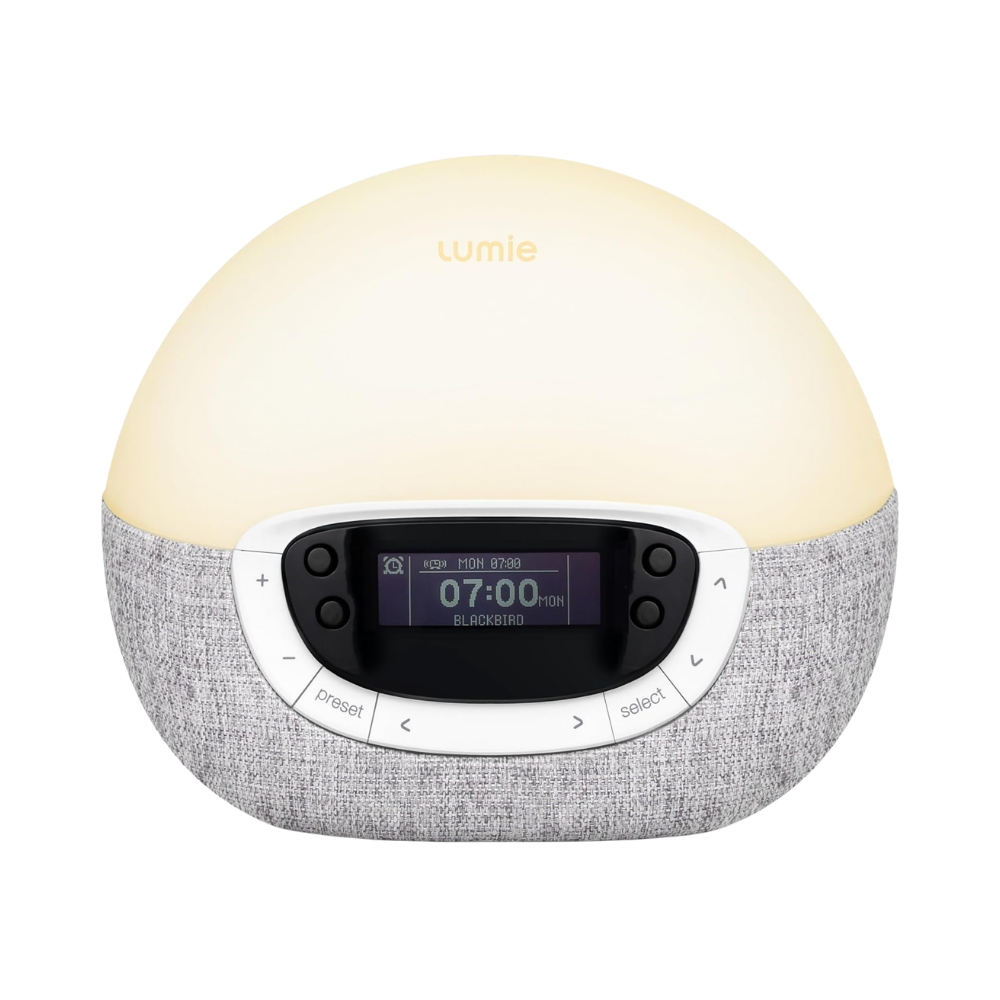
The Shine 300 is the brightest traditional sunrise clock I tested (730 lux at a foot, 360 at a realistic 18 inches), and it pairs that with a 15-to-90-minute sunrise and 20 brightness steps. Nothing else here is this adjustable, and it does it all with no hub and no app, which is why it’s the one I’d hand most people.
It also auto-dims and can shut its screen off completely in a dark room, with a nightlight and sunset mode if you want them.
The downsides are real but minor: the interface takes a few days to learn, and there’s roughly 200 Hz flicker once you dim it. Doesn’t bother me; might bother you.

Buy it if you want the brightest, most flexible sunrise and the longest ramp on the market, with nothing to set up but the clock itself. Skip it if flicker sensitivity is a real issue, or you’d rather control everything from an app. Read my full Lumie Bodyclock review.
Best Overall
Lumie Shine 300
Best raw brightness and the only 90-minute ramp this side of the Luxe 700FM, no hub required. Trade-offs: flicker when dimmed, and a menu that takes a minute.
Pros
Cons
Smoothest Sunrise: Philips Hue Twilight
If the sunrise itself is what you care about most, the Hue Twilight is the best of the lot. It’s the brightest at the bedside of anything I tested (840 lux at a foot, 395 at 18 inches), and its ramp is the smoothest — a gradual climb that shifts from cool blue-white to warm white as it brightens, the way a real dawn does. None of the others change color like that.
Watch the color shift, not just the brightness.
It’s also a bit different physically: there’s a downward-firing LED in the top, so you can turn it around and bounce a softer, less head-on light if that suits your setup better.
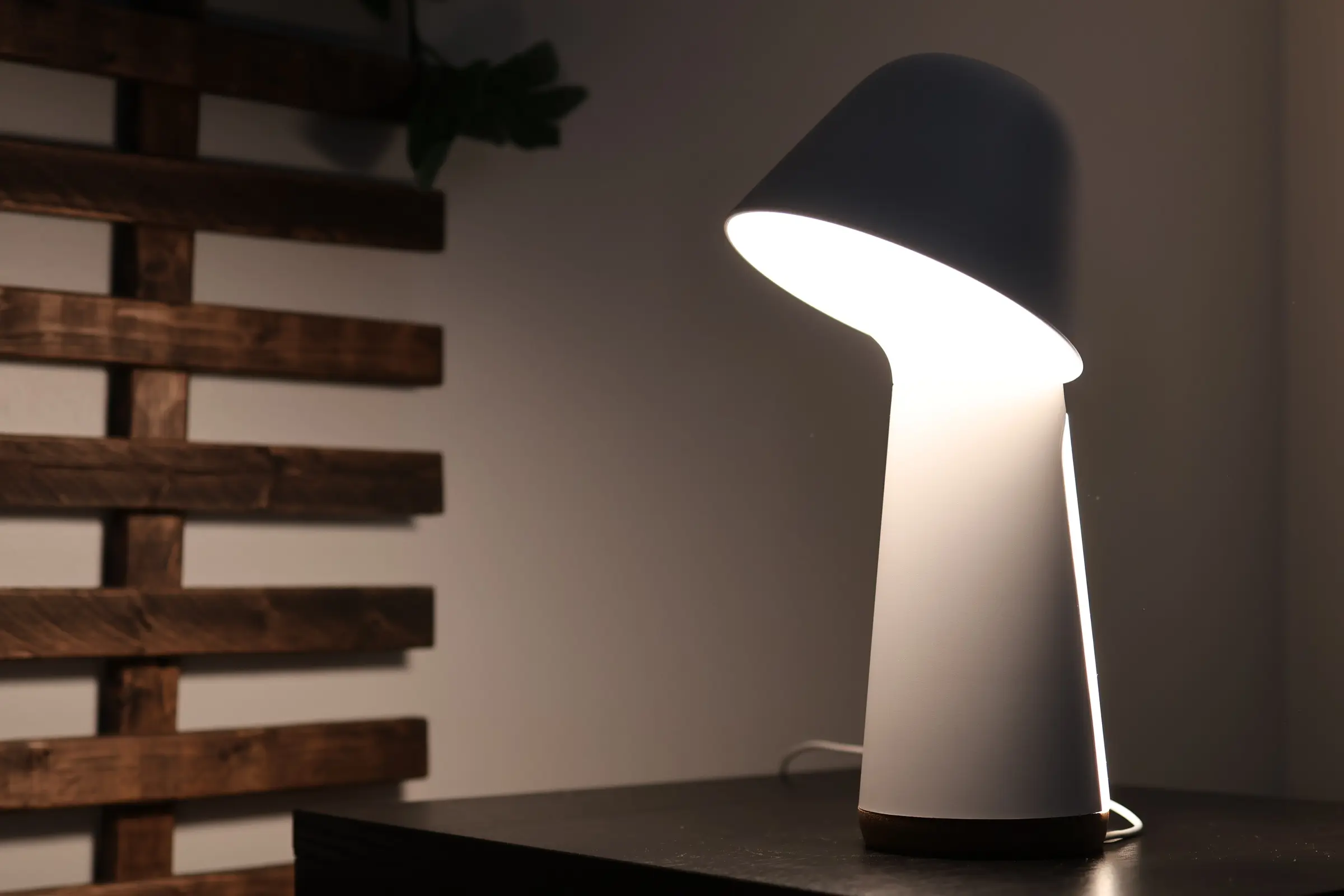
Everything runs through the Hue app, which makes it the easiest here to schedule — and if you already own Hue bulbs, it’ll wake your whole room with them. Those room lights won’t wake you on their own (that’s the lamp’s job), but coming to in a gently lit room is a nice touch.
The one real catch, and the reason it’s not my overall pick: you really need the Hue hub. Without it the settings are crippled. So the true cost is the lamp plus the bridge, plus buying into the Hue ecosystem.
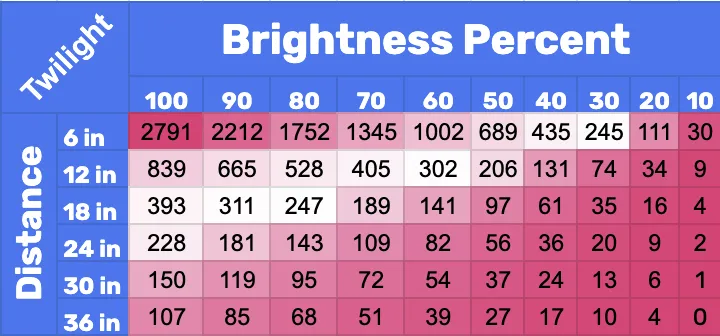
Buy it if you want the most beautiful, smoothest, most customizable sunrise — and you’re fine adding the hub (or already live in Hue). Skip it if you want a standalone clock with no app or extra hardware. Read my full Philips Hue Twilight review.
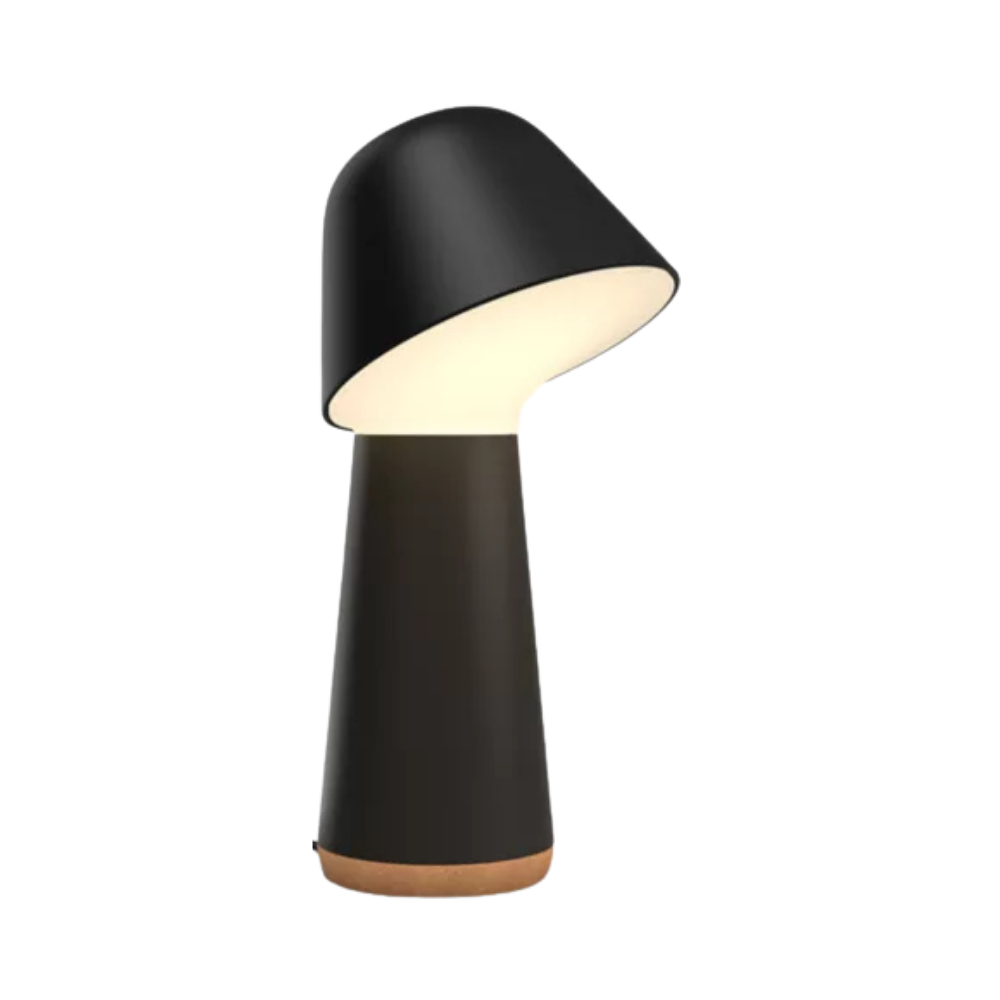
Smoothest Sunrise
Philips Hue Twilight
The brightest at the bedside and the smoothest, most realistic ramp, with a true blue-to-warm color shift and easy app control. Trade-offs: needs the Hue hub to be any good, and pulls you into the ecosystem.
Pros
Cons
Runner-up: Philips SmartSleep HF3650
Just behind the Shine on brightness (650 lux at a foot, 325 at 18 inches), the HF3650 earns its spot on the extras. And the tap-the-top nightlight is the one nightlight feature here I actually reached for.
Its menu, as covered above, is genuinely painful — icon-only and unlabeled. But push past that and there’s a clock that turns its face fully black at night and has nicer alarm tones than most.
The standout is the backup alarm: during a power outage the internal clock and alarm keep running for 8 hours, and if your alarm time hits mid-outage it’ll beep for 30 seconds. If a missed alarm is a genuine fear, that’s a real feature.
Flicker isn’t great on this one, though — it’s in the risky group.

Buy it if you want near-top brightness plus a nightlight and a power-failure backstop. Skip it if the icon-only menu sounds like a daily annoyance, or flicker matters to you. Read my full Philips SmartSleep review.
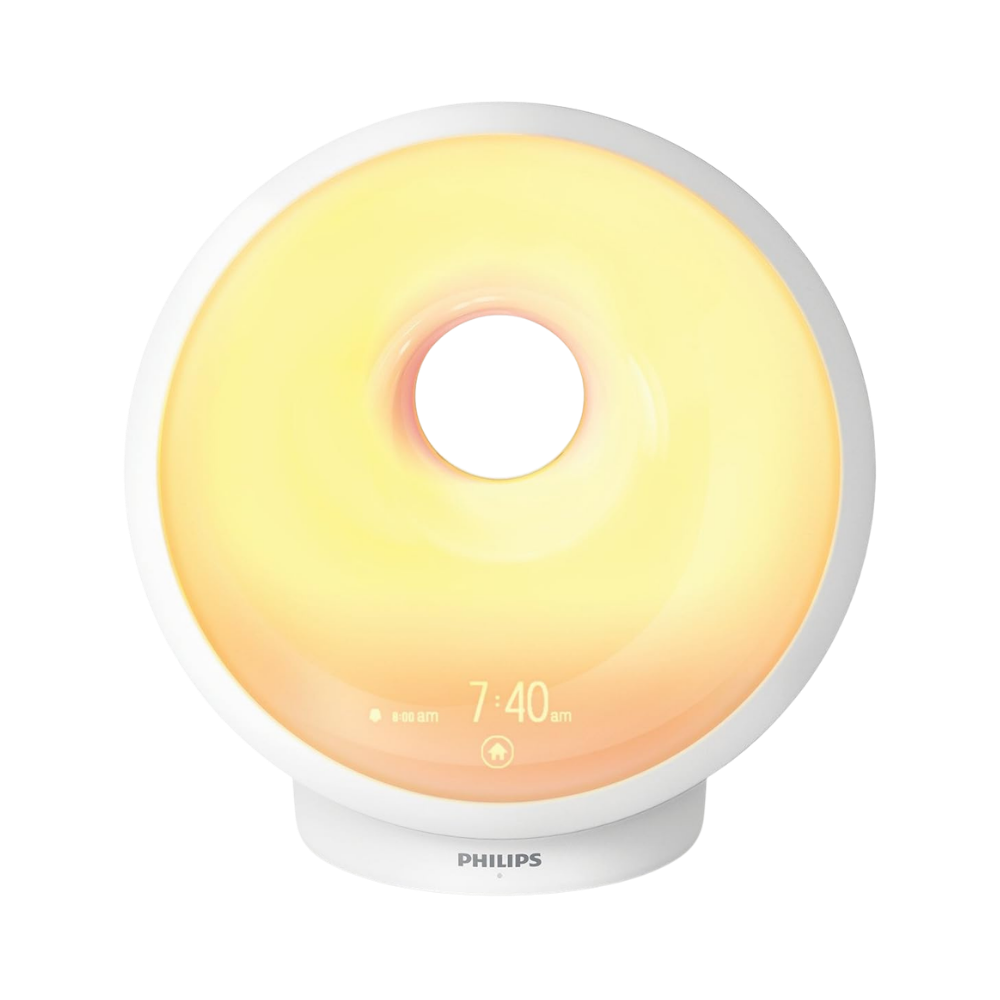
Runner-up
Philips HF3650
Second-brightest traditional clock here, with a nightlight and backup alarm. Trade-offs: a confusing menu and flicker.
Pros
Cons
Most Features: Hatch Restore 3
The Hatch Restore 3 is about 30% brighter than the Restore 2 (285 lux at 18 inches vs. 209), so if you want a Hatch, get the new one. It aims its light forward, so even though it’s small it lands fine at the bedside.

But light was never the whole pitch here. This is really a wind-down-and-wake-up routine machine that happens to do sunrises. Two physical buttons up top run your routines and the alarm; everything else lives in a genuinely well-built app. You can stack unwind routines, sleep cues, white noise, and wake-up sequences — and they can shuffle day to day so it’s not the same loop every night.

A routine I built: stretch, a story, a little meditation, then nature sounds fading out.
Despite the subscription, I ended up loving it. The free tier still includes every sunrise and works as an excellent white noise machine — which none of the other lamps here can claim. The catch is that the best routine-building features sit behind the paywall.

Two more notes: brightness adjustment is clunkier than it was on the Restore 2, and it does emit some EMF if that’s something you track.
Buy it if you want the night-and-morning routine, the app, and the best white noise in the category. Skip it if you want maximum sunrise brightness, or you resent subscriptions on hardware you already bought. Read my full Hatch Restore review.
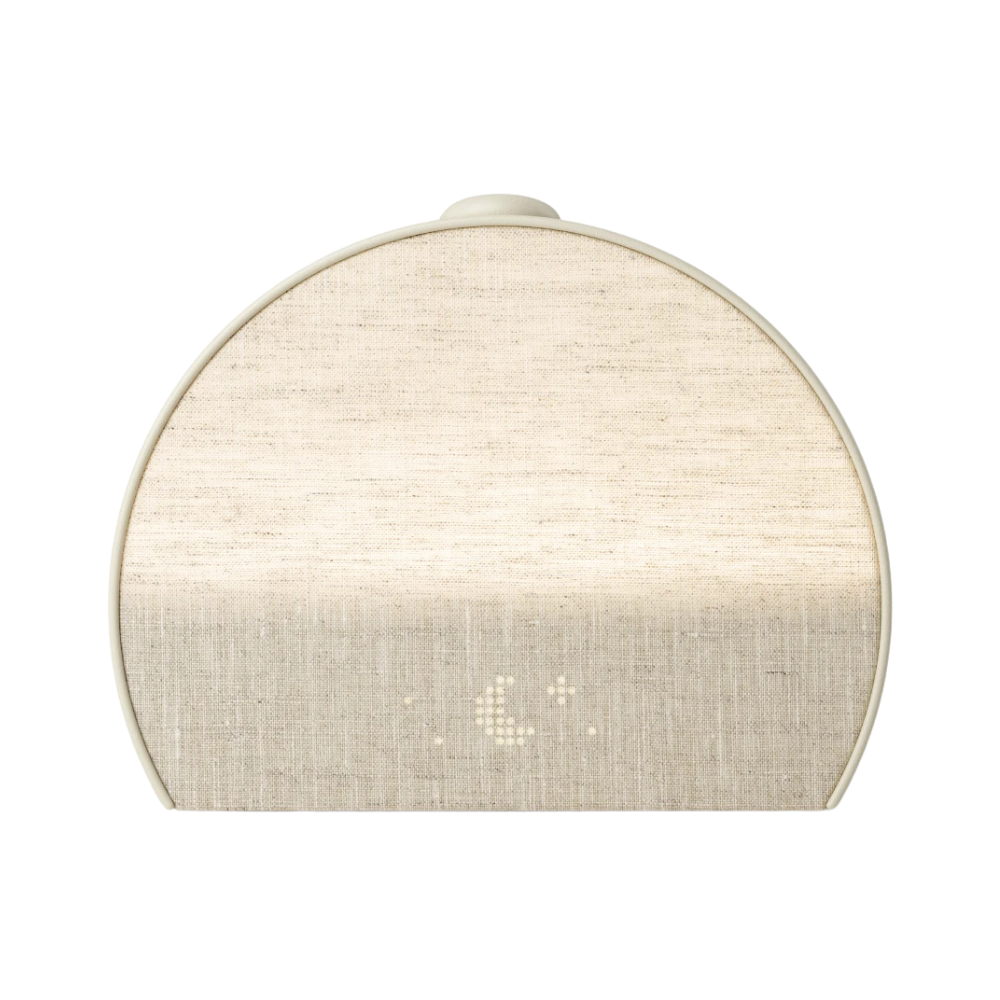
Most Features
Hatch Restore 3
Brighter than the 2, with a superb app, routines, and white noise. Trade-offs: dimmer sunrise than the top picks, best features behind a subscription, clunkier brightness control, some EMF.
Pros
Cons
Budget Friendly: JALL Wake Up Light

The JALL surprised me. For a cheap Amazon lamp it’s genuinely bright: 545 lux at a foot, 275 at 18 inches, clearing the 250 mark without trouble. Pair that with a 10-to-60-minute sunrise and 20 brightness steps to dial it in.
The Philips HF3500 costs about the same and performs similarly, but you can’t silence its beep — so the JALL gets the nod. It also lets you set two alarms, which the HF3500 won’t.
No auto-dimming, so a fully dark room means turning it off by hand. At this price, I’ll take that trade.

Buy it if money’s tight and you want the most capable sunrise per dollar. Skip it if you want a polished interface or app features — this is honest hardware, nothing more. (And it’s not a Hatch look-alike, despite what the listings imply — it’s its own thing.)
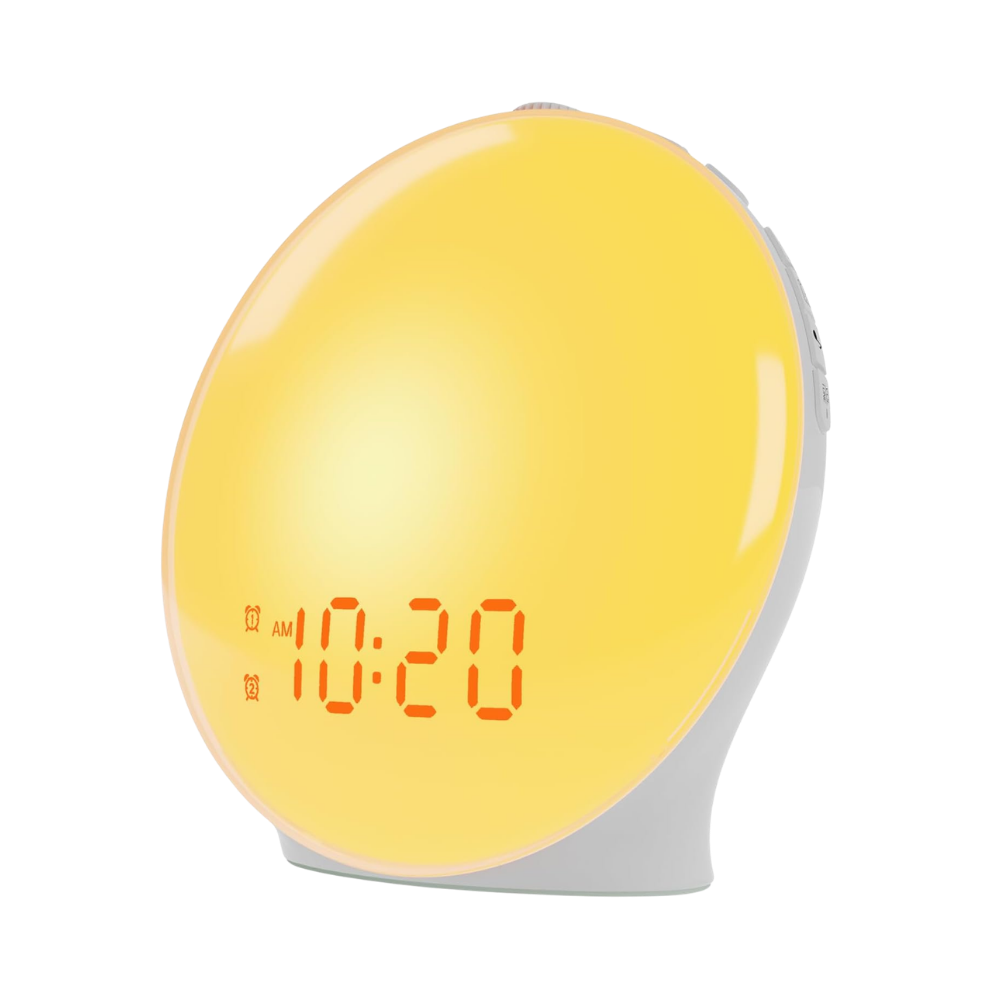
Budget Friendly
JALL Wake Up Light
Real brightness and a 60-minute ramp for the price, mostly flicker-free. Trade-offs: fiddly buttons, no auto-dimming, less output than the top picks.
Pros
Cons
Cross-shopping Hatch, Philips, and Lumie?
If you’ve narrowed it to these three brands, here’s the quick read.
Go Lumie (the Shine 300) for the brightest, longest, most adjustable sunrise in a standalone clock — the best pure wake-up light. Go Philips (the HF3650) if you want nearly that brightness plus a nightlight and a power-outage backup, and you can stomach the menu. Go Hatch (the Restore 3) if the morning is only half of it and you want a full night-and-morning routine with great white noise.
And if the sunrise quality itself is the priority (the smoothest ramp, the color shift), that’s the Hue Twilight, as long as you’ll add the hub.
Brightness in a standalone clock: Lumie > Philips. Features and polish: Hatch > Philips > Lumie. Best sunrise experience: Hue, hub and all. Pick the axis you care about most.
[A full three-way Hatch vs. Philips vs. Lumie breakdown is coming as its own article — I’ll link it here when it’s live.]
Frequently Asked Questions
Common questions about sunrise alarm clocks
The verdict
If you want the best sunrise in a standalone clock, buy the Lumie Shine 300: brightest, longest ramp, most control, nothing to set up. If the sunrise experience itself is what you’re after and you’ll add the hub, the Hue Twilight is the most beautiful and smoothest of the lot. Want near-top brightness with a nightlight and a power-outage backstop? The Philips HF3650. Want your whole evening and morning handled (routines, white noise, the lot)? The Hatch Restore 3. And if money’s tight, the JALL does more than it has any right to.
Whatever you pick, get it bright enough to clear 250 lux at your bedside. That one number is the difference between a sunrise clock that works and an expensive lamp with an alarm.
-
Hatch Restore Review: Worth the Subscription? (Tested)
Is the Hatch Restore 3 the best sleep assistant? Our lab tests reveal the truth about its brightness, flicker, and whether Hatch+ is worth the cost.
13 minutes -
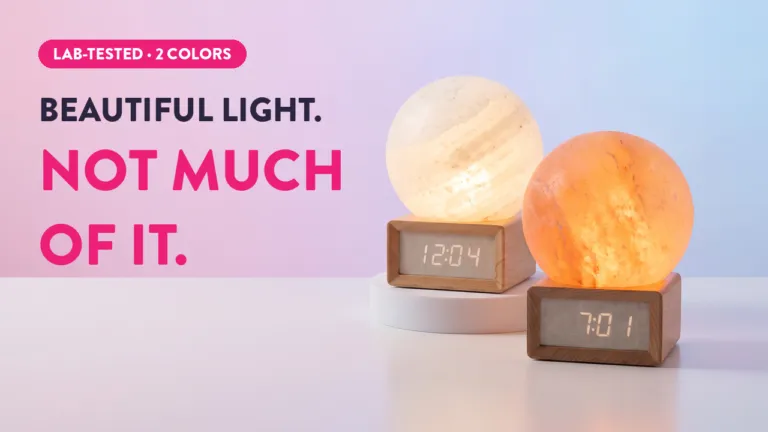
Rise Centered Sunrise Alarm Clock Review: Gorgeous, and Dimmer Than You Think
A hand-carved Himalayan salt sphere that makes the loveliest light of any clock I’ve tested, and the least of it. Here’s what the spectrometer, the flicker meter and a 30-minute video actually found.
21 minutes -
Philips Hue Twilight Review: The Ultimate Sleep Lamp?
We tested the Hue Twilight’s sunrise and sunset features. See the spectral data, lux output, and if this expensive lamp is worth the investment.
7 minutes
Do you have any thoughts on the Rise Centered Sunrise Alarm Clock?
Hi Tianna,
I haven’t tested the Rise Centered yet, but it’s on my list to get to in the future.